


Opinion
What is happening to bus travel in Wales?
Professor Stuart Cole CBE, Emeritus Professor of Transport Economics and Policy, University of South Wales
There is a a lot of uncertainty around bus travel in Wales at present.
Financial support from the Welsh Government which was introduced during the Covid pandemic has now ended and despite the short-term introduction of the temporary Bus Transition Fund (BTF) operators and passengers find themselves in an uncertain position.
Bus travellers, especially those on lower incomes, face new challenges; and bus companies face rising costs and reduced revenue. Bus travel has become more expensive (single urban fares between £4 and £8), though in Wales 55% of bus users travel free using government funded concessionary passes. Some local authorities have additionally provided free travel (Swansea) or low flat fares (RCT).
There are also 10.7% fewer buses in service compared with 2018 thus reducing service frequencies or removing services completely. There are two solutions – continued revenue support (subsidy) or increased demand and therefore revenue.
The government has taken action to maintain services which passengers and politicians would consider to be a reasonable level through the BTF replacing the Bus Emergency Fund which ended this week.
The BTF should maintain most services but only for six months. This is too short a time and too great a financial risk for operators to employ staff or lease buses. Consequently some operators have pulled out of the market or have put in very high bids to compensate for any such possible losses.
The government (county, TfW, Welsh Government) funding level on BTF is constrained by choices between bus subsidies and a range of other public services. Ring-fencing bus subsidy is dependent on the (as yet unknown) Welsh block grant and consequent Welsh Government grants to local councils.
Social impact
The social groups disadvantaged most from bus service cuts are the elderly, those with mobility constraints, on lower incomes or with no access to car use. Neighbourhood shops are more expensive than big supermarkets, medical facilities are usually some distance away and visiting friends and relatives is only possible by bus. They cannot afford taxis.
Bus passes for the elderly were initially a social policy intended to enhance travel opportunities and social contact.
Bus operator finance
All bus services are run by local private companies, major groups usually in urban areas and council owned bus companies. The last operate at arms-length and cannot be preferentially subsidised.
Bus services in Great Britain operate within the now discredited freely competitive market established by the Thatcher / Major Tory government (Buses Act 1985) on the principle that competition improves quality and reduces prices.
While bus operators consider they have ‘commercial’ services, these are achieved through combined income from passengers fares and operating grants / concessionary travel passes together with a political desire for affordable travel. Government franchising policy funds the railways and that may be the most appropriate structure for the bus industry rather than a competitive framework.
Bus company costs per passenger trip have also risen in recent years from 179p in 2018 to 460p in 2020 ( as Covid cut passenger numbers) and settled in 2022 at 241p.
Operating costs per bus-kilometre have risen from 236p in 2018 to 259p in 2022 (9.7%), with the sharp rise in the last two years resulting from driver pay increases (partly through driver agency costs to overcome driver shortages) and fuel cost rises.
In consequence even a busy route with 14 passengers per trip (8 was the profitable measure in 2018), and 6,000 passengers monthly has been cut because it doesn’t cover its costs.
A further concern has resulted from the 20-mph default speed limit particularly on urban routes. As buses travel on some sections of a route at up to 30-mph more vehicles will be needed (with drivers in short supply) to maintain the current frequency, there will be a reduced frequency or costs / fares / subsidy payments will have to rise.
Fewer numbers of passengers
Bus ridership has been falling for decades. Covid lockdowns merely exacerbated the downward slope. There was a sharp downturn in demand and services (and some companies) only survived because of government revenue support payments.
Post Covid passenger demand in Wales is back to 70% of 2018 levels. However, if there are threats to government funding then the only other source of revenue is increased fares or increasing the numbers of passengers.
A recent study (Factors affecting local bus demand and potential for increase, by professors Stuart Cole and Peter White, 2022, CILT) indicated how fares, service quality and customer experience can reverse the current downward trend.
Some factors are outside the control of the bus industry and government in a free market economy. Changes in demographics, increased internet shopping, store home deliveries, out of town, car-based shopping parks with free and convenient parking, and a growth in ‘working from home’ across a wide socio-economic group have all contributed to the decline.
Fares increases have been a cause of the decline. When fares rise by 1.0% above inflation there is a fall in passenger numbers of 0.4%. These higher fares may be unaffordable or perceived as more expensive than the car (for multi-person journeys) alongside a close correlation between increased car ownership and reduced bus use since the 1960’s. More passengers per bus journey can reduce fares and demand reversal can begin.
Reversing the trend
There have been bus services which caused patronage to rise up to 2019.
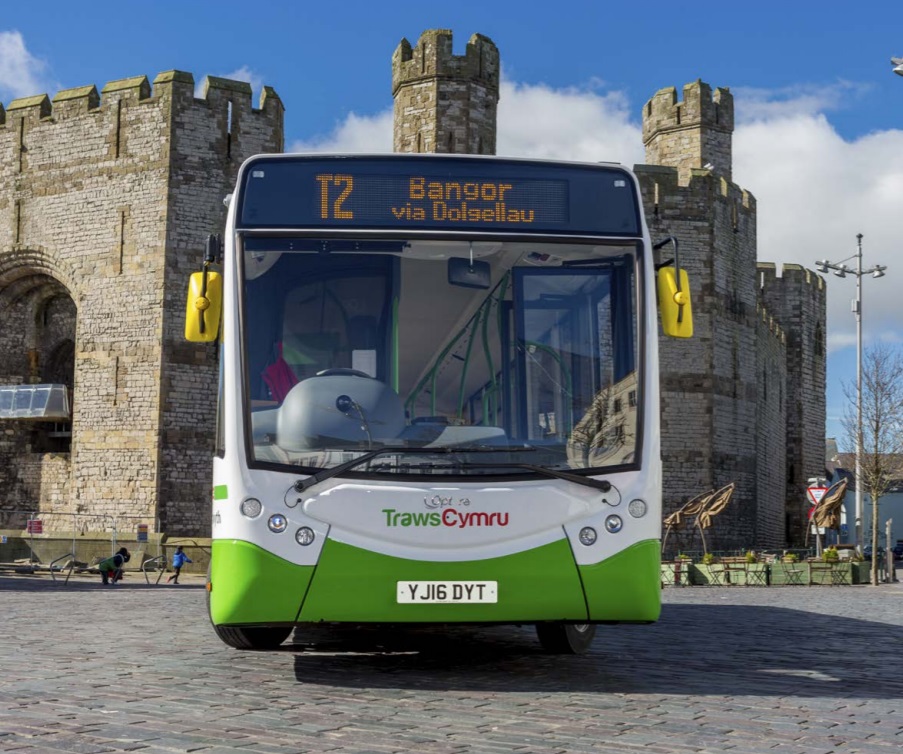
In the seven years before Covid (2019), passenger numbers and service levels increased in Edinburgh (7.6%), Bristol (11.1%, particularly on evening services and bus priority schemes; suitable for Cardiff’s buoyant night life), Bournemouth (16.7%), Brighton (10.5%) and TrawsCymru, Wales’ national bus network (400%).
In Swansea, the university and Gower Explorer services increased demand significantly.
This reversal of the downward trend has been achieved primarily by easy timetable access, regularly-timed frequent, punctual and reliable services. Improving the passenger experience and perception of bus travel also has a role - improving the bus stop environment; designing easy and convenient interchanges (bus/rail, bus/bus) where route timetables match; easily available information; the ambience of bus travel – clean buses, friendly staff with a ‘Waitrose’ customer care approach.
A national stored-value electronic ticket, similar to the Netherlands OV-Chipkaart could cover all bus / rail travel in Wales and increase demand. The senior bus pass has proved it is possible.
It is clear that bus services will only be maintained at their present level with government revenue support (subsidy). Each bus company has already identified its core profitable network operating without subsidy; Wales needs to avoid that level of bus provision.
Support our Nation today
For the price of a cup of coffee a month you can help us create an independent, not-for-profit, national news service for the people of Wales, by the people of Wales.
Get more trusted Welsh news
Choose Nation.Cymru as a preferred source in Google News to see more of our journalism.
