


Opinion
What if Brittany had been annexed by England rather than France?
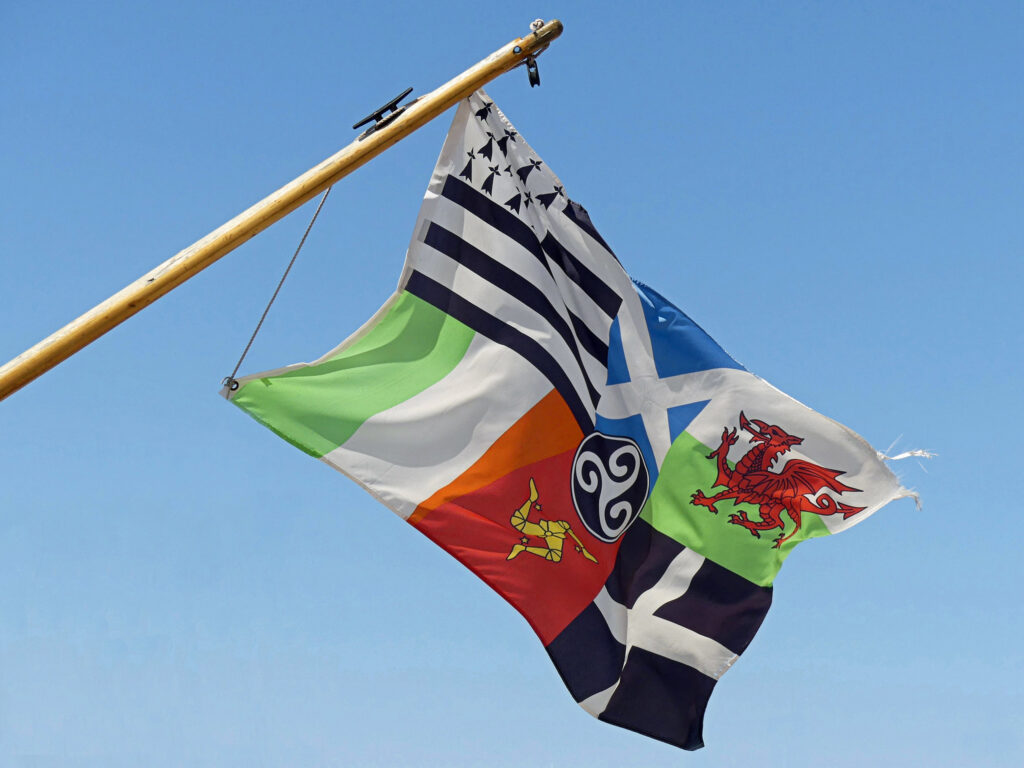
NHU Bretagne, translated by Rosserk
Brittany has always oscillated between two main political powers.
Since the Middle Ages, its destiny has been decided between France and England. Sometimes an ally of one, sometimes protected by the other, Brittany has long maintained its independence thanks to subtle diplomatic manoeuvring.
But what if history had taken a different turn? What if Brittany had been incorporated into the United Kingdom?
Let us explore an alternate history: what would have become of an English then a British Brittany?
Let us start by setting the scene.
At the end of the 15th century, Brittany was under increasing pressure from France. After the death of Francis II, Duke of Brittany, his daughter Anne became Duchess, but faced a war of annexation.
In 1532, after a military invasion, bribery and political pressures, France finally annexed Brittany.
But what would have happened if, instead of ceding to France, Anne of Brittany had married an English prince?
Or if England (with Welsh archers ?) had won the war in Brittany through decisive military intervention?
Brittany would then have come under English control, long before Scotland and Ireland were incorporated into a United Kingdom.
A status similar to that of Scotland or Wales?
Let us look at the situation today of the other Celtic nations incorporated into the United Kingdom.
• Scotland has its own Parliament, a self-governing government, a distinct education and health policy, and a strong national consciousness.
• Wales also has its own Parliament, with a large devolution of powers and as in Scotland, a strong national consciousness.
• Northern Ireland benefits from a complex political system resulting from specific peace agreements but has self-governing powers.
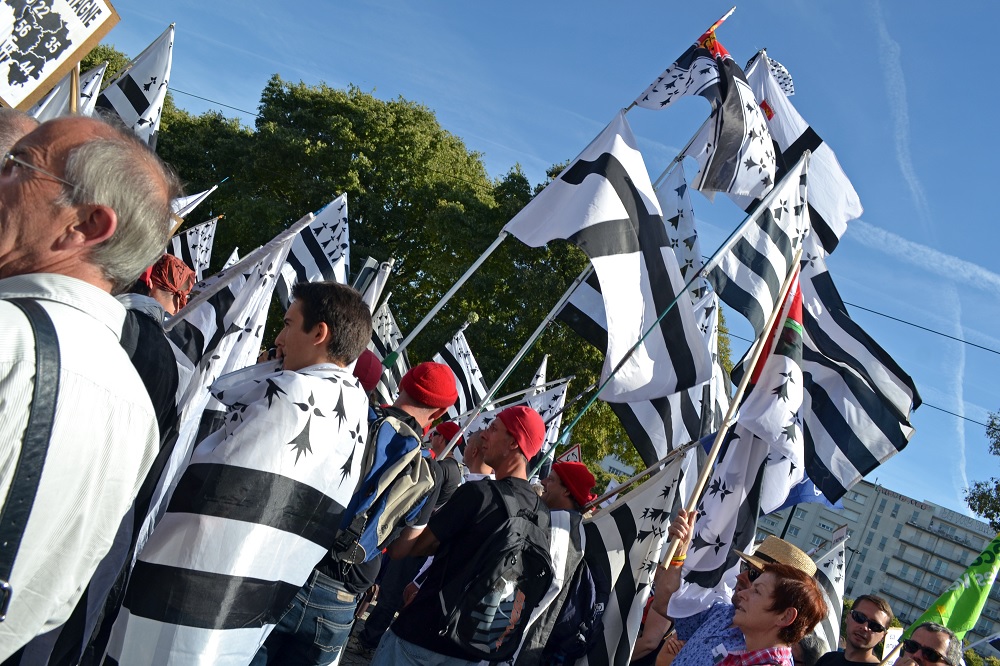
A British Brittany would likely have followed a similar pattern, with a gradual devolution of powers in the 20th century. One can imagine an Assembly of Brittany, sitting in Rennes/Roazhon or Nantes/Naoned, with powers over language, culture, environment, health, transport, and other economic aspects.
And if Brittany had been annexed by England, would the Breton language be more widely spoken today?
This is one of the most sensitive points. Welsh has survived and is now spoken by nearly 20% of the population. It benefits from widespread education, public media, and mandatory bilingual signage.
[mid-content-banner]
In a British Brittany, would Breton have been more preserved ?
Despite its ‘imperial’ domination, England has allowed Celtic languages to survive more than France.. The Breton language could have been protected, supported, and taught, notably through genuine regional autonomy.
As in Wales for example, we would have seen the flourishing of Breton-language TV channels, immersive public schools, and the official use of Breton in local institutions.
A more decentralized society
The United Kingdom has well evolved and has today a decentralised organisation. London acknowledges the fact that the Kingdom is a union of different nations having have differentiated statuses and respected strong identities. A British Brittany would therefore have retained its national pride, rights to decide locally and the right to build an even better future.
Its history would have been taught in schools. Its heroes, its traditions, its specific geography would have been valued.
And who knows, Brittany would participate in the Seven Nations Rugby Tournament !
A different kind of economic development?
A British Brittany would have most likely followed a different industrial and agricultural trajectory. Probably more oriented toward the sea and Atlantic trade. Less constrained by French centralisation. It would surely have better preserved its ports, shipyards, fishing fleet, and short agricultural supply chains.
And what about the Breton capital city: Rennes or Nantes? Roazhon or Naoned?
In a British Brittany, the partition of ‘Loire Atlantique’ decided by the French collaborationist Marshall Petain (and kept since!) would have not occurred. Nantes/Naoned would have remained the capital of Brittany. This partition decided by France intended to weaken Brittany (it is still the case) and is not to be compared in any way with what happened in Northern Ireland.
Breton resistance against England ?
Of course, a Catholic Brittany would have perhaps fought a Protestant England between the 16th and the 19th century. Revolts could have broken out, as in Scotland or Ireland.
But, the question of ‘Home rule’ and why not independence would have been debated, tested by referendum, and perhaps even partially achieved.
[lower-mid-content-banner]
A British Brittany and Brexit
A British Brittany would have left the European Union in 2020 (or would have helped the UK to stay in the UE thanks to its votes).
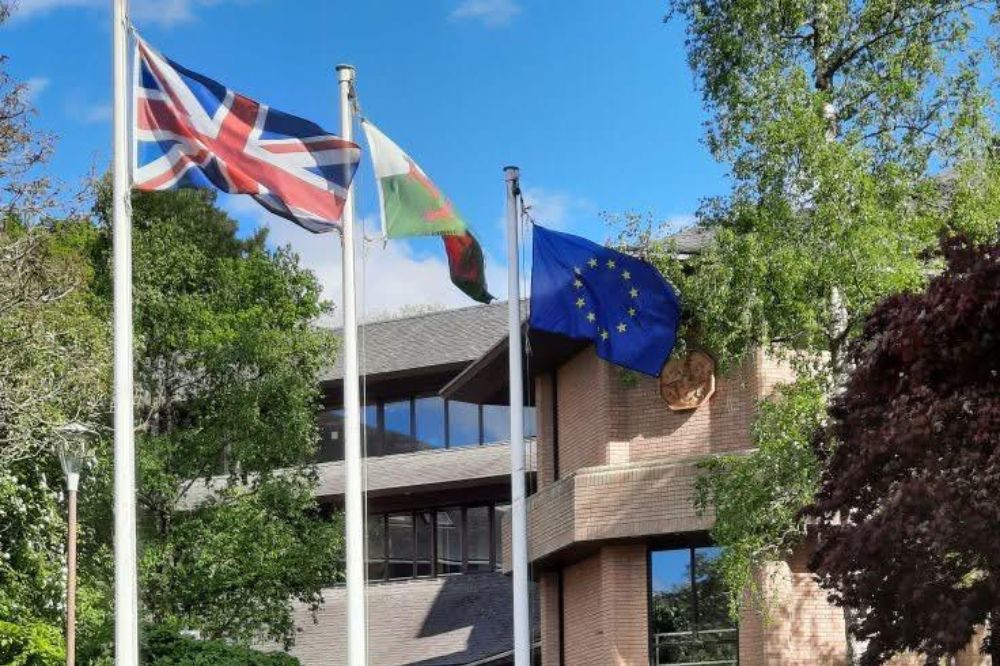
Like Scotland, it would have voted overwhelmingly to remain. This political shock would have revived the question of its future within the United Kingdom. But, Brittany could have also used the Brexit to be a ‘bridge’ between the UE and the UK (as Northern Ireland at the moment).
So, if Brittany had been annexed by England: its history would have been very different.
Imagining a British Brittany is not a mere fantasy. It is a way of questioning our own history, our choices, our losses. For the reality is there: integrated into France, Brittany was stripped of its autonomy, its language, its power. Still, Brittany is alive and thinks about its future in these moments of changes all over the world and specifically in Europe
A British Brittany would probably have obtained advanced autonomy status, whereas today our continental Celtic nation is under a stifling French control. Brittany would have been able to defend its language, its ports, its culture, and its vital interests. But she would also have faced London's centralism, the remoteness of power, and other forms of domination.
Nevertheless, Brittany’s future remains to be written.
It will be.
Support our Nation today
For the price of a cup of coffee a month you can help us create an independent, not-for-profit, national news service for the people of Wales, by the people of Wales.
Get more trusted Welsh news
Choose Nation.Cymru as a preferred source in Google News to see more of our journalism.
