


Opinion
We’re teaching Cymraeg wrong: Is ‘bratiaith’ the answer?
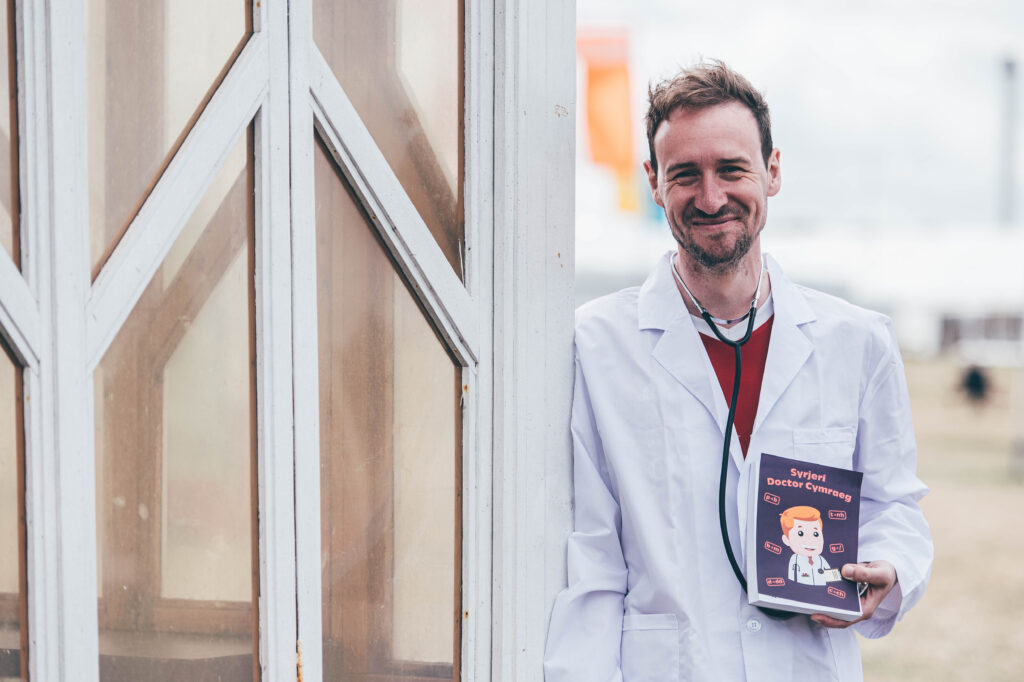
Stephen Rule (Doctor Cymraeg)
A few years ago, a sixth-form student who was learning Welsh told me a story that has stuck with me ever since.
She’d tried to use her Welsh outside the classroom. A perfectly reasonable thing to do after years of lessons. She said something in Cymraeg to someone she knew who spoke it at home.
The response? “We don’t say it like that.”
Now, there are a few ways to read that moment. You could see it as a cultural problem. A bit of gatekeeping. A lack of generosity towards learners.
But there’s another interpretation. What if the student had simply never been taught the kind of Welsh that people actually use? Because if we’re honest with ourselves, that happens a lot.
You’ll often hear the same sentence repeated in Wales. “I did Welsh for ten years at school… and I still can’t speak it.” It’s usually said with a kind of weary certainty, as though the case is closed. But it’s a slightly strange argument when you stop to think about it.
Most of those same people studied maths and science for just as long - if not longer. Yet, very few of them can explain quantum mechanics or solve advanced algebra on a Tuesday afternoon. Nobody treats that as a national failure of mathematics education.
Languages get judged differently. When language learning works, it disappears. It just becomes conversation. When it doesn’t, people remember the awkwardness.
There’s another factor too. Attitudes travel through families. In Coming Home: One Man’s Return to the Irish Language, journalist Michael McCaughan reflects on Ireland’s complicated relationship with its language. At one point, someone involved in Irish-language teaching observes that one of the strongest predictors of a negative attitude towards the language in children is often a negative attitude from parents. Uncomfortable perhaps, but probably true. And it brings us back to the classroom.
An awkward question
I went through this system myself. I studied Welsh throughout my English-medium education schooling. I passed the examinations, did the coursework, ticked the boxes. But, if I’m honest, I didn’t feel genuinely fluent until I arrived at the university. Only then did the language start to feel natural. Only then did it start to feel like something people actually used.
And that raises an awkward question. Why does it sometimes take leaving school before the language finally starts working? I’ve now been teaching Welsh in an English-medium school for over fifteen years. And I’ll be honest about something... It frustrates me.
Not because pupils can’t learn Welsh. They absolutely can. But because the system still too often asks them to approach the language in a way that makes the first steps harder than they need to be.
In many English-medium schools, Welsh is still taught as though the goal is linguistic tidiness. A carefully polished, standardised form of the language. Grammatically neat. Properly dressed. Ready for inspection.
The problem is that this version of Cymraeg - and, indeed, this style of teaching - is often more Victorian than visionary.
It’s the language equivalent of teaching children to swim by explaining the theory of water. Meanwhile, outside the classroom, Welsh lives quite happily in dialects. North-eastern, south-western, the fuzzy bit in the middle. Fast and slow. Formal and gloriously messy. People drop bits. Add bits. Borrow things. Bend things.
Languages do that. All of them. Nobody expects every English speaker to sound like a BBC newsreader before ordering a coffee. But with Welsh, we sometimes act as though the first step must already be the finished product. We quietly hope pupils will sprint before they can crawl, never mind run before they can walk.
The result is a strange situation. Around a quarter of people in Wales can speak Welsh. But a far larger proportion has at least some Welsh from school. That should be a huge advantage.
Instead, many learners come away feeling their Welsh isn’t quite right. Not quite authentic. Not quite ready for public use. So, they stop using it. Which is a terrible waste because the early stages of speaking a language are not supposed to be perfect. They’re supposed to be noisy. They’re supposed to sound like learners.
Bratiaith
This is why I’ve increasingly come to believe we’re approaching Welsh in English-medium education from the wrong end. Rather than starting with the polished version of the language, we should start with the living one. The Welsh pupils are actually likely to hear. Local dialect. Everyday expressions. The things people really say when they’re chatting in a shop or shouting across a football pitch. In other words, what some people dismiss as bratiaith.
That word is often used as criticism. In reality it can be a doorway. A learner who can understand and use informal spoken Welsh has something incredibly valuable: momentum. And momentum is what languages need.
At the moment, though, the system often pulls the other way. Pupils are introduced early on to forms of Welsh that are technically correct but socially rare. Structures that appear frequently in textbooks but far less often in conversation. Then we act surprised when they hesitate to use the language outside the classroom. It’s a bit like teaching someone to drive exclusively on a simulator and then wondering why they’re nervous on an actual road.

If we want Welsh to grow, the early stages of learning need to feel more like the real thing. That means rethinking how we approach Welsh at Key Stage 2 and Key Stage 3 in English-medium schools. It means exposing pupils to spoken Welsh as it actually exists, not just the idealised version found in textbooks. And it probably means something else too. We need examinations that are dialect-ready.
At the moment, many pupils feel they must constantly translate their instincts into something that sounds “correct enough” for the exam paper. That creates distance between the language of assessment and the language of life. A dialect-ready GCSE would recognise that Welsh has always been a language of variety. Not a single uniform voice, but a family of voices.
None of this means abandoning standards. Standard Welsh has an important role. It helps people from different parts of the country communicate clearly. It provides stability for writing and broadcasting. But standards should be destinations, not starting lines. Learners need a way into the language before they’re asked to tidy it up.
And perhaps this is where another small shift needs to happen. It’s just as important to talk about Cymraeg as it is to talk in Cymraeg.
We spend a lot of time encouraging people to use the language, which is absolutely right. But we should also feel comfortable discussing how it’s taught, how it’s learned, and what we want its future to look like.
Because the Welsh language belongs to all of us.
And while many talented people are working hard to support it, it would be optimistic to assume the current system will magically fix itself. Better, perhaps, to keep the conversation going. If we do that honestly and constructively, something interesting might happen.
Instead of producing pupils who feel slightly nervous about their Welsh, we might produce pupils who simply use it. Messily at first. Confidently later. Which is exactly how languages are supposed to grow.
Find out more about Doctor Cymraeg's books and lessons via his website, or follow him on X and Instagram.
Support our Nation today
For the price of a cup of coffee a month you can help us create an independent, not-for-profit, national news service for the people of Wales, by the people of Wales.
Get more trusted Welsh news
Choose Nation.Cymru as a preferred source in Google News to see more of our journalism.
