


Opinion
Westminster has made it clear it won't let Wales or Scotland go – so what now for their indy movements?
Ifan Morgan Jones
Wales and Scotland’s independence movements have so far been operating under the understanding that the union of the UK was a voluntary one.
The challenge for both – and it was enough of a challenge in itself – was to convince over half their populations that independence was the right course of action.
Get that crucial 50%+ of support, win power in their own parliaments so that a referendum could be held, and – voila – those nations would have their independence.
The new book Independent nation: Should Wales leave the UK? by Will Hayward which I reviewed this week proceeds based on this accepted premise.
That is, at some point, if YesCymru and others manage to convince enough people of the need for independence, Wales will have a referendum, which will or won’t lead to independence on the strength of the arguments for and against.
But this idea that nation-states arise due to the desire of their own populations for independence is itself perhaps based on a bit of a myth.
In fact, of the 70 nations that have declared independence from the UK, only one – Malta – won a proper population-wide vote on it.
What tends to happen instead is that the relationship between those running the semi-detached territory/country/colony and that of Westminster just breaks down to the point where maintaining any kind of 'union' is just more trouble than it is worth.
No doubt independence is a popular idea among many, usually the middle classes frustrated by being ruled from without. There is some sort of mass movement involved.
But the idea that the bulk of the population rose up and demanded/voted for their independence tends to be a post hoc story constructed afterwards by the ‘founding fathers’ of that country.
[mid-content-banner]
Impossible
However, campaigners and politicians in Wales and Scotland have proceeded on the basis that if independence from Westminster can be won, it will be won by a public vote.
The UK Government however is now putting that idea very much in doubt.
Yesterday it was revealed that the likely new PM Liz Truss is thinking of moving the goal posts on independence, declaring that now closer to 60% of voters will have to go for ‘yes’ before the result is binding.
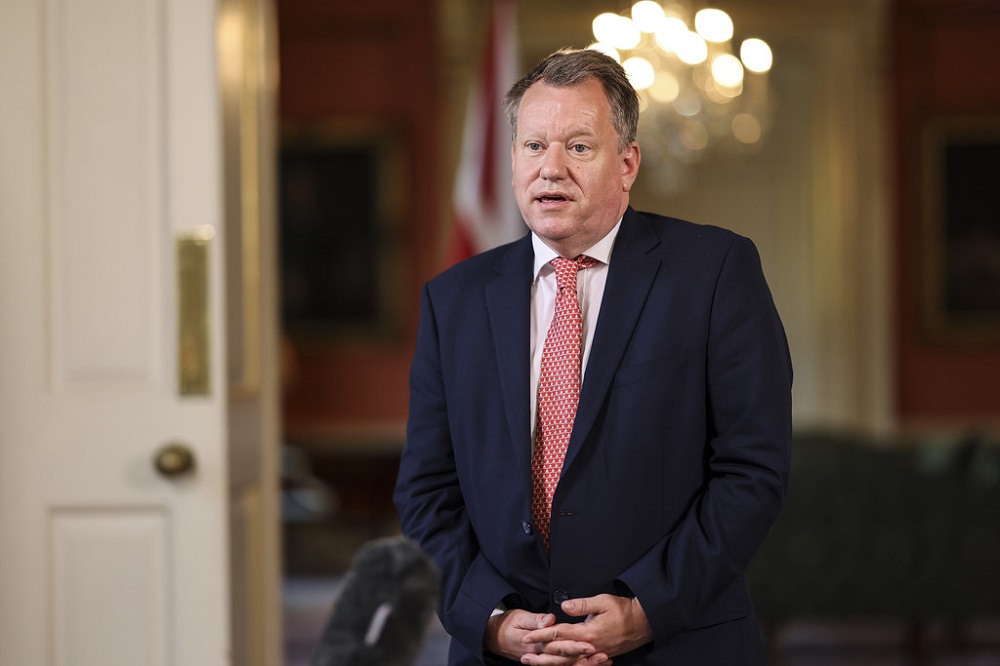
And Lord Frost, who is likely to be handed a cabinet position despite (ironically in this case) being unelected, wants to set the bar even higher still.
There is of course the added hypocrisy that this same government has been arguing that the extremely narrow Brexit result of 52% was the ‘will of the people’ this whole time.
But let’s face facts here – Westminster will just keep moving the goalposts. The closer Scotland or Wales come to independence, the harder it will be made to achieve it.
Lord Frost was at least candid when he admitted in his same article that the aim was to make it “impossible” for the UK to break up because it would be a “humiliation”.
Goal
So, the UK is no longer a voluntary union of nations. Perhaps it was itself just a myth to ever pretend that it was.
Perhaps the 2014 Scottish referendum only proceeded because those at Westminster were convinced it didn’t have a hope in hell of success.
The same is true of the 2016 Brexit referendum. If David Cameron thought for one moment that it would succeed, does anyone imagine that he would ever have called it?
So where does that leave the Scottish and Welsh independence movements?
Well, perhaps it doesn’t actually make that much difference at the end of the day whether the UK breaks up because of a referendum or whether it breaks apart because of a fundamental collapse in the working relationship between the nations.
Because the goal of the independence movements is to convince people that a) their nations exist as a separate political and cultural unit in the first place, and b) that they’re capable of self-governance, c) people won't be hugely materially worse off as a result.
Essentially, all YesCymru and YesScotland and others can do is keep going, keep pulling up the tent pegs of the union while putting down their own, and wait and see if a storm blows through.
Because the irony is that the more it has to be made clear that no one can leave the UK, the more people will start to feel trapped within it.
That in itself could facilitate a spiralling breakdown in the relationship between the nations – leading to the exact sort of crisis that history tells us tends to lead to independence after all.
Support our Nation today
For the price of a cup of coffee a month you can help us create an independent, not-for-profit, national news service for the people of Wales, by the people of Wales.
Get more trusted Welsh news
Choose Nation.Cymru as a preferred source in Google News to see more of our journalism.
