


Opinion
Welsh nationalism needs to embrace and redefine Britishness to win
Jonathan Edwards
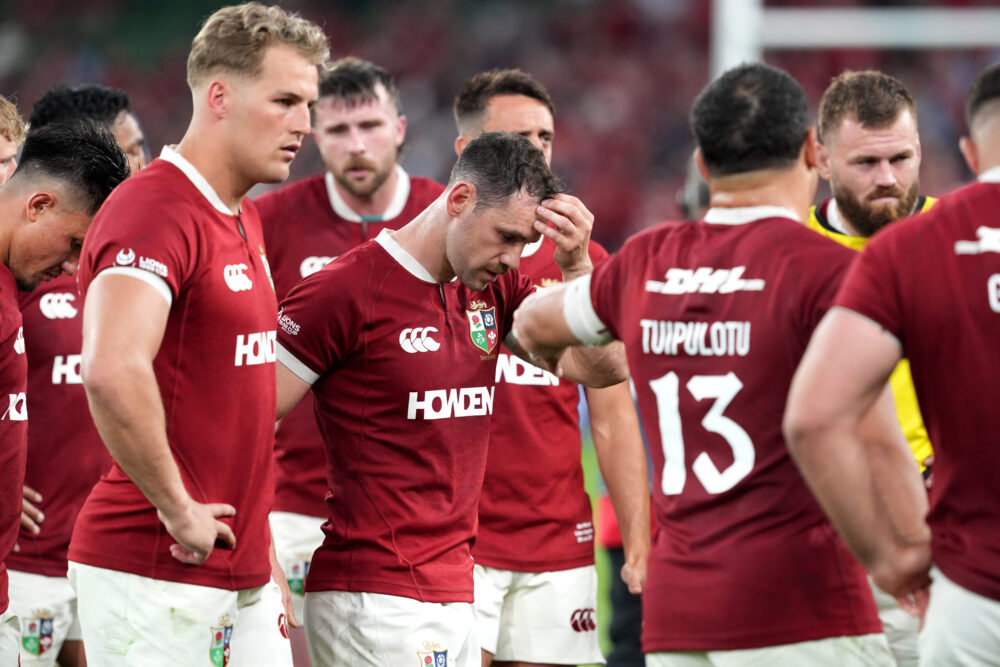
A British and Irish Lions rugby tour always used to stir up mixed emotions for me as a Welsh nationalist once I became politically active.
My politics was very much driven by considering everything Welsh as good and conversely anything British as bad.
However, the Lions concept of four nations coming together challenged that notion, especially as skilled unionists such as former First Minister Carwyn Jones would often equate the Lions as an example of his vision of a reformed British state based on a partnership of equals in a confederal structure.
The argument put forward by Mr Jones was very persuasive but in fact wasn’t quite true as one of the Lions nations was an independent country, with 26 of the 32 Irish counties that make up the Irish national rugby team being in the Republic and not the UK.
[mid-content-banner]
Embodiment
Unionists proclaim the Lions as the embodiment of the UK state, while of course it is not: it is the rugby side of the British Isles. The British Isles and the British state are two different entities and, as time has gone by, I have concluded that Welsh nationalists are missing a trick in not embracing our common British identity and redefining it to serve the aim of achieving Welsh political independence.
The political strategy of polarising Welshness against Britishness, amplified most vividly by the famous ‘Viva Gareth Bale’ football chant sang by Welsh football supporters has undoubtedly served a purpose in the social media age we live, where electoral politics is far more about energising bases than triangulating opponents.
The last census however indicated that only 55% of the people of Wales identified as Welsh. While in party electoral politics this provides enough people for Plaid Cymru to operate on when energising the base, especially at a Senedd election where the turnout is small and those participating are more likely to be Welsh identifiers, in the context of a referendum the Yes campaign would have to be far more nuanced.
[lower-mid-content-banner]
Louis Rees Zammit
The personal attacks on Louis Rees Zammit this week for his photo shoot with a Union Jack flag indicates the problems that traditional nationalist strategies face. (Before getting accused of hypocrisy, I got myself into plenty of trouble during my time as MP with stupid social media posts.)
To compound the difficulties the Yes campaign will face in the future, statistics from the Office for National Statistics indicate that each year an average 59,000 people move from England to Wales, while 53,000 move the other way. While population flows are complex and not straightforward, it’s obvious that a Yes campaign aimed at polarisation based on identity is probably doomed to failure.
Speaking to the converted in social media echo chambers is easy, but to win a referendum on independence the Yes campaign would have to convert a huge chunk of our fellow citizens who do not consider themselves to be Welsh, despite the deliberate attempt to define our national identity on a civic basis.
Welsh nationalism should go further and embrace the common identity of the people of the British Isles while directing its critique at the failure of the British state.
When I developed a political strategy based on the hashtag #westminsterisntworkingforwales it was very much to pivot the vanguard of attack towards challenging the legitimacy of the British State as opposed to deconstructing British identity and anti-Englishness.
Anglophiles
Instead, Welsh nationalists if they were clever should be the biggest Anglophiles on the planet as a part of the process of creating a new common British identity where the people of Wales, Scotland, Ireland and England face the future as distinct and genuine equals.
An independent Wales would need the closest possible relationship economically with our neighbours to the west and east. We would also need to work together on matters such as defence and foreign policy. There is a strong case for a common currency with England and Scotland: the creation of a Sterling Currency Zone, as I labelled it, with appropriate political accountability by the Central Bank to the constituent political members.
I was personally relaxed about leaving the fight about the Head of State for another day, partly so as as to not immediately turn off royalists.
In embracing Britishness and the need to redefine it as something beyond the structures of the British state, the Yes campaign will not only begin to answer some of the questions of how an independent Wales would work with our neighbours, but also expand the appeal of independence to those who will need to be persuaded to win a vote. It will also pose a challenge to Unionists, that for the British state to survive it will have to reform decisively by becoming far less centralised.
British identity
British identity is the Unionists’ strongest political card, especially as Welsh nationalism polarises against it. Negate its impact on the political debate and Unionist politicians will be left with the UK state. Stripped of being the embodiment of British identity, what would be the point of Westminster?
In my periodic discussions with indy-sceptic fellow citizens, there is little love for Westminster and the British establishment, which seems increasingly hysterical – witness the response to the performance of Kneecap at the Glastonbury festival as a case in point.
The attacks on the band, the festival and the BBC have been off the wall delirious. Personally speaking, I would be worried if the youth of today had been anaesthetised to such an extent that they weren’t voicing their concerns at events in Gaza. Festival organisers and the BBC must resist pressure to censor. Those leading the charge on the right in faux outrage aren’t worried about the lyrics of ‘Recap’, it’s about cultural control and very North Korean in nature.
Returning to the rugby, while I consider the Welsh tour of Japan as the most important rugby event this summer, I will be cheering my fellow Amman Valley citizen Jac Morgan, the sole remaining Welsh tourist, and the rest of the Lions squad in Australia.
For me, the Lions epitomise a future political structure for the British Isles where four independent countries will chart their own path in the world, but also must work within common structures to replace the British state when time is eventually called on Westminster rule.
Jonathan Edwards was the MP for Carmarthen East and Dinefwr 2010-24
Support our Nation today
For the price of a cup of coffee a month you can help us create an independent, not-for-profit, national news service for the people of Wales, by the people of Wales.
Get more trusted Welsh news
Choose Nation.Cymru as a preferred source in Google News to see more of our journalism.
