


Opinion
Welsh Labour demand power but dodge scrutiny. They can’t have it both ways with devolution
Theo Davies-Lewis
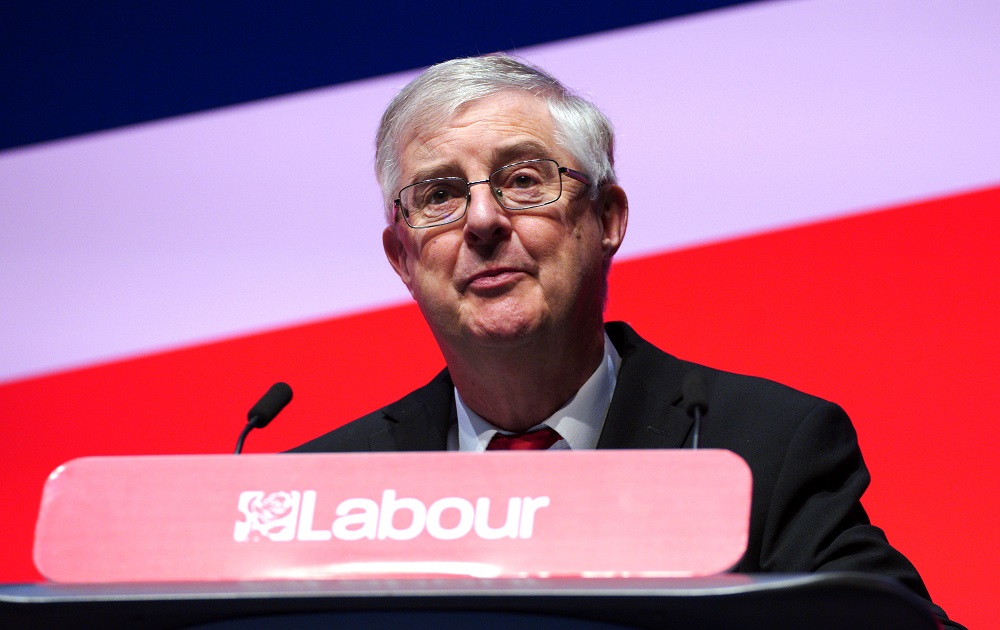
Don’t be fooled by Mark Drakeford. An eminently polite and humble exterior masks a political animal far removed from his academic stereotype. But his comments last week in the Senedd exposed how even the most skilful and considerate leaders can miscalculate (and possibly, misspeak) on the issue of the day. The First Minister insisted the world, including a campaign run by bereaved families, had “moved on” from a Wales-specific inquiry into Covid.
And then – in an instant – came the visceral fallout. The Covid Bereaved Families for Justice Cymru (CBFJC) took to social media: it was “not true”, the group said, that they were no longer seeking a country-specific inquiry and questioned whether Drakeford had officially supported their request to obtain core participant status in the UK-wide probe (which was eventually secured.)
Plaid Cymru and the Liberal Democrats said that comments made on the floor of Y Siambr “misrepresented” the group. Welsh Conservatives say the record should be corrected or the First Minister’s comments clarified.
Families, businesses and communities will reel from the pandemic for years to come. They are rightly aghast as Welsh Labour dodge scrutiny of their decisions during a period which defined people's lives. Yet this column is not about Covid exclusively. Instead, it frames the paradoxical principles that Welsh Labour espouses: one moment they “stand up” for the Welsh public; the next they are abrasive (alarmed maybe?) when the lens shifts from Westminster to Wales.
[mid-content-banner]
Answers
But first a word on inquiries. Whichever – British or Welsh – would be better placed to tackle the complexity of policy and emotion is ultimately subjective, at least in political terms. Members of CBFJC are however right to highlight concerns about the degree to which Welsh voices will be heard, and how in-depth issues in this country will be investigated, through the UK-wide probe which has opened.
And if the case for a four-nation investigation is so strong, why has the Scottish government set up its own independent inquiry? Proponents of a UK-only approach cite the interconnected nature of scientific advice and associated decision-making throughout the pandemic. Which is a fair point. But remember we were essentially told for two years by the government that “Wales is not England” in terms of public health policy and economic support.
It’s ultimately about principle, as summed up by the CBFJC: “We believe that decisions made in Wales should be scrutinised in Wales.” So do vast swathes of the public, I imagine, and indeed many members of the Senedd across the political spectrum. Some opposition politicians will support an inquiry in the hope of inflicting damage on the Welsh government, even the framework of devolution itself.
The majority, by contrast, share the simple principle of families that have lost loved ones during the pandemic: the quest for learning and answers. The Welsh government was tested to its limits. Why wouldn't we want to understand what happened in our own context? Wales is an old nation that has recently become a new democracy. Do we not want to act like it?
Growing up
Deep down, many Labour politicians must feel awkward. Their party accrued unprecedented political capital and electoral success differentiating themselves from Johnson’s haphazard, obfuscating government. After national and local election triumphs, they are steadfast in their call for an expanded Welsh parliament with more politicians that will apparently lead to… better scrutiny of decision-making. Further powers (justice, the Crown estate, you name it) should also be moved from London to Cardiff, the First Minister says, while measures such as the Internal Market Act promoted by the UK government have been challenged aggressively in the courts.
Welsh Labour aren’t necessarily wrong on these issues, though their sheepishness on the Covid inquiry is a sore anomaly in an otherwise dominant two years.
Politicians cannot have it both ways. A worried and dismissive approach to scrutiny is unbefitting of a party that relishes in its natural seat of government. A seat, one could argue, which was only secured for the next five years because of the pandemic’s influence on the political landscape and in particular public opinion of Drakeford.
For months we have been told that politics is different in Wales, particularly in the wake of the co-operation agreement between the government and Plaid Cymru. But the last week has only fed into the work of campaigners who resent devolution, desperate to paint Cardiff Bay as a ‘bubble’ with a government that misunderstands the daily Welsh experience.
In this instance, they would be right. The pros and cons of a Wales inquiry are fine to debate but the principle – "decisions made in Wales should be scrutinised in Wales" – is hard to rebuke in any circumstance. Insensitivity is also not a good look for leaders, nor is appearing shifty.
Commentators, and most importantly members of the public, thought Welsh governance had finally come of age during Covid. Clearly it still has some growing up to do.
Support our Nation today
For the price of a cup of coffee a month you can help us create an independent, not-for-profit, national news service for the people of Wales, by the people of Wales.
Get more trusted Welsh news
Choose Nation.Cymru as a preferred source in Google News to see more of our journalism.
