


Opinion
We should tackle over-tourism rather than get angry about cancelled new roads
Huw Prys Jones
For any government who may wish to cancel a spending commitment on environmental grounds, it’s clear that COP26 offers an ideal opportunity to do so.
One does not have to be unduly cynical to see the timing of the announcement to scrap the Llanbedr bypass project in Gwynedd in that light.
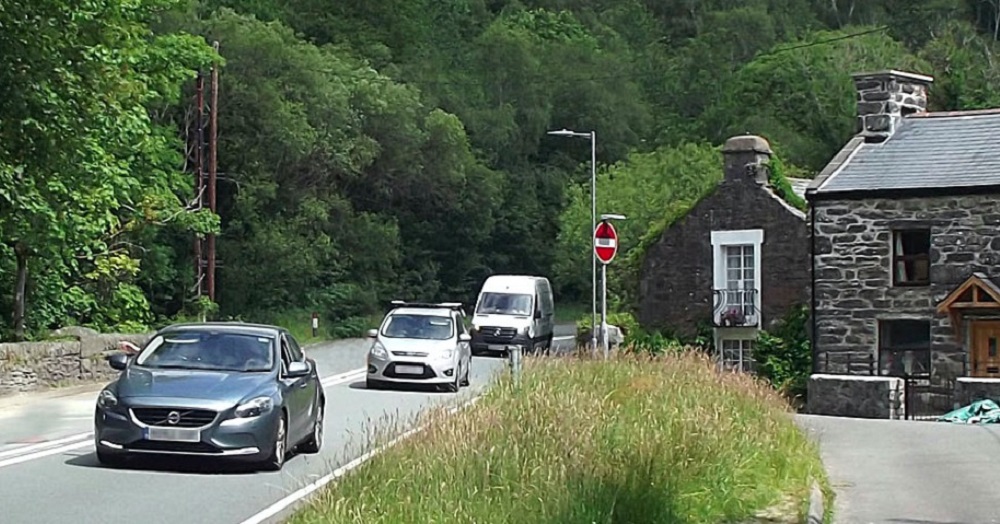
This, however, does not mean that the Welsh Government’s decision was wrong. They were right to put the brake on new road projects, and it is difficult to see how Llanbedr, which after all is not on a key transport artery, deserved to be treated differently.
The predictable reaction from local politicians has been one of anger and disappointment – and this is understandable to an extent. They obviously wish to absolve themselves from any blame for failure to deliver such a project. And they would be entirely justified to demand that any money saved must be spent on sustainable travel in rural Gwynedd, rather than Cardiff, for example.
However, before they throw accusations of ‘betrayal’ on the Welsh Government, they really need to be taking a closer look at decisions that are taken much closer to home.
[mid-content-banner]
Massive expansion
Not far, as the crow flies, from Llanbedr is Hafan y Môr holiday park on the southern coast of the Llŷn peninsula, where permission was granted this week for a massive expansion. It will bring the total number of caravans there, in an Area of Outstanding Natural Beauty and one of vital significance to the future of the Welsh language, to 1,300.
Whilst there is wailing and gnashing of teeth at summer gridlock problems in Llanbedr, no-one seems to bat an eyelid when the seeds of future traffic jams are sown a little further afield.
It is high time that we take a more holistic and sustainable approach to traffic problems in rural areas. And look beyond the condition of our roads as the only cause of the gridlock.
Over the past few months, much of rural Wales has experienced a summer of hell, with local communities blighted by so-called ‘staycations’. (It remains a mystery to me how can any self-respecting Welsh person tolerate the term ‘staycation’ in the context of tourists from England holidaying in Wales – but that is another question.)
As it happens, the Meirionnydd coast is a stark example of the damage such excessive development can do to the fabric of our local communities, and of course, to the quality of life of those who live there.
If we want to restore peace and calm to our rural villages, we really must be looking at the root of the problem instead of seeking quick fixes through ever wider roads.
Excessive tourism
Any objective observer will have to admit that excessive tourism was a major problem this year in many parts of Wales, including some of our most cherished and precious areas such as Eryri and Llŷn.
Sooner or later, we will have to grasp the nettle and face up to the fact that the volume of tourists coming here is a direct threat to our environment, our heritage and our communities.
What we need is a sustainable tourist industry that serves our communities instead of one that controls and dominates them – and that must inevitably involve fewer tourists.
For that to happen, that there must be a presumption against any increase in accommodation, or any additional attractions, in sensitive areas if we wish to safeguard their character and distinctiveness for future generations.
Councillors will undoubtedly argue, as they did at Hafan y Môr, that their hands are tied by national policy in many planning decisions. This may be true, but when it came to the issue of Llanbedr bypass, local political leaders did not hold back in their criticism of the Welsh Government.
It would surely be far better if they channelled their energies into challenging the outdated national planning and housing policies that are failing our rural areas so miserably.
Global responsibilities
The COP26 in Glasgow should surely be an inspiration to us all to widen our vision beyond parish pump politics and rise above petty point-scoring between political parties.
It is time to think big – and from a new perspective. It is imperative that we look to long-term solutions rather that politically expedient quick fixes. We must ask ourselves what needs to be done to protect our precious environment, landscape and heritage for future generations – and act accordingly.
This must include urgent and decisive action against excessive tourism – especially in our AONBs, National Parks and any other areas of significance to our heritage.
Responsible global citizenship demands a new approach and new solutions for our rural communities. Anything less would be failing in our duties to future generations – which would be the worst betrayal of all.

Support our Nation today
For the price of a cup of coffee a month you can help us create an independent, not-for-profit, national news service for the people of Wales, by the people of Wales.
Get more trusted Welsh news
Choose Nation.Cymru as a preferred source in Google News to see more of our journalism.
