


Opinion
Wales stands on the brink. Our government's decisions now will shape our country for years to come
Theo Davies-Lewis
Covid-19 has presented the most serious challenges to people and governments across the world, including us in Wales. Not since the Spanish flu have we seen such a global pandemic wreak havoc on our societies and cause harm to our leaders – and impacting every single one of us along the way.
But the situation in Wales feels different. Different to the situation faced by the rest of the UK, and even further afield to our neighbours in Europe.
We are vulnerable – demographically, economically and politically – when it comes to mitigating the effects of this pandemic. From Pontypridd to Bangor, Aberystwyth to Cardiff, Llanelli to Brecon, we have all seen the impact of this pandemic on our cities, towns and villages.
This is why the next few weeks will shape Wales for years to come. Our communities, our economy, and our own political system is depending upon the response of our Government – and I mean our Welsh Government – to ensure Wales is able to emerge from the current crisis in a place to rebuild the damage that has already been caused.
Impact
Earlier this month it was reported by WalesOnline that people in Wales may be more at risk than others in the UK.
Many factors reportedly come into play to make us vulnerable; one of the most shocking is that some respiratory conditions are much more common in our deprived areas due to higher pollution levels, greater levels of smoking, and more exposure to pollutants in certain industries.
Wales has some of the poorest places not just in the UK, but across Europe. The environmental, demographic and, despite being ignored too often, economic issues that have slowly eroded our towns and villages mean that the consequences from this crisis have the potential to be long-lasting on people’s health and wellbeing.
So, the decisions taken by the Welsh Government – as well as future deliberations on relaxing restrictions at the start of May – will first and foremost impact people, families, and communities. It is a statement of the obvious: never before since the beginning of devolution has a crisis been a matter of life and death.
[mid-content-banner]
Farms and towns
It also happens that some of the worst-hit areas of society globally are what forms Wales’ DNA: rural communities and former industrial towns.
Only this week did reports surface that the livelihood of farmers has been tested due to the pandemic. The Welsh economy is dependent on its farmers. You can then understand the distress of the farming community this week when they found that they were not eligible to access the Economic Resilience Fund launched by the Welsh Government.
It is frankly astonishing that such an important part of our economy – not to mention our cultural footprint and history – has been overlooked in the most comprehensive support package offered by our government.
But such abandonment is only rivalled by areas such as the Valleys in the south, where most of my family can trace back its roots for generations, which is now teetering on the brink.
There are some towns, like Treorchy, that are facing uncertain futures. An ITV report this month highlighted how this uncertainty is risking their chances for financial survival. Devastated by storms Ciara, Dennis and Jorge in February, it is not for the first time that these communities have been overlooked by the government.
But this crisis is different to anything they have faced before; whatever these areas had left after the closure of the mines, the acceleration of an unforgiving and competitive globalised economy, and the centralisation of the financial system in the UK, is now at risk altogether.
Decision-making
The Welsh Government – which at times has been an afterthought for most of the people it serves – has now found itself scrutinised for decisions to support these communities like never before.
From the existential crisis faced in areas like Gwent, where the trajectory of infections was judged to be similar to those in Italy, to the saga involving a pharmaceutical company who denied that they had committed to providing tests for our nation, serious questions have been asked of our First Minister and his response to the crisis.
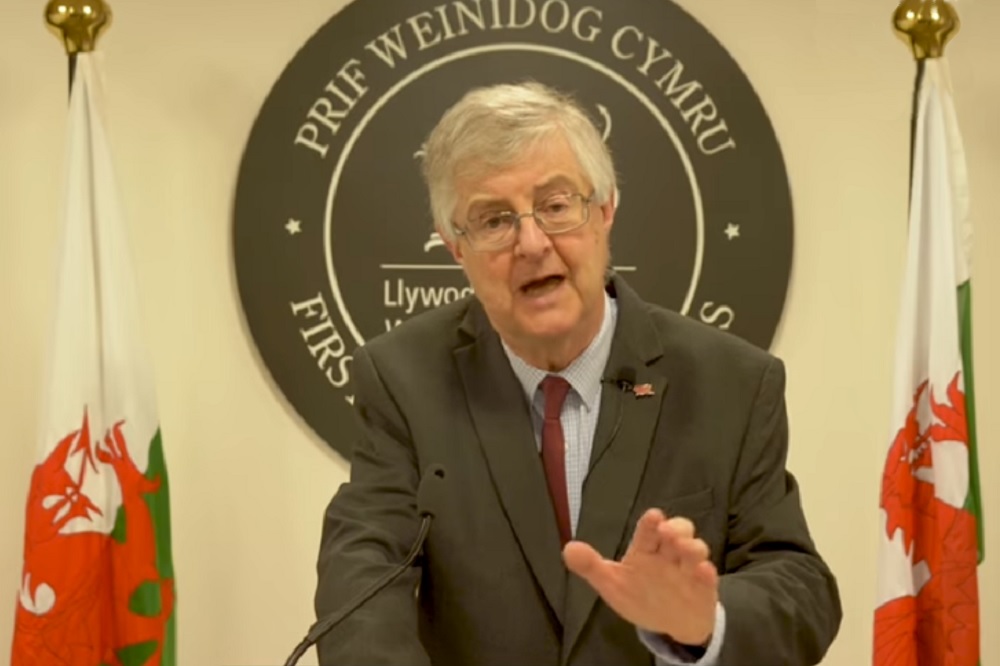
To mitigate the impact on communities, the First Minister must make the best decisions for the people of Wales when it is needed – in spite of actions elsewhere in London or Edinburgh. For our political system, this decision-making over the next few weeks will also influence how the public view the effectiveness of the Office of the First Minister of Wales, as well as its current holder.
For most ordinary people – like my neighbours and friends in Llanelli – whoever is making the decision for them is not what worries them at the moment. They just want it to be “right” decision. But we must face up to the reality that Wales, and by default our devolved administration, has not been the primary source of information during the pandemic when it has needed to be.
Of course, the First Minister has had to battle to make himself visible to the Welsh public; even as far back as late March, BBC Wales had announced cuts to its breakfast bulletins, while the UK media has failed to give Wales sufficient attention in its print and broadcast platforms.
Nevertheless, whatever the circumstances, the Welsh Government must stamp its own authority on the response across the country. While the First Minister has suggested he is prepared to take a different route to others across the UK, in the next few weeks we will see whether the Office of the First Minister can act effectively in times of crisis; something it has not been tested with since the position was established.
With any policy dithering or inaction, the Welsh Government and the Office of the First Minister will be undermined. Alongside the damage to our communities and impact on our economy, this would have extreme consequences on the Welsh democratic process, creating further disengagement with a political system that has already suffered following the Brexit vote and the subsequent centralisation of power in London.
Responsibility
Such an impact on Welsh politics is not so far-fetched, with a recent YouGov poll predicting that Mark Drakeford, as well as many of his Labour colleagues, would lose his seat in next year's election.
It is clear that many corporate companies will be judged on their response to Covid-19, but the same is also true for politicians. Mark Drakeford has already admitted that Wales' testing system has not "been good enough", and opposition parties have been circling his government for weeks on its transparency throughout the process. And so they should.
For all the responsibility on our leaders’ shoulders, they have a duty to be held to account and answer for the decisions they have made. Boris Johnson is being treated in such a way, and the same should apply to our First Minister.
But there are signs that Drakeford realises the severity of the situation and his role to play.
From his lengthy appearances on television programmes last weekend, it is evident that the First Minister knows he must be as visible as possible to the public. He should also make use of his public health experts who themselves can reassure the public in such a crisis. Above all, as Boris Johnson has so often wanted to speak for Britain, Mark Drakeford must now realise the grim situation here in Wales needs a leader who is ready to lead decisively for the government.
Survival
There will inevitably be challenges we must face as the United Kingdom in the weeks ahead. A “four nations” approach has been adhered to so far, but that is likely to be broken next month with the various peaks across different regions of the UK.
Having already faced challenges, and experienced failures, with virus testing and PPE supplies during this pandemic, the Welsh Government cannot afford to be complacent again. These next three weeks of lockdown, and the decisions taken next month, will be crucial for Wales. It is no exaggeration to say that entire communities are depending on it.
Of course, in the best of times, we do not expect our governments to be perfect. But in the next few weeks the Welsh Government must get as many decisions right as possible.
The health of our people, the resilience of our communities, and the survival of our economy depend on it.

Support our Nation today
For the price of a cup of coffee a month you can help us create an independent, not-for-profit, national news service for the people of Wales, by the people of Wales.
Get more trusted Welsh news
Choose Nation.Cymru as a preferred source in Google News to see more of our journalism.
