


Wednesday, 15th July 2026 Cardiff 17° · Clear sky
NationCymru A news service by the people of Wales, for the people of Wales.

Opinion

Is it time Wales had a President?
By NationCymru
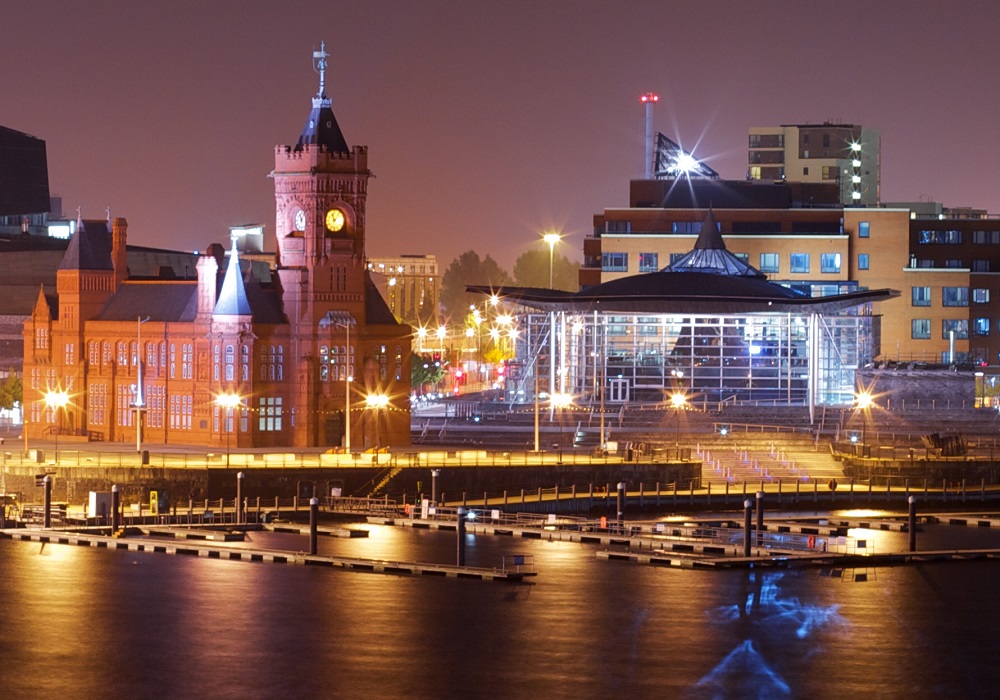
Peter Birkinshaw (CC BY 2.0)

Ifan Morgan Jones

Welsh politics has a visibility problem. Survey after survey show that few can name more than a handful of politicians and most couldn’t tell you what powers the Welsh Assembly has.

As a result, Wales has what has been called a ‘democratic deficit’. The majority can’t make a fully informed choice whe voting, because they don’t know who is in charge of what.

Most people think, for example (according to a BBC/ICM poll conducted in 2014) that the UK Government oversees health and the Welsh Government in charge of policing.

The lack of a strong Welsh media usually gets the blame for this. And that is certainly a factor, something voluntary alternative news sources such as Nation.Cymru, Senedd Home and Desolation Radio hope to address.

But a piece of research published last week shows that it isn’t just Wales’ AMs which are largely anonymous – London has the same problem.

This is notable because on paper London has what Wales lacks – a vibrant media that keeps the population informed about what its politicians are up to.

This suggests that it may not just be a lack of media that is at fault here.

Part of the problem surely is that weak devolved legislatures lack political dynamism. This is particularly the case in Wales where the same party has been in charge for 18 years.

There just isn’t much of what was once derided as the ‘Punch and Judy’ of politics to maintain the viewers’ interest.

But, of course, devolution in London does get a lot more attention than Wales. Because one thing London does have that Wales does not is a separate and directly elected executive branch.

They have a Mayor. And I’m sure the majority not just in London but the UK would know that the current Mayor is Sadiq Khan, and would probably be able to name both his predecessors too.

There’s nothing unusual about this system where the legislative and executive branch are elected seperately. It’s used successfully in autonomous governments around the world.

The United States is a good example of such a federal system at work. Every state has a semi-autonomous legislature and a governor.

Australia is another good example. The other ‘south Wales’, New South Wales, has a governor as well.

And Catalonia, as we’re very aware at the moment, has a President who is the focus of great public attention.

There are three main reasons why I think Wales should emulate this system:

  1. Public interest

A single president-style figure is very good at maintaining the public’s interest.

The election to choose a Mayor of London gets a lot more attention than any other in the UK bar a General Election, and that’s because it’s a clear clash of personalities.

As any novelist or journalist will tell you, the best stories are about people. This is impossible when you have a cast of 60. But a presidential election puts the focus on two or three individuals.

It is also simpler to understand. The individual with the most number of votes wins. PR and STV may be fairer, and should remain in place for the legislative branch, but they’re difficult to explain to the lay voter.

  1. Conflict

The other advantage, which becomes apparent when we look at London’s Assembly and the United States’ state governors, is that the political affiliation of the executive and legislative branch can often be very different.

Boris Johnson faced an assembly where Labour was in power. In the United States, a Republican such as Arnold Schwarzenegger could get himself elected in deep-blue California.

The differences in political allegiance makes politics in these areas much more unpredictable and interesting, and ensures that no single party can rest on their oars without any real opposition for decades.

Even when the governor and senate belong to the same party, the system creates friction as they attempt to pull the agenda in different directions.

It would also keep politicians themselves on their toes. They would know that one day they may want to run for President, and that their political decisions would be pored over. There would be nowhere to hide.

Perhaps the reader won’t be particularly keen to see controversial ‘celebs’ such as Johnson, Trump or Schwarzenegger in positions of power in Wales.

But the choice of President would of course be up to the people of Wales. And if they choose a politician from outside of the current consensus, with very different ideas about how things should be run, all the better.

  1. Geographic balance

One other possible advantage of having a separate legislative branch is that it could be an opportunity to redress the north-south, east-west balance in Wales.

A President would be accountable to voters in all of Wales, and would know that every vote counts. They wouldn’t be able to depend on electoral fortresses in any part of the country, or ignore counties where they had little hope of winning a seat.

The same BBC poll mentioned earlier showed that 31% thought that the south-east had profited most from devolution, while only 1% thought that north or mid-Wales had done best.

The legislative branch could be located somewhere in the north of Wales to counterbalance the Cardiff-centric nature of the Assembly.

Attention

Last year’s EU referendum showed how dangerous it can be when the public are ill-informed about the work a legislature does, or feel that it’s not directly accountable to them.

A directly elected Welsh executive branch would increase public interest in Welsh politics, as well as increase accountability. It would energise voters, activists, and politicians themselves.

There is nothing unusual about this idea – it is used successfully throughout the world, including within UK devolution.

We can only do so much about the lack of media attention for devolution in Wales. But there’s nothing stopping us from doing all we can to ensure that Welsh politics is interesting enough that people will want to pay attention to it.


Support our Nation today

For the price of a cup of coffee a month you can help us create an independent, not-for-profit, national news service for the people of Wales, by the people of Wales.

20 comments

Benjiman L. Angwin

Ifan, Dwi'n anghytuno. As someone of American origin, choosing a Presidential system over a Parliamentary system is a terrible idea. Especially for Cymraeg. Concerning a few of your points: Establishing a President. - No. What it would do overtime is change psychology towards a French/American slant (which is bad because Parliamentary democracy works better). It is also a reaction against Parliamentary systems in favour of Presidential systems (see France), which do not bode well for minority languages. Every major decision in our democracy must consider the effects upon Cymraeg hundreds of years from now. The slow-moving nature of Parliamentary systems allows minority nations to adapt. Public Interest - If you want to change the structure of a democracy merely to appeal to public interest, democracy itself is a secondary consideration. If people do not take an active interest, that is unfortunate, but that is also their democratic choice. What you suggest fosters a carnival, entertainment atmosphere, which I think is unhealthy. Conflict - Again, unhealthy. Wales often has an obsession with comparing itself to England and seeking validation of its existence through that comparison. London is one of the world's great mega-cities; and we, being a part of the British state are within the sphere of that mega-city. Even the Republic of Ireland is within the sphere of London's influence. There is no conflict here. London is the centre of power on these islands, independence or not, and that will not change anytime in our grandchildren's grandchildren's lifetimes. Sadiq Kahn is well-known because he is a key player near the centre of our political ecosystem's centre of power, and for no other reason. There is no conflict within the Parliamentary system for Wales; a Parliamentary system has brought us devolution and enabled the birth of nationalist, green and socialist parties. The only conflict which exists is that expressed by those who consistently do not obtain power, and those of them who feel bitterness because of their consistent lack of power. Geographic Balance - It took over 100 years to acquire devolution. That in itself is a geographic rebalancing of epic proportions, and the last 20 years is nothing. It will take us centuries to understand what the 1997 vote on devolution means. A 'legislative' branch located in another part of the country would foster the Welsh Government's disunity and open it up to attack upon the Parliamentary system of government. Devolution is not old enough to consider such changes. We still do not yet know what devolution means; it is too young. In another 100 years the Geographic Balance may very well be an interesting question. After we have seen what devolution actually means. Labour has never lost power; we cannot take the first steps which eventually lead us to consider such questions until perhaps a second election after it has lost power. Attention - Somewhat true, but I am a Parliamentarian, after seeing the failures of the United States. Many, many Americans do not know the name of their state governor. The problem is that America is not Parliamentary, but Republican Federalist, with its microscope upon carnival entertainment as the focus of power rather than electoral processes and the sovereignty of Parliament. Here, devolving darlledu (broadcasting) is a way to foster attention. It is a far less disruptive move then establishing a 'President', and a far more positive a consideration. It is certainly less Republican. Presidential Republics do not favour minority languages.

Reply
ERNEST

Yes it may bring more public interest into Welsh issues. Most presidents are either elected in a 2 round election such as in France/Russia or you may use the alternative vote method. Should note if you use FPTP you may end up with a president representing only a small minority of voters. The second issue is that of centralisation of power, so we would need a written constitution (amendable by 2/3 of parliament or referendum?). Another, system of checks could be a 2nd chamber with delegates from the council areas or a German type federal system, This may not attract public attention in the short term, but would address the problems of centralisation of power. A federal system will still require a written constitution. Any other opinions.

Reply
John

Without a mature polity a president would make us look even more stunted than we do already.

Reply
Peter Gilbey

Interesting idea. I must say, there are many excellent candidates for leader here in Wales, who will *never* get a decent opportunity because they are not a member of the Welsh Labour Party.

Reply
Red Dragon Jim

Catalonia's President is not separate to the legislative branch sorry. He is the President of the Generalitat (government). He is elected by parliament. It is almost exactly the same role as a Welsh or Scottish First Minister. The London Mayor is a valid comparison. Wales could elect its own President who is scrutinised by the National Assembly. It could be a symbolic role rather than one of actual governance.

Reply
Cymru Llundain

I feel that perhaps this elected figure should maybe be called Tywysog Cymru instead of President. It would have more symbolic meaning in taking the role of Prince of Wales back from the English monarchy. The Tywysog would be no different from a president, but this name would be more meaningful for a Welsh leader. Just a thought

Reply
sibrydionmawr

That sounds a pretty awful idea to me, but then I think having a government is a pretty awful idea in the currently undemocratic way we have it now. But I would far rather a Llywydd than a Tywysog any day. It would at least spare us the trouble of eliminating royalty.

Reply
Tame Frontiersman

A directly elected head of government rather than one elected by AMs may well indeed stimulate greater public interest in the election process and subsequent performance of the government of Wales. It should also open up the field and encourage new entrants - political parties and independents. However: It is not guaranteed to raise the bar for political debate. Even though the system of directly elected Mayors is now established and the head of government in Guernsey (elected by States' Deputies) holds the official title “President of Policy and Resources Committee” or “President” for short, and there’s been a trend for UK Prime Ministers to behave more presidentially, the concept of an executive presidential style system of government will seem “un-British” to many in these lands of the “Mother of Parliaments” and therefore unlikely to receive the consideration it might deserve. Do we really want to “fix” devolution? Is it still a route to independence for Wales or an institution for managing British decline? If we would rather have independence might not the title of “President” imply a republican constitution in waiting, which might enthuse some, but given the popularity the House of Windsor has been enjoying, turn away others?

Reply
John Sweeney

Every country in the world has a democratic deficit as you define Every country in the world will always have a democratic deficit because the majority of the public make the decision—and it’s not a bad one— to leave politics to those who enjoy it and to engage with the process only at election time or when some issue captures their imagination By all means try to engage more people but don’t expect to suddenly inspire a surging dynamic democracy full of engaged citizens Life Just isn’t like that and that is probably a good thing

Reply
SPJ

A simple way of raising the profile of the Welsh Government and the National Assembly would be to provide the First Minister with an official residence: the First Minister of Scotland has Bute House and the Prime Minister of the UK has Downing Street and Chequers. At present the First Minister of Wales often entertains visiting dignitaries in what looks like part of an IKEA showroom.

Reply
Jonthan Edwards

Benjamin L.Angwin, we need a discussion here. I have lived for many decades under the UK system. I studied it at university and practised its laws for decades more. It is crap, and here's why. 1. It is not written down. Are referenda binding or aren't they? What is the point and status of the "Sewel Convention" when you need it to protect Wales? 2. It does not protect Judges, so they are continually browbeaten and cowed. Though not all of them. 3. It includes a Monarchy, which has enormous "soft" power ie is unaccountable. It is also a distraction from the hard business of genuine politics, so a lot of British never grow up politically. 3. The House of Commons is a single chamber and an elective dictatorship. We are Bicameral in theory only. No check or balance, unless we're lucky. 4. We have no separation of powers, leading to the House of Commons being run by the Government. Really it is a wonder that I have any time for the UK at all. But I do. Most of the people try to be civilised and to do the right thing. Their heart is in the right place. But this is in spite of the system, which gives them no support at all. But I now live a lot of the time under the US System. Which I have studied closely from schooldays. Welsh people should not agree with your assessment. Start by thinking not of the UK but of Europe. And imagine that Wales was like a US STATE. How would it work. Well. There are 50 US states and they all similar in that 1. In theory they are independent. And they do act independently. So California can be different to Texas and they can hang together across 3000 miles. There is give and take between the States and Washington, and lots of law dealing with it this. It is not chaos. You need give and take and the the US has it. So would Europe. 2. They all have similar Constitutions. And you have to admit that these (theoretically independent) States command a great deal of loyalty. Mine, North Carolina, is a 250 year old very well run middle-of- the-road State and has very loyal citizens. There are many others, all of them really. Add them all up, and they have a lot of experience to draw on as to how to run a State well. Yes, every now and then one of them chunters about Secession (California at present). But you know it will never happen. 3. All 50 Constitutions are written, they protect Judges, have no unelected Monarch, are genuinely Bicameral, have separation of powers. And neat Codes of State Laws which cover crime, family and commercial law. The N.Carolina is a pleasure to read, very accessible. Weep, Wales! So what bugs you about the USA? What is it you do not like? It can't be the system, which is neutral. Here are some examples of what is mad, bad or weird to a Welshman in the US. Guns - Article 2. I get the historical argument. And I get it that there's a lot of crime. Even so, having 300 million guns and endless murders is not what G.Washington had in mind, was it? Privatised Health - many Americans hate or fear things like the NHS. So they spend twice as much per head on health, half of which goes in kickbacks and inflated costs in the US health system. Bernie was right, they could have a German style NHS for half what they pay now. A good system. But they won't. Hey, ho! Corruption - it seems to be on an industrial scale, especially in Washington DC. Insider dealing by Congress members is in effect legal. The Department of Justice has been well and truly nobbled, with "high crimes and misdemeanors" by the IRS and by the Clintons, just for starters. But don't blame the system Benjamin L.Angwin. Blame the people, especially the Federal Congress. Americans invented "Gerrymandering", the fixing of artificial Constituency Boundaries, and took it to a ludicrous extent. And it is not controlled. And it leads to many of the problems including the allegation that Congress is deadlocked. But its a people thing, and not a system thing. We have Gerrymandering in the UK too, but there is some control of it, in all fairness. 4. Elected Governors in the US: rubbish, the good ones are very well known. And respected. Yes, they are political but to my eyes they step up a gear and provide a lot of unity. I have never heard an American say "get rid of Governors". They liaise with Washington. Wales would do well to elect a Governor. A body of 3 million people does not have a lot of political talent, but it could certainly raise some good Governors. I am not a fan of Labour, but you could do a lot worse than Rhodri Morgan as elected Governor. And Carwyn Jones, if elected Governor, would put the fear of God into London over Brexit and improve Devolution (Statehood, please!) no end. If released from his shackles and given a mandate. And the Welsh Assembly would only have to meet for a few months in Year 1, to set the Budget and legislate, and for a few weeks in Year 2 to tidy up. Great for Wales, surely? All I can say is, it works in the US States and noone is trying to change it. OK, we both have the "zeal of the convert"!. You like your new home and I like mine. But the above is the fruit of a lot of thought about what would work well in Wales. We need to copy your country, badly. And shake off the old world like your ancestors, many Welsh, all did.

Reply
John Sweeney

SPJ makes an interesting point about an official residence For myself, I think there are plus points to a small dynamic country dispensing with formality like this and simply meeting and greeting on official no nonsense premises

Reply
Benjiman L. Angwin

Mr. Edwards. Wales is not a state. It's a country. Devolution and Parliamentary systems acknowledge constituent parts as nations; presidential and hyper-Republican systems do not. Parliamentary systems allow peaceful and organic deconstruction of political states over much longer periods, without radical change and revolutions. The radical change of revolutions are violent, therefore they are bad. Therefore Parliamentary systems are better than the American system or the French system. The Welsh Language is in a position where it may not survive radical change, a revolution, or the adoption of a presidential system. Diolch am gymryd yr amser sgwennu ateb mor hir. Hwyl.

Reply
sibrydionmawr

Wales has been a state since the establishment of the Welsh Office in 1964, so it actually predates the 'democratic' Assembly. I don't know quite where to begin with your comment about the Welsh language. It's certainly under threat, but that's as much to do with the attitudes of Welsh speakers as much as it is about the less than positive environment it has to exist in. If more Welsh speaking people were prepared to be a little less worried about being liked, and a little more determined to insist on their language being respected the situation would change almost overnight. There are enough of us to be able to make Wales ungovernable if we put our minds to it. Ir's not just governments though, it's big business, who are actually very vulnerable - why, nearly 25 years since the passing of the Welsh Language Act 1993 do we not have all package labelling in Welsh supermarkets in Welsh. Of course, the likes of Tesco etc will say that it's too expensive, but that's an easy one to counter. Motivate the youth to ensure that it's a lot more expensive for them not to provide exactly what we want. Supermarkets are super vulnerable to stunts like 'supermarket sweepstake' like protests where they would find themselves having to deal with huge amounts of goods in trolleys abandoned at checkouts on a busy Saturday morning. Very easy to organise, very difficult to prevent and very, very effective. I know from personal experience how effective a language recognition campaign can be if prosecuted methodically to the very end without let up. Ultimately it was a bit of a pyrrhic victory, but Cymdeithas yr Iaith Gymraeg's campaign against the electronics retailer Tandy chain in the late 90s proved to me beyond doubt that sustained campaigning under charismatic, and above all organised leader, carried out by what was more or less an very small affinity group can achieve. There is nothing like that happening now, and, if anything the position of the Welsh language is less secure than it was back then when, knowing how inadequate the 1993 Act was, we were campaigning for better legislation that basically demanded that in Wales, it all must be done in Welsh as well as English, unless there is a bloody good reason why not, and cost is very rarely a good enough reason. A bit of backbone from Welsh speakers would safeguard the Welsh language, and a few really determined people could make a huge difference. How many Welsh speakers, who are union members, for example, demand that their union provide their services in Welsh as well as English? And why do they not demand services in Welsh? Because they don't want to rock the boat? Because they don't want to be seen as 'awkward'? Because they fear that they would be subject to vicious verbal attacks, which they almost certainly would? Why are Welsh speakers always in a position where they have to accept being a second class citizen in their own country 90% of the time? Because, by and large, they accept it.

Reply
Wrexhamian

Does he mean an executive president or a symbolic head of state? If an executive one, the First Minister performs that role. If a symbolic one, whose role would be to take away the role of the Prince of Wales (as Cymru LLundain nicely put it), then why not pass the throne of Wales to the current pretenders, the Angwin family of Sir Meirionydd (the descendants of the House of Aberffraw)? That would cement Welsh statehood very effectively (a London government would never dare try to invalidate devolution or independence with such a set-up in place). It should also produce the kind of 'political celebrity' that Mr. Morgan Jones feels we need as a unifying factor.

Reply
Jonathan Edwards

"Wales is not a state. It’s a country." This does not have much meaning, unless you get some definitions. "Country" has no precise meaning. It can be as vague as "Geographical expression". Or a country might be a State - but you'd need precision about it. "State" can have a number of meanings. 1. Territory with a Governing Structure - yes, Wales is a territory which has got a governing structure. A state in that sense. 2. "State" in international law - a State ( a sovereign governing structure) that is recognised by other States (with sovereign governing structures) that have legal status in international law. Wales is not one of these. We have not sought recognition, nor have we been granted it. Scotland is not a sovereign recognised state (though once upon a time it was). Ireland is. 3. A United States "State" - this started by being "one of the 13 colonies which declared itself to have sovereign status in international law". They broke away from the UK. And were independent and sovereign and recognised in international law. As 13 new States, they then agreed to pool their independent sovereignty to form the USA. US Lawyers have a lot of fun by claiming that, deep down, US States are or could be sovereign. Can they nullify Federal Law or secede? Go to a summer school and work it out. Texas of course was independent, long after the first 13. You can see its embassy in London. It had broken away from Mexico, but then joined the Union. My point is that a US State is a kind of qualified independent sovereign State. A US State get a very good deal indeed. It thinks of itself as sovereign, and could be if it really really wanted But it chooses to be federal for a number of practical reasons, currency, armed forces, etc. I think Scotland is a lot like a US State, it was sovereign once, and could be again. Own legal system, own monarchy, lot of prestige. By the way, take the US State of Idaho. This started off as Federal Territory. But, as happened in the US, it got itself a Constitution like all the other States. And applied to be recognised as State No.43, which it was. Wales has a way to go. We have gone from being a geographical expression in the nineteenth and twentieth centuries, and have acquired a governing structure. We have kind of autonomy. But it is delegated to us by London, which conquered us in 1282. So London could take our autonomy away - as might happen with Brexit if you listen to some people. What we have is better than nothing. But we need to do what Idaho did. Call a Convention, write ourselves a Constitution, and declare ourselves a State. Or Dominion, if the Queen prefers this name. We could claim nominal sovereignty as US States all do. But we'd be federal, in the UK and/or Europe. This would be a big big advance for Wales. Thanks to the US model. But if we really got brave, we could go completely independent. I wonder.....

Reply
Lyn Thomas

I would welcome a president of Wales, but not an executive presidency, rather on the model of the Icelandic or Irish presidency, a unifying figure above party politics who has some reserve powers but is largely symbolic. Issues of democratic deficit and regional alienation with the government based in Cardiff would be better addressed with devolution to the regions of Wales (hence my suggestion of 5 regional councils) and a balancing second chamber largely drawn from the regions and on the basis of regional equality not on population. Interestingly one of the proposals floated in the early 20th century for a Welsh parliament had a two chamber set up with the lower house being elected by constituencies and the upper house with delegates of the then county and county borough councils.

Reply
Dafydd ap Gwilym

Too many distractions for such a small population who do not know who to follow already! Nor will they until everyone has a focus and my friends, all these weird and wackey ideas will never come into focus because you are all looking from the same perspective as the rest of the decaying Western world does, trapped in a capitalist world! You have to focus on one thing and that is simply Independence. You have to drop all the 18th/19th and 20th century hang ups that still exist and familiarities to believe that here is something far better than the mental and physical slavery we are all in. However, many are awakening to join the already swelling numbers of YesCymru who do offer a new and fresh focus, bringing so many people from all regions of Wales and backgrounds together. Don't come back to me with the same old arguements take a look at their unassuming booklet entitled "Independence in your pocket". Take the time to read it and that will give you the basics from which to start. We all need to focus on, ourselves, our neighbours, community, region and nation. This, without doubt as well as importance, involves our language, that old burning issue of being held back if we speak it - something my parents did like many others that left Wales in the 50s and 60s/70s/80s/90s and today, to seek a better life in England or abroad. From impoverishment into a raised standard of slavery within the English elitist system. Personally, my own feelings are that we should delve into our own pre anno domini Celtic culture to find some of the answers. We are going no where, every time a weird and wackey idea is put forward which is, I'm afraid at least once a week! Entertaining as this all is, it ius time we settled down as a distinct culture and the truly indigenous culture of these isles and shake off the anglo-american unsustainable lifestyle - for a far better and rewarding one. So, take a look at YesCymru there is a website and contacts to get any questions answered and hopefully you'll become enlightened and emerge from the British shadow like many are doing. I know where I'm going, the question is do you?

Reply
CapM

"all these weird and wackey ideas" It's good to have a range of ideas to discuss and evaluate. Regarding a "President" or similar here's a potentially w&w one. With an absence of an indigenous press and media someone who's role was to seek to make the Government, Senedd and AMs accountable to the electorate might be popular . Such a role might increase the interest in our politics as well. A sort of officially elected Political @rse Kicker.

Reply
Oliver R

As a graduate of Bangor University, I am very disappointed to find that a lecturer from there would try to advance their case by referring to Australian constitutional arrangements without undertaking more than the most basic research. Yes, the position of Governor of New South Wales exists, but it's clearly not what the author of this piece thinks it is...

Reply

Leave a reply

Replying to SPJ Cancel

A simple way of raising the profile of the Welsh Government and the National Assembly would be to provide the First Minister with an official residence: the First Minister of Scotland has Bute House and the Prime Minister of the UK has Down...

Comments are reviewed before they appear.
