


Tuesday, 14th July 2026 Cardiff 23° · Clear sky
NationCymru A news service by the people of Wales, for the people of Wales.

Opinion

Wales’ history is being erased – we need to teach it at school
By NationCymru
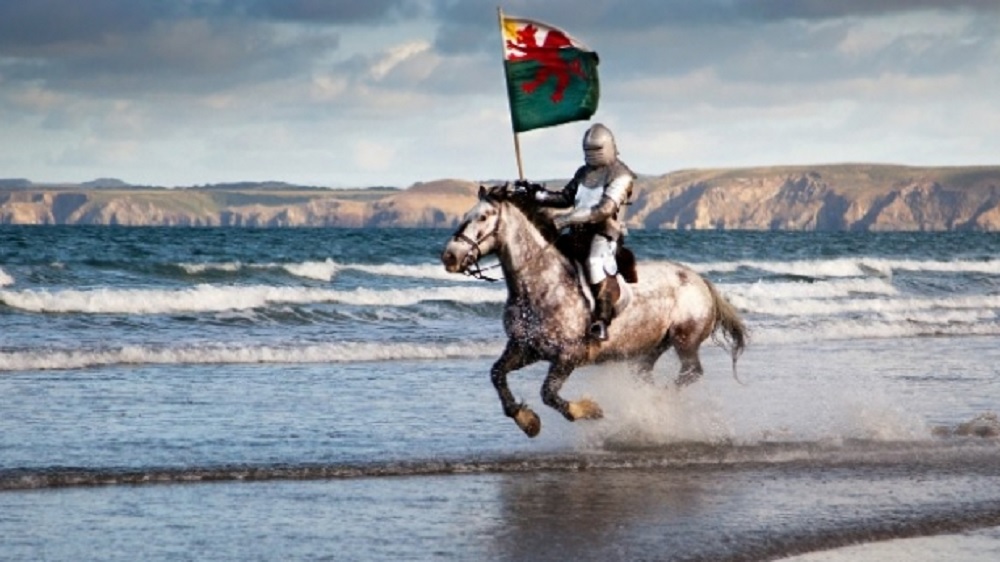
"The Story of Wales" - Green Bay Media for BBC and the Open University.


Over 1,000 people have signed a petition calling for the teaching of Welsh history in Wales’ schools. Here its creator, Elfed Wyn Jones, explains what inspired him to start it.

If you stopped a passer-by in a street in Wales, and asked them to sum up our nation’s history, what would they say?

They would probably mention 1066, Henry VIII and his six wives, and the First and Second World War.

But what if you said: ‘No, I mean Wales’ history.’ Would their eyes narrow? Would they scratch their head as they rummaged around in the back-rooms of their mind for some half-forgotten fact from our nation’s past?

They would eventually probably come up with something vague bout Owain Glyndŵr, or miners or quarrymen depending on where in Wales they come from.

It’s unlikely however that they would have any real grasp our national history, and the effect it has had on their daily lives, and its importance in our present and future.

From the Laws of Hywel Dda to the Acts of Union, through to the boom of the industrial revolution and the fight for our own parliament, Wales has a rich history that goes back thousands of years.

Much of this history will remain mouldering in the attics of the nation’s subconscious, and unless you pursue a postgrad degree in Welsh history you’ll never get to hear about most of it.

Milan Kundera said that “the first step in liquidating a people is to erase its memory. Destroy its books, its culture, its history”.

After that “have somebody write new books, manufacture a new culture, invent a new history. Before long that nation will begin to forget what it is and what it was”.

“The struggle of man against power,” he said, “is the struggle of memory against forgetting.”

Paths

I’m currently on a process of discovering Welsh history, but I would never have done so unless I had gone looking for it.

I can recall only two lessons on Welsh history at school, one about Llywelyn, the last Prince of Wales, and the other about Owain Glyndŵr.

And these lessons were mere “add-ons” to the main curriculum, just to give us a little taste of ‘local’ history.

I set up a petition to ask our national parliament to introduce Welsh history on the curriculum because I don’t want the children of Wales to miss out like I did.

I would like the Welsh Assembly to craft a curriculum that includes every aspect of Welsh history and is relevant to every part of Wales and children from every background.

If we don’t know what paths we’ve travelled along in our past, how do we know where we’re going in the future?

So please, sign the petition, to teach our children about who we are, and to unite Wales under a curriculum that shines a light on every corner of our nation’s history.


Support our Nation today

For the price of a cup of coffee a month you can help us create an independent, not-for-profit, national news service for the people of Wales, by the people of Wales.

20 comments

Craig

Not going to happen though. The very very last thing the Labour in Wales government wants to do is create citizens with a strong sense of national identity. The same goes for creating a million Welsh speakers. If you believe in Wales rather than Britain, chances are you'll vote Plaid. If you speak Welsh, chances are you'll vote Plaid. Labour in Wales exists for one reason, and that is to hold on to power. They think the only way they'll do that is by rigidly maintaining the status quo. 1066 isnt even Wales' history, but we are stuck with it.

Reply
David Jonathan Wheeler

I think that's a depressing assessment but there must be a certain amount of truth in it. If people can get this petition circulated extensively throughout Wales and get a large percentage of the adult population to sign it then the Welsh Government could be forced to do something about it.

Reply
JD

Yes I welcome this. But I would argue many aspects of history are well covered. The crucial missing bits for me at school werethe age of the Princes and the fall of Llywelyn and what happened to Gwenllian. This is now being taught albeit at a year 7 level. The Act of Union was bypassed too. However, I was drowning in industrial revolution history, Rebecca Riots, Newport Chartists, Dic Penderyn, Bethesda strike etc by the end. It's about being taught from a Welsh perspective which is different from being taught about Welsh history.

Reply
Martin

Absolutely true. Plaid Cymru needs to get the education ministry. Simple as that.

Reply
CambroUiDunlainge

They've never had any inclination towards getting our history taught in schools. In fact all you've got to do is look at their manifesto for the last lot of elections... "defending Welsh identity"... and that was all they said on that. No details. Not held to account for it either.

Reply
CambroUiDunlainge

I completely agree that our history needs to be taught... it needs a lot of work to make it coherent and dump the nonsense churned out by Geoffrey of Monmouth and understanding the need of Kings to relate themselves with some pretty barmy origins. Anyway... I'm now going to say something controversial: Where is Plaid Cymru in all this? They say they defend our identity - but that is all they're doing - saying and claiming. Getting Welsh History into schools should have been first thing on the agenda in 99'. I've never seen any mention of it ever. If people were taught about the Blue Books rather than not understanding why they learn Welsh then teach them why they do not already speak Welsh - show them how it was taken from them. There is value in the teaching of history - so why are Plaid not fighting for it? Why is this not central to their cause? What damage do we do to ourselves by supporting a party that clearly is not "defending Welsh identity" but rather taking it for granted like the Westminster parties.

Reply
Martin

It's in their devolved manifesto for Assembly elections. "Develop more awareness of Welsh history through the education system". Frankly, the idea that supporting Plaid is damaging this, is insane. Get them into power, with the Education Ministry.

Reply
CambroUiDunlainge

That line in an 190 page manifesto. Does it expand on it? No. Our history is as important to our identity as our language. Do you feel that they have made progress towards this goal in the past year? We're talking one of the three pillars of our identity here along with language and culture... Educating over the Blue Books and how the Welsh language was effectively taken from people will have a huge impact in the valleys.

Reply
Sibrydionmawr

I agree, though as JD points out, it's history from a Welsh perspective rather than Welsh history that we need. I was fortunate to have been able to have studied some aspects of Welsh history whilst a student at Coleg Harlech in the mid 80s, which emphasised that it's the perspective that is important, and that teaching it in isolation, i.e. teaching Welsh history, is pretty worthless, especially as us Welsh have always defined ourselves in the reflection of others - we didn't start to define ourselves as Cymry until that other lot started to define us as Welsh! So in a way it's been the events outside of Wales that have defined us as much as those within the country. Even people like Saunders Lewis rejected the insular approach, and he certainly looked to the wider horizons of Europe, whilst we have historians such as Gwyn Alf Williams who took it global. I'm not personally convinced that anyone really needs to learn much about the overlords, such as Llywelyn, as though he might have been Welsh, he was no better, from the standpoint of an ordinary Welsh person of the time, than his Anglo-Norman equivalent. Both were complete bastards, out to carve a feudal fiefdom that was based on screwing the peasantry. It's the peasantry who are more interesting, and more representative of ordinary people's lives. About the only utitlity of Llywelyn is as a comparison and contrast to a study of Owain Glyndwr, who is a far more interesting historical figure, and in terms of modern Wales, a far more important character, as it we he, and those around him who sought to establish a recognisable Welsh state in the modern sense. He is also an historical figure who's status persevered, remaining unforgotten, if continually re-interpreted over the ages, whereas Llywelyn was largely forgotten about. Glyndwr is also a figure that has an appeal right across the political spectrum, wheras Llywelyn only really has an appeal to those saddos on the extreme right. People get somewhat enraged when certain Labour politicians describe Welsh medieval leaders as 'robber barons' but in the case of Llywelyn ein Llwy Olaf, he was right, (and no, that's not a typo, I always refer to him as 'Llywelyn our Last Spoon' as it really winds up the Welsh ultra-right!)... Whislt a study of history from the earliest days is important, for the sake of perspective, if nothing else, it is the study of the period from perhaps the misnamed Acts of Union, (they were acts of annexation, union would suggest at least a level of negotiation and voluntarism from the Welsh side, which just wasn't the case), Wales was annexed, and we should perhaps destroy the cosy illusion by calling them Acts of Annexation. It's a bit like referring to the American Revolution as the War of Independence. It might have gotten them their independence, but it was also a revolution that had far wider consequences, and in no small measure due to some Welsh people! We do have a very rich history, and it needs to be studied by all in the Welsh education system. It will be a hard slog getting it into the curriculum, but it needs to be done, but in the meantime we can also pressure BBC Cymru to produce more programmes of historical interest, without avoiding the potentially contentious and uncomfortable aspects. There is also a great need to have an easily accessible reading list so that interested individuals can do follow their own scheme of study.

Reply
Craig

Pressure the BBC to produce programmes of historical interest!!! Hahahaha. How they going to do that without the words "Great Britain" in the title?

Reply
Huw Griffiths

The importance of teaching pupils in Wales about their history and culture has been outlined by Dr Elin Jones in 2013 in a report on 'Welsh history, the story(ies) of Wales and the Cwricwlwm Cymreig' which was accepted in its entirety by the then Minister for Education. Unfortunately everything has now been placed on hold with the new curriculum. The only body which has responded to the report (and they should be applauded) is the examination board WJEC who have changed GCSE History to include a considerable amount of Welsh history. Pupils in Wales should now about who they are and where their from in order to look out at the world. To quote Dr Elin Jones - 'Mae angen i blant Cymru cael gwreiddiau ac adenydd'. Dr Huw Griffiths

Reply
Anon

It's frankly insulting to the 55000 Welsh men and women killed in the First and Second World Wars to suggest those conflicts aren't part of Wales' history. Teaching more Welsh history would be a good thing but that also means recognising that there is a British dimension to Wales too and one that was not imposed against the will of the majority of the Welsh.

Reply
Craig

Its frankly insulting to use the "55000 Welsh men and women killed in the First and Second World Wars" as a reason why we need to continue with an English centric education system. Nobody in Wales, at least nobody i have heard discussing this subject, is proposing that we ignore the two biggest international conflicts. We are suggesting that it makes sense to teach Welsh history to Welsh people. Our history involves those two world wars. It would however discuss it from a Welsh perspective. For example, there was a large and active campaign Welsh against joining up in the first war. One of the results of the first war was the penultimate nail in the Welsh language coffin. And of course Wales didnt play any role in the start of those conflicts. Our neighbour certainly did. That's a different perspective.

Reply
Craig

And "one not imposed against the will of the majority of the Welsh"! Can we see your proof for that? Petitions, referenda, pro British mass movements, anything at all?

Reply
anon

The article very clearly says that if someone was asked about "our nation's history" and replied the world wars, the answer would be "No, I mean Wales’ history". On evidence of a willing Britishness: every single general election ever fought in Wales has seen pro-union parties win a huge majority of Welsh votes. Wales is a democracy and not once has the Welsh electorate ever shown that independence is anything but the belief of a minority. As you say, there is a Welsh perspective on both world wars but the vast majority of Welsh people in both conflicts also felt British and acted accordingly. Every professional historian of Wales who has written about the conflicts has argued that. Number of Welshmen who served in WW1: c.280,000 (at least 123,000 of whom volunteered) Number of conscientious objectors in Wales who refused to undertake any war work: c.1500 Those 1500 deserve respect, acknowledgement and study but they were a small minority and not representative of the typical Welshman in 1914-18. This doesn't mean that the majority didn't also feel Welsh. As historians have argued, the wars were about defending both Wales and Britain. Then, as now, the two national identities sat alongside each other for the majority.

Reply
Sibrydionmawr

To deal with the alleged voluntarism of the colonisation of Wales, and it's subsequent Anglicisation there would need to be and anti-colonialist and deconstructive element to any scheme of studies. There is little question that the English language and culture didn't really have to struggle to penetrate Wales, the question is how, and why? We all know about Brad y Llyfrau Gleision, but why was that report commissioned in the first place, and why did the Welsh, and often Welsh speaking elite collude with it's findings? Why do many Welsh people still defer to English sentiment, and why is the notion and practise of parchusrwydd basically a reluctance to behave, or say or do anything that could remotely be interpreted by an English person as offensive? @ Huw Griffiths - I was glad to see that the WJEC is now to include a 'considerable amount' in the GCSE syllabus, but what does that quantify as? And why has it not been fundamentally changed so that it is history taught from Welsh perspectives entirely?

Reply
Tal Mac

I was watching Heno last night (confused?), and I was enjoying one of the many local history pieces that they do, and it dawned on me that english speakers in Wales have nothing similar that is told from a Welsh perspective. I know they have the one show, but that's almost always about eng. I know there's under-representation of welsh english speakers, that's obvious & acknowledged in reports, but they seem content with this. I suppose it's the same as always voting labour, and expecting representation in London. Keeps the status quo.

Reply
Trailorboy

It's a good point. BBC Cymru/Wales doesn't have a magazine show, where bite-sized content pieces like this can be shown. It's all very well have a series of history programmes made and shown after the 10 O'Clock news, but much like the political shows they only really appeal to those who are already interested. The lack of a BBC Wales version of the one-show or Heno is a problem in terms of converying simple interesting facts and information that can inspire people to want to discover more. having said all of that - maybe bite-sized interesting, quality content on You-Tube would be more useful platform these days to get in front of the target audience and garner interest elsewhere at the same time?

Reply
Emrys

Far more work needs to be done on teacher training courses which appear to be woefully inadequate at the moment. Prospective teachers - not only history teachers - need to be introduced to aspects of Welsh History which can be implemented in their lessons. Many history teachers in Wales have no real idea about Welsh history [particularly those who have emigrated from England] and continue to teach British History i.e English History with the occasional Welsh add on. This might be an area that ESTYN could try and improve, Unfortunately many primary schools still tend to focus on the second world war and ignore all the wonderfull local and national history that exists. Probably beacause teaching the Second World War is easy!

Reply
Gaynor

The welsh contribution to Brit history and beyond from refotmation through to enlightenment is totally ignored in welsh history in schools and colleges/ radical, internationalist and inventive and probably far more important than a bunchnof blokes in tights decapitating each other

Reply

Leave a reply

Replying to Craig Cancel

And "one not imposed against the will of the majority of the Welsh"! Can we see your proof for that? Petitions, referenda, pro British mass movements, anything at all?

Comments are reviewed before they appear.
