


Opinion
Wales has accommodated enough. AirBnBs and second homes are no longer welcome
Stephen Price
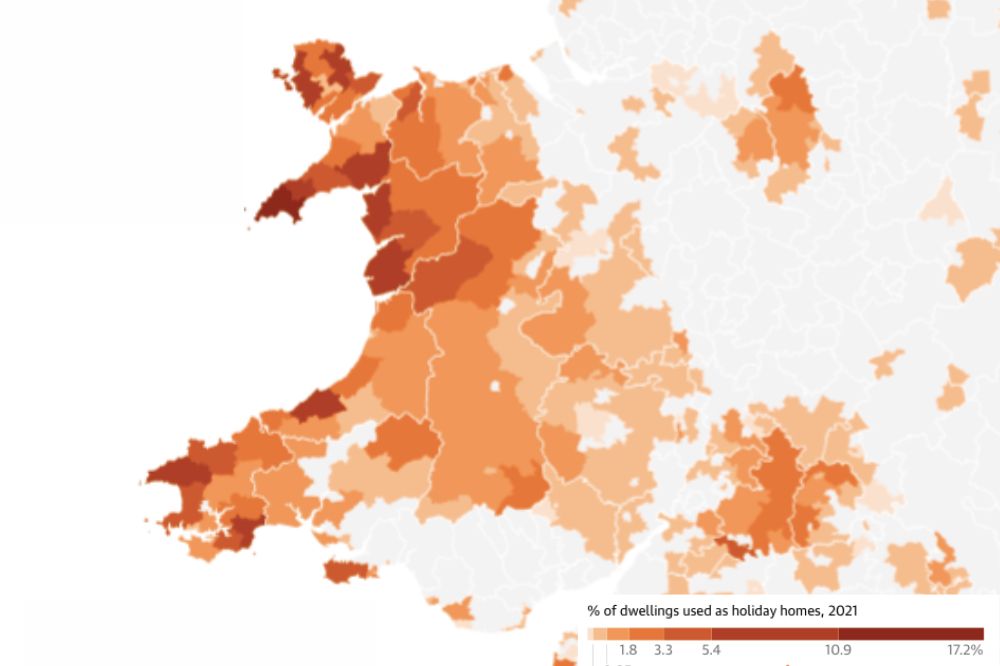
An article published by the Guardian following the Budget in March contained a shocking graphic which brought to light the high concentrations of holiday homes found in Wales.
The article focused on Cornwall, where locals say they are on a “cliff edge” due to the sheer number of people with second and third homes - sharing the impact this is having on local schools and businesses.
[embed]https://twitter.com/David_J_Ellis1/status/1765674966190580006[/embed]
The stories could have easily been plucked from communities within any of our own coastal areas and national parks.
Famously, Nation.Cymru shared the story of 88-year-old Norman Thomas, the last Welsh speaker in Cwm-yr-Eglwys in Pembrokeshire, who called on the Welsh Government to protect dying communities such as his back in 2021.
What happened next...
Much has happened since - councils across Wales are finally able to increase council tax up to 300% - but the impacts on the ground have yet to be felt. We live next door to a nation with almost twenty times our population after all.
So far, councils have teetered towards a 100% increase - with much applause from people from Wales each time they raise the cost. But is it enough?
A financial deterrent only works for those who don’t have deep pockets. For anyone who can afford the million pound plus price tag of a property in Cwm-yr-Eglwys, this is simply laughable.
Either stop it, or don’t.
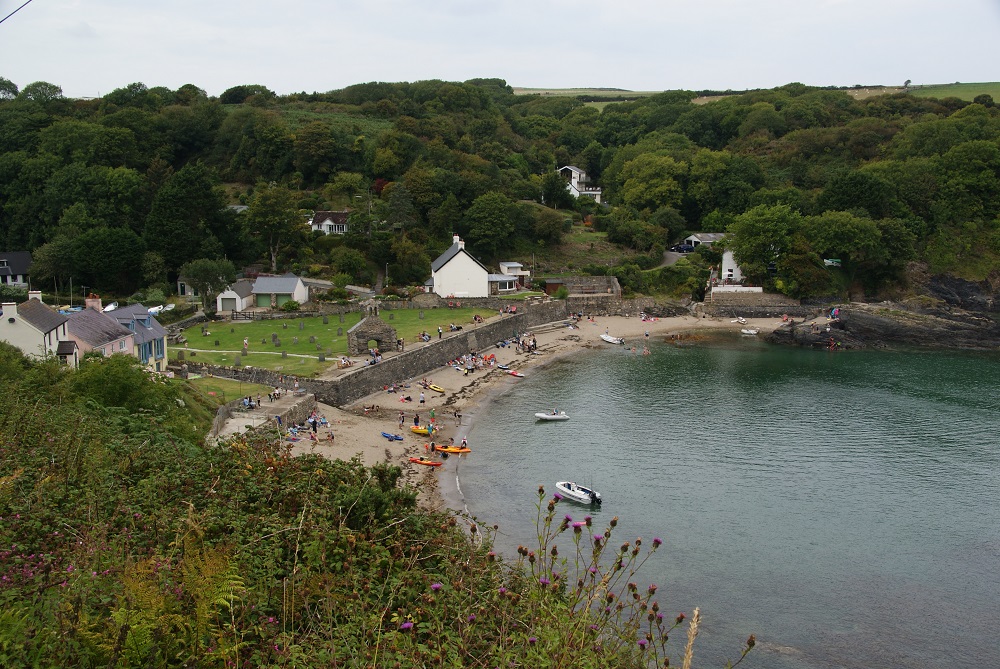
In a poignant scene on S4C’s Pobol y Mor (People of the Sea), a fisherman who grew up in Llangrannog talked about how, in the space of a matter of decades, his home village went from being Welsh to English, often to be used as holiday homes and AirBnBs.
His words, spoken matter of fact and bluntly, weren’t embellished - but in scenes of him out on the open shore afterwards in search of crabs and solace, what he didn’t say and how he visibly looked - his pauses and his silences - were just as powerful.
The story is the same across Wales. We see it happening in front of our eyes - the hollowing out of our communities, eye-watering property prices, the houses used as investments or crash pads for the rich.
But we mustn’t connect the dots.
[mid-content-banner]
Tristwch
The last time I wrote a piece about the housing crisis facing Wales, I was accused of being jealous.
How dare someone have an opinion about an injustice facing countless people who can’t afford to live in the places they were born, or where they wish to work even.
That’s how the world works nowadays - throw as powerful a label as you can at someone and get them to shut up. Only Wales has been meek and kind and has shut up for too long to its own detriment.
We’re a nice bunch, often too nice. And where does it get us?
Many properties in my own home village are now holiday homes and AirBnBs - and I’m told this is somehow good for the local economy. I have yet to see evidence of that being the case, but I must remember to thank their absent owners if I ever get the chance to meet them.
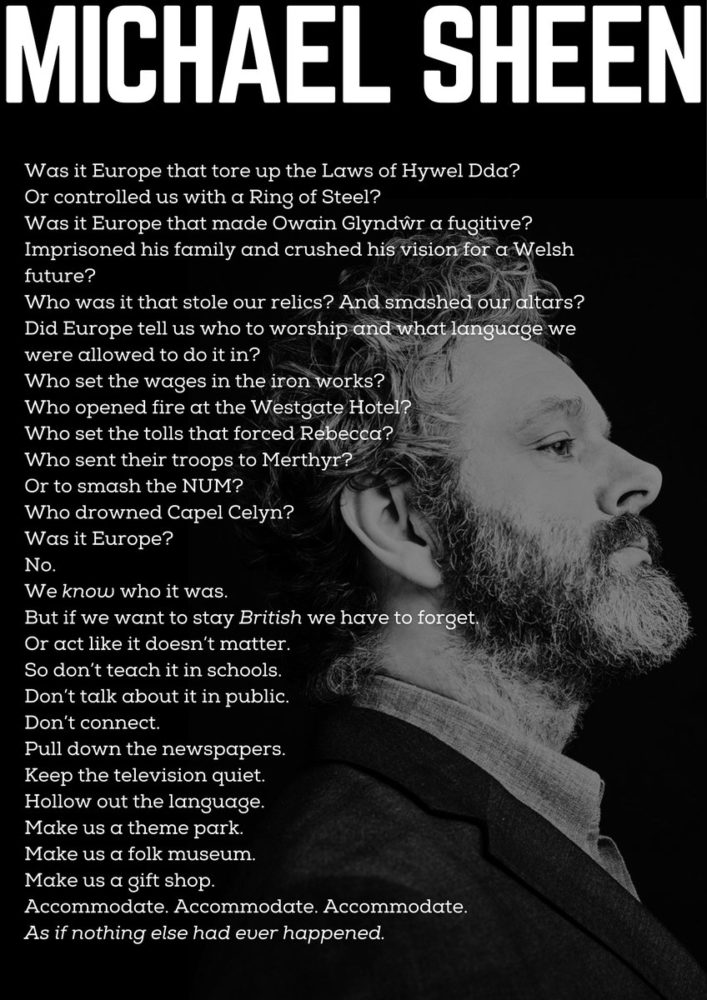
Michael Sheen’s rousing speech from 2017 - “Make us a theme park, make us a folk museum.. Accommodate. Accommodate. Accommodate,” made mention of this go-to default mode to not ruffle feathers, to be polite and “act like it doesn’t matter”.
We can talk about it amongst ourselves, but to publicly raise concerns about house prices, families in emergency accommodation or on the streets while they wait for a place to call home, or the scourge of holiday homes across the country is to be compared (as I have been - credit to them, I do like a nice roast) to characters from the League of Gentlemen.
But Welsh people have accommodated enough.
We’ve all had enough. And our Cardiff-based leaders need to listen.
I missed the chance to go to Llangrannog’s summer camp in the first years of high school, but went for the first time during the Sixth Form, determined to use more Welsh and try it out on the locals.
If only I’d spoken to the fisherman before.
My first ‘shwmae’ with a ‘local’ was met with a blank stare and a very un-Welsh silence. And every coastal holiday since has shown that complete contrast with the familiar Welshness of the valleys I’ve grown up with.
Llandudno and Aberystwyth offer a similar, ‘Oh...’ scratched head feeling whenever I visit. And in my forty plus years of holidays in, and life lived within, Wales’ coastal and national park communities, their once vibrant Welshness seems to be diminishing rapidly.
[taboola-banner]
Global issue
This isn’t a local shop for local people, it’s a proud nation of welcoming people, but a people who recognise injustice and unfairness as much as any other.
While our own people wait for a safe, warm roof above their heads, it’s frankly offensive to have our housing stock sit empty outside of the holiday season or to find a depressing new lease of life as a boutique AirBnB.
And this is not just a Welsh issue.
In an article for Business Insider from last year, Isabel Heine, a 40-year-old attorney from Queens, New York explained why she no longer used AirBnBs, referring to them as “morally sketchy”.
She said: "I saw what it was doing to local housing markets, including my home in New York City, where there were more Airbnb listings than available apartments in 2022.
"And it wasn't just New York — in Mexico City, Americans were renting apartments or Airbnb by Americans at prices that many locals couldn't afford."
[lower-mid-content-banner]
"Off you trot!"
She finished: "Maybe it's the bias of my social circle — I work at a social-justice organisation — but it seems like the tide is turning away from AirBnBs.
"We want to be aware of the effects our decisions have on our wallets and on other people. AirBnB just doesn't align with us anymore, financially or morally."
The tide really has turned.
Cymdeithas yr Iaith Gymraeg are currently calling for the introduction of an Article 4 Directive for the whole of Eryri.
The introduction of this policy would make planning permission mandatory before changing the use of a property from a main home to a second home or short-term letting accommodation.
Gwyn Siôn Ifan, Chair of the Gwynedd and Môn Region of Cymdeithas yr Iaith, said: “The significant number of second homes and short-term holiday accommodation in Eryri – around 17% of the entire housing stock – is a symptom of the inequality of an open housing market which undermines the sustainability of communities and threatens the future of Welsh as a living language.
“According to a report prepared for the Planning Committee, 65% of Eryri’s entire population have been priced out of their own housing market.”
Half measures
I personally don’t think they’re going far enough. AirBnBs and holiday homes must no longer be a part of our national story and both need an outright ban.
And on top of that, in Gwyn Siôn Ifan’s words, “Ultimately, the housing system must be transformed at its core by introducing a Property Act which would treat houses as essential social assets and put the housing needs of communities before profit."
If anyone wishes to enjoy a break in our country, or any other country for that matter, book a hotel or stay at a holiday resort and actually support local people.
And if you miss the dog, find a dog-friendly one. It’s that easy.
Call me, or anyone else asking for fairness for Welsh communities, what you want, but close the door on your way out.
Support our Nation today
For the price of a cup of coffee a month you can help us create an independent, not-for-profit, national news service for the people of Wales, by the people of Wales.
Get more trusted Welsh news
Choose Nation.Cymru as a preferred source in Google News to see more of our journalism.
