


Opinion
Trump's first days back in office prove politics can make a difference
Martin Shipton
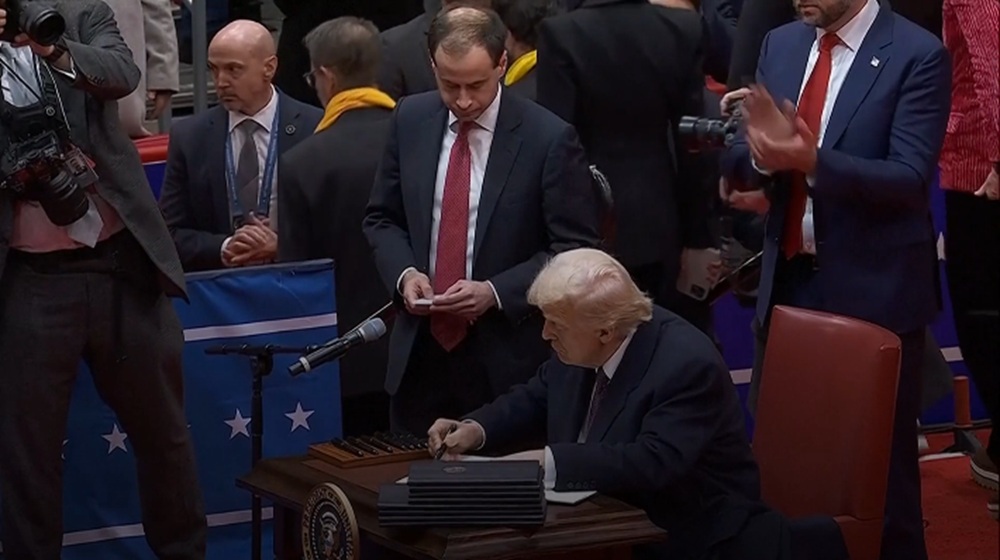
Much as we may deplore the offensive and provocative executive orders signed by President Trump immediately after his return to office, they disprove the often repeated fallacy that all politicians are the same.
Trump’s appeal to the more than 77 million voters who backed him in November rests on his promise to bring change. It may be that in due course his supporters become disillusioned by what the change amounts to. But it’s clear that while some of his executive orders will be challenged on the basis that they are unconstitutional - the denial of citizenship to some of those born in the United States, for example - we can be sure that Trump’s second term will be just as full of contention as the first.
Here in the UK, Labour under Keir Starmer won a landslide victory on a prospectus that also promised change. The reason why his government has lost popularity so rapidly is that what change has occurred has not been seen as change for the better, while in terms of economic policy we are essentially getting a continuation of austerity.
Lessons don’t appear to have been learnt. It was austerity policies that led to the referendum vote being won by those bent on taking the UK out of the EU. As predicted, Brexit has acted as a drain on our economy, making trade with our closest neighbours much more difficult and thus inflating the cost of imported goods.
[mid-content-banner]
Brexiteers
Ironically it’s a party led by one of the two most recognisable Brexiteers - the other being Boris Johnson - that is riding high in the polls. Not only does Nigel Farage now avoid talking about Brexit - telling those who raise the subject that they should “get over” something that happened nearly a decade ago - but he isn’t keen on discussing the Trump-inspired deregulation programme that he’d like to put into place if he came into government, as he asserts he will after the next general election in 2029.
Just like Trump, Farage serves the interests not of ordinary people, but of the extremely wealthy. He has in the past spoken of reforming the NHS by replacing free treatment by private health insurance. Having succeeded in obtaining a narrow victory for Brexit in the 2016 referendum by exploiting people’s fear and hatred of migrants, he’s doing the same again as leader of Reform.
Blaming migrants for the poor performance of the UK economy while ignoring the structural inequalities that fan disenchantment is something Farage should be called out for. But other politicians, who are stuck in a conventional economic mindset, don’t want to take him on.
Is it too much to expect a Labour government to take action that would improve the living conditions of ordinary people? Rachel Reeves, the Chancellor, would have us believe that the state of the public finances she inherited from the Tories is so bad that such aspirations need to be shelved. Economic commentators have suggested that she is boxed in by the high cost of borrowing, making it impossible to spend the money that would enable a real end to austerity and ease the disenchantment of voters.
But there are alternative strategies that could be adopted. It just takes courage to put them into effect.
Running commentary
Richard Murphy advised Jeremy Corbyn on economic policy when he led the Labour Party. He writes a blog called Funding the Future, which is providing what amounts to a running commentary on how the Labour government is handling the economy. He isn’t impressed and thinks we are heading for disaster unless there is change.
In one of his recent posts, Murphy wrote: “The UK economy need not be stuck in a rut. It's Rachel Reeves' choice that it is. If only she demanded lower interest rates from the Bank of England and let the government spend to transform public services, we could be in a great place.
“Where is the UK economy? If you were to listen to most commentators, you would say it is in a mess. And, to some degree, I have to agree with them. As it stands, Rachel Reeves has put us in a mess. Deep into a mess. But we need to stand back a little bit and decide what does that mean? What are the causes? What are the prospects, and how can things change?”
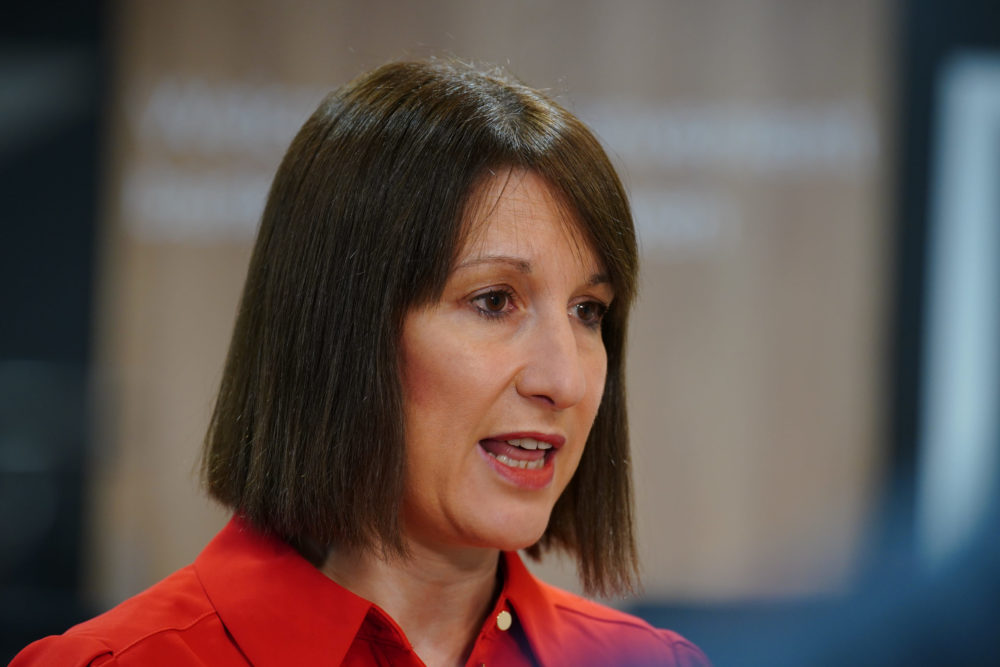
According to Murphy, Reeves’ plan for growth is failing. He argues that the private sector isn’t delivering it because instead of focussing its attention on creating new products and services, it focusses on how to make more money by increasing prices.
As for the public sector, he states: “Yes, I know she has increased spending in the NHS a bit, but only a bit, and not enough to even meet additional demand from people who are obviously more sick. They must be because they're certainly turning up at doctors more often.
“Look at other parts of the UK public sector and almost nothing to deliver growth is happening. Education is flatlining. Other parts of the public sector are still in deep trouble with no indication as to where resources will come from to actually make them effective or to meet public demand. We really are running things very badly because of a lack of money - money which would transform those services and of course simultaneously create demand in the economy to deliver growth.
“We have interest rates that are far too high. Another Labour Chancellor might tell the Bank of England to cut interest rates. If they did, they'd be very wise. It's absolutely essential to the well-being of this country that that happens.
“At the same time, we could undertake real reforms. Those real reforms would include increasing the taxation of the wealthy. The wealthy are simply too wealthy for the well-being of the UK economy.
“We could put the money that is currently used by those wealthy people back into use and in circulation in the economy simply by taxing them more, by redistributing income and wealth. And a wise Chancellor would be doing that because that is what the UK economy requires.
“And we could change the way in which pensions and ISAs are given tax relief in the UK so that money saved with a tax subsidy has to be used for a social purpose, meaning that this money would be available to create the investment in social infrastructure, whether that be housing, or in the green economy, or in transport, or in education, or in health, to deliver what the people of the UK need. Using funds saved by people in the UK, for the benefit of the people in the UK, with a tax relief attached. That is entirely possible.
“To pretend, therefore, that we are stuck, which is what most commentators claim, having analysed the current UK situation, is just wrong. We have every opportunity for change, and every opportunity for growth, and every opportunity for a better future.”
Impact
Trump has created an impact by issuing provocative executive orders immediately on taking office. They’ve played well with his core vote.
Starmer, with less political instinct, made a series of early announcements that managed to alienate many of his party’s traditional supporters.
The way he and Reeves are going, Labour will haemorrhage more votes, with many going to Reform.
So there is another way, but sadly the chance of Labour taking it is low.
Support our Nation today
For the price of a cup of coffee a month you can help us create an independent, not-for-profit, national news service for the people of Wales, by the people of Wales.
Get more trusted Welsh news
Choose Nation.Cymru as a preferred source in Google News to see more of our journalism.
