


Opinion
The Welsh Lib Dems are dying — and deserve to
Simon Hobson
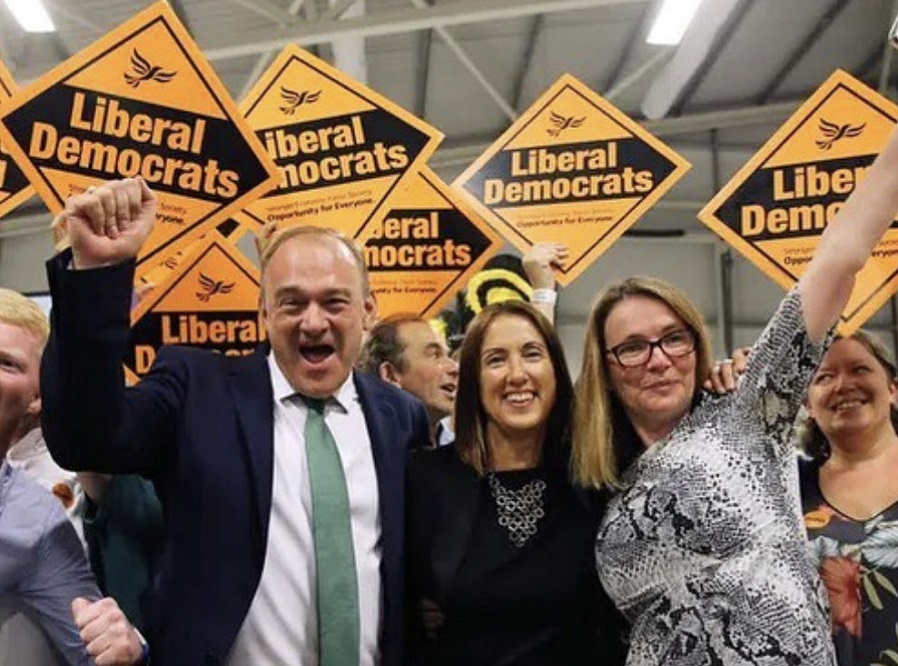
The Liberal Democrats in Wales are shedding members. The party that brought to Westminster the Tory-led coalition between 2010–2015 is, in Wales, in terminal decline.
Away from Ed Davey’s antics and the attention these stunts have, for now, brought to the English party, here in Wales the picture is bleak.
Recent controversies surrounding candidate selections for the 2026 Senedd elections have been marked by poor engagement. Many local branch members reported never receiving an invitation to vote, and there were widespread complaints about how the party determined the rankings on the closed list.
This seemingly undemocratic process has led to the departure of high-calibre individuals, including former general election candidates for the Liberal Democrats.
I am one of them.
An abusive relationship
For many of us who’ve campaigned, canvassed, or simply cared about the future of liberalism in the United Kingdom and in Wales for the past 20-years, the decision to step away, to resign our membership of the Liberal Democrats, feels less like giving up and more like escaping a broken and abusive relationship.
We are left wondering when was my voice ever heard? Why has the party abandoned its principles of devolving power to communities? Where is the urgency to renew?
Why can’t the executive, which runs the party from the centre, see that an already electorally irrelevant party in Wales, is heading for oblivion?
An outdated party in a changing Wales
Over the past two years, I’ve repeatedly urged the Welsh Liberal Democrats to acknowledge the stark truth: the party faces electoral extinction.
This isn’t pessimism—it’s the inevitable conclusion drawn from polling data and real voter sentiment.
Advocating for the status quo is rarely a route to political success.
How did a party, once at the vanguard of reform, a home to radical ideas, become a weekend club run by an inner circle of old white men? That question should haunt anyone who still believes in the value of Welsh liberalism.
Speaking the language of Wales
Jane Dodds MS, the party’s leader in Wales, has had many years to develop a unifying voice within the Welsh Lib Dems. Bilingual, culturally aware, Ms. Dodds has, nonetheless, allowed the old men—the English retirees to Wales and, the ever-critical Ed Davey in London—to take control of the Welsh Liberal Democrats.
The balance of languages, in the ‘Welsh’ Lib Dems, is skewed in favour of English. Cymraeg has become an afterthought, used only for superficial branding at ever more sparsely attended conferences.
The result of having a Welsh political party which speaks English with a Home Counties accent and neglects its duty to the Welsh language, is a party that fails to speak with either the urban south Walian valleys or, outside the English retirees, rural Wales.
And a party which cannot speak the languages of the electorate will not be trusted to speak for Wales in any language.
A branch office of a distant party
The Welsh Liberal Democrats have become a shadow cabinet of shadows—mirroring London’s interests, not Wales’. Westminster-centric thinking is not new in Welsh politics, but its grip on a liberal party of Wales is particularly galling.
Once, Welsh liberalism meant independence of thought and fierce localism. Now, policies come pre-approved from London, and party messaging is polished to please an England focused HQ, not the high streets of Ceredigion or the valleys of Torfaen.
Is it any wonder that younger activists turn to Plaid Cymru, to the Greens, to Reform UK or away from politics entirely?
Rejuvenate or perish
The warning signs are everywhere. The Senedd’s upcoming restructuring—moving from 60 to 96 members, who will fill multi-member super-constituencies, elected through a closed list electoral system, in which only the name of the political party will be on the ballot—demand fresh candidates and innovative thinking.
Yet there is no serious plan to diversify candidates, modernise messaging, adapt to the challenges of a new way of electing Senedd members or connect with voters beyond the familiar enclaves.
Instead of adapting to the new realities—reconnecting to the radical traditions of Welsh Liberals, enjoying the challenge of making the case for a Liberal Wales—the party bimbles on using methodologies and campaigning material which hasn’t changed since the 1990s.
The disconnect with reality is never more emphasised in the party’s leader, Jane Dodds. Who in recent interviews, has been making eccentric statements to the media in Wales, claiming that, on election night in May 2026, she is confident that the Welsh Lib Dems will: "paint Wales Lib Dem gold".
The phrase ‘rejuvenate or perish’ is not melodrama. It’s maths.
Unless the party reforms radically—and fast—it will cease to be relevant. The next election will not be forgiving.
Liberalism as a compass, not decoration
This is more than a parting shot. It’s a challenge. To the party. To its few remaining members. To anyone who still believes liberalism matters in Wales.
My loyalty was never to the party—it has been, and remains, to the people of Wales. A nation, which I believe is best served by liberalism than by any other creed of politics and, which is even more vulnerable from English nationalists —such as Reform UK—for not having a vibrant Liberal Party.
The question now is: will the party finally listen? Will it decentralise power—from London and from the old white men at the centre—and find a voice rooted in our nation, in Wales?
The Welsh Liberal Party once stood tall for minority rights, community voices, cultural pride and, nonconformist thinking.
If it can no longer do that—if the Welsh Liberal Democrats choose not to—then maybe the party deserves to disappear.
Support our Nation today
For the price of a cup of coffee a month you can help us create an independent, not-for-profit, national news service for the people of Wales, by the people of Wales.
Get more trusted Welsh news
Choose Nation.Cymru as a preferred source in Google News to see more of our journalism.
