


Thu, 23rd July Cardiff 18°
Nation.Cymru wordmark
Advertisement

Opinion

The Welsh Language belongs to everyone – let’s make bilingualism the norm, not the exception
By Mark Mansfield
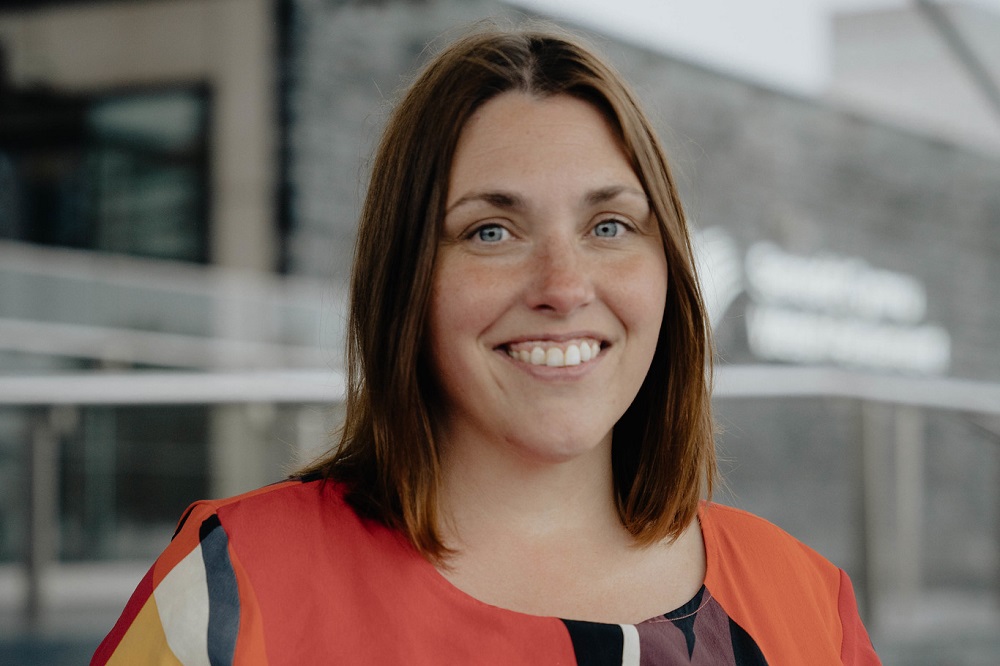
Heledd Fychan. Picture by Plaid Cymru

Heledd Fychan

An important part of my job as a Member of the Senedd is to visit schools, to discuss with children and young people the issues that matter to them. What has struck me when visiting English-medium schools in particular is how angry so many of our young people are that they cannot speak Welsh, even though the majority of them have a GCSE in the language.

Undoubtedly, the Cymru men's football team World Cup campaign and the use of Yma o Hyd contributed to many feeling that they had been deprived of the opportunity to become confident and fluent Welsh speakers.

But it would be wrong to believe that this was the only trigger, with many telling me that they felt throughout their childhood a sense of confusion over their identity having been denied the opportunity to learn our nation’s history as well as the Welsh language.

How do we therefore put this right? It is my view, and that of Plaid Cymru’s, that we must now commit to making bilingualism the norm by changing the way Welsh is taught to children and young people.

After all, more and more organisations are now embracing y Gymraeg. Earlier this week, we saw a second national Park decide to revert to its Welsh language name only: Bannau Brycheiniog.

This came as quite a shock for those who have told us time and time again that Welsh is a dead language. ‘No one uses the language’ they say. And to them I say: ‘What nonsense.’

Cymraeg is alive and well. The language is not elitist, and is no more difficult to learn than any other language, and has been here longer than any of us.

[mid-content-banner]

Relevant

In this ever tumultuous and digital world, we’ve seen the Welsh language remain relevant.

We’ve seen refugees who have fled to Wales for sanctuary proudly learning the language, and their children competing in Eisteddfodau.

The Welsh Language has also staked it’s place in the international market – Duo Lingo has proclaimed that Welsh is among the most learned languages on its app.

Shows like Welcome to Wrexham on Disney Plus, and Dal y Mellt on Netflix are showing to the world – and the long time naysayers in the UK – that Welsh is relevant.

There is a future for the language and it has, as Plaid Cymru has long argued, both social and economic value.

But what of the language on the ground? The most recent census figures have shown a strange movement of the language. Although declining in typical Welsh heartlands, the language is growing in our cities and larger towns.

The sure fire way to ensure that the language flourishes in all parts of Wales is to make sure that every child has the opportunity to become bilingual.

And if we truly believe that Cymraeg belongs to everyone in Wales, then nobody should be deprived of their chance to learn it. Something which is becoming a step closer, thanks to the influence of Plaid Cymru on the Welsh Government.

White paper

A recently published white paper setting out proposals for a Welsh Language Education Bill has been published with input from Plaid Cymru as part of the Co-Operation agreement.

The proposals take Wales further towards ensuring the education system delivers Welsh to all pupils in a way that creates confident speakers and one where Welsh medium provision is “normalised” within our schools and communities.

These proposals set out a foundation towards an education system that delivers Welsh medium education to all pupils. They include more Welsh medium schools, an increase in Welsh medium education in every school in Wales and ensuring that every child will leave school as a confident Welsh speaker by 2050.

Continuing as we are will not safeguard the future of the Welsh Language. That’s why we need a Welsh Language Education Bill that is ambitious and brave, so that no young person living in Wales is ever again deprived of the opportunity to become bilingual.

For the price of a cup of coffee a month you can help us create an independent, not-for-profit, national news service for the people of Wales, by the people of Wales.

Get more trusted Welsh news

Choose Nation.Cymru as a preferred source in Google News to see more of our journalism.

Choose Nation.Cymru as a preferred source in Google News

13 comments

Hayden

Ydy wir. People who've been blessed to have been raised speaking Welsh will also hopefully work to discourage anyone feeling a smug, 'superior' sort of Welshness, just because they can speak Welsh, since Anglo imperialism is to blame for severing so many of us from our mother tongue, and that sort of attitude really doesn't help the language. Thankfully, I don't encounter that so much now. It feels more like we're all pulling together more now, which is great. Welsh speakers from west, north, and south Wales have usually been keen to help me regain my language, encouraging, and often very kind. Israel is a good example of how a language can get back on its feet within a single generation. I'm looking forward to speaking fluently with my niece and nephew, some day.

Reply
Rhosddu

Good point. I would hope that every Welsh speaker feels a degree of solidarity with those Welsh citizens who, because of events in the 19th and 20th Centuries, are di-Gymraeg, and should show support for any who want to learn the language. This is, regrettably, a political issue, and the London right-wing media has attempted to weaponise those who have not learnt Welsh by presenting them as victims of crachach exclusivity. The Blue Books did a number on this country , and we haven't yet fully recovered from it, but the national mood has begun to change to one where the Welsh language is seen as belonging to us all.

Reply
Che Guevara's Fist

I'm from the south and therefore brought up English speaking. It's this result that I have an affinity with the Welsh language because dw i hefyd yn ddysgwr y Gymraeg. Yr iaith Saesneg, however, doesn't hold the same; I feel that Saesneg holds no regard for me whatsoever simply for two reasons: 1) I never had to put in the same time and effort to learning it the way you do simply by being brought up with it, so I never had to sacrifice anything. 2) I speak it as a result of English cultural imperialism and not because any of us really had the choice. It is, however, a conscious, wilful choice to continue speaking it over the mother tongue long after one's consciousness has been raised with the issue. I think, however, if I was from those areas further north who speak it growing up I would still hold the same regard for Cymraeg as I do now considering how it's been an oppressed language for so long. I'm far from being fluent though, not enough to have a conversation with anyone. But, as Ghandi once said: be the change you wish to see in the world. Hence why no one is going to revive the language until we all as individuals put in the time and effort in learning it ourselves. With that being said, I did see a report some time back that said that there are more Welsh speakers under the age of six than there are over sixty. So Plaid really have done a wonderful thing in our national revival. And more definitely needs to be done. I think the older "boomer" generation are more often than not a lost cause. Too stubborn to change their ways that the youth are key. I speak as a middle-aged Gen Xer at the very latter half of the generation and therefore more closely related to the millennials so I think I might have a much different resolve than the former half of Gen X who seem to have a similar attitude of apathy much like the boomers. Yr iaith Gymraeg is most certainly political regardless whether anyone else admits it or or not because it's oppression was and still is politically motivated.

Reply
Iago Prydderch

Unless we admit that the language has declined under devolution we can't fix the problem. It's not good enough just to say "The most recent census figures have shown a strange movement of the language." All the political parties in the Senedd have been complacent with the Welsh language. Unless there's a new Welsh Language Education Bill that states that all new schools opened in Wales must be Welsh language medium only they'll never meet the target of a million speakers by 2050. Nothing else is good enough!

Reply
Karl

Damn right, my kids have hugely benefited from being bilingual. Opens the mind, reminds you of your real culture. The real Cymru, not dome weird fake arrogance of Britain. Best thing I could offer them.

Reply
Steve A Duggan

Well written Heledd ! Cymru is on the up, with a new belief in itself and that includes its language. We should be proud of it, proud that it still exists after centuries of attacks and decline. Our language is our soul, our difference, our heartbeat. We should do whatever we can to preserve it and make sure those who can speak it grows.

Reply
Stella

The Brythonic language is the original language of these isles, I am not from a Welsh speaking family, i lived in North Wales for many years and I learned the language while I lived there. I live in England now and having forgotten a lot of what I had learnt previously, I now take 3 lessons a week. I have Welsh Ancestry and I have always felt ultra connected to my Welsh side.

Reply
Richard Morse

Yes, Yes, Yes for the vision. But the white paper proposals so totally miss the point about how to successfully to learn a second language after early childhood as to make one wonder if any actual fluent learners had any input into it. Piling more bureaucracy in top of the existing unsuccessful bureaucratic systems that have existed for decades is a plan doomed to failure. To briefly share my experience here in order to illustrate an important principle. I was born and grew up in Cwmbrân in the 60s and 70s. There was no Welsh taught in my primary school. We weren't even taught how to properly pronounce the names of the villages that make up the town. There was no Welsh taught in the comprehensive school either, even though a number of teachers spoke Welsh, we had a school Eisteddfod including a chairing ceremony and there was even a Welsh recitation contest, won every year by the only Welsh speaking pupil. But no-one ever felt that they lacked a Welsh identity. We admired our wonderful rugby heroes of that era. Some of us even watched Disc a Dawn, without understanding a word, because it was 'pop' music on the TV. It turns out my experience in South Wales shared a common theme to many. I recently discovered that my maternal grandmother spoke Welsh as a child. Later on I went to study in London, was made aware of the importance of language to an identity by a friend from the Basque country and set about learning Welsh. In the 80s almost the only widely available resource was the 'Teach Yourself Welsh' book. However I managed to find a class in London and managed to learn Welsh well enough in a few years to find work back in Wales teaching Maths, IT and Science in Welsh medium schools for 30 years. Later on, for the last 15 years, I have taught Welsh to adults. I also initiated and led the team which wrote and maintained the Welsh course on Duolingo. I was lucky. I never had to sit a school exam for learning Welsh. I never had to experience the negative reinforcement that was the mainstay of school language lessons and its emphasis on learning parrot fashion to pass exams. An approach that seems to be extending more and more into Welsh for adults programmes. Learning a language should never be about passing an exam or an assessment. Learning a language is acquiring a skill, an ability. Just like how learning to make a delicious chocolate cake is also a skill. Learning to cycle is a skill. Learning to successfully grow vegetables, flowers or anything is a skill etc, etc. The key to all these examples is receiving some guidance from someone more experienced, positive reinforcement of the tiniest success and perserverance. At no stage is sitting down and doing a written test part of successfully acquiring the skill. This is the genius of Duolingo, and many other successful language learning resources. Constant positive reinforcement. This is why Duolingo has become so popular with people around the world wanting to learn a language. 500 million registered, 15 million daily users, possibly as many as 100 thousand learning Welsh every day all around the world. Learning Welsh should be about fun and a sense of personal achievement rather than bullet points within a 136 paragraph document. The energy for learning Welsh is with people actually learning Welsh and the communities that they have created, for example the wonderful Facebook group (Owen a'i bannas') that exists to enjoy the surreal humour of the Duolingo Welsh course. For more of this learning Welsh surreal humour check out the 'Dragon and Parsnips' podcast (welshclass.wales, also Spotify) and Stephen Rules' wonderful books 'Parsnips and Owls' So please talk to learners, both school children and adults, to find out what is working and what has worked for them in becoming successful learners of our beautiful language. Please use this living experience to inform a real vision for the future and try to move away from bureaucratic centralism.

Reply
Caleb

Good discussion. But elitism will remain structurally built into WG strategy until the programmes that address poverty include free access to Welsh immersion opportunities for pre-schoolers and parents who would otherwise have no access to Welsh. There’s still the default setting that the priority for economically and socially deprived families is to communicate in English, missing the point that early bilingualism gives the child an early boost to succeed in education and the workplace in a bilingual Wales. Let’s also address the earlier formative years.

Reply
Philip Davies

Bilingualism born of linguistic parity is the solution to our most pressing language and cultural issues. Bilingualism is the minimum accomplishment of most Europeans, as also of any peoples sharing larger - continental - lands such as Asia or the Americas. Many European children are naturally tri- or -quadrilingual, speaking with equal facility French, German or Flemish, for just one instance. This isn't particularly political, but is just the friendly pragmatism of close neighbours. It would be nice to hear less of the petty anti-Englishness in the Senedd, which only distracts from the dialogue of the best on either side. A flair for Diplomacy is the sign of any mature nation.

Reply
Esths

I'm a Spanish national who has lived in England for 14 years. I decided to start learning Cymraeg during lockdown and never looked back - it's a beautiful, logical language, so easy to learn (although, granted, my speaking skills are lacking because its very difficult to find anywhere to practice in Southern England!). So much more emphasis should be put on it in schools, especially early years and primary, to develop confident speakers.

Reply
Chris Mitchell

Absolutely! I'm English and have lived in England virtually all my life, apart from a brief university placement in Cwmbrân in 1980, where I did an evening class to learn a little Cymraeg. I've been learning more seriously for the last year using Duolingo, SaySomethingInWelsh (and am going on the SSiW bŵtcamp in June), and attending some Cymraeg-speaking groups locally - because yes, there really are people in Leicester, right in the middle of England and who have no Welsh connections, who want to learn Cymraeg! I suspect that if it hadn't been for Henry VIII imposing the English language on a largely non-English-speaking Welsh population 400 years ago, Britain would now be a bilingual/multilingual country just as Belgium and Switzerland are. This would have enriched everyone in both England and Wales, and it's a tragedy that we aren't all brought up learning both languages. Being bilingual is incredibly useful, whatever the languages are. I think it would be a very powerful campaign if we could pressurise not just the Senedd, but the British parliament to promote Cymraeg (I can see an argument for Scottish Gaelic too, but I suspect that battle is already lost) as a national language of the whole of Britain and not just Wales, and to provide free resources to all citizens who want to learn it.

Reply
Ian Thomas

I have been learning for several years, I found the mynediad and sylfaen courses enjoyable, however the canolradd course was/is another matter, personally I found the jump to canolradd difficult and also I feel the emphasis on setting targets, writing to be to the detriment of speaking and learning to converse in welsh, also there seems to be perhaps understandably a desire to see people move to the next level but in my case I was clearly not able or capable of progressing to uwch, given I’d only get 20-25% in canolradd past papers that we did for those doing the exam ( not me) it would have been better on reflection to do be told not to start uwch, in the event I dropped down to canolradd 2 again, I use Duolingo every day at present as I don’t like zoom/ on line classes. Sorry for the long post and don’t know if it’s helpful to the debate I’ll keep on learning though and have no intention of giving up. As an aside having been born in Wales in the 1960’s and lived here all my life it’s my opinion welsh should be taught in all schools preferably the younger the better so that we all become bi lingual

Reply

Leave a reply

Replying to Stella Cancel

The Brythonic language is the original language of these isles, I am not from a Welsh speaking family, i lived in North Wales for many years and I learned the language while I lived there. I live in England now and having forgotten a lot o...

Comments are reviewed before they appear.