


Opinion
The Welsh Government is failing our children when it comes to reading
Finola Wilson
Teachers in Wales are working tirelessly to help children learn to read, but their efforts are being undermined by the confused guidance and poor policies of the Welsh Government.
That might sound like a stark message, but it is one that must be spoken plainly. I don’t enjoy speaking out against the Welsh Government, or criticising the work of ministers or civil servants, and it is not something that I actively seek to do.
But the education of our children is far too important to keep quiet out of fear of causing upset or controversy – on occasion ‘rocking the boat’ is a necessary act.
The simple fact is that literacy levels among pupils in Wales are poor, and they have been poor for a long time. For years, the international PISA test results have made it clear – Wales’s pupils consistently perform below their peers in England, Scotland, and Northern Ireland.
[mid-content-banner]
A recent report from a Tory-linked think tank warned that if current trends continue, by 2040 Wales could fall behind Romania in educational attainment. For a country with our resources and history, that is embarrassing and unacceptable.
The Welsh Government has pointed out that literacy levels are improving, and this is true. Any sign of progress should be welcomed. But the uncomfortable reality is that the pace of this improvement is far too slow. For pupils in Wales to catch up with standards in the rest of the UK, their progress needs to be a lot faster than the marginal improvement seen in the latest round of national tests.
Your columnist Martin Shipton was absolutely right to call improving literacy a ‘national mission’ for Wales. Reading is not simply another subject on the curriculum – it is the gateway to all other learning. A child who struggles to read will struggle in all other subjects.
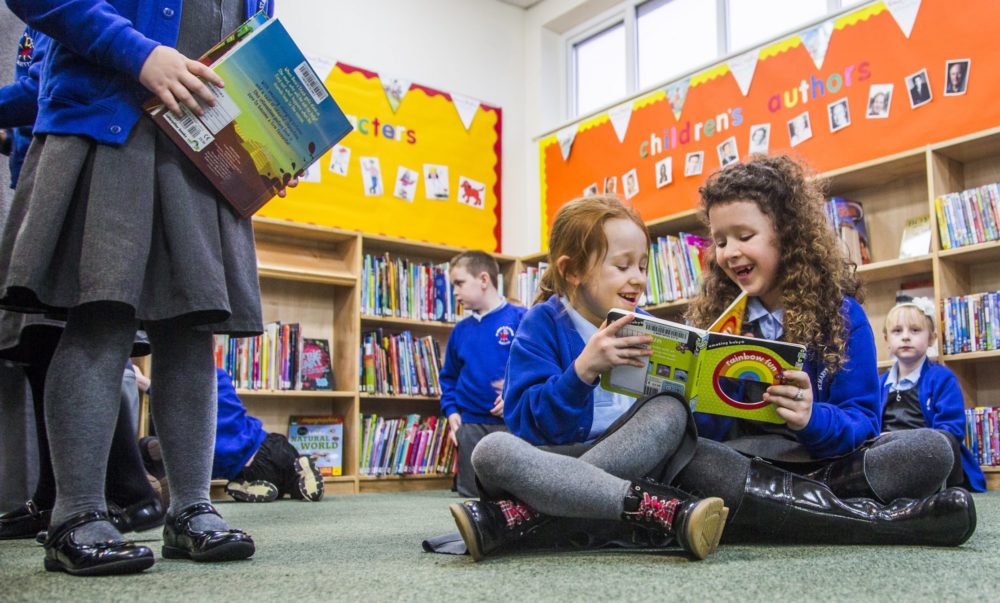
Poor literacy in the early years inevitably leads to poor GCSE results, limited career opportunities, and diminished life chances. A recent study in England showed that each year group of 5-year-olds who do not meet the expected early years standard generate lifetime economic costs of around £830 million through the loss of lifetime earnings and increased Government spend.
If Wales’s education system continues to produce young people with low literacy levels, we are locking ourselves into a cycle of economic underperformance, with an uncompetitive workforce ill-equipped for the challenges of the future global economy.
None of this is the fault of our teachers, who are doing their best to help children master this essential skill. But the truth is that not every teacher is equipped with the right tools or knowledge to teach reading effectively because they are not being given clear, evidence-based guidance from the Welsh Government.
[lower-mid-content-banner]
Indeed, it was recently revealed how primary schools were being encouraged to teach reading using thoroughly discredited methods such as cueing – a practice abandoned in England two decades ago. How many children had their education damaged by these practices? While the Welsh Government has since addressed this issue, the current guidance around early years reading is still complicated and confused.
The solution is not difficult. In England, the Department for Education has mandated systematic synthetic phonics (SSP) As a result, England’s pupils are outperforming their Welsh peers in literacy. Wales should follow suit. All teachers should be using this proven method to teach reading that works.
Until the Welsh Government takes that step, it will continue to fail both teachers and pupils.
Finola Wilson is a director of Impact Wales, an education company that works with schools and teachers across the UK and beyond.
Support our Nation today
For the price of a cup of coffee a month you can help us create an independent, not-for-profit, national news service for the people of Wales, by the people of Wales.
Get more trusted Welsh news
Choose Nation.Cymru as a preferred source in Google News to see more of our journalism.
