
Opinion
The way and the light
Ben Wildsmith
What is it with Labour in Wales and answering questions?
The First Minister treats enquiries about his various irregularities as an impertinence or, latterly, evidence of prejudice on the part of those asking.
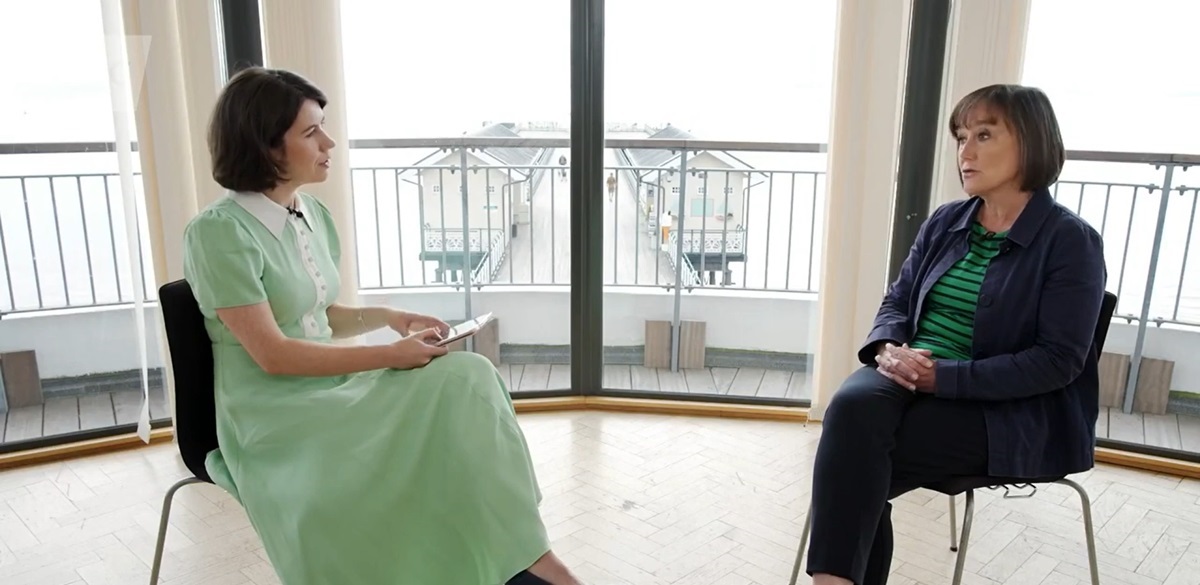
This week, the Shadow Secretary of State for Wales, Jo Stevens, seemed to regard Catrin Haf Jones’s impeccably crafted interview questions as irrelevant to her role.
Clearly irritated with the line being taken, Stevens gave the impression that the issues at hand were a distraction from the big picture of UK politics.
Right off the bat, Stevens disclosed her caste of mind. Asked how a Labour victory would lead to change in Wales, she explained that,
‘The UK government controls a lot of what goes on in Wales.’
[mid-content-banner]
Desirable
As the interview unfolded, it became evident that this state of affairs is not merely acceptable to the incoming Secretary of State, but desirable. In her own words, ‘Devolution is an agreement, not a demand.’
Well, good to get that learnt.
Conservative plans to electrify the North Wales Main Line may not, it seems, be affordable. The money invested by Wales into HS2 is apparently ‘not there’ anymore.
Repeatedly promising to ‘work hand in hand’ with the Welsh government, Ms. Stevens seemed not to recognise its legitimacy as regards longstanding demands for the devolution of criminal justice.
We discovered that recommendations to devolve probation and youth justice are not to be implemented but, rather, explored. Pressed on whether this represented a betrayal of devolution, Stevens invoked the desires of ‘the people of Wales’.
These ‘people of Wales’ aren’t interested in ‘fiddling around with structures and systems.’
[lower-mid-content-banner]
Stunt
Vaughan Gething, she claimed, is also listening to the ‘people of Wales’. Dismissing the recent vote of no confidence as a stunt mounted by the Conservatives in connivance with Plaid Cymru, Stevens effectively erased the democratic legitimacy of the Senedd.
The ‘people of Wales’ can have a parliament, but the Secretary of State is the way and the light. Only through her can the ‘people of Wales’ reach the ears of power.
A clear picture of how Wales is to be governed after the election is beginning to emerge. Earlier this week, Nation.Cymru revealed that Labour’s Westminster whips’ office had attempted to bring pressure on members of the Senedd before the First Minister’s confidence motion.
Last week, Ms. Stevens told us that money to replace EU funding would be distributed not by the Welsh Government, but by ‘representatives of Wales’. A cynic might infer that both the ‘people of Wales’ and the ‘representatives of Wales’ are, in fact, the incoming Secretary of State herself.
Progressive reforms in Wales have, until now, been politically useful to the national party.
As the UK has suffered under Conservative austerity, Labour have been able to point to the Welsh government as an example of social justice.
Now that the party has accepted the current government’s fiscal rules, that situation is reversed. Unless the economy grows far more quickly than most experts predict, Labour will need to find £17 billion in cuts to public services over its term in office.
Spendthrifts
Welsh measures, like free prescriptions, which were once a matter of pride for the UK party are set to become a stick with which it can be beaten. If the rest of the UK is not to be levelled-up in terms of social justice, then the pressure will be on to level-down the spendthrifts in Cardiff Bay.
Wales’ loyalty to Labour is, perversely, its weakness once the party is in power. Juicy, safe seats have been handed out as rotten boroughs to potential fast-tracked ministers, whilst funding is removed from Welsh democratic control.
Devolution has indeed been an agreement rather than a demand in Wales. Belief that Labour UK governments will eventually do right by us has fostered an affable ‘jam tomorrow’ atmosphere in our relationship with Westminster.
Political positions, however, can change, as Ms. Stevens well knows. As recently as 2015, she was calling for unilateral nuclear disarmament. In 2013, she was mourning the socialist leader of Venezuela, Hugo Chavez, whom she described as her ‘political hero’.
What happened to all that?
Jo Stevens’ remarks this week sought to diminish self-determination as a factor in every question she faced. She reduced Welsh nationhood to cultural window dressing, and our Senedd to the talking shop the Conservatives always accused it of being.
In an election that seems unnaturally predetermined, it is Wales that has the most at stake.
Our rugby team are playing a home match at Twickenham this weekend. Watch the boys and remember how it feels.
Support our Nation today
For the price of a cup of coffee a month you can help us create an independent, not-for-profit, national news service for the people of Wales, by the people of Wales.
Get more trusted Welsh news
Choose Nation.Cymru as a preferred source in Google News to see more of our journalism.