


Opinion
The UK Economy and the coming reckoning
Jonathan Edwards
Over recent weeks, whatever the subject under consideration, UK Ministers haven’t opened their mouths without using the phrase ‘growth is the number one priority of the government’.
Superficially this can be explained by incredible message discipline as part of the new year reset. If you were writing a book on how to manage your first 100 days in office, you only have to look at the actions of the new UK Government and do the exact opposite.
The honeymoon has long gone with the latest polls indicating that Reform UK, with only five MPs, is in second place, not far behind the governing party, having seen their poll rating increase by 10 percentage points in a matter of months.
The Tories, who are all over the shop, are only 4% behind. Together the Reform/Tory vote leads by 20%.
[mid-content-banner]
Domestic political management
I sense that matters are more serious than domestic political management. The whole machinery of government has been deployed to try and reassure international investors who finance UK debt that the UK Government has a handle on the economy.
The cost of UK state borrowing has increased significantly, raising the spectre that the British state is on the verge of a debt crisis. The borrowing base rate has increased to 4.64%, which is 1.66% higher than Portugal; nearly 1% higher than Italy; 1.2% higher than Greece; and 1.5% higher than Spain. I mention the so-called PIGS to give an indication of the deep trouble the UK is currently in.
To make matters worse, the value of the sterling currency has been in freefall since the beginning of the year. Some economic analysts are now asking whether the UK is on the precipice of a debt and currency crisis, where extra borrowing is required to service increasing debt interest costs and speculators short the pound.
I always voted against fiscal targets as I viewed them as a deliberate ploy by the Tories to dictate policy.
Labour on the other hand always supported them, I suspect in order not to give the Conservatives the chance to attack them for being reckless with public spending.
However, their acceptance by the new government leaves the Treasury in an unenviable position.
When international investors don’t believe that the chosen policy is deliverable, the targets soon become a slow garrotte.
[lower-mid-content-banner]
More austerity
The Chancellor is now contemplating more austerity at the forthcoming Comprehensive Spending Review as a means of trying to achieve self-imposed targets.
Reducing public investment is an economic headwind which is why investors have reacted as they have.
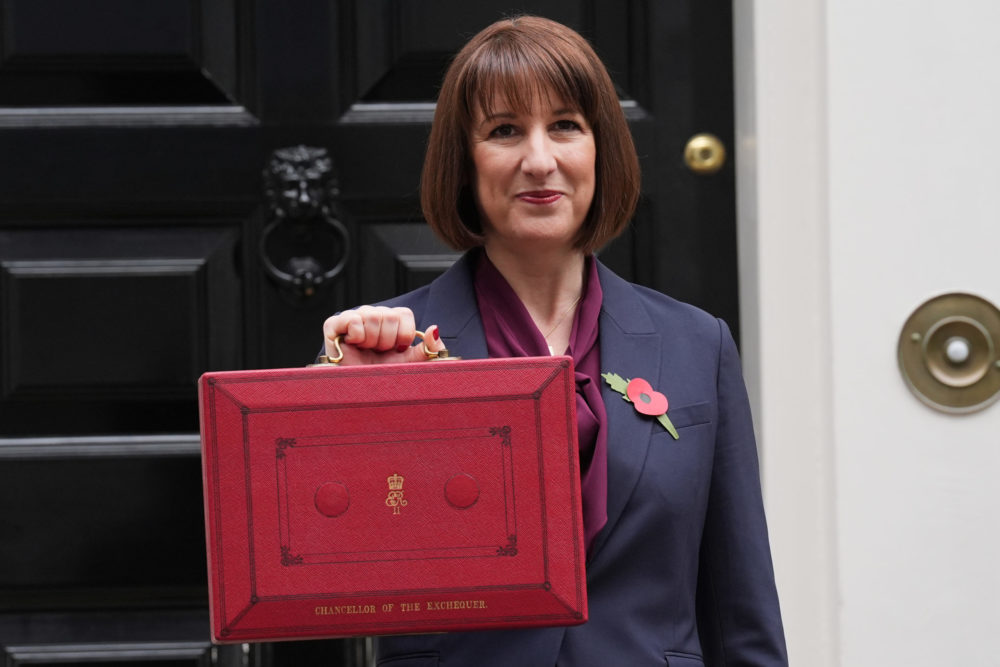
This week the Chancellor’s Growth announcement was aimed more at the ‘markets’ as opposed to a domestic political audience.
The economic alarm bells are ringing. An economic crisis will inevitably lead to a political crisis, and while the majority Labour enjoys will stave off the collapse of the government, its long road to election defeat at the next general election will be set.
Labour won with less than 34% of the vote last year. It has very little margin to play with, especially if the Tories and Reform come to some sort of arrangement as mutual interest will surely encourage.
The UK economic model has been unsustainable for a very long time.
Kamikaze economics
Labour did inherit a mess, but it wasn’t one solely from the Truss-Kwarteng experiment in kamikaze economics.
The rot goes back further to Thatcher, embraced by Blair and Brown: to bet big on the financial sector.
Even amateurs who like a punt on shares know you have to diversify your portfolio; the UK state for decades has been placing all its eggs in one basket.
Much was the talk following the 2008 financial crash about the need to rebalance geographically and sectorally.
There was precious little governmental action apart from baseless slogans such as Levelling Up. What has happened is that geographical and individual wealth has become even more polarised.
Today in the UK, according to the Resolution Foundation, wealth is unequally distributed far more than income. If more consumption is funded from wealth, then living standards diverge driving inequality.
The report further notes that compared to the 1970s, the private wealth to national income ratio in the UK has doubled to 6:1.
Wealth
A clear indication of economic health comes when looking at wealth between the generations. In a vibrant economy each generation should be more affluent than the one that precedes it. The complete opposite is the case in the UK today, where we are witnessing generational slowdown.
These statistics project decline with a capital D.
The reckoning facing the UK economy might not come this month or the next, but it will eventually come. The key question policy makers will then face is what alternative economic model the UK can adopt and who will bear the cost of the transition.
At this stage the only credible path will be to tax private wealth, especially considering the vast quantities accumulated by the richest in recent decades.
However, is there a political party out there prepared to make the case?
Viewed from this context, the announcements by the Chancellor in her growth strategy this week at best can only offer a stay of execution for UK plc.
Jonathan Edwards was the MP for Carmarthen East and Dinefwr 2010 - 2024.
Support our Nation today
For the price of a cup of coffee a month you can help us create an independent, not-for-profit, national news service for the people of Wales, by the people of Wales.
Get more trusted Welsh news
Choose Nation.Cymru as a preferred source in Google News to see more of our journalism.
