


Opinion
The time for one Welsh place name is now
Stephen Price
Wales' place names offer a source of endless fascination for me - our rich history plotted across the nation in pure poetic form. Each hamlet, village, town, city and everything in between hinting at past industry, owner, local flora, and so much more.
Wales' place names, as well as being poetic, also lay bare conflicts that have raged for over a thousand years, and the impact on Wales' status as England's first colony - a land that has resisted, defied, and stood firm, but one that is undeniably bruised, both culturally, economically and linguistically.
This tension plays out across our place names in a multitude of ways - from alternate English names with completely different sources of inspiration (e.g. Swansea/Abertawe), to new settlements with English names only (e.g. Fairbourne), locations with shared Welsh and English names (e.g. Brynmawr), or quite often a Welsh name and an Anglicised version thereof (Caerdydd/Cardiff).. We've even got plenty of English names made Welsh (e.g. Niwbwrch).
A delightful mix? That's up for debate.
If you're anything like me, or the much-more-clued-up and brilliant historian, Josef Roberts from Tirlun however, it's a constant source of joy to mine, with every road trip or map search offering new inspiration and history to discover.
Aberdâr/Aberdare.. Blaenafon/Blaenavon.. Aberpennar/Mountain Ash, Beaufort/Cendl, Aberteifi/Cardigan.. Endless decoding, delving and untangling of complex histories - many of which have been lost to time.
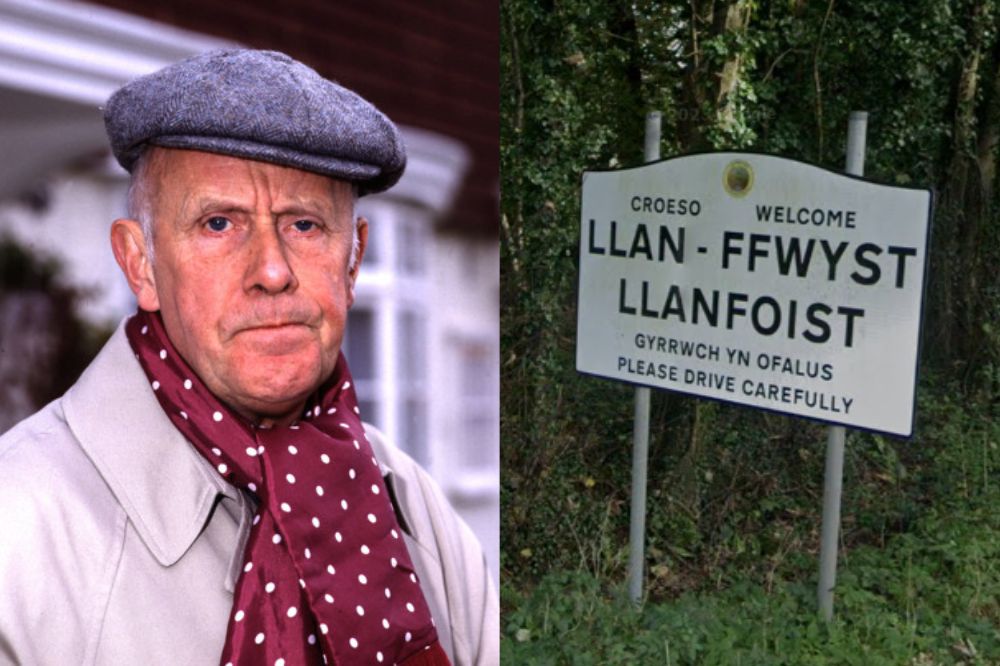
Welsh place names are a hot topic and hit the press time and time again - be it a mistranslation of a sign, or a petition to rename our very land, and only last month there was (mostly) widespread approval when North Wales Wildlife Trust announced that its nature reserve near Tal-y-bont, Bangor, will once again be known by its historic Welsh name, ‘Llyn Celanedd’, replacing the more recent (and rather ugly) title ‘Spinnies Aberogwen’.
With the New York Times praising y Bannau Brycheiniog in January 2024's list of the best places in the world to visit, we were given clear proof of the impact made by a nation reclaiming its pride and confidence in one of its most important components - its language.
The recognition gloriously confirmed the right decision was made to use an authentic name for the national park and, just as North Wales Wildlife Trust has proven almost two years later, that a precedent has now been set.
The New York Times praised the park for the decision to use its Welsh name only, and for ‘conserving Welsh culture amongst scenic mountains’.
Journalist Susanne Masters wrote: “Reclaiming the name Bannau Brycheiniog for a beloved national park in Wales last year was more than a linguistic change to Welsh from English; it was a shift to spotlight the Welsh culture of the 520-square-mile park, formerly known as Brecon Beacons. The park’s emphasis on the relationship between nature and local culture is also shown in a new logo."
Welsh actor, Michael Sheen featured in a moving short film to launch the name switch from Brecon Beacon’s National Park to Bannau Brycheiniog back in April 2023 – describing it as “a name from our past, to take us into our future.”
Outdated
Looking back at articles featuring the name Brecon Beacons, its use couldn’t look more outdated or more inappropriate for the Cymru of today. And don’t get me started on the trend from people over the border who Christened it ‘the Brecons’.
Back then, articles appeared in print and online with businesses claiming it would damage the region and its ‘Beacons’ named businesses - and yet, here we are today with one of our national parks featuring in one of the most important and most-read news publications worldwide.
A priceless PR move, with y Bannau firmly planted in the minds of American and worldwide tourists and their deep pockets.
To me, there’s something so refreshing, so ‘right’ about calling it ‘y Bannau’ or 'y Bannau Brycheiniog’. It’s the original name, after all.
Subjugation
As for the popular Senedd petition calling for us to change the name of Wales to Cymru, Labour have ignored it as they do, and we've heard nothing since. Off the agenda, a distracted nation, and an unaccountable government dancing to the tune of Westminster.
Will Plaid be brave enough if they take power in 2026? I really hope so.
Back to the dual names, and parallel lives, we're all currently accepting with our place names. Again, why is no one making it more of a priority?
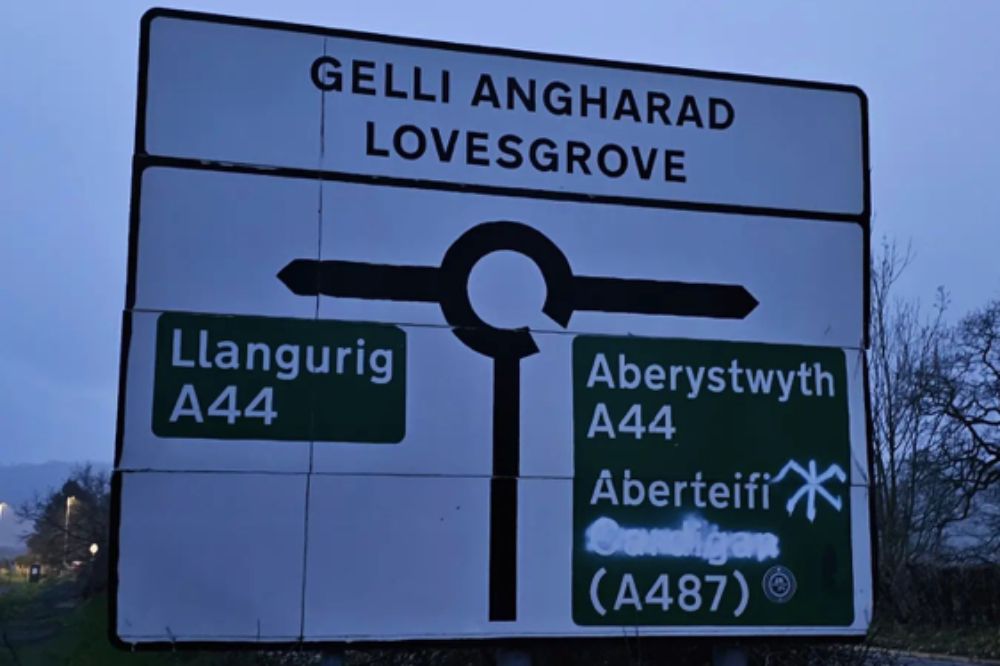
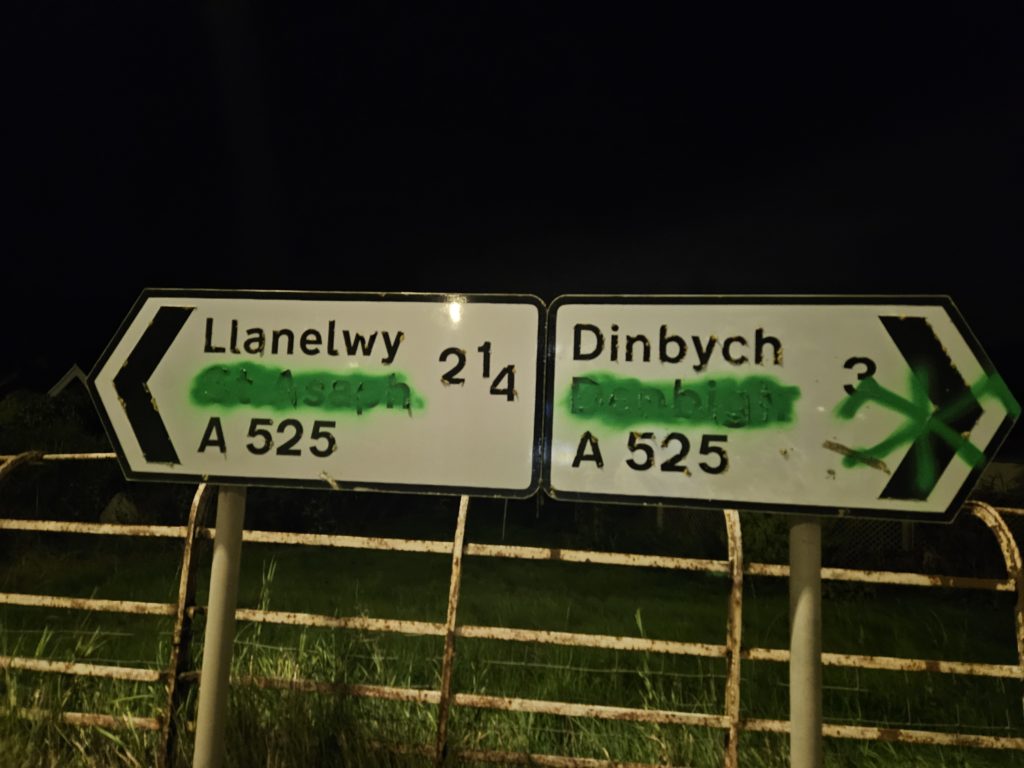
As it stands, it's taking the likes of groups such as the youth-led campaign group, Mudiad Eryr Wen, to show the strength of feeling particularly among the young who have simply had enough of this accepted idiocy and subjugation.
In August 2024, the protesters targeted the Anglicised names ’St Asaph’, ‘Ruthun’ and ‘Denbigh’, leaving behind only the indigenous Welsh names (Llanelwy, Dinbych and Rhuthun).
A representative from Eryr Wen told Nation.Cymru: “We believe it to be necessary and reasonable to remove imposed English place-names from road signs within Wales.
“As is often the case, many of the names targeted are wholly unnecessary and meaningless, being mere bastardisations of the original Welsh names.
“Following on from the official name change of Eryri and Bannau Brycheiniog last year, there is a growing movement to de-anglicise names within Wales.
“It certainly isn’t without precedent; similar acts of direct action from the likes of Cymdeithas yr Iaith Gymraeg have resulted in the removal of ‘Carnarvon’, ‘Portmadoc’, ‘Cardigan’, ‘Dolgelley’, ‘Conway’ and ‘Llanelly’ already.
“The names are nothing more than a bad hangover from England’s historic conquest and failed attempts at forced assimilation in Wales.
“Some may attempt to argue that because most of Wales cannot presently speak the language fluently, that it therefore simply isn’t fair or appropriate to de-anglicise the names.
“However, this is complete and utter nonsense. No one struggles with the aforementioned examples of places in Wales that have already been de-anglicised, do they?
“Indeed, there also are no complaints about other Welsh place-names either. Non-speakers and speakers alike have no issue with the likes of Llangollen, Llandudno, Pwllheli, Abersoch, Pontypridd, Aberystwyth or any of the countless other places within Wales with Welsh names.
“It’s time for Wales to wholly reclaim its rich linguistic heritage, and there is no simpler starting point than by first reclaiming the names of its many towns, villages and cities.”
Matt Howells, summed things up thus: “The etymology of Welsh place names isn’t a black-and-white affair. There are examples of English place names in Wales that predate the Welsh names such as Rhyl (originally ‘The Hill’) and ‘Prestatyn’ (originally ‘Priest’s Town).
“Having Swansea and Abertawe, for example, gives us two histories. One of the Island of an unknown Viking called Svein, and another denoting the mouth of the river Tawe.
“But when it comes to insulting, garbled, derisional spellings of Welsh places such as Cardigan and the notorious Llantwit Major, we need to make a stand now and revert them all to Welsh. We don’t need a Kidwelly and a Cydweli, or a Caerphilly or Caerffili. And Peterston-super-Ely makes my blood boil!
“I totally support the reintroduction of Welsh-only place names except for those where the English has developed in tandem and has a unique meaning.
“The Welsh Language Commissioner has been too toothless in this regard and things need to change.”
If not now, then when? It's going to happen, so why wait when the time is now.
Josef Roberts from Tirlun writes: "I love place names because they combine several interesting things like languages, history, culture and geography into one parcel.
"I believe if people understand the stories, history, and meaning behind our place names, then maybe they will be more inclined to support protecting and promoting them as part of our national heritage."
As it stands, Wales thinks, looks and acts like a colony while we continue the silly and offensive acceptance of two names for one location. If we want a place on the world stage, we need to believe in ourselves and our language. If we can't, why should anyone else?
Just imagine the reset using our own language, and only our own language, for our own places would give Wales. And just like the switch to Bannau, the opportunity to gain wider recognition (and with it investment, for those that can only see value in economics) across the world.
This is a bruise we could heal overnight - a united nation, with Welsh and English speakers singing from the same hymn sheet geographically and linguistically, in a land where the place names are "of this soil, this island.."
Where they are, call me biased if you must, pure poetry, and truly beautiful.
Where they belong to us.
Support our Nation today
For the price of a cup of coffee a month you can help us create an independent, not-for-profit, national news service for the people of Wales, by the people of Wales.
Get more trusted Welsh news
Choose Nation.Cymru as a preferred source in Google News to see more of our journalism.
