
Opinion
The Soul of Labour
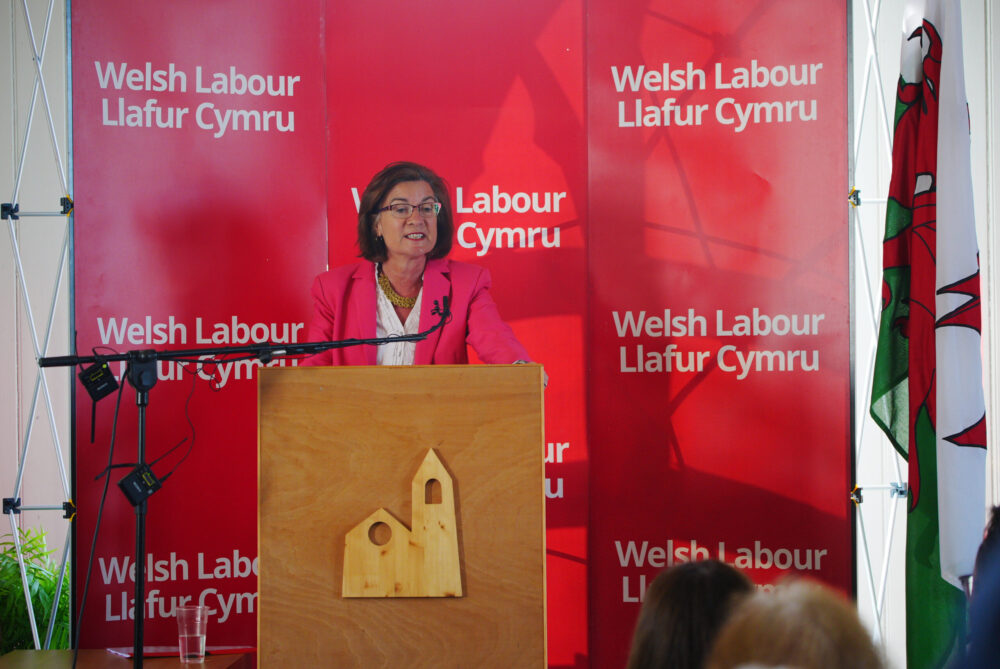
It’s difficult to know when or how Wales ceased to be a contributing partner to the UK Labour movement.
Neil Kinnock’s serial failure to win a general election was often ascribed to an English distaste for Welsh sensibilities. Certainly, the press of the time had no qualms in tossing out ‘Welsh windbag’ jibes with increased frequency as elections approached.
Such assumptions don’t apply to Scottish politicians. Indeed, a Scottish veneer seems to signify caution and prudence even if worn by break-the-bank gamblers like Gordon Brown.
Scotland has had a far more volatile political scene than Wales in recent decades. Its independence movement has come close to winning a referendum, whilst the SNP has surged and receded with the Tories, Greens, and Labour all having their moments in the sun in the past few years.
Meanwhile, Wales has stolidly returned Labour MPs and MSs with nothing, until now, suggesting that any real drama was likely to erupt and disturb the status quo.
[mid-content-banner]
Prime position
You would think, then, that Welsh Labour politicians would be in the prime position to influence and lead the national party. With the possible exception of Nick Thomas-Symonds, however, our representatives enjoy very little national recognition or consideration for the highest offices.
At last year’s election, of course, two of our highest profile city constituencies were contested by Labour candidates who, one suspects, might have struggled to point them out on a map a few months previously.
Both Torsten Bell and Alex Barros-Curtis are tipped for rapid promotion in Keir Starmer’s government, leaving the impression that the reliability of the Welsh electorate is a resource that can be tapped by ambitious national figures, rather than a springboard for Welsh politicians who aspire to national careers.
The deficit in power between the Scottish Parliament and the Senedd is one reason why Scottish politicians enjoy a relatively higher UK profile.
Nicola Sturgeon and the late Alex Salmond had A-list status, to the extent that any politician can.
Whilst Mark Drakeford garnered some coverage during the pandemic, Sturgeon was well-known enough to be impersonated on prime-time TV by Tracey Ullman.
With Labour back in Downing Street, you would think that Welsh politics would be experiencing a purple patch.
[lower-mid-content-banner]
Spiritual home
Having been prominent at the birth of the party, and instrumental in the creation of the NHS – its defining achievement, Wales could be described as Labour’s spiritual home.
That historical status, though, partly explains the peripheral position that Wales holds in Labour politics now.
When Neil Kinnock began ‘modernising’ Labour, a Welsh accent had benefits within the party, even if we believe its supposed detrimental effect on the wider electorate.
As party members were softened up for what eventually became Blairism, Kinnock’s cultural identification with industrial Wales lent credibility to the claim that ‘new’ Labour was merely an update; a besuited, modern expression of deeply held, and immovable values.
After Blair tore up Clause 4, and Kinnock had floated to Brussels on a sea of English gratitude, cultural affinity with the heartlands of the UK was left almost entirely to the cartoonish efforts of John Prescott.
It was a throwback, a cheerfully tolerated relic of what once was.
But whilst Labour in England gentrified its appeal and sharpened its vowels, the party’s most loyal voting bases in Wales and the north of England watched their towns fall into ruin.
If these voters showed signs of straying from the pack, then they were explained away as bigots.
Now, though, Labour is not contending with lost sheep but a fugitive flock.
[lower-mid-content-banner]
Traditional values
Baroness Morgan’s assertion that she won’t be afraid to criticise the UK party if they are at variance with the traditional values of Labour in Wales came off like an AI approximation of Rhodri Morgan but without the genuine intent.
If this criticism is eventually forthcoming, the Baroness might find herself without a hearing.
Last year, at the height of Vaughan Gething’s troubles I spoke to someone now at cabinet level in Westminster to see what the leadership thought.
They thought nothing because they had no idea anything was going on.
This week’s news of trade deals with India and the USA has seen UK Labour triumphant in mood.
If, however, these seemingly welcome developments do not result in the funding of policies that the Welsh electorate see as being in their interests and aligned with the values of our communities, then they will not translate into Senedd representatives next year.
Wales did more than anywhere to define the soul of the Labour Party, if the party loses here, it has lost more than it may yet realise.
Support our Nation today
For the price of a cup of coffee a month you can help us create an independent, not-for-profit, national news service for the people of Wales, by the people of Wales.
Get more trusted Welsh news
Choose Nation.Cymru as a preferred source in Google News to see more of our journalism.
