


Opinion
The right to protest against injustice is no longer respected by the UK Government
Martin Shipton
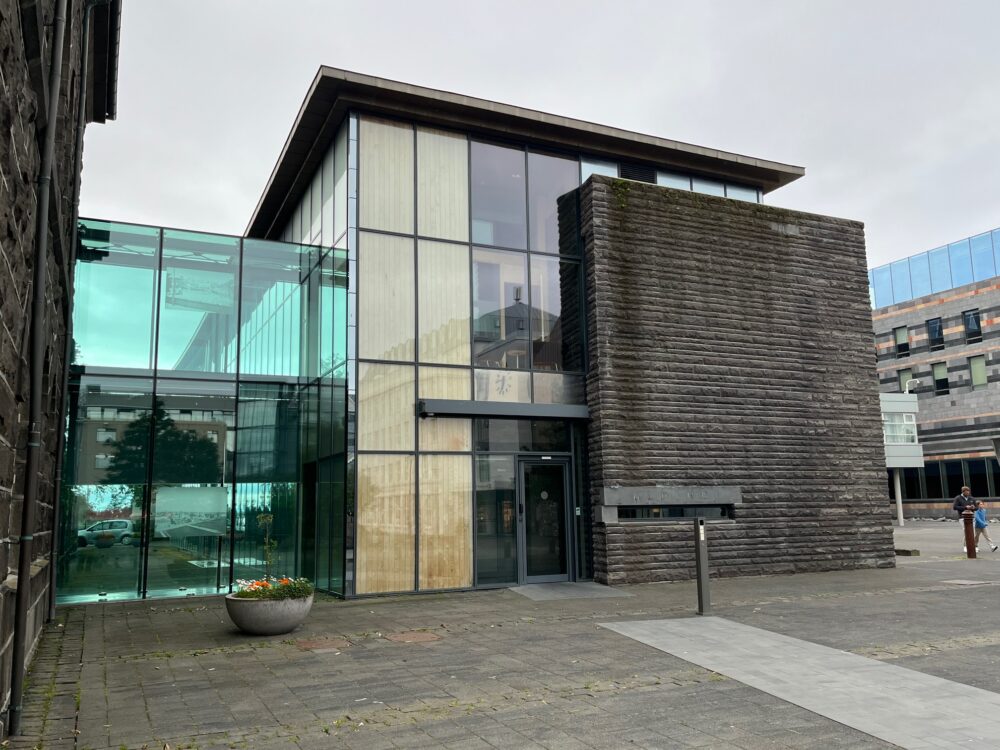
Outside the Althing - the Icelandic Parliament in Reykjavik which is the oldest surviving parliament in the world - is a plaque that contains a quotation from the Declaration of the Rights of Man and Citizen, a document dated 1793 from the period of the French revolution.
Headed “Monument to Civil Disobedience”, it reads in a rather awkward English translation: “When the government violates the rights of the people, insurrection is for the people and for each portion of the people the most sacred of rights and the most indispensable of duties.”
It reminded me that one of the essential tenets of a democratic society is the right to protest against injustice.
And I immediately thought how such a right was no longer respected by the government in Britain.
[mid-content-banner]
Palestine Action
The decision of Home Secretary Yvette Cooper to classify and proscribe Palestine Action as a terrorist organisation has crossed a threshold that I considered uncrossable.
A country like Iceland recognises the right of citizens to engage in civil disobedience as fundamental to freedom. Of course there will be instances where the law is broken in pursuit of a cause. But defendants have been able to argue that taking action that may involve breaking the law is excusable if the intention of the action was to prevent a bigger crime being committed.
Britain was essentially in this same category until Ms Cooper issued her edict.
For her to have done so defies commonsense. No one seriously believes that Palestine Action is comparable as an organisation to Isis or Al Qaeda - groups that behave as terrorists do, murdering anyone in pursuit of an ideology that is at the opposite end of the spectrum from democracy.
However much one may disapprove of Palestine Action’s modus operandi, it is clearly very different in terms of its motivation and implementation.
No one has been killed as a result of the group’s activities, which have been directed at thwarting violent actions undertaken by a foreign nation - Israel - or support given by the British military to that nation.
It’s significant that there has been no question of proscribing the Palestine Solidarity Campaign - the group responsible for organising countless protests against Israel’s murderous attacks on Palestinians.
The Israeli Prime Minister Benjamin Netanyahu doesn’t care how many people in Britain participate in demonstrations against his war. With the practical and moral support of the US, the UK and other European nations, such protests can be safely ignored.
[lower-mid-content-banner]
Israel’s war aims
But damaging weapon systems produced by Israelis on British soil is another matter entirely, and something that Netanyahu won’t tolerate. Breaking into premises where deadly drones are manufactured, as Palestine Action has done, is interfering with Israel’s war aims and has to be stopped.
Classifying the group as a terrorist organisation, with jail sentences of up to 14 years for anyone who belongs to the group or expresses support for its aims, is an effective way to neutralise opposition that has proved itself capable of causing tangible damage.
What should worry us is how Israel has been able to exert such pressure on the UK Government that it has extended the definition of “terrorism” into what should be considered the realms of absurdity. But the forces of law and order aren’t treating it as absurd, and individuals who don’t have the slightest inclination to violence are now being arrested by police officers acting in accordance with political instructions - something that should never happen but, as those of us old enough to remember the miners’ strike realise, sometimes does.
On this occasion, however, we’re into new territory, with repressive measures being introduced at the behest of a foreign country - and one that can legitimately be argued to have engaged in terrorist activity itself.
A certain amount has come out already about the way British forces have been deployed to help Israel’s vicious attacks on the people of Gaza, and I have no doubt that much more will emerge as time passes.
Equally I am sure that future revelations will not be to Britain’s credit.
Having been away in small Nordic countries - the Faroe Islands and Iceland - for two weeks, I can see with some detachment how debased our political discourse has become.
In Akureyri, Iceland’s second largest city with just 22,000 inhabitants, a large mural of Greta Thunberg has pride of place in the main pedestrian street, underpinning the population’s legitimate concerns about climate change. In Britain, meanwhile, the young activist is subjected to vile abuse on social media, and the party leading the polls is becoming increasingly extreme in its climate change denials, thus doing the bidding of its fossil fuel industry funders.
In Wales, right wing social media accounts on the Tory/Reform cusp using pseudonyms are pushing on a daily basis the line that the Welsh Government has spent millions on its “Nation of Sanctuary” initiative, clearly implying that the bulk of the money has been spent on housing asylum seekers who arrived on Britain’s shores in small boats.
In fact, as the FoI disclosure that revealed the costings made clear, most was spent on resettling refugees from Ukraine. Making that point wouldn’t help the desired racist narrative, however, so it isn’t mentioned.
The deceptive modus operandi is similar to that deployed by Andrew RT Davies when repeatedly asserting that the Welsh Government was handing out thousands of pounds to “illegal migrants”, based on the fact that a small number of unaccompanied child asylum seekers had benefitted from a pilot scheme aimed at helping those leaving the care system. But perhaps that’s no coincidence.
We’re going to be faced with such onslaughts of distortion from now until the Senedd election next May, and it’s important that what these people are pushing out is called out for what it is constantly.
The politics of grievance that is exploited by bad actors without solutions thrives when political leaders are frightened to tell people the truth about why they are being held back. Austerity policies compounded by the hard Brexit delivered by Boris Johnson and Nigel Farage are made even worse by the imperial nostalgia that too many people still find alluring.
The Faroe Islands and Iceland may be tiny nations with populations of 55,000 and 400,000 respectively, but they seem at ease with themselves and their place in the world. They were never colonial powers, even on a small scale, and their heroes are people who have trailblazed for others, like Iceland’s first woman MP whose statue is outside the Parliament building.
In comparison, Wales is not at ease with itself. Those responsible for its future should seek to make it so by taking encouragement from smaller nations that can create successful and prosperous societies without any imperial baggage.
Support our Nation today
For the price of a cup of coffee a month you can help us create an independent, not-for-profit, national news service for the people of Wales, by the people of Wales.
Get more trusted Welsh news
Choose Nation.Cymru as a preferred source in Google News to see more of our journalism.
