


Wednesday, 15th July 2026 Cardiff 27° · Clear sky
NationCymru A news service by the people of Wales, for the people of Wales.

Opinion

The quest for a home in my homeland, continued...
By Mark Mansfield
House for Sale

June Slater

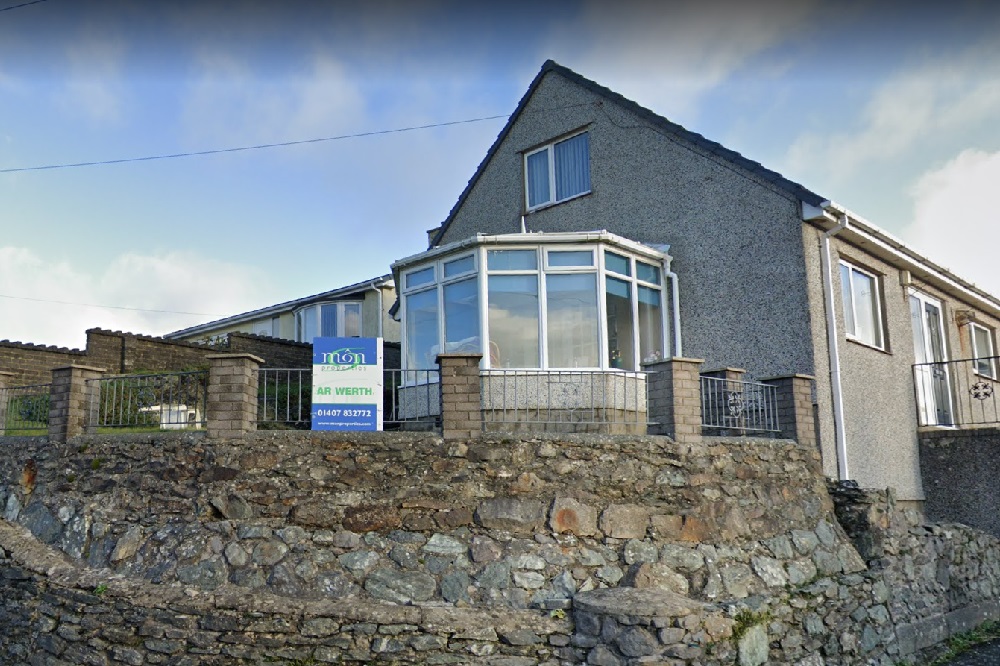
Last year I wrote here about how I was without a home, disabled and was struggling to find somewhere to live in my homeland. I’m dismayed to have to report that, a year-and-a-half later, I find myself in much the same situation.

My budget has increased following the recent death of my mother, but it’s still proving near-impossible to find a property that both fits my needs as a disabled person and that’s within my price-range. Any properties that fit the bill for me (in every sense of the term) solicit a stampede of viewers and potential buyers and I end up getting beaten to it or priced out.

A couple of weeks ago I went to view a one-bedroom detached house, on the market for a shade under £200,000. I viewed it 4 or 5 days after it had been put on the market, by which time the vendors had already had two offers and there was still viewing after viewing taking place on the day I went to see it (alas it wasn’t suitable for my needs).

I asked the estate agent who the offers had in come from: a local couple of first-time buyers, and some people from ‘up country’, which appears to be euphemistic estate-agent speak for ‘from over the border’. I really hope the vendors decide to sell it to the local couple.

I want them to have it because, in the course of my still-fruitless house-search, I’ve been struck by the fact that in rural west- and mid-Wales I come across surprisingly few Welsh people—to the extent that I’ve sometimes found myself wondering where all the Welsh people have gone!

Apart from working family farms, it seems to me that more and more rural properties in the west- and mid-Wales countryside are owned by people from England. I imagine this is true of other parts of rural Wales too.

I’ve also been able to find out that a few of the rural properties I’ve been unable to buy—too expensive at the time, or I was outbid—have since gone to people from ‘up-country’: from Sussex, the Midlands and the Isle of Wight, for example.

I recently turned up to view one house (which also turned out to be unsuitable for me) to find that the previous viewer had motorbiked all the way from Kent to view it. It was under offer soon after, so I assume it was be snapped up by the English motorcyclist.

A smallholding next to a friend—himself a recently-arrived Englishman—has just been acquired by someone from Hertfordshire, who bought it off people from Yorkshire, to add to the other people from Birmingham, Suffolk and London who’ve moved to the small valley in question.

Other properties I’ve viewed have been put on the market by vendors who previously moved here from over the border.

'Lifestyle choice'

This personal observation seems to be reflected in recent data: between 2020 and 2022, according to Compare My Move, there was an increase of 27.9% in people moving from England to Wales. Almost half (47.4%) of those who moved to Wales cited a lifestyle choice, and 26.3% did so for their retirement.

The lower cost of living was given by 15.8% as a main motivation for relocating to Wales, and it’s not hard to see how a combination of lower property prices (with a smallholding or substantial property in Wales costing the same as a very ordinary house in many parts of England, especially in the south-east) and the quality of life on offer has proved very attractive to people from over the border.

Since then, the trend has continued: last year the Telegraph reported that “Net internal migration into Wales surged by 65pc year-on-year to 17,559, also the highest total on record excluding the year to June 2020.”

While looking into this issue I forced myself to watch an episode from 2025 of the BBC’s I Escaped to the Country, a spin-off of its series Escape to the Country, which helps would-be buyers from urban areas relocate to the countryside. The one I watched focused on people who’d moved to Pembrokeshire, and indeed much was made of the lovely properties that had been unexpectedly within their budget.

One of the ‘escapees’ had moved from Warwickshire, and she was shown helping out in the village community garden and playing in the local ukulele band.

Also helping out in the garden was a woman from Wiltshire, while a man from Hampshire was a member of the band as well. It was unclear whether these people were to be taken as typical of the members of these groups or whether they’d been picked to speak because they were incomers too.

'Another county'

When the programme switched to the case of a couple who’d moved from suburban Wiltshire to a large rural property in north Pembrokeshire, they were asked how they’d experienced the move to ‘another county’, at which point I confess I shouted at the TV, ‘No, it’s actually another country!’

The influx of people from England with bigger housing budgets arguably contributes to the inflation of house prices in Wales. Indeed, a recent article in Nation.Cymru about the housing crisis in Wales noted that house prices in Wales have risen 70% in a decade while wages have lagged far behind, and around 90,000 households are on social housing waiting lists.

Shockingly, that amounts to almost 7% (6.68%) of all households in Wales. Those not currently battling to find somewhere to live might well be unaware of how difficult it is to find an affordable home in Wales.

And there’s another potential negative consequence of this influx: Dave Sayce, the owner and managing director of Compare My Move, predicts that “the more English movers that do move to Wales for the cost of living purposes, the higher the cost of living will rise in Wales, levelling out with England sometime in the near future.”

That’s not good news for Welsh people earning local wages given that house prices in Wales have experienced some of the biggest increases in the UK over the past five years.

The other piece of data that appears to back up what I’ve experienced on the ground is the fact that the latest census data (from 2021) reveals that only 1.7 million usual residents in Wales identified with a “Welsh” only identity (55.2% of the population, down from 57.5% in 2011).

Almost thirty percent (29.4%) of the population of Wales now identify as English and/or British and not Welsh at all. By contrast, some 65.5% of residents in Scotland identify only as Scottish.

Unlike in Wales, this has increased by 3.1 points since 2011, when 62.4% of people said they were Scottish, not British.

If these trends in Wales continue, it seems likely that in a couple of decades’ time those who identify only as Welsh will end up being a minority in their own country. I can’t see many other small countries thinking this is a good thing, but there’s precious little that can be done about it unless and until Wales gains independence, something that’s probably becoming less and less likely as the English population of Wales grows.

I’ve got many good friends who moved to Wales from England. They’re very happy that they did so—as am I because they’re my friends. Some incomers genuinely appreciate and embrace Welsh culture, throwing themselves into local community life and also getting to grips with the language.

It’s heartening to read about people like Anthea Fowler, who moved to Wales in 2021 and is learning Welsh. Others, however, can sometimes come across as rather indifferent to the culture of the country they’ve moved to: they like the quiet rural life but couldn’t really care less that this happens to be in Wales; the place they ended up was merely the means to a better quality of life.

There’s no personal animosity, xenophobia or anti-English sentiment in stating this. I’m not blaming those who move to Wales looking for a better life for doing so. Nor am I seeking to stoke division or fuel resentment: I’m simply reporting what I’ve noticed ‘in the field’ so to speak, and wondering what its long-term impact will be for my country.

All in all, I suspect these trends probably don’t bode well for the future of Welsh culture and identity, and even less so for the future of the Welsh language in what is already an imperiled minority culture with a domineering neighbour—one to whom Wales is constitutionally enchained and by which it’s continually exploited.

Wales is, as former Plaid Cymru leader Adam Price has put it, England’s “first and final colony”.

The Welsh Government wants Wales to have a million Welsh-speakers by 2050 but I’d wager that’s very unlikely given current trends.

Are such levels of English immigration into Wales—and into rural Wales in particular—sustainable if we want to see a viable Welsh culture, identity and language surviving into the future? I suspect not, but I’d be very glad indeed to be proved wrong.

For the price of a cup of coffee a month you can help us create an independent, not-for-profit, national news service for the people of Wales, by the people of Wales.

19 comments

Evan Aled Bayton

The same is happening in the urban parts of England like London, Birmingham and Manchester where the English are now a minority outnumbered by immigrants from all over the world. In Birmingham the accent is disappearing. I can think of parts of Lancashire where the English are becoming a minority and where politics and municipal administration is controlled by immigrants and their descendants. It is a worldwide experience and as climate change occurs likely it will continue.

Reply
J Jones

But the English themselves are immigrants, rather than indigenous people where history and culture needs to be maintained instead of the traits of the vile modern world.

Reply
Padi Phillips

And so are those who call themselves Cymry/Welsh. Let's not forget that all humans alive today are descended from a woman who migrated from what is now Africa. At some point or another, if you go back far enough, most places on the face of the earth was populated by 'immigrants' who usually displaced the other species of humans that were indigenous, in the case of Europe, they were the Neanderthals. When are people going to realise that race is a load of bollocks, we are all one species. I'm not for a moment suggesting that there isn't a crisis here in Cymru, but coming out with rubbish arguments as to origins or who was here first isn't going to help, nor is blaming people for wanting to live here in our beautiful country. Organising and pushing government to act will make a difference, local authorities do have some tools they can use, such as increasing the council tax on holiday homes to 300% the usual rate - how many apply that? We could demand more substantial action from the Senedd, to implement legislation similar to the Channel Islands or Switzerland, or indeed, like Denmark where it is extremely difficult to buy a holiday home unless you're Danish. This is our fight, and our fight alone, and doing the usual of moaning about the Sais isn't going to change a damn thing.

Reply
Egon

Are you suggesting this flow from England is mainly white flighters?

Reply
cilmeri1282

The problem is that English immigration to Wales is very different from English people moving to live in different parts of the their own country. In rural Wales they move and undermine our language and culture. There is a 'white flight' from English urban areas in particular - welathy English retirees or middle class types able to sell expensive properties in England and buy a farm in Wales. Another big problem which is undermining our rural commu ities is the One Plant Development movement of English do gooders getting planning permission in rural areas through the back door. Not all, but many, and in particular retirees - are also at heart white English nationalists' who are racist, right wing types. Come across them here in Pembrokeshire regularly in the pubs anc cafes and on the street spouting their poisonous opinions.

Reply
Padi Phillips

What utter rubbish. Manchester is 56.8% white, London is 53.8% white and Birmingham 48.7%white, so only in Birmingham does the white population make up less than half of the citizens. Even so, white people make up by far the largest single skin colour group in Birmingham. I won't even bother to address some of your other statements, and the number of down votes suggests your viewpoint is not popular, or supported.

Reply
J Jones

It's all about balance between the tourism industry and protecting the indigenous language and culture. but balance is not evident in modern day politics, Despite the English being immigrants in their own land, they march around protesting about those who've followed them over the channel. But then they come to this country where many show total hypocrisy with their disregard for the indigenous language and culture.

Reply
David K

Unfortunately extremes are always bad as they displace the majority view. Gywnedd have uncontested councillors in their job for years so live in this small bubble without experience of the rest of the world. It's good to get a mixed view as the current anti-tourist attitude is a minority view which has a loud voice at the moment. Houses have dropped 10-20% due to the Article 4 directive and the market is flooded with affordable houses no one wants to buy. Many people want to rent not buy. They blame the holiday market but fail to see their own ineptitude in not investing the money from council house sales into additional social rental housing so no wonder there is a housing shortage in the rental market. When it comes to jobs their policies put off busineses investing in the region as they don't know what poorly researched policies are doing. People and businesses need stability to invest but Gywnedd council is constantly messing around without an appreciation into what the consequences are. If a business or fails stagnates it introduces new management to bring in new experience/ideas. This doesn't happen in councils and the same people who failed once fail multiple times

Reply
Egon

What anti-tourist attitude? Secondhomers aren't tourists, they're absentee residents.

Reply
Gaynor Jones

So Dave - you do realise that selling off council houses came with the stipulation that monies made was not to be invested in local housing, or did you forget that Thatcherite stipulation?

Reply
Clive hopper

Let's also remember that when someone sells their property most just want the highest price. They are not bothered about who buys it whether they are local or from Mars!

Reply
Padi Phillips

That's an inconvenient truth that too many ignore. The real problem here is the capitalist housing market. Until you get rid of that, or more likely, strictly regulate it, then there will be no change. Governments (especially Welsh governments) seem very reluctant to do anything like that.

Reply
Egon

Perhaps self-build is the answer.

Reply
Padi Phillips

Still have to buy the land, which is often the expensive bit, and get planning permission. Personally I think it should become virtually impossible to buy or build a home of any type (holiday or even to move into) unless you have a substantial local connection, i.e. you were born within a reasonable distance (no more than 10 or 20 miles away) are a key worker needed in the locality or have lived in the area for a specified amount of time. Not a perfect system, but it would affect all comers equally, and would avoid any serious suggestion that Welsh people would be advantaged and would also allow those who genuinely want to move to live among us an opportunity to prove their desire by living in an area so that they eventually qualify. The benefits of such a system would allow local people fairer access to a regulated and restricted housing market that would probably suppress house prices. Of course, this kind of thing alone isn't a solution, and what many of the areas where this is a particular problem need is serious economic development based on something other than tourism. preferably something that is high skilled and well paid so that tourism jobs have to pay substantially more in order to attract and retain staff.

Reply
Rhufawn Jones

A great piece, exposing the blatant colonization of Wales - especially Welsh-speaking West Wales. There is no housing shortage in Wales - the problem is too much unaffordable housing that local people cannot buy. Many places in England have section 106 local occupancy clauses to help with this. But of course, that would be 'racist' in Wales, because Wales exists solely for the benefit and convenience of England. We need very very brave politicians to tackle this.

Reply
Egon

If the local connection clause is valid for council houses why not all social housing and affordable homes.

Reply
Padi Phillips

Cymru also has Section 106 housing and much ex local authority housing is sold under the provision of Section 106. Section 106 isn't in itself necessarily the solution as it can also result in some strange anomalies itself. Some years ago there were some Section 106 houses for sale in Abersoch, built I assume under a planning stipulation for percentage of houses in a development to be 'affordable'. At over £180,000 each, those houses were hardly affordable for the vast majority of local people.

Reply
Dai

Too late, I remember going to Carmarthen around 2001 time and I didn't hear a Welsh accent in the town back then. I thought it was supposed to be a hotbed of Welsh national identity and a Plaid stronghold? It's been the same when I've visited places like Llandeilo or Aberystwyth too. Even in places like the Gwent valleys, where there were hardly any incomers 30-odd years ago, you'll find plenty of English people. Most of the incomers I've come across have been fine and many of them are lovely people, some of them learn Welsh and make massive contributions to their communities... but they're not going to vote for annibyniaeth in their droves or preserve our identity, even if they are pro-Welsh.

Reply
Egon

We've been here before, during the coal rush. Perhaps mandatory integration lessons are the answer.

Reply

Leave a reply

Replying to Padi Phillips Cancel

What utter rubbish. Manchester is 56.8% white, London is 53.8% white and Birmingham 48.7%white, so only in Birmingham does the white population make up less than half of the citizens. Even so, white people make up by far the largest single...

Comments are reviewed before they appear.
