
Opinion
The Port Talbot and Scunthorpe steel plants do not have a long-term future as privatised companies
Mike Hedges - MS for Swansea East
As people have received their water bills, had to change supplier following the failure of some energy companies and British Steel almost closing in Scunthorpe, they have discovered that whilst privatisation made a few people very rich, most of us have ended up paying the price.
The Conservatives under Thatcher came to power in 1979 with privatisation as part of its manifesto, and it became a central part of its ideology as the 1980s progressed. Many industries and utilities including some that had been nationalised by the Attlee government of 1945-51 were made into private companies.
Steel, railways, airways, airports, and aerospace industries; and the public utilities, gas, electricity, telecoms, and water were privatised. When the Conservatives won the 1979 general election, nationalised industries represented 10% of the economy and 14% of capital investment.
It was not only government industries that were privatised, but we also had the privatisation of mutual building societies.
[mid-content-banner]
Demutualised
Building societies are mutual organisations owned by their members and starting in the late 1980s, most of the larger societies decided to convert to become banks rather than building societies. To do this, they floated on the London Stock Exchange and offered free shares to their personal customers.
Other societies became demutualised through agreeing to be acquired by banks such as Birmingham Midshires, Bristol & West, Cheltenham & Gloucester and, National & Provincial.
This easy way to make money from shares came to a halt within a few years. The last to demutualise was the Bradford & Bingley in 2000. The remaining large building societies all made it clear that they supported mutuality and did not see the business case for demutualisation and conversion toa bank.
Every one of the demutualised societies quickly lost their independent status either by being acquired by other banks, or by running into calamitous financial difficulties during the 2007/08 financial crisis exemplified by Northern Rock, and Bradford & Bingley. Shareholders of the Northern Rock and the Bradford & Bingley found that their holdings became worthless.
[lower-mid-content-banner]
Water
Water privatisation in England and Wales took place in 1989, through the sale of the ten regional water authorities The newly created, privately owned, water and sewerage companies paid £7.6 billion for the regional water authorities.
At the same time, the government assumed responsibility for the sector's total debts amounting to £5 billion and granted the WSCs a further £1.5 billion of public funds. England and Wales became the only countries in the world to have a fully privatised water and sewage disposal system. A publicly owned monopoly was turned into a private monopoly, and we have paid the price.
Research by the University of Greenwich suggested that consumers in England were paying £2.3 billion more every year for their water and sewerage bills than they would if the water companies had remained under public ownership.
By 2024, the rise in inflation and interest rates left several water companies with unsustainable debt. Water companies sharply increased bills failed to deal effectively with sewerage entering rivers, but water and sewage companies were still able to pay £1.4bn in dividends in 2022.
Welsh Water is a not-for-profit company supplying drinking water and wastewater services to most of Wales. In 2021 the chief executive of Welsh Water received remuneration of £892,000 and in other years on top of the salary package there has been a bonus.
The only long-term sustainable solution is to return water and sewerage companies to public ownership.
British Gas was privatised in 1986, and the first parts of the electricity industry were privatised in late 1990, when the twelve regional electricity companies in England and Wales were sold. This was followed by the Scottish industry and the generating businesses National Power and Powergen and the National Grid being privatised.
Profits
Due to privatisation, UK consumers and workers have suffered from increasing energy prices, fuel poverty and thousands of job losses whilst private firms are recording growing profits. The privatised transmission grid operator National Grid paid out dividends of £1.4 billion in 2021.
The national grid was a public monopoly which was turned into a private monopoly. The changes in the energy sector in the 1980s paved the way for a structure where the ‘big five’ firms currently control 70 per cent of the household energy market.
From the mid-1970s, British Steel pursued a strategy of concentrating steelmaking in five areas: South Wales, South Yorkshire, Scunthorpe, Teesside and Scotland . In 1987 the Conservative government stated that it intended to privatise the British Steel Corporation.
In 1988 the assets, rights and liabilities of British Steel Corporation were transferred to British Steel plc in the year prior to privatisation the state controlled British steel was profitable. The company merged with Dutch steelmaker Hoogovens to form Corus and was then taken over by the Indian company TATA.
Whilst privatised utilities have a monopoly industrial companies must trade and compete. In 2020 the Jingye Group, a Chinese steelmaker, became the owner of British Steel at Scunthorpe.
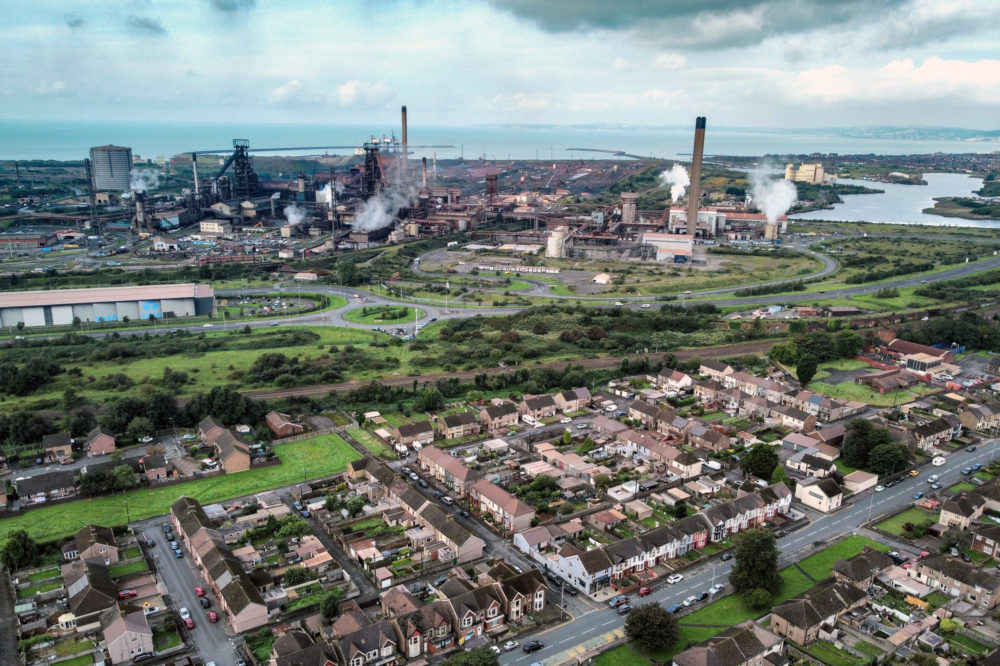
We now have the UK Government stepping in to stop the Chinese owners of British Steel in Scunthorpe closing it down. We have seen the closure of the iron and steel making in Port Talbot by TATA and the proposal to use an electric arc furnace to recycle steel.
Future
I do not believe either Port Talbot or Scunthorpe have a long-term future as privatised companies owned by Chinese and Indian companies. Now is the time to bring both back into public ownership.
For utilities, mutuals and industries privatisation has been a costly disaster for most people. There is a need for a strategy to bring the privatised industries back into public ownership and put an end to the Thatcherite experiment. We need a plan I would suggest that we start with steel and water with the rest to follow.
Support our Nation today
For the price of a cup of coffee a month you can help us create an independent, not-for-profit, national news service for the people of Wales, by the people of Wales.
Get more trusted Welsh news
Choose Nation.Cymru as a preferred source in Google News to see more of our journalism.