


Opinion
The north of Ireland has a republican FM: why it matters for Wales
Hywel Williams, Plaid Cymru MP for Arfon,
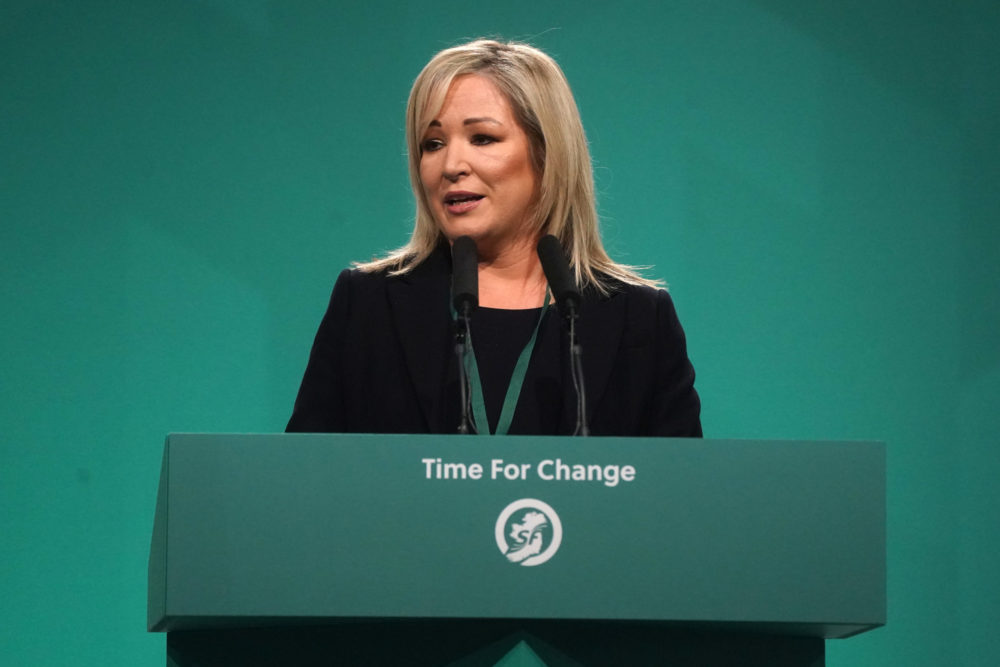
There was a hugely significant event last Saturday as Michelle O’Neill became the first Sinn Féin, first ever Irish nationalist, republican and Catholic First Minister of Northern Ireland. She follows a long line of unionists of various shades of opinion, all but one of whom was a man.
The news bulletins I have heard describe the First Minister as a ‘nationalist.’ She says that she is a nationalist and a republican.
A republican who starts as she means to go on by attending royal events, representing ‘all the people of Northern Ireland.’ Her deputy from the Democratic Unionist Party is also a woman, Emma Little-Pengelly.
Will they be able to establish the sort of positive working relationship that Ian Paisley and Martin McGuiness created? They got on so well in public that they became known as the ‘Chuckle Brothers.’
Both women are from well-known families in their respective communities and are unlikely to be accused immediately of betrayal. Both have made statements about working for the people of the north and wanting to get on with the business in hand, which is a good sign.
[mid-content-banner]
Fundamentals
There is however a huge gap between them on the fundamentals, most obviously on Irish reunification. Their relationship may be strained if not broken if, as expected, Sinn Féin win the forthcoming general election in the Republic.
Then again, a form of reunification may provide huge opportunities for those willing to seize them. Even the Brexit supporting UK Prime Minister has praised the access the north has to the European Union (whilst of course denying it to Great Britain).
Historically of course the DUP have always been ready with a quick tactical ‘NO!’ at the expense of the longer strategy. A DUP MP interviewed on Irish television in 2022 was asked (and I paraphrase slightly),
‘You backed Brexit, reviving the border issue, rejected Theresa May’s deal which would keep Northern Ireland in Great Britain’s customs union, backed Boris Johnson, who agreed a border down the Irish Sea, and say the UK’s international agreements don’t apply to Northern Ireland.
Are you working for the other guys?’
By now there are some Unionists who recognise that a unified Ireland is more probable than not and are seeking a future which will fully accommodate diversity.
What happens in Ireland is of importance to us in Wales, Scotland, and England of course. Since the partition into north and south in the 1920s (for which our own Lloyd George bears responsibility) maintaining the union has been part of the credo of all UK governments.
[lower-mid-content-banner]
Logjam
If and when change happens in the north that may at last break the logjam and a chance to reform the relationship between the countries of these islands.
That relationship will always be close. You can’t choose your neighbours. For me, it should be like the relationship between the Scandinavian countries, close but independent and without domination by one partner.
This won’t be so easy as England is so large. But Wales, as a small country, nurturing strong links with the very successful smallish country next door seems to me to be infinitely preferable to domination. And more sensible than pursuing post Brexit deals of little value the other side of the world.
One detail of the successful deal that hasn’t had much attention is the fact that Northern Ireland will now get over £3 billion in funding. Of course, the money that Scotland, Wales and Northern Ireland get is a percentage of spending by Westminster - the famous (or infamous Barnett Formula.)
Whenever we in Plaid cymru have criticised, this as being just a percentage of what England wants, rather than what Wales needs, we’ve been told, ‘Change the Barnett Formula at your peril!’ It is a very good deal, and we should be properly grateful!
Now it’s all change for the Barnett Formula in the north of Ireland at the drop of a hat.
This just shows that the Barnett formula is not set in stone. It is not based on today’s needs but rather is a political matter.
My colleague Ben Lake this week urged the Chancellor to review the Barnett formula as applied to Wales. Given it currently relies on data from 2001, it’s time for change.
To get it changed for Wales we need politicians who want it changed - more than they want to keep in with their friends in London. As we approach a General Election – only Plaid Cymru will run on a manifesto demanding fair funding for Wales.
Support our Nation today
For the price of a cup of coffee a month you can help us create an independent, not-for-profit, national news service for the people of Wales, by the people of Wales.
Get more trusted Welsh news
Choose Nation.Cymru as a preferred source in Google News to see more of our journalism.
