


Opinion
The Missing Agenda: Plaid Cymru’s Nature Blind Spot
Eben Myrddin Muse
This weekend Welsh politics is comprehending a new political reality, confirmed by Caerphilly’s electorate – Plaid Cymru are the rising force in Welsh politics, the presumptive government even. But six months is a long time in politics and the Senedd elections will be a game played under totally different rules.
I attended the Plaid Cymru conference in Swansea’s Brangwyn Hall a couple of weeks ago to try and find out how the Party of Wales will run Wales. As an environmentalist, what I saw was rather bleak.
Nature was left off the agenda: for the vast majority of the conference, its protection, its future, its significance, was either utterly absent, or relegated to self-congratulatory back-patting remarks at fringe events dedicated to other things.
Far from acknowledging the nature crisis that they themselves (successfully) pushed the Senedd to declare back in 2021, it seemed to be an irrelevance, and the protections that it enjoys? ‘Bureaucratic regulations’: an annoyance, and an inconvenience to industry lobbyists who demanded that they be gutted. Declarations are cheap, but for nature, regulations matter.
A win for polluters
Wales is already one of the most nature depleted countries on earth, with one in six of our species at risk of extinction, and our rivers are in a truly terrible state of health.
Deputy leader Delyth Jewell, who featured on the only panel of the conference which directly referenced nature (sponsored by WWF, thank god), is clearly a genuine champion.
But she struck a very lonely figure, along with co-panelist and Plaid candidate Nerys Evans who also spoke convincingly, saying that additional funding for farming should for environmental benefits (“It’s public money!”).
For his part, party leader Rhun ap Iorwerth couldn’t even muster a single word in a 45-minute speech recognising nature’s value, or making a commitment of any kind to protecting or, (gasp) restoring it. Some emergency.
His pledge to clean up Wales’ rivers rang hollow an hour or so after a room of lobbyists laid out another demand for Llŷr Gruffydd (presumptive farming minister) to ‘review’ and ‘explore practical and innovative solutions’ (read: dismantle) for regulations designed to protect our watercourses from nitrates and other agricultural runoff (which is responsible for the majority of river pollution). This process of ‘declawing’ regulation and the watering down of incentives for nature friendly farming at the direction of lobbyists has been the fate of the Sustainable Farming Scheme, and may yet befall the Environmental Governance Bill. It should be of genuine concern to us all that Plaid Cymru politicians seem happy to kowtow to deregulators who expend their resources preventing environmental progress.
This isn’t the path of good stewardship, and nobody is punished more by stripping regulators than farmers who are already doing the right thing. It’s the polluters who win, and many of us are sick to death of them winning.
An indicative moment and a rare mention occurred when a panellist at a farming event declared that there is ‘no space for large-scale nature restoration in Wales’. Llŷr Gruffydd, sitting next to him, declined to challenge that notion, but the idea that we can reverse the decline in biodiversity without doing so is for the birds.
Plaid have never appeared to formally endorse 30x30, the global commitment to protect and effectively manage at least 30% of the world’s land, inland waters, and oceans for nature by 2030, although they’ve been happy to use the Labour Government’s lack of progress towards that goal as a stick to beat them with. Llŷr himself has said he considers these landscape protection goals “central to efforts to halt and reverse the loss of nature by 2030”.
But where and what is their plan? Why can they make commitments to ‘cut red tape’, but no commitment to nature? It feels like Plaid are chronically incapable or unwilling to challenge or lead when it comes to land use. They don’t even speak about it.
If they win this election and form a government, the internationally agreed 30x30 target will be theirs to bungle, the failure theirs to own. It’s not enough to say that you’ll reverse the decline of nature, you have to have a plan to do it.
[mid-content-banner]
Blind spot
There are a couple of ways in which this environmental (let’s be charitable) blind spot could cause issues for Plaid Cymru, both electorally and in government. The first big problem is that farming is reliant on nature and is already threatened by climate change. Farmers know this better than any lobbyist, and the truth is that farming needs to radically change to survive, let alone prosper.
Even before Brexit poured gasoline on the flames of Welsh farming, the industry was in steep decline, with a dearth of new entrants, a depressed, increasingly rentiered industry with a perishingly ageing workforce, and a drastically devalued product.
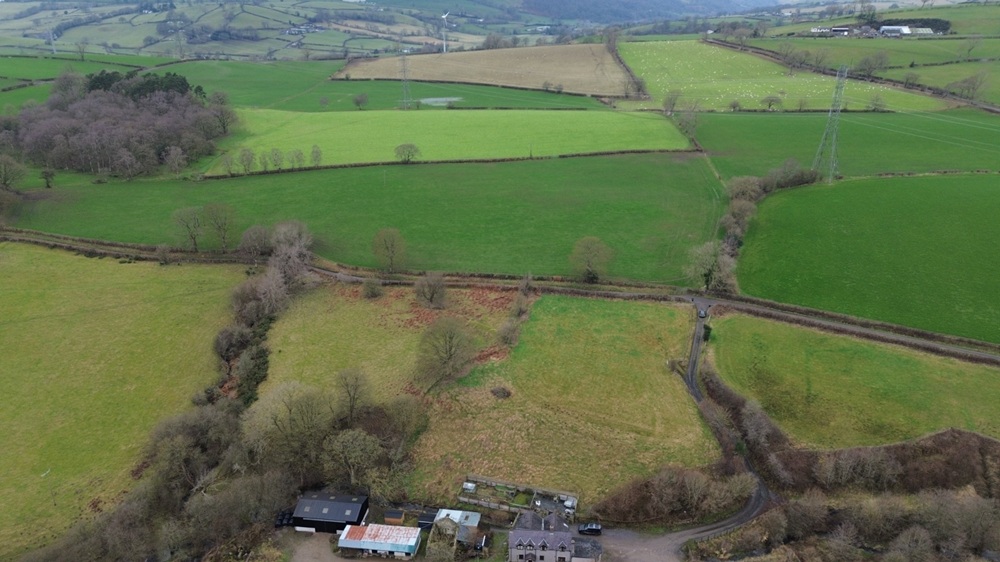
It is a harsh truth, but current farming incentives, including our new so-called Sustainable Farming Scheme, will drive Welsh nature and Welsh farming to the same oblivion, dragging the rest of rural Wales (including the Welsh language) with them. You cannot disentangle them.
These schemes and incentives were dictated by the same reactionary lobbyists who feel they have the Party of Wales in their back pocket. And it’s not hard to see why they feel that way, rubbing their hands with glee at conference.
They do not have Wales’ best interests at heart: so-called advocacy that leads to the detriment of the environment and intensifies the crises that threaten all Welsh communities, especially farming communities, is no real advocacy at all.
But that is the advocacy I witnessed at the Plaid Cymru conference, and it is the advocacy that I fear that they will carry on their backs into government.
[lower-mid-content-banner]
Change
The second big problem for Plaid is that pretty much everyone, everywhere, really loves nature. The Welsh public support clean rivers, action against polluters, they support public money being spent on environmental benefits (not blank cheques for simply owning land), and broadly, they support the reintroduction of species like beavers to Wales (call it rewilding or call it something else).
If Plaid sell nature down the river there will be repercussions: if you want a case study on the electoral fortune that trashing nature and torching protections buys you, check out the favourability of this Westminster Labour government who pathetically pin their impotency on snails, newts and bats.
Plaid Cymru cannot rely again on the tactical voting that saw them surge to victory in Caerphilly – that by-election was swansong of that kind of voter coalition.
We are entering the age of proportional-ish representation, and the resurgent Greens (and their recently-doubled membership) will now pose a genuine threat, especially in urban and student-dense areas, which Plaid can’t afford to ignore.
Without significant upheaval the Greens likely won’t take too many seats from them, but a double-digit Green vote here there will heavily deflate Plaid’s performance further down the lists, which is where the election will probably be won or lost.
I’ve already seen suggestions that the Greens, as a progressive party in support of Welsh independence, should simply step aside, ‘get out of Plaid’s way’ to prevent a Reform victory. ‘For the greater good’. But in order to lock in the progressive vote, you need to genuinely be progressive.
Remember, the Green Party used to be known as the Ecology Party. Those votes, and a strategic partnership, if such a thing is even possible under the new system, are to be earned, not an entitlement. Plaid cannot expect voters to simply coalesce against Reform, already well-beaten in Caerphilly.
The Lib Dems are also a party that understand the marketability of nature, especially of the fight for clean waters, which they have made their defining cause. For the many for whom the environment is their principal motivator, they may find the Lib Dem promise to clean things up to be more compelling, more credible.
A time for courage
During his big marquee speech in a packed-out hall, Rhun ap Iorwerth spoke earnestly, as he always does, about the need to govern for all of Wales, both rural and urban. The crowd was electrified – this was a party a century old, with the keys to the kingdom dangling so close to their reach.
People had waited their entire lives for this moment, this feeling. It’s easy for parties in moments like these to be caught in their sense of providence, the calling of fate. But can he do what he says he wants to?
Plaid Cymru’s twin constituency has long been a contradiction — two spheres, urban progressives and rural small-c conservatives orbiting a core of Welsh nationalism, self-determination, economic independence, and the Welsh language. But as Plaid moves towards real power, real scrutiny, these spheres move towards a collision course. In government those contradictions will become harder to ignore.
Plaid Cymru has no God-given right to the votes of people who care about nature. To deserve them they must reject the idea that to look out for farmers is to gut regulation and ignore Wales’ environment, because that is a lie.
It is possible to champion both nature and Wales’ farmers. In fact, it’s the only way forward that makes any sense. We can reward nature-friendly farming, we can restore nature at scale and reverse biodiversity loss, we can support rural and urban communities’ access to land, we can deliver policies of renewal instead of reactionary managed decline. We must.
But does Plaid Cymru have the courage to do it?
Eben Myrddin Muse is a writer and campaigner based in Splott
Support our Nation today
For the price of a cup of coffee a month you can help us create an independent, not-for-profit, national news service for the people of Wales, by the people of Wales.
Get more trusted Welsh news
Choose Nation.Cymru as a preferred source in Google News to see more of our journalism.
