


Opinion
The independence shield
Ben Wildsmith
Peering too far into the future is unwise at the best of times, and risks derision when events are as unpredictable as they are at the moment.
We should, however, expand the scope of possible outcomes to reflect all the new variables in play. Let’s start with the Senedd election and see where that might leave us.
Current polls show Plaid, Reform, and Labour in something close to a three-way tie. With the Caerphilly by-election upcoming, Plaid’s messaging is sensibly interpreting the party’s lead in the polls to appeal as the ‘stop Reform’ option.
Keir Starmer’s reshuffle this week suggests that Labour is about to pivot right at UK level. It’s difficult to see how that will help the party here, where Baroness Morgan’s efforts to carve out a space on the left for labour in the Senedd are already contradicted by the party’s Welsh MPs, not to mention some of her own MSs.
In light of these dynamics within Labour, the party’s current position in Welsh polls looks vulnerable from both directions.
[mid-content-banner]
Anti-Labour
In Wales, Reform’s support is more specifically anti-Labour than in England where some of its appeal is drawn from the existing cohort of voters who were attracted by the right wing of the Conservative Party.
Here, it’s doubtful that a rightward shift by Labour in Westminster will peal off many, if any, Reform voters. Labour’s record in the Senedd will nullify its London messaging, however right-wing that becomes over the next few months.
Conversely, Reform-friendly rhetoric from the party in London will likely put off existing Labour voters here and undermine the party’s Wales-specific campaign points. So, Starmer’s positioning probably won’t win voters from Reform but may well drive some towards Plaid, the Greens, Lib-Dems and, potentially, the new Corbyn/Sultana outfit.
Plaid’s job will be to convince the anti-Reform vote that it is best placed to face down Farage’s party with a strong slate in the Senedd. If that messaging hits home, then Labour’s support could conceivably collapse with voters turning to Plaid as the safest option against Reform.
[lower-mid-content-banner]
Outnumbered
It seems near to impossible for Reform to govern in Wales. The party’s most optimistic projections still see it outnumbered to the left in the Senedd and any opportunistic alliance made by a party to its left would lack support from that party’s membership.
In Westminster, however, it looks very plausible that Nigel Farage will emerge from the next General Election as Prime Minister.
This means that the next Welsh government will need to act decisively and quickly to define a national position for Cymru and draw clear lines as regards our democracy.
We have already heard Laura Anne Jones suggest that Reform might seek to abolish devolution here, and you can well imagine how a Reform government in Westminster would view matters of Welsh exceptionalism like free prescriptions and the fracking ban.
From day one, the government in Cardiff must be relentless in demanding that no erosion of Welsh democracy be allowed to pass. It will have time before a General Election, perhaps as long as three years, to flood the zone with this message so that it can form the centrepiece of campaigning here when that election comes.
Ideological leadership
There is a wider implication for a Plaid-led government assuming ideological leadership against Reform UK, particularly if Reform provides the UK government.
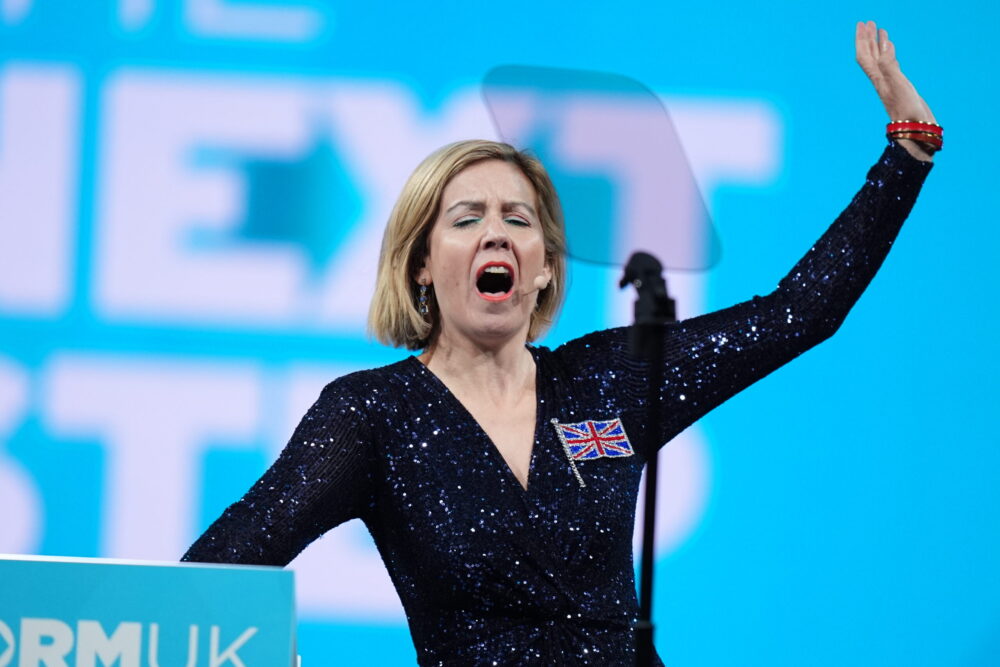
This week’s conference has revealed how extreme, undisciplined, and downright weird Farage’s party is. From Andrea Jenkyns singing her self-penned song, to platforming a doctor who asserted that the royal family’s cancers were caused by Covid vaccines, it’s clear that Trumpian chaos is coming to the UK if they win.
Beyond the frivolous, Farage’s insistence on repatriating female asylum seekers to a Taliban-run Afghanistan is so beyond the bounds of decency as to render the party unacceptable to many on its own.
Against this backdrop, the case for Welsh independence takes on an unfamiliar atmosphere. The argument against it has always run that:
1) We share UK-wide values that are rooted in history and have served us at moments of crisis like WWII.
2) Leaving the UK is financially risky and the people who advocate it are unserious or reckless.
When we are facing down the barrel of our democracy being abolished by MAGA enthusiasts, antivaxers, xenophobes, and free-market fundamentalists, then exactly which UK values are we sharing?
In these circumstances, independence ceases to be a leap into the unknown and seems more like a necessary retreat into sanity. Before long, the choice might be between boring social democracy with independence or the fascism of clowns in the UK.
Support our Nation today
For the price of a cup of coffee a month you can help us create an independent, not-for-profit, national news service for the people of Wales, by the people of Wales.
Get more trusted Welsh news
Choose Nation.Cymru as a preferred source in Google News to see more of our journalism.
