

Sat, 18th July Cardiff 23°
Nation.Cymru wordmark
Advertisement

Opinion

The General Election results show that Plaid Cymru has a mountain to climb before 2021
By NationCymru
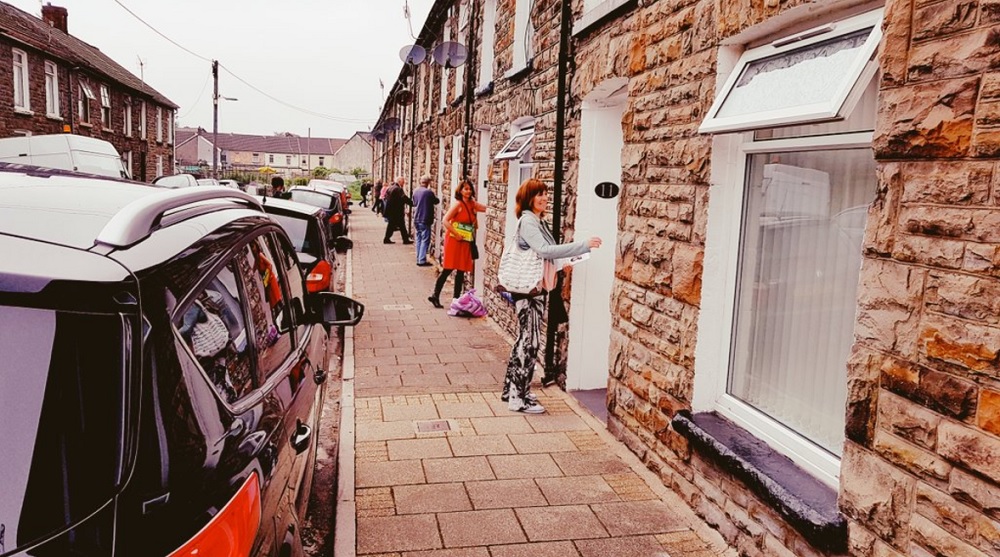
Plaid Cymru campaigning in Rhondda. Picture: RhonddaPlaid Twitter feed

Ifan Morgan Jones

At the launch of Plaid Cymru’s independence commission at the beginning of November, Adam Price spoke of how the party would, after forming a Welsh Government in 2021, push for a referendum on Welsh independence.

What struck me at the time, sitting in the audience in Caernarfon, was that Plaid Cymru’s success in the 2021 Senedd elections was being spoken of almost as if it had already happened.

Of course, every political party talks up their own chances of success. And one of Plaid Cymru’s key tasks over the next 18 months is to drill into the minds of the people of Wales that it is a realistic challenger for government.

This is essential if they are to counter Labour’s assertion that a vote for Plaid Cymru will just ‘let the Tories in,’ its go-to line at every election within political memory.

But there is also a danger that by repeating the claim that they will be in government in 2021 the party either fails to motivate its supporters or leaves them crushingly disappointed after the event.

Because on the evidence on Friday morning, the party has a hell of a mountain to climb to get to a point where it is the largest party at the Senedd.

[mid-content-banner]


Campaign

I don’t want to be too negative, so first let me list the positives to be taken from Plaid Cymru’s performance.

On the one hand, the results on Friday were a success for the party. Two of its four seats, Arfon and Ceredigion, were marginals and they turned those into big majorities.

What was most pleasing was that in the four seats they do hold, Plaid’s canvassing and Get Out the Vote operation was a well-drilled machine.

The messaging was also much more focused and professional than I’ve ever seen it by the party. Their campaign had clear themes, and they made great use of multimedia content and social media advertising.

Adam Price also did very well, not just on the TV debates but also in finding a way to make himself relevant to the UK media. His idea of making lying by politicians a criminal offence was a good example of this. A completely unworkable idea, in my honest opinion, but the press and public lapped it up.

The position which Wales’ main opposition parties find themselves, also suggests that 2021 will be a great opportunity for Plaid Cymru.

Labour are in a real mess, having suffered two historically bad election in Wales in a row. Their new leader Mark Drakeford has not made a great first impression.

They face a decade long slog back into government – if they ever get there, making it much easier for Adam Price to align the debate around Wales v Westminster rather than Labour v Conservatives.

‘Vote for us or you’ll let the Tories in’ has far less force if the Tories are likely to be in anyway, for the foreseeable future.

For the Conservatives, by 2021 they will be a party approaching the mid-point of their time in government and will probably face an inevitable slump in the polls. And with Boris Johnson sticking to the end of 2020 as a final possible moment to Brexit it is likely that any economic shock that will be felt will be rumbling away in Wales as the country goes to the polls.

UKIP and the Brexit Party, meanwhile, will likely be defunct for much the same reason. So things are looking very positive for Plaid Cymru at the moment, if the aim is to increase their numbers of AMs.

Valleys

And yet, despite all these improvements and advantages, there was nothing is Friday’s results that suggested that Plaid Cymru have conquered their key hurdle: an ability to generate any kind of broad appeal beyond their own heartland of Y Fro Gymraeg.

Even if the seats where they did not stand are discounted, Plaid Cymru only saw an uptick of 0.03% of the vote on the 2017 General Election.

One of the arguments made by many of Leanne Wood's detractors (including myself) was that the party had stood still electorally under her leadership, so it’s only fair that the same charge is laid at Adam Price’s door.

More worrying still, while the party saw small increases in their share of the vote across the M4 corridor, their vote went down in the valleys themselves and plunged in Rhondda and Blaenau Gwent.

Part of this plunge can be explained by the popularity of the Brexit Party in these valleys seats. There were four major parties now vying for the vote here rather than three.

However, rather than making gains in these constituencies that Plaid Cymru will have to win to have any hope of forming a majority in 2021, the party seems to be going backwards.

Of course, many will argue that General Elections are a completely different kettle of fish to Senedd elections. Plaid Cymru just aren’t as relevant there and their vote is squeezed by the unionist parties.

They will point to the SNP in Scotland who only held six seats before they formed a government at the Scottish Parliament, and then after the independence referendum had their breakthrough at Westminster.

I have made this argument myself in the past. However, the difference was that while the SNP held only six seats they were in second place in another 19.

That is, they had a broad-based foundation of support across Scotland – and 20% of the vote – that resulted in huge gains in their favour when that support picked up.

Plaid Cymru, in comparison, did not come second in a single seat on Friday. In the valleys they were fourth in many key seats, behind Labour, the Conservatives and the Brexit Party.

Yes, there was a ‘green dam’ of support that held on Friday, in contrast to Labour’s ‘red wall’ in the northeast.

But I'm not sure if that ‘green dam’ is holding support for other parties out, or holding support for Plaid Cymru in.

It’s going to take a hell of a turnaround between now and 2021 for Plaid Cymru to breach that wall and take a large number of seats beyond it in 2021.

Identity

Plaid Cymru spends a lot of time talking about policy but perhaps it’s in the more intangible realm of identity and belonging that explains both their success in the Fro Gymraeg and their failure to break through in the valleys.

The largest shock of the recent General Election was the large swing against Labour in post-industrial, working-class communities.

This was despite the Labour manifesto essentially being tailor-made to appeal to these constituencies in terms of the kind of economic transformation that would save them from decline.

However, many people felt that the Conservative Party spoke to their cultural sense of who they were in a way that the Labour party did not.

In a way, what we may have seen at this election is the Plaid Cymru-isation of the Labour Party. I.e. a lot of well-meaning middle-class socialist leaders with great ideas about how to cure society's ills but little cultural understanding of the electorate they're trying to reach scratching their heads about why the voters won't take their medicine.

Indeed, much has been made since the election of ‘cultural conservatism’, which often seems to be used as a euphemism for racism and misogyny.

However, it strikes me that real cultural conservatism can only be a good thing if it is done with the right intentions. That is, not to foster hate but to foster a feeling of belonging and solidarity and togetherness within a community.

One thing that Brexit has shown us is that this sense of belonging to a cultural community is even more important to many people than their economic fate.

Plaid Cymru are naturally the party of cultural conservatism in Y Fro Gymraeg. Their progressive social and economic ideals sit unobtrusively side by side with being the small-c conservative party of Welsh-speaking towns and rural communities.

In other parts of Wales they are not considered the culturally conservative party at all. People across Wales are broadly supportive of the Welsh language when asked about it but it isn’t directly relevant to their lives in the same way.

For 80% of the population, the Welsh language is not, to use Plaid Cymru’s own slogan, ‘us’. At worse, it can feel like an alien culture being imposed on them.

The inability to foster such a connection with the English-speaking working-class culture of the valleys, in particular, is a block on Plaid Cymru’s left-wing economic and progressive goals, as socialism needs to form around that nucleus of community-led institutions that are either being hollowed out or into which Plaid seem to have little access.

One way Plaid Cymru can perhaps make progress on this question is to take a leaf out of the book of the Welsh independence movement, particularly YesCymru.

What YesCymru has developed is a more hands-off approach, allowing different branches to largely set their own agenda and helping out financially and organisationally when needed.

Plaid Cymru meanwhile have tended towards a more top-down approach, which has caused it problems in Llanelli, Blaenau Gwent, Ynys Môn, and Cardiff – i.e. pretty much everywhere they had a realistic hope of winning in 2021.

There's an irony that a party whose raison d'être seems to be a criticism of political over-centralisation itself seems so centralised. Why can't for instance, Plaid Cymru in the valleys be its own semi-independent body? It can even call itself something else, if it likes.

This could be allied to a broader commitment to devolving power across Wales. Plaid Cymru’s focus has perhaps naturally settled on establishing Arfor, a semi-autonomous region across y Fro Gymraeg.

But why shouldn’t the valleys have their own Arfor, and parts of ‘British Wales’ too?

‘Wales, it’s us’ intoned Plaid Cymru’s slogan. But perhaps the way forward is to realise that the basis for any national identity is maintaining a rather superficial wholeness while actually supporting the coexistence of many different parts.

And if Plaid Cymru is to succeed in 2021 the party must become ‘us’ to many different parts of Wales, and do so quickly.

For the price of a cup of coffee a month you can help us create an independent, not-for-profit, national news service for the people of Wales, by the people of Wales.

Get more trusted Welsh news

Choose Nation.Cymru as a preferred source in Google News to see more of our journalism.

Choose Nation.Cymru as a preferred source in Google News

52 comments

Martha Farquahar

I agree there is some problem with the language. It is the Jeremy Corbyn of Plaid Cymru. I am a woman of a certain age, and when I was younger I was told that the Welsh language was dying out, and there was absolutely no point in bothering with it. This was, somewhat peculiarly, in a school that held an annual Eisteddfod and also had the occasional Welsh hymn in assembly. In fact, I had to be told, when I first encountered it at age 11, what Welsh was- by a child from Yorkshire. Then, sometime in the eighties, it seemed Welsh went in an instant-from something of an irrelevance to being more or less compulsory. I have good friends who are first language Welsh speakers of a similar age, who had absolutely no idea that there are those among us who learned absolutely no Welsh (Latin, yes!) This is of course divisive, and "divide and conquer" is page 1 of the Coloniser's Manual. If any school subject went from "useless" to "essential" some years after one had left, it would be simply wrong. This has caused bitterness among non-Welsh speakers. Not the Welsh speakers fault, but Plaid ignore the side-effect of such thoughtlessness at their peril. People I know who shun Plaid do so on the grounds that they only have the language and independence as an agenda. Which I know not to be true, but it is not helpful when Plaid twitter that started in English discussions lapse into Welsh and do not lapse back again. It enforces a stereotype (again see Coloniser Manual.) Plus there is a widespread assumption that YesCymru and Plaid are the same. It has been pointed out to me how poor the Plaid votes are locally, as if that were in and of itself a barrier to Welsh independence. Coloniser trick 3 - conflating all nationalisms.

Reply
Sibrydionmawr

I think the second line of your comment says it all where you say you were 'told'. People are told a lot of things by people in authority, but that doesn't necessarily mean that they are true, as we know from the recent election campaign. It's a pity that critical thinking isn't taught in our schools, which would have challenged the somewhat conflicted approach to the Welsh language in your school. There were a lot of people in the 80s who were convinced, (erroneously) that Welsh became compulsory, and I can well remember some people complaining bitterly that 'You have to speak Welsh now in order to get a decent job' despite evidence suggesting that the reality was something different. Even today where there are an increasing number of jobs that do require Welsh, they are still a small minority of the total number of jobs. I appreciate that there might be those who feel they are being excluded from applying for these jobs, but they need to be aware that there is a demand for Welsh language services, and that it's not all about them. Welsh speaker have rights too, and generally speaking have their rights trampled on far more often than any English speaker. It's also completely wrong to conflate the Welsh language with Plaid Cymru, who, whilst embracing the language, don't actually do that much to promote it, or even defend it really. Hence the foundation of Cymdeithas yr Iaith Gymraeg in the early 1960s. What has happened is that Welsh Labour has turned the Welsh language into a bogey, and promoted lies suggesting that if Plaid Cymru got any power everyone would have to speak Welsh, or that a Welsh speaking elite would control - quite how in pre-devolution times wasn't outlined, but again we come back, to critical thinking not being a prominent part of the school curriculum. I'd suggest that those who object to Plaid on the language and independence issue and those who conflate YesCymru with Plaid are those who would be unlikely be swayed in that opinion, no matter what they were told, so they are perhaps best left alone to fester with their ideas. In the bad old pre-internet days there may have been a bit of an excuse for being ignorant, but now we have the internet, patchy and poor though it is over too much of Wales, ignorance is a choice. Indeed, if Plaid, (and by association, all political parties in Wales) are to be criticised in one are it is the poor availability of decent fibre broadband in much of Wales. It doesn't take much initiative to set up a scheme such as the one the villagers of Michaelston-y-Fedw did a while back. Why hasn't Plaid been promoting schemes like that in the South Wales Valleys as community based schemes? What better way of showing people that it's not just a one issue, one language organisation? Yes, Plaid is way too top down, but so are Labour and the Tories, so though people might initially be a little sceptical, (with very good reason) of an apparently sudden conversion to community issues, once the visible benefits started to flow, and confidence built, then I can see support being forthcoming. I think Ifan is correct that Plaid needs to jettison its control freakery. It's probably completely destroyed the chance it had to unseat Drakeford in the next Senedd elections over its cack-handedness in dealing with the somewhat maverick nature of what was once one of its biggest hitters who knew how to deal with Welsh Labour, and that wasn't through cosying up to them! Talk about snatching defeat from the jaws of victory. Personally I don't think Plaid has a snowball's chance in the next Senedd election, as I think that mountain they have to climb is just top steep and rocky, and anyway, I think they'd be far better sticking to acclimatising in the foothills, building up their strength and support.

Reply
Huw Davies

Take issue briefly with your point on critical thinking. You are correct to say that there isn't enough of it applied to all sorts of situations but I don't think that teaching it is much of a solution, indeed the education system is arguably a medium for ensuring compliance and conformity. The unwillingness ( or indeed willingness) to engage in radical critical thought is very much down to the personality of the individual. I have known people from all levels of education, zero GCE/CSE right up to post grads, and the capacity for critical thought occurs at all levels mainly because the individual is motivated to look closer and not accepting of a subservient compliant attitude. It is accepted that we are all socialised to some degree to accept certain norms or standards but radicals do so for a while and then gain traction by following their curious enquiring impulses. And good job that we have people like that.

Reply
Meurig Jones

To survive, Plaid Cymru needs to become a totally different party. Plaid Cymru needs to totally junk its ambition of independence for Wales and its left wing socialist stance. The election has proved that no one wants or needs a Labour Party - and most certainly doesn't need a copy-cat Labour Party in the form of Plaid Cymru. . Plaid Cymru should espouse free-market economics, capitalism and become an "England-friendly" and a genuinely "business-friendly" party- demonstrating that it can work with a Conservative administration in Westminster and in the Welsh Assembly. Wales was once a nation of entrepreneurs, farmers and shopkeepers (Owen Owen in Liverpool etc) . It would also be nice to engage positively with the USA - where so many of the Welsh diaspora now live - and with President Trump - the most successful American president of all time. Let's start attracting more American investment into Wales. Plaid Cymru should junk its crap, left-wing politically-correct "woke" policies and bring what remains of the traditional bible-belt sector of Wales back into its fold. These are part of the warp and weft of Welsh society - a sector of society which has been alienated and ignored by Plaid Cymru. Whether publicly spoken-of or not, religious tradition is still deeply embedded in the Welsh subconscious. We are still the nation that sings hymns at rugby matches. It is part of who we are. Plaid Cymru should retain and promote its root-beliefs of pride in Wales, Welsh history and the Welsh language. This is what makes it distinctive. Voters should be encouraged to vote for Plaid Cymru out of emotion, pride and passion and should not feel they are being asked to vote for what is now just a second-rate Labour Party, Wales once had the best schools in Britain and the highest educational standards. Plaid Cymru should revive that deep-rooted desire for good schools and educational achievement . Plaid Cymru should become - above all else - the party of education . The aim should be to make state education in Wales the best in the UK within 15 years. It will mean the wholesale sacking of thousands of incompetent, left wing teachers and lecturers - but the sooner it's done the better.

Reply
Jonesy

what planet are you living on? Wales is the most irreligious of the 4 nations see 2011 census. as for singing hymns at rugby matches, that has not happened since 1974, they crowd cannot proceed beyond Hymns and Arias chorus. America- get real, you obviously have no idea about how international trade matters work. Left wing teachers, you are 'aving a laugh, most of them can't be bothered to join an union

Reply

In reply to Jonesy

Ximixwene

Don't bother. He's taking the P.

Reply
jr humphrys

Much of what you write is correct, but what you want is available in the party called Gwlad Gwlad. Take a look?

Reply
Penderyn

More England friendly? Wales is about as integrated into the English system as it gets... no one is more integrated.. not northern Ireland or Scotland... maybe kernow but thats just a weaker wales

Reply
vicky moller

Agree with Ifans analysis From canvassing only a few know what Plaid is like Most smile with sympathy for the irrelevant little party soldiering on, others say politely Sorry I don't speak Welsh, suggesting, And I dont want to be made r to, all this bilingual everything is wasteful PC correctness And most are hostile to the unafordable and dangerous break up that independence would be. Plaid could be the party for decentralised power in all senses. With inspirational leadership too set the direction and horizon we can locally find our own way to implement

Reply
jr humphrys

Katie Hopkins Twitter to Varsi (who worries about direction of Tory party) "It's our party, now". If you needed confirmation that the old Conservative party is not just English Nationalist, but heading into Tommy Robinson territory, Hopkins provides it. If you are in the Labour party, or have voted Labour, you must now realise that the "mountain to climb" means not only wishing our culture to survive, but to remain a fundamentally decent society. If you have ever read any of Hopkins tripe, you will know the direction England is headed and should hasten to join Plaid.

Reply
Joanne

Welsh nationalism is full of its own bigots

Reply
jr humphrys

Sting!

Reply
Penderyn

But yet we are ruled by the English bigots... a few welsh bigots have no power over my life in the same way

Reply
Jill o the South

How averse would the membership be to a name change? WNP (Welsh National Party) or CNP (Cymru National Party) Trying to dissuade voters that it is not a party for Welsh Speakers when the two words are in Welsh. The Party of Wales as a translation has too many words in it. The areas where Plaid Cymru are strong in Westminster, the Green Dam, happen to be where the highest population of Welsh Speakers live outside of Cardiff. Perhaps that is tinkering around the edges along with a symbol change from the Welsh poppy but if Plaid Cymru and Welsh Labour cannot find common ground then they are forever going to be fighting the Conservatives and any other right wing party that comes along. The inner tension of having a small c conservative membership in the Fro Cymraeg when the Leadership is avowedly Socialist can only be solved by further navel gazing or taking prompt action before 2021.

Reply
Huw Davies

What's so difficult about 2 words - Plaid Cymru ? - no problem, easy to pronounce. The real issue ( not ishoo) is that the Party has get down to the business of 2 way communication with the public. Their major difficulty, but never admitted, is within the party with so many activists being only at ease talking to their own kind. Bring along a man like McEvoy who is at ease doing the hard yards, no loads of miles, in the west of Cardiff and he is quickly demonized and decommissioned because he's "different" . Well the bad news boys and girls is you need loads of "different" people, men and women with a capacity for taking messages to the streets of our cities and towns and the dispersed communities who have also been taken for granted. Boris "borrowed" a pile of votes this time around, and he will lie, cheat, do whatever it takes to hang onto them. Plaid's message will need to be robust and regularly communicated picking up the detailed faults in Boris' grand plans and actions, and by 2021 to have largely completed the task of skewering the track record of Drakeford and his crew. Nail the local challenge and success at the UK level may follow, or if we're lucky they'll get fed up and kick us out !!

Reply
Jill o the South

There's nothing difficult about the two words. I support Senedd over the use of Welsh Parliament but in Plaid's case it is a political party looking outside its Welsh speaking core vote to get it into the Senedd. Historically a party of academics and intellectuals if you want to get down and dirty with the proletariat then you have to take risks and utilise people like Neil McEvoy. Unfortunately Plaid Cymru thought that he was going to utilise them. They are still not out of the shallow waters of being a protest party or a defensive party : Tarian Cymru. If they are going to have any hope of further electoral success outside of their heartlands they are going to have to start trusting the mavericks and rough diamonds or they will forever be the party of 'the menyg gwynion'

Reply
Joanne

Wales isn't Scotland or northern Ireland there are few comparisons and as much as it hurts me to say there is no appetite for independence and never will be. Plaid Cymru are an irrelevance to the English speaking majority in east Wales they are flogging a dead horse and would be far better pushing for successful devolution within the UK.

Reply
Gareth ap Rhisiart

Perhaps there seems to be less appetite for independence because the movement is smaller and Plaid Cymru are perhaps not seen as relevant to all of Wales and perhaps a reluctance to 'get out of the bubble' in activists. For example, during the election a lady slammed a door in my face as 'I don't believe in burning homes'. Plaid Cymru are still falsely tarnished in some eyes with the actions of Meibion Glyndwr after all this time, the Cymraeg language community is still a bit of a mystery to the uninitiated. The movement needs to find better ways of getting the message across

Reply
Joanne

What exactly is the message?

Reply

In reply to Joanne

Gareth ap Rhisiart

That Wales can do a lot better than the neglect it gets from Westminster, to make decisions about Wales in Wales.

Reply

In reply to Gareth ap Rhisiart

Ernie The Smallholder

....And to de-centralise power and wealth from the centre and to put wealth and power into the hands of all individuals. The power in the communities rest with those communities. Plaid Cymru should be an enabler for people3 to build their communities, whether it is business and jobs or lesure and environment. Plaid Cymru should of course stand on an anti-discrimination platform but also on a traditional non-conformist platform so that the individual can be what they want to be.

Reply
KK

Not quite so Joanne. The very fact that independence is spoken about is progress in itself and what is now needed is some evidence based research and people to communicate that idea to the electorate. Pushing for greater devolution whilst an option is pointless as we will still be at the whim of a country who have pretty much asset stripped us for generations. We certainly have the people and the intellect but would argue that what is really needed is belief. Belief has always been short in supply within the Welsh psyche despite its rich history. I can always remember someone telling me that Cardiff could never hold major events because it didn't have the know how yet you would think completely the opposite now. Likewise, the belief that our sporting teams should at least be competing at major events is light years away from the attitude that existed before devolution whereby people were happy to make do. Remember, if someone tells you that you can't do something the greater fear rests with not you actually doing it but them being afraid that you actually can.

Reply
jr humphrys

If it hurts you to say it, why do you almost always say it?

Reply
Penderyn

Flailing about with superficial analysis is not the way forward.... there are deep seated reasons why Wales has little appetite for the pretty boring notion of self rule Thinking 800 years of distant decision making and social engineering is changed in a few tears is naive at best

Reply
John Ellis

This is one of the most perceptive opinion pieces about Plaid Cymru which I've read in recent times, and it sets out the party's situation and dilemma both sympathetically and realistically. Every new Plaid Cymru leader seems to feel impelled to begin their leadership stint by giving the independence drum a good loud bang. Maybe that's inevitable, since the cause of independence is core to Plaid's corporate DNA. But I recall Leanne Wood beginning in like fashion, and yet I presume the party jettisoned her in favour of Adam Price because members felt that her leadership hadn't delivered the goods - or at least enough of the goods! - as well as they'd hoped. Is 'doing the same over' really the best strategy?! I remember some years ago reading an article about the building of the modern Italian nation, in which the writer commented that if, around 1840, you'd asked a cross-section of the inhabitants of that boot-shaped southern Eurpean peninsula how they self-identified, his guess was that not one of them would have answered 'I'm an Italian'. Rather they'd have described themselves as Piedmontese, Parmesan, Venetian, Neopolitan or Calabrian. Pressed to identify with something less parochial, he thought they'd say 'Well, I'm a Catholic'! Even the language that they spoke i n the south wasn't then readily comprehensible by the folk up north, and vice versa I suspect you could say something similar about contemporary Wales. The sense of 'Welshness' is an absolutely authentic phenomenon; but it's still primarily and instinctively 'felt' in terms of a local rather than a national sense of belonging: 'Oooh, Valleys girl, I am'; Newportonian or Cardiffian; Cardi; 'I'm from Ynys Môn, Mam Cymru!' For some, the Welsh language is an intrinsic part of that belonging. For others it just isn't. Plaid Cymru's effectively managed to 'get through' in y Fro Cymraeg, but not in any lasting way in any of all the other 'Waleses'. Doing so isn't a hopeless task, because there have been some temporary successes beyond 'y Fro'; I remember Plaid taking the councils in Merthyr Tudful and Cwm Rhymni years ago - they flared for a time though they ultimately went out. But in others - think Sir Fflint! - they've always been the dampest of squibs, and they still are. I think Ifan Morgan Jones is on to something in his suggestion that 'perhaps the way forward is to realise that the basis for any national identity is maintaining a rather superficial wholeness while actually supporting the coexistence of many different parts'. The fact is that Wales isn't like Scotland, where a discrete national self-understanding with some distinct national institutions - notably the law and education - was forged in the early modern period when England and Scotland were clearly separate political entities. Wales, on the other hand, was practically incorporated into England bit by bit in mediaeval times when the nation was still divided into squabblesome early mediaeval-style princedoms leading directly to the point where some mid-20th century legal encyclopaedia used by lawyers , local authorities, &c., had the entry: 'WALES - see "England"'. It's rational politics in Scotland for the SNP to bang the independence drum, because they've shown that there are significant numbers of votes for it. But Wales is different, and for Plaid Cymru to start to make a significant mark beyond 'y Fro', echoing the SNP looks unlikely to be a way forward.

Reply
KK

Whilst I agree to an extent with your comments it should nevertheless be noted that Plaid Cymru held more seats at Westminster than the SNP on a number of occasions and the SNP had only 6 seats in 2010. What galvanised the SNP was leadership and belief as well as devolution itself. I would like to think that Wales could replicate this but we're still stuck with this can't do mentality and elitism which sets itself against the voter. Adam Price is a fine politician but more people could and would relate to someone who walks in their shoes and understands what is needed. People like Neil McEvoy who would win in Cardiff as well as Ben Lake and Jonathan Edwards who represent their constituency well.

Reply
Rhosddu

It's true that Wales is disadvantaged compared to Scotland; Cymru is a colony and an economic resource; Scotland is like a wife who wants a divorce from a controlling husband. But Plaid Cymru's problems have relatively little to do with the language 'divide' -- the number of learners, and of Anglophone sympathisers /supporters, is growing. The problem lies with the policy priorities of the leadership. Wales has so many problems that if these were tackled in ernest on a local basis the party could sweep into power -- including in Sir Fflint. McEvoy confronts local problems, and wins local support. There's your role model, Plaid. Then you can legitimately and realistically talk about having the moral authority to campaign for independence -- in both languages.

Reply

In reply to Rhosddu

John Ellis

I pretty much agree with the intriguing simile of your opening paragraph. Living now in north-east Wales, I've not really got my head around the particular local issues which have led to the alienation between Neil McEvoy and Plaid. But my daughter, who lives in Cardiff, is pretty clued up with the local political scene, and not too long ago was pretty sympathetic to Plaid Cymru's political agenda, in more recent times switched off from Plaid Cymru because she absolutely detested the political style of Neil McEvoy, and in consequence has switched her vote to Labour. Your post prompts me to further explore the exact reasons why next time I talk to her.

Reply
Jonesy

Yes I for won was disappointed that not more opportunity was given to Jonathon Edwards to feature in the election debate - he has more street cred than Adam

Reply
Aled Gwyn Job

Good and realistic analysis of Plaid's performance by the author in general here, pulling no punches with his words. Although he does actually fail to mention the elephant in the room as regards Plaid's dire showing across the valleys-their decision to go against the result of the Welsh vote in 2016, and hitch themselves so shamelessly to the metropolian 'people's vote' and remain alliance bandwagon. - 16% in Blaenau Gwent and - 8% in the Rhondda( two of the constituencies with the highest Welsh-born percentages in the whole of Wales) is a shocking return for a national party, and says it all about the huge gamble taken by Adam Price. What this election has just proved is that electors have long, long memories. They waited 3 long years to exact their revenge on a political class which wanted to subvert the biggest ever democratic vote ever held on these isles. And managed to decapitate several of the leading Remain figures in quite a ruthless fashion. My sense is that this folk memory will still be in play in the Leave areas of Wales in 18 months time, and that voters in those areas will just not vote for Plaid in view of that fact. That is a problem not just for Plaid but for the whole national movement. All the signs are that Boris Johnson will soon seek to downgrade both the Scottish Parliament and the Welsh Assembly as part of his Global Britain brand. Quite literally, the Welsh Election in 18 months time, could be Wales's last chance saloon. That means that nationalists have to engage in some serious out of the box thinking how to approach things for this election. As far as democratic choices for voters is concerned, it's likely to be the most promising election ever held here in Wales, with GWLAD offering a small 'c' nationalist agenda and Neil Mc Evoy's Propel party also providing a new populist choice, in addition to Plaid this time round. But this in itself will be of no use at all unless the different parties manage to work together to maximise the nationalist vote for the wider good of Wales. Perhaps a leaf needs to be taken out of that wide ranging coalition put together by Johnson to win that overwhelming victory last Thursday. Natural conservatives, Brexit diehards, disaffected Labour voters, people fed up of the Brexit impasse, and those seeking a renewed English patriotism were all coralled together for one purpose. Could a similar nationalist coalition of interests be formed here in Wales for 2021? Could it perhaps involve YES Cymru in some shape or form in addition to the above parties? Could 'independent' nationalists also stand in some places as part of such a coalition, especially in view of Wales's affinity towards local identities. It's a big ask in such a short space of time. It would also require a level of magnaminity and realpolitik from Plaid seldom seen up to this point. It could possibly involve Plaid withdrawing from some key areas to allow other nationalist groupings to have a clear run there unencumbered by all the failures of the past, both distant and recent. Plaid could still lead this nationalist platform as the largest and longest established nationalist party, but it could also operate as a facilitator and enabler to maximise the vote in areas where they choose not to stand. Now that would be a pre-election pact that all nationalists could support!

Reply
jr humphrys

Of course Boris will try it on, but Washington DC will have their eyes on him. If, or when, Trump is defeated, the Dems, who have never loved England, will make it very tough for him, not least in revenge for his support for Trump, and the EU will fold their arms and watch. Nancy has already given him one warning, regarding Eire! More difficult for Wales, as our standing is not the same as the Irish or Scots. So all Labour supporters must join Plaid as they will never in our lifetimes see a Labour Gov. in Westminster. No Deal looms.

Reply
Rhosddu

This is entirely do-able if Plaid, Gwlad, Yes Cymru, Propel and others get together soon. They must highlight the genuine problems that this country faces, and offer plausible solutions, in order to win support in the Bro, the Valleys, the north east, and everywhere else. It's reasonable to assume that Plaid would take the lead, provided they stop playing student politics and learn about their constituents.

Reply
Jonathan Gammond

Plaid are strong on history, but rather weak on geography. If you are in Caernarfon, Carmarthen or Ceredigion you will see Wales and the world from a different angle than if you are looking from Chirk or Chepstow, Wrexham or Welshpool. The difference is as great as that between 'the north' and 'the south' in England, though you would never know it from the policies they propose and the stories they tell. I am not sure why this blind spot exists, perhaps someone with a greater knowledge of the party, its origins and DNA and its membership can explain.

Reply
Rhosddu

What you say about a blind spot is almost certainly true of the leadership, perhaps less so of local branches. The leadership must listen and learn. If the Tories can beat Welsh Labour in an election based on one single issue, Plaid and its potential pro-Indy allies can do so in 2021 based on a plurality of local issues. But they need to start examining and highlighting these issues right now. That's as true in Wrecsam as in Caernarfon.

Reply
jr humphrys

Well now, I'm from Wrexham, and I sing along with our national anthem just as they do everywhere in Cymru. And especially well, after a Wrexham Lager!

Reply

In reply to jr humphrys

Rhosddu

All it takes is the one pint, JR. It's no longer the weak stuff you would have imbibed as a teenager.

Reply

In reply to Rhosddu

jr humphrys

Wow! As an apprentice, I was taken to Bank St, and introduced, with a spot of lime. When I got home, my Mom told me to stop whistling!

Reply

In reply to jr humphrys

Rhosddu

Bank Street -- me, too. It's a strip club now. And no, I don't, before you ask...

Reply
Walter Hunt

So very much to do, so little time to do it in. Rather than struggle up that mountain towards the summit or look to change in any way to widen their appeal, Plaid Cymru may look at the UK election results and may conclude that in 2021 Labour's seats in the Senedd will be down and there won't be enough Liberal Democrats to make up the numbers, so yes, Plaid Cymru will inevitably be in government - as junior partners in a coalition with Labour .

Reply
Siôn

"Plaid Cymru meanwhile have tended towards a more top-down approach, which has caused it problems in Llanelli, Blaenau Gwent, Ynys Môn, and Cardiff – i.e. pretty much everywhere they had a realistic hope of winning in 2021." The SNP also has a top-down approach when it comes to organising disorganised branches. It is extremely successful as it refuses to take any nonsense from them. What happened in three out of these four areas with Plaid Cymru is that people's egos got the better of them, with people refusing to play by the rules. Without rules, a party cannot function. Neil McEvoy and similar characters have destroyed the hopes of Plaid winning Cardiff, as scores of ordinary members either felt too disillusioned or frankly felt too afraid to go to any meetings. Plaid Cymru has many problems, but being too top-down is not one of them – being too soft on nonsense, quite frankly, is.

Reply
Siôn

It is *because* Plaid Cymru centrally has left valleys constituencies to their own devices that it is failing in those areas. A more 'hands off' approach would lead to utter disaster. Constituencies such as Merthyr, Cynon Valley and to a lesser extent Islwyn have little manpower and do not have the organisation of other constituencies where there is a staff member, for example. Allowing people with no background in design, political communication or translation to make leaflets and infographics is a basic oversight by the party centrally (which ends up in some cringeworthy material being given out in some constituencies by well-meaning activists). The constituencies where Plaid has improved its result this time receive help from Ty Gwynfor at general election time, because there is literally *no point* in wasting time in unwinnable constituencies (be that because of the voting system, people voting Labour to keep the Tories out, etc.). Plaid Cymru centrally will absolutely have to intervene in constituencies in which it hopes to improve its result, because places like Llanelli and Ynys Môn are not being won because of a lack of organisation.

Reply
Rhosddu

Okay, but in that case Ty Gwynfor might need a better handle on local issues and a radical reappraisal of its central message.

Reply
Jonesy

Yes well central intervention really worked well in Llanelli did it not? Tories beat PC. Without grass roots community campaigining to improve lives PC are stuffed , they are so out of touch with the realities of living in Wales and the problems in communities , preferring to tweet abut right on fringe issues, virtue signalling about every irrelevant protest in other parts of the world, ignoring the scandalous behaviour of local authorities and the way grant money and unsustainable "investment schemes" are propped up by the Welsh Govt and millions wasted year after year after year;the cover up of the late Carl Sarjants case so they don't upset the apple cart and any extent of fringe issues they are irrelevant to 90 per cent of the electorate

Reply
Wexit

I think that idea of a broad nationalist election pact for 2021 has got legs. We've got to try something different or else it's goodnight vienna, if you look at the dominance of the Tories now. The valleys (with 45% of the Welsh population) are crucial in all this. Welsh labour voters need to be attracted to such a new nationalist pact/coalition. In view of the toxic relationship between Plaid and Labour in the Valleys and as Plaod have now got this millstone of the 'people' s vote' round their necks-these voters need to see they're voting for something different this time round. And of course Plaid have already set a precedent here with their standing down in seats for the Remain alliance. So, easier now to stand down for a form of Welsh Alliance maybe? Although i want Indepedence for Wales, maybe that shouldn't actually be the focus of a Welsh pact. Maybe it should just have a simple slogan of 'Let Wales be Wales' with an emphasis on increased powers, and economic fairness(e.g control over Water and Electricity export).

Reply
Siôn

Between who?

Reply
Rhosddu

Too early to say.

Reply
Steve Duggan

Why does Plaid have to change it's stance when Brexit will do the work for them? There is a very high chance that Johnson's Brexit will ruin the Welsh economy making us poorer than we already are. We've seen the results of Tory hard right policy in Wales before during the 80s - it left us devastated, jobs in the Valleys demimated. There was a rise in the support for an independent Wales as a result. Blair realised the threat and gave us devolution. Tory warped ideology is doing it again - this time there must be no appeasement of the issue - just independence - full stop.

Reply
jr humphrys

UK -wide I counted roughly 47% Remain oriented and 45% Brexit oriented. Lot of little parties I don't know . For Wales, it's 57% Remain and 43%. Brexit. Like with Trump, the Right do a lot of talking, but the actual popular vote is not for them. Now look at the UK wide support for Nationalisation, hardly on the Right Wing agenda; BBC = 57%, Rail = 64%, Water = 63%, Bus = 55%, Royal Mail also. Public not sure as to what parties represent, so Plaid should give clear large figs. A Left agenda is actually quite popular, but it must be leavened out with banging the drum for business ?

Reply
Martin J

I think this is a rational and thoughtful article by Ifan. I don't agree with creating separate 'Plaid Cymrus' but the analysis of the result is perceptive. I'm not enthused by the results but I am relieved. I was also relieved when we went up to 4 seats under Leanne Wood. My views haven't changed, Westminster is a long hard slog and at least we survived. Where we fell short was we could not offer to 'get Brexit done'. We don't believe in Brexit or in implementing the referendum result. There is also no way Adam could have switched tack to that, members are not in that place, so he can't be blamed. Giving Plaid in the valleys autonomy wouldn't have changed this. Would Plaid valleys or north-east Wales candidates have campaigned on getting Brexit done? I doubt it, members don't agree with that. We face an enormous challenge then, if this Conservative increase also becomes embedded in the Senedd. Sorry but we cannot contest the Senedd on the basis of stopping or thwarting Brexit. I am not advocating panic stations but the constituencies we might gain in the Senedd are mostly places which voted to leave the EU. Let's take a look at that, using Adam's proven skills of carving out clear positions. To just comment on Welsh ("the language"). It is the difference between Plaid have 4 seats and us having 0 seats. Comments and articles must understand it is not a bolt-on and that Plaid Cymru would not have been formed without it.

Reply
Alwyn J Evans

What's the single best thing about Plaid? Does that appeal to more than 20% of the population? In those questions are the problem and solution.

Reply
Penderyn

A lot of soft plaid cymru voters around me never voted or a few went tory/brexit this election if you wondering why the vote fell. They said they wanted democratic outcome of 2016 referendum to be respected.... many were annoyed at plaid on doorstep. Thought plaid leadership arrogant for ignoring them. Even some soft remainers werent happy and didnt vote

Reply
Will Podmore

Regionalism, separatism, petty nationalism – all were made redundant by the Industrial Revolution, the demise of feudalism and the forging of a nation of workers who looked out for each other, who were determined to fashion a new and better world by their own power, efforts and inventiveness. The historic process created during the Renaissance, the Enlightenment and subsequent leaps in scientific thought, created our modern secular society with its rich tapestry of culture. Once separatism is defeated, progress can be made in deepening unity – STUC, Welsh TUC and TUC moving closer together, a common football league, British teams at international competitions (rejected for the 2012 Olympics!) could be among hundreds of consequences.

Reply

Leave a reply

Replying to Jonesy Cancel

Yes I for won was disappointed that not more opportunity was given to Jonathon Edwards to feature in the election debate - he has more street cred than Adam

Comments are reviewed before they appear.