


Opinion
The future of farming in Wales is vegan
Dr Carys Bennett
Wales' biggest boasts include our gentle spirit, stunning natural scenery, and farming roots. But like many others, I feel shame at living in a country now dominated by cruel and destructive animal agriculture.
If we want to preserve our reputation for kindness and restore nature across our mountains, the government must support farmers to quit unethical farming for good.
Thanks to relentless humane- and greenwashing by the National Farmers Union (NFU) Cymru, animal farming is granted a false halo.
Disingenuous welfare labels like RSPCA Assured, Red Tractor Certified, and “free-range” are designed to soothe consumers’ consciousness.
Decades of misleading marketing spin have normalised the abnormal, but countless damning cruelty investigations and volumes of climate research prove this is just desperate gaslighting.
“Back British Farming Day” (September 11), run by the NFU, is the perfect time to object to cruel animal agriculture and champion the hardworking growers who feed us without harm.
[mid-content-banner]
Land use
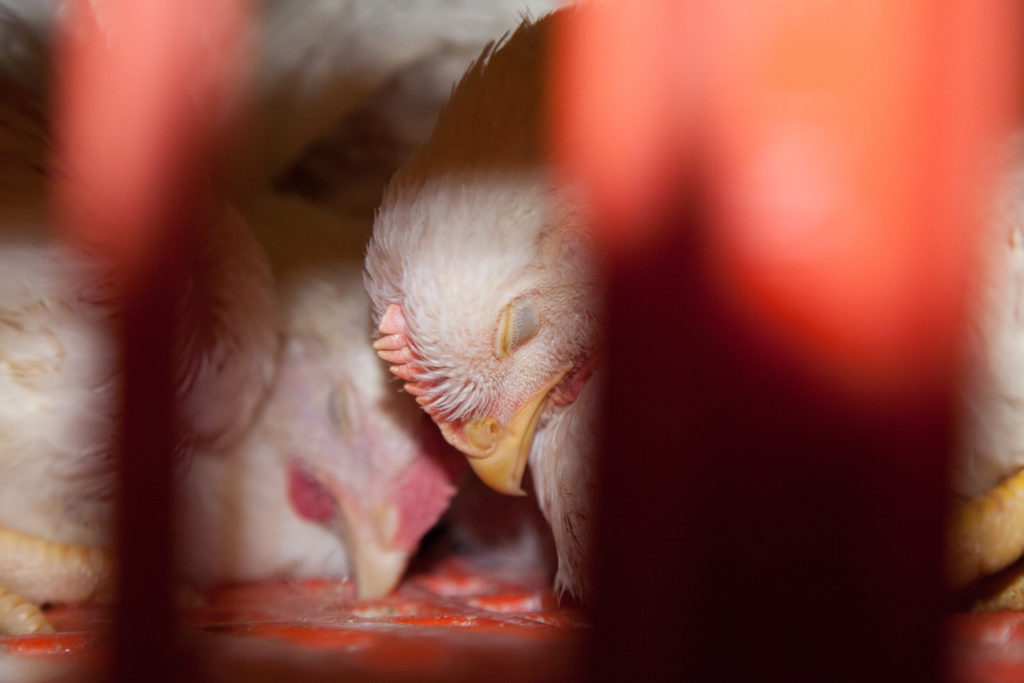
Agriculture occupies 90% of Wales’ land, primarily to raise sheep and cows for their flesh or secretions (meat and milk). Wales also confines 25,000 pigs in farms, and is a hotbed of intensive chicken units that cram 13 million birds in dark, filthy sheds amongst their own waste.
Unnaturally bred to grow super-sized, these clever, social birds are denied even simple pleasures, usually glimpsing their first rays of sunshine en route to slaughter.
PETA’s new website, BritishFarming.org, reveals the grim reality animals face in the farming system, including the abuses considered “business as usual”.
Last year, an inspection of Cildywyll Farm, Carmarthen, revealed severely ill pigs, animals living among carcasses, and emaciated dogs.
Just this month, Somerby Top Farm in Lincolnshire was exposed for smacking pigs with paddles and beating a sow with a metal bar while she screamed. Both farms were Red Tractor Certified, proving—just as the cruelty uncovered by Animal Rising at 45 RSPCA-Approved farms last June did— that welfare assurances mean nothing.
It’s not a case of “a few bad apples”. Many abuses of farmed animals are routine. Mother pigs naturally “sing” to their nursing piglets, but forcing a pregnant sow into a cage so small that she can’t even turn to meet her babies is legal.
On dairy farms, it’s standard practice to separate a calf from their loving mother within a day of birth. And all animals, whether raised in a field or a cage, are eventually killed.
[lower-mid-content-banner]
Exploitation
Unsurprisingly, this also takes a toll on the humans involved, and 92% of UK farmers under 40 told the Farm Safety Foundation that poor mental health is the biggest problem they face, and all this killing doesn’t help.
Our farmers deserve better, but the recently launched Sustainable Farming Scheme does nothing to help them escape the stress, violence, and toil of animal-exploiting industries.
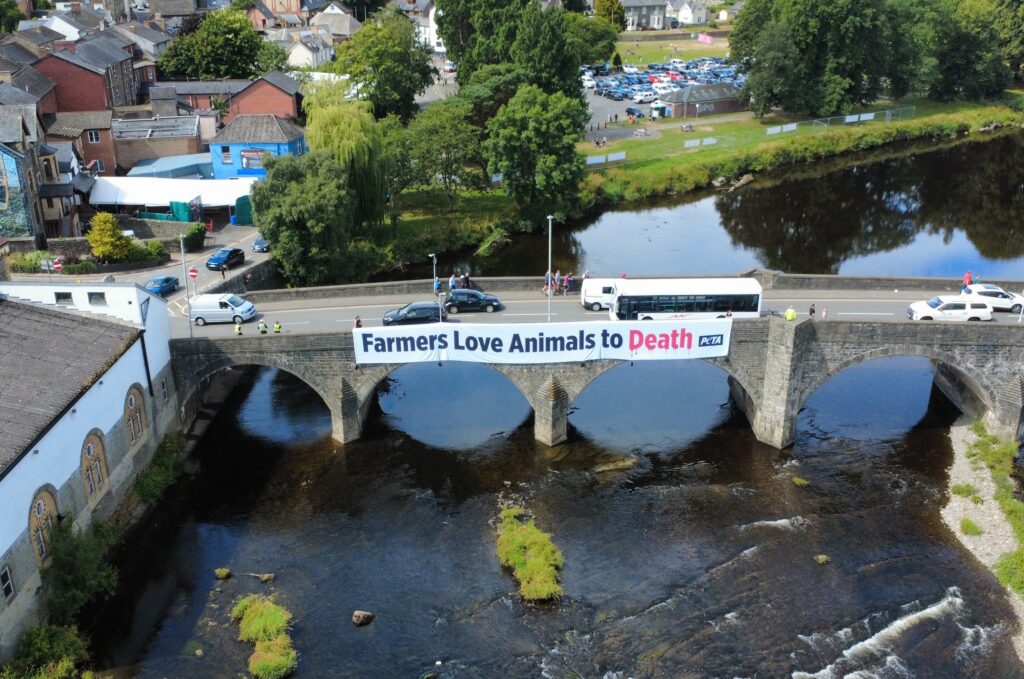
PETA’s push for plants, which recently saw them mark the opening day of the Royal Welsh Show with a Wye Bridge banner reading “Farmers Love Animals to Death”, is also about the environment and human health. Animal agriculture emits enormous amounts of greenhouse gases and drives mass deforestation.
Conversely, research shows that vegan eating produces 75% less climate-heating emissions than a meat-eating diet. Where I live, near Bannau Brycheiniog national park, it’s common to see once-lush mountains transformed into barren grassland that environmentalist Ben Goldsmith describes as “sheepwrecked”.
Chicken farms in Powys are polluting the River Wye so severely that approvals for new farms are being rejected. Meat consumption is linked to a higher risk of obesity, heart disease and cancer.
It is a start that Welsh-grown organic fruit and veg are served in schools, but we need significant government backing to transform farming.
This “Back British Farming Day,” let’s celebrate ethical, eco-friendly horticulture and arable farming and use mountainous land for renewables, forestry, and rewilding.
Please support hardworking farmers and help animals by eating vegan, and join PETA to urge the government to facilitate the urgent transition to animal-free agriculture.
For the animals, for ourselves, and for the planet, the future of Welsh farming is vegan.
Dr Carys Bennett is Senior Corporate Projects Manager at People for the Ethical Treatment of Animals, PETA.
Support our Nation today
For the price of a cup of coffee a month you can help us create an independent, not-for-profit, national news service for the people of Wales, by the people of Wales.
Get more trusted Welsh news
Choose Nation.Cymru as a preferred source in Google News to see more of our journalism.
