


Sat, 18th July Cardiff 19°
Nation.Cymru wordmark
Advertisement

Opinion

The fight to save Radnor Forest
By Mark Mansfield
Radnor Forest

Jonty Colchester, CPRW, The Welsh Countryside Charity, Chairman.

Here in Powys, as in many other parts of Wales, we are bracing for a torrent of planning applications for onshore wind farms.

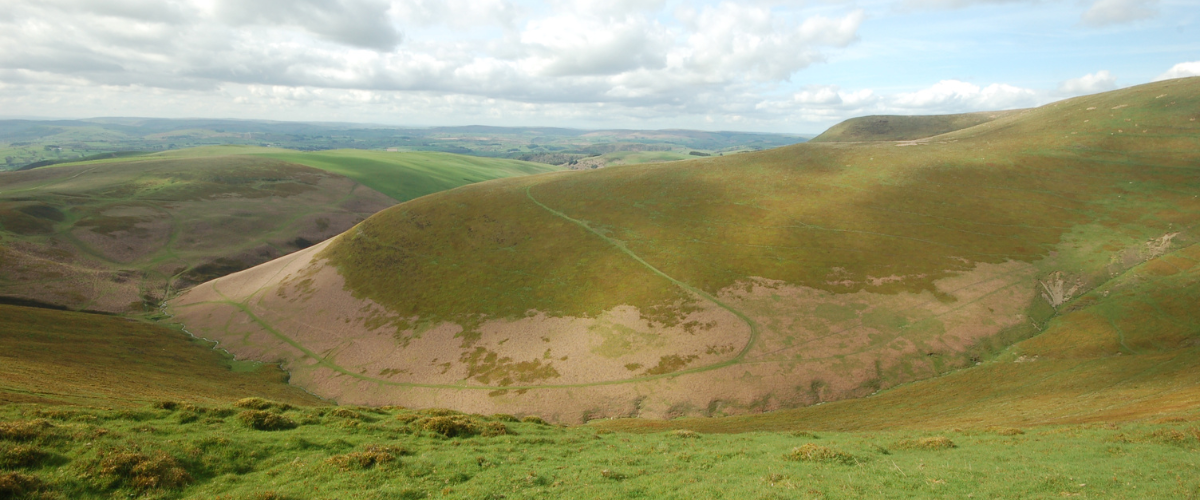
These are now on a scale never previously envisaged in England or Wales. The thirty-one turbines proposed for the ‘Nant Mithil Energy Park’ on top of the picturesque Radnor Forest in South-East Powys, are up to 220 metres high.

This is 30 metres higher than the BT Tower in London.

There are no onshore turbines of this height operating anywhere in Britain. Even getting the components into position will be a massive undertaking, not to speak of the 25m diameter bases demanding thousands of cubic metres of concrete.

The logistics of moving these huge elements in to position up and across the Radnor Forest will require kilometres of roads capable of dealing with 80-metre blade loads up some steep corrugated inclines. The Radnor Forest is not a plateau. The landscape will be industrialised.

[mid-content-banner]

Bute Energy

This proposal is being made by Bute Energy, a speculative development company funded by offshore money in the shape of ‘Copenhagen Infrastructure Partners’ in Luxembourg. Bute Energy has never built or operated a wind farm.

Can this seriously be the way to implement a policy which is a national priority?

We are all familiar with the realities of climate change and its seemingly inexorable progress is amply evidenced with each passing year.

But as Wales is self-sufficient in alternative energy with the already permissioned on-shore and already committed Celtic Sea off-shore facilities, the destination for all this additional energy is South-East England.

Yet under the present plan, the electricity from Nant Mithil (and its two sister South Radnorshire wind farms also being proposed) is to be conveyed on pylons down the Tywi Valley to near Carmarthen, i.e. 70 miles in the wrong direction, from where it can join the huge transmission line to urban parts of England.

[lower-mid-content-banner]

UK grid

This plan is completely independent of the National Grid’s carefully analysed and professionally executed 2024 plans for the re-configuration of the entire UK grid to meet the forecast needs of the climate emergency.

The future needs of Wales (which will grow as electricity replaces carbon fuels) will be more than met by offshore wind, which nearly twice as efficient as onshore wind as there is more wind.

In common with many of the other presently proposed onshore sites, (For example, on the unspoiled flanks of Pumlumon) Radnor Forest is an area of great beauty and natural habitat.

Perhaps with unintentional irony, Bute Energy has actually named the development after the Nant Mithil & Cwm Blithus Site of Special Scientific Interest on the western flank where an ancient brook has carved a beautiful miniature canyon rich in rare wildlife.

In addition to the Climate Emergency the Welsh Government has recognised a Nature Emergency, yet somehow nature and biodiversity always slide down the order of priority when it comes to proposed developments.

It was ever thus. The future of our glorious hills and traditional Welsh settlements drive a thriving local tourist industry attracting visitors from all around the world. Our uplands act as a hugely effective carbon sequestration sink, identified by Deiter Helm, the world-famous Oxford economist studying the future of our environment, as the greatest contribution Wales can make to combating climate change.

Future generations will never know the countryside we love. Mid-Wales is at risk from a Scottish property developer making millions out of our precious landscape.

Is Welsh Government really going to let this happen? Are we?

For the price of a cup of coffee a month you can help us create an independent, not-for-profit, national news service for the people of Wales, by the people of Wales.

Get more trusted Welsh news

Choose Nation.Cymru as a preferred source in Google News to see more of our journalism.

Choose Nation.Cymru as a preferred source in Google News

9 comments

Mab Meirion

Reading about Brithdir Mawr I thought I was back in the Sixties... Maybe we should re-occupy the Hill Forts to protect our Highlands from New Rome..

Reply
Mab Meirion

And go back further in time for a champion, say Caratacus, I intend to see Romans, Raids and Revolutions... by Mr Jordan Brinkworth, No spoilers...

Reply
S Duggan

Coal and slate are being replaced by wind and hydro. All routes lead into England. Highland areas of England need not be inundated with super high wind turbines so long as there is an alternative across the border. We have to stop this second plundering of our country before it gains a foothold. Yes, climate change is a massive issue but not at the expense of our beautiful countryside. It's another reason for independence as soon as possible before we are, once again, abused by our neighbour.

Reply
Mark

It is not England that is doing this to Wales - it is our limited independence (devolution) from England that has allowed wind turbines to blight almost every part of open country in Wales. Cameron passed laws that effectively prevented this in England but, one of the benefits of devolution is that they doesn't apply here. Everybody who voted Labour in Welsh elections over the last twenty-five years has voted for this. England can be blamed for lots of things, but the blame for this lies squarely with Welsh Labour and their planning rules.

Reply
John Ellis

When I walk out of our back door and look westward, I see a whole line of wind turbines along the hillside there. I don't see them as any sort of 'blight'; on the contrary, when the morning sun illuminates them (on the days that we get any morning sun!) I think they have a certain grace and beauty. But, more to the point, they and their ilk provide an alternative to energy powered by the burning of fossil fuels. If we continue in doing that, a lot more than 'open country' will fall victim to very different examples of blight.

Reply
Erisian

Cui Bono? Not us.

Reply
Ap Kenneth

While I do not agree with this particular scheme we do have to get away from thinking that Wales is somehow self-sufficient in green electricity. Wales is bottom of the pile. In 2023 only 34% of electricity production in Wales was from renewables. it was 42% in England (largely a result of the huge North Sea windfarms), 50% on Northern Ireland and 70% in Scotland. In Wales we probably do still export electricity to England but that is largely due to large gas plants Connahs Quay, Deeside,and Pembroke. South Wales electricity supply is not that green. We also need to recognise that the countryside is already industrialised, farmers are fewer than ever, and is the countryside is dotted with large sheds for cattle, chickens and barbed wire is everywhere. The cattle markets are centralised, the dairies gone and cattle/sheep transported longer distances to slaughter. Radnor Forest without people would be a real forest of trees not the denuded hills we have now.

Reply
Brychan

Not so. In Wales current operational installed renewable capacity is Onshore wind 1,266Mw Solar 1,179Mw Offshore wind 726Mw Hydro 170Mw Proposed Celtic sea wind farm 12Gw. while half is non from renewables capacity is Pembroke Gas Power Station 2,200Mw Connah’s Quay Gas Power Station 1,400Mw Uskmouth Gas power Station 900Mw The surplus (half) is exported to England (71Twh) via two 400kv transmission lines. This means that when offfshore is complete we will be net zero only buring fossil fuels to feed England. More onshore wind serves the same purpose.

Reply
non davies

Llywodraeth Cymru is not just a passive observer to this carnage, it is a proactive instigator, applying an undiscerning blanket policy approach with little or no regard for those individuals and communities scarred by these developments. Valid objections are discredited and attributed to climate change deniers or NIMBYs - itself, at best, a convenient and unhelpful tagline, at worst an incitement to hatred and a community safety risk. There is no scrutiny of developments, nor lateral thinking across the other noted emergencies including nature and ecology. There is no strategic overview nor monitoring of these developments; Llywodraeth Cymru is either unwilling or unable to provide details of these relentless applications across Wales, for this we are reliant on volunteers and CPRW, a charitable organisation. Ministers refuse to meet with citizens, yet developers have access to the table, (the same table from which crumbs are presented as community benefits). Is this really good governance, Llywodraeth Cymru? It is impossible to know whether the decisions made by governments are the right or wrong ones, what is possible though is to consider whether governmental decision-making is defensible or not.

Reply

Leave a reply

Replying to Ap Kenneth Cancel

While I do not agree with this particular scheme we do have to get away from thinking that Wales is somehow self-sufficient in green electricity. Wales is bottom of the pile. In 2023 only 34% of electricity production in Wales was from ren...

Comments are reviewed before they appear.