


Sat, 18th July Cardiff 22°
Nation.Cymru wordmark
Advertisement

Opinion

The fading Welsh accent, and does it even matter?
By Stephen Price
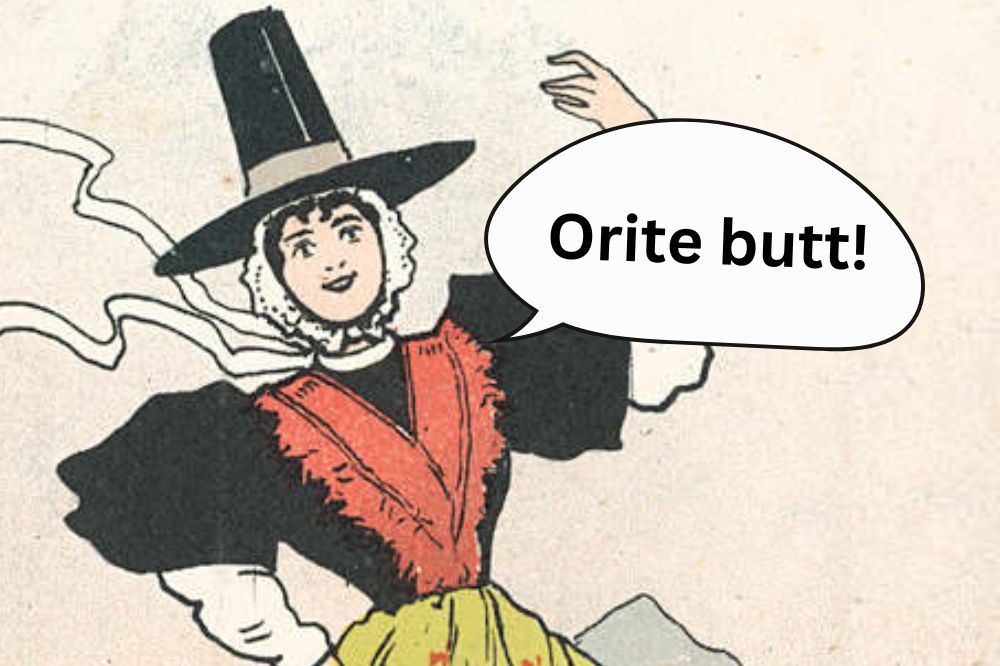
Orite butt - talk tidy, isir?

Stephen Price

Discussing the ‘overwhelm’ of his autism for a BBC documentary, Chris Packham described walking through a forest and noticing every leaf, every detail, every sound around him.

Where others may just pass through, the onslaught of his brain takes in everything. At rapid speed, but also at an overwhelming, energy-zapping cost. Everything all at once, all in need of processing, all just a bit too much.

His description felt very familiar to the workings of my own brain (a shock to no one) and brings me to my experience of walking through a park, sitting in McDonald’s with my nephew, you name it.. I’m hypervigilant, hyper-aware, and I’m also incredibly bloody nosey.

Over the past few years, when both listening in or chatting with younger folk in my square few miles of southeast Wales, I’ve noticed a radical shift in the ‘softening’ (or should that be erasing?) of Welsh accents - chiefly within Blaenau Gwent, south Powys and Monmouthshire (which incidentally don’t have a Welsh language high school but I’ve already covered that)…

And the biggest shift amongst that ‘softening’, is a very strange hardening too - namely the introduction of Received Pronunciation (or RP) into Welsh accents.

GlaRsses?

FraRnce?

DaRnce? What the actual ffoc!?

PaRss

[mid-content-banner]

Murder on the daRncefloor

And RP isn’t just infiltrating my small patch either.

Calling John Francis Estate Agents out west a few years back, the Welsh folk answered with ‘John Frarncis’ each time. And each time felt as painful as the first.

And it’s not just Welsh accents that are at risk of fading into a bland indistinctive mono-palette - regional accents and dialects across the whole UK are said to be fading into oblivion.

Watching episodes of George Clarke’s Remarkable Renovations, I’m always struck by (or should that be cringed out by) Clarke's use of "maRster bedroom" completely at odds with every other detail of his wonderful Sunderland accent. *shudder*

Wales isn’t alone, either, in having beautiful, soothing, interesting and lively accents.

From Liverpool to Newcastle, Aberdeen to Cornwall, there’s charm and wonder in so many (let’s not lie and say all!) - and I’m rather partial to a cut glass Helena Bonham Carter style RP accent myself too. Just not mixed in with a Sunderland or Abertillery one.

[taboola-banner]

Hyur, hyur!

I’ve made no conscious effort to change my accent in my lifetime.

In true valleys style, I generally pronounce ‘ear’, ‘here' and ‘hear' as ‘yur'.. But noticed a while back how, over the years, I've shifted from a peculiar valleys way of seeing ‘yours' in three different ways depending on the desired intonation (youaz, yoz and yarz - you’ll notice it now I’ve said) to the more traditional ‘yours’ (rhyming with paws).

My (much older) siblings and parents would make an ‘O' sound into an Or.. ‘Coke' becomes ‘cork'.. ‘No' becomes ‘nor’, ‘Toby’, 'Torby’ and so on… A hard ‘O' becomes soft in other ways too, so ‘don’t' will rhyme with want.

A hard ‘A’ will become softer - ‘David’; ‘Dairvid’, 'Babe'; ‘Bairb’... To my ears, all made ‘gentler’.

I remember chatting at an event with my mum in tow, and someone remarking how my accent was noticeably less strong than hers.  I’ve also been told that I sound like I have an 'educated Welsh accent’ -  as opposed to the uneducated one. Charming.

The term ‘educated’ is of particular note.

In days gone by, rather than signifying one’s bilingualism (and intelligence), the dominant and self-assigned ’superior' monoglot cultures of these isles have tended to view those with Celtic accents as ’thick’, as typified by outdated 'Paddy and Murphy' ‘jokes’.

Hearing generations below me speak, I can’t help but feel sad (and somewhat hypocritical) that the dilution that my generation ran with shows no signs of stopping.

It also makes me wonder if older generations felt the same hearing the natural shift in my accent (one that I might just have called ‘saying certain things properly’) as I do when I hear friends of my children speak with barely a trace of a Welsh accent, and the use of received pronunciation. 

Charnce, darnce, Frarnce, marster and the like.

Of course, there is no one Welsh accent, and most of us have certainly used a mix of received pronunciation and not since us Welshies first learned to speak English (see bath and path) but things have definitely ramped up a notch of late.

And why is it happening? Television, inward and outward migration, teachers a-teaching, more contact with the big bad outside world, a number of reasons.

And naturally, too, no doubt, just as mine did back in the 80s.

[lower-mid-content-banner]

The tide and the jury are out

The Welsh Government has an admirable, hopeful, and achievable (if we get real about Welsh medium education) target of a million Welsh speakers, but when it comes to accents is there anything we could and should be doing?

Picture it now, teachers across the land telling people how to pronounce ‘here’ the Welsh way, ‘whole' the Welsh way (whool if you’re wondering!) or ‘tube' (tewb) and so on and so forth. Or don’t, since it won’t be happening.

I remember an English language and literature teacher at my high school drumming out one classmate’s use of ‘do’ which is a valleys add-on for verbs, for example 'I do like', 'I do think’, and the best of all, 'I do do'. 

I see why the teacher (from England, incidentally) did it.. but what else are we drumming out? What else are we saying is just 'speaking properly', as I thought to be the case by saying coke in a way that doesn’t rhyme with cork.

And it’s not just teachers drumming it out. We in Wales police ourselves and each other just as much ourselves. 

I remember being mocked by friends for calling my mum, “mam".

Mam, so endearing, so evocative, so Welsh. But Welsh is bad, right?

And another friend knocked me in my early twenties for saying “tube" in the way Welsh folk would say Huw (Hew vs Hyew)…

How many times too, do we hear our voices recorded and say "I sound so Welshy". Again, how terrible!

Welsh but in English

And changing Welsh accents in English aren’t the only shifts I and others are noting. 

Welsh sports stars have come under fire time and time again for not using ‘proper Welsh’ in post-match interviews, and critics have rightfully received a backlash.

But an observation I’ve had for a long while which many seem afraid to voice, is the strange way in which younger second-language Welsh speakers often have stronger Welsh accents in English than in Welsh.

I’m not talking Welsh language skills here, so ‘don’t get it twisted’ as the young ‘uns say, I’m on your side here - use the Welsh you’ve got - I just mean the accent.

In an act of reverse Welsh rebelry, the beautiful and I would say essential accent ain’t in, and to me that’s tragic.

Is the letter ‘r’ that hard to ‘rrrrroll’? The effect comes off as ‘I’ll say what you want me to say, because you want me to say it, but don’t expect any effort.’

Talk tidy, mun

Anyway, back to the point in hand. Does it matter if English-speaking Wales, or Welsh-speaking Wales, loses its accents?

To me, undoubtedly it does.

It’s a marker of our identity, a direct trace back to the language and melodic tones of our ancestors, and a key pathway to getting us back to one day being a Welsh-speaking nation again.

I’ll be criticised for saying it too, but I simply like hearing Welsh language and accents around me when I’m in Wales.

On a cellular level, they land in my brain better, they soothe me, they’re of this soil, of my people.

So I’ll say it hyur, so you can all hyur me with your own yurs: I don wonna hyur any more RP this side of the border, orrrrrrite.

Although, chaRnce would be a fine thing.

For the price of a cup of coffee a month you can help us create an independent, not-for-profit, national news service for the people of Wales, by the people of Wales.

Get more trusted Welsh news

Choose Nation.Cymru as a preferred source in Google News to see more of our journalism.

Choose Nation.Cymru as a preferred source in Google News

26 comments

John Ellis

I've not really noticed that much of a decline in the Welsh accent across recent years. My daughter, who grew up as a child in the north-west of England but went to university in Cardiff and stayed on there to live and work, has by now, in her forties, evolved a distinctively Cardiffian accent. Is she unusual?

Reply
Rhosddu

That happens to a lot of people. They unconsciously adopt the accent of the community they have moved to. My sister-in-law's sister (from the English Midlands) married a guy from Ynys Mon, moved into his home, and now speaks with a pure NW Wales accent and is a fluent Welsh speaker. Reverting to the subject of this article, obviously many places in Cymru are peppered with the accents of incomers, but Welsh accents are still recognisably Welsh, and in the majority. And even in an age of mass-media-driven cultural homogenisation, there's no Welsh equivalent of estuary English eating up local accents.

Reply
John Ellis

Agree - that seems to be the case. My daughter was actually born in Newport because we were living there at the time, but for family reasons we moved back up to south Manchester, where I'd grown up, not long before she started school. In consequence she evolved a 100% Manchester accent. But having moved to university in Cardiff in 1997 when she was 18 and having stayed there continuously thereafter, her Manchester accent, though not entirely eradicated, is way less apparent by now. Sharing her life with a lad Cardiff born and bred also surely has had an impact.

Reply
rj700

My little bro moved from North Wales to near Cardiff and now sounds like one of them. It's like mate 'here/hear', 'ear', 'year' and 'you are' should all sound like different words.

Reply
John Ellis

Same with my daughter. Some traces of her childhood south Manchester accent still remain, but after the best part of twenty years of living in Cardiff, and latterly with a native-born Cardiffian, it's the Cardiffian twang which now predominates.

Reply
blc

Try being a Forces Brat. My dad was in the RAF, so from the age of about 4 to 12, I lived in South Wales, Scotland, North Wales, The Netherlands, and Germany. Since moving back in ‘94, I’ve subsequently lived in Pontypool (where I’m originally from), Swansea, Cwmbran, Newport, and finally Cardiff, where I’ve been for nearly 17 years. My parents held on to their Welsh accents; my dad has been gone 7 years, but my mam’s accent is as strong as it ever was. But because I was around so many other kids from all over the UK when I was younger, I never really developed a Welsh accent. In fact for a long time, probably until around 15 years ago, I very much saw a strong Welsh accent as “parochial” and a sign of poor education. I didn’t even call myself Welsh, I called myself British. Yes, all the old stereotypes. My Welsh accent has definitely become stronger since I stopped moving around so much, but it’s still quite generic. Most people I meet just assume that I’m English.

Reply
David

I was also in the RAF, I was born in Pontypool. I eventually moved to Pontsian near Lampeter. While waiting for the contracts my wife and I lived in a holiday chalet. I was in a queue for the chemist and a 20ish postwoman in front of me turned round, she was ranting about people not wearing masks when she delivers parcels. I told her she wouldn't be delivering to me in the chalet. She got all high and mighty saying "we don't want your sort here, living in holiday homes stealing our resources ". I tried to explain I was brought up in Chepstow, went to Newport, Cardiff and Swansea Universities. She shouted "you've got nothing to say I want to hear" and walked off

Reply
Paul

I’m also a forces brat. I’ve found that not only do you develop a ‘Heinz57’ accent that doesn’t really fit anywhere but I find that I don’t feel that I have a national identity. My father is Welsh my mother Scottish I guess I’m British and I don’t really know what that means.

Reply
Oswald Muesli.(Sir)

I ordered, or rather tried to order, a Coke in Cambridge a few years ago. Met with a blank stare. Turned out they only served Cowke. Lesson learned, drink Pepsi!

Reply
Garycymru

Since starting to learn Welsh 3 years ago, my accent has fortunately, got stronger. Which now stands out quite nicely in a border town.

Reply
Will Richardson (Rees)

Trying to learn Cymraeg improves one's, sic, appreciation of Welsh English pronunciation.

Reply
Jack

I hate everything that's not English!

Reply
Paul

Talk about shooting yourself in the foot. With that attitude you really are helping people to decide if Welsh independence is a good thing.

Reply
Johnny Gamble

Shut up you bore 😴

Reply
Mary O'Connell

Wholeheartedly agree Stephen. I LOVE hearing the many regional accents of these islands, and lament their fading. Born in Yorkshire, but studied at Aberystwyth University, I remember having to moderate my speech so that people would understand me. I didn't realise how strong my accent was back then. These days, people say, 'I didn't know you were from Yorkshire' so I must have lost my accent somewhere (though I've unconsciously hung on to short vowels - grass rhymes with mass etc). I guess it happens because we're all communicating globally, and it's expedient. So how to keep our beloved heritage alive....? I don't know, but perhaps the global energy and environmental crises will mean we need to focus on our local communities more, and perhaps our accents will thrive after all.

Reply
HarrisR

Is there a single "Welsh accent"? There's a significant Cardiff accent, a very definite Newport accent, and I guess across the board. There's an academic Welsh accent, a middle class Welsh accent, a media Welsh accent when those people want to demonstrate their "authenticity", the "my great grandfather was a Rhondda miner" BS. I imagine North Wales is the same. The MYTH is that Wales is homogeneous, politics, culture, association...& the rest. It really isn't.

Reply
Peter GD

This article could have been written solely through having watched a single episode of Gavin and Stacey. Horrible program and horrible Welsh accents - which i normally love be they from the north or south.

Reply
Wales Tourist Board

If we're in the UK, it is 'programme' in this context.

Reply
Peter GD

Decades ago, program appeared in both American and British writing. In the nineteenth century, the Brits started to favour the French way of spelling it—programme. This word is just one of many examples of how British English spelling and American English spelling differ.

Reply

In reply to Peter GD

Will Richardson (Foss Rees Roberts))

Ruling clarss Brits, perhaps?! ;-)

Reply
Ste Richardson

Language changes, that is the nature of language. It take about 35-40 years on average to notice that change, for an individual not actively researching it or paying attention to it, but after saying that amount of time, an accent is sufficiently different that a layperson may notice tacitly, but not be able to quantify the change. I mean, listen to a news broadcast in the accent or accents that you are most familiar with, from any year since voice recordings have existed, and you can surprisingly accurately pinpoint the decade in which it was made by the accent alone (discounting audio quality etc.). And that's even with active attempts during the late Empire era to level all regional accents to RP. Interestingly, Received Pronunciation (RP) no longer exists, save but in a ever-dwindling handful of elderly individuals and in a relative scattering of people inhabiting the upper echelons of a certain class. RP has been replaced in terms of many of the social situations it was previously used in, by Standard Southern British English (SSBE). In fact, the isogloss (an imaginary line on a map delineating where the pronunciation of a particular sound changes from 50% to 49% on average) for the TRAP-BATH split, has been moving swiftly southwards for a few decades now. This basically means that the areas where the sound that you characterise as "chaRnce" is made is shrinking. More and more people ever closer to London are saying "chance" in the same way as a person from Derbyshire would say it. I myself am a massive outlier, I am a native south Londoner, and I say "bath" in the "Northern" way considerably more than 50% of the time. Having lived in Japan for 4 years and having to clarify my pronunciation without Americanising it, I subconsciously chose to say "bath" over "baRth" when the Japanese asked me to repeat and it stuck, even 15 years later. Cockney is even "deader" than RP, it really is almost completely gone (in fact it has completely disappeared in London). Within London (and in fact in many urban centres of the UK), a partial descendant of Cockney, called Multicultural London English (MLE) has formed using many features of Cockney, but also carrying a heavy mainly Jamaican influence in its vocabulary, cadence and phonology. Another, more "conservative" partial descendent of Cockney survives in parts of Essex, where it, in its turn caused the traditional "old Essex" accent to disappear.... Except, there's no such thing as a "traditional accent"; the very concept is completely imaginary; an accent that is recognisable as part of the same accent continuum from its first to its last speaker can only last around 70-80 years, and perhaps, if you were to really strain to really pick up on the precise similarities, I'd stretch that as far as 150 years at the absolute maximum with an awful lot of hand-waving and confirmation bias to aid the perception of similarity. All accents change, even in a vacuum, the nature of language is for it to do so, and it has been doing so for as long as it has existed. Both the Welsh language AND the Welsh accents when speaking in either Welsh or English have and will continue to change. They will remain distinctive in their own way. Perhaps Welsh English will adopt the baRth pronunciation. wholesale while it is utterly lost in London and the south east... It is constantly the case that nonstandard varieties often become closer to the standardised accent in many features slowly over time, and by the time they are fully adopted, the speakers of the standardised form no longer speak with that feature. Surprisingly, it's not the first time something similar has happened - the "o" in the American pronunciation of GOAT was once the signal of an upper class British accent in the latter half of the 19th century, a feature that the current King's great-grandfather exhibited, (gifted as he was in the facial hair department). Now it has utterly vanished from England, being seen as a less-prominent but nonetheless existent feature of North American pronunciation.

Reply
Bob

This article seems to focus very much on what linguists call the BATH-TRAP split for its evidence. This is the lengthening of the "a" in some words (like bath) and not others (like trap). This is a feature of most Southern English accents (not just RP as stated in the article) whereas Northern English accents don't have the split. What I found surprising about the article is that all the Welsh people I know from South Wales have the BATH-TRAP split. These are not youngsters but people in their 60s and 70s and include people who have lived in Northern England for much of their life so have definitely not acquired it in England. I am therefore curious about the claim that this is a recent change. The other point I would make regards the pronunciation of "master" by someone from Sunderland that was mentioned in the article. This is actually a standard North East England pronunciation. Although the NE lacks the BATH-TRAP split like the rest of the north, the pronunciation of a couple of words - master and plaster - are quirky and follow the more southern versions. You will find this all over the NE from Teesside up to Northumberland and it is not a recent phenomenon.

Reply
Laura

Yeah, I noticed that too. Growing up in the Rhymney Valley 40yrs ago, everyone said Barth. The short version was from further north.

Reply
Richard Carpenter

Doesn't matter at all to me, all I ask is that I am able understand what is being said. Language and accents evolve over time, pointless to worry over something you have no control over.

Reply
Neil Wyatt

I grew up in Barry with an English dad, a mum from Pembrokeshire and an Irish nana. I never noticed any of their accents... My brothers have definite Barry accents (although one picked up a bit of Scots over 10-15 years there). The odd thing is I spent 35 years in England and the English only ever spotted my Welsh accent a day or so after I came back from Wales. Yet many times Welsh people in England would pick up that I had one. Finally, I always wanted to sound like Richard Burton whose Welsh accent with a touch of RP sounded incredible.

Reply
Edward

When the welsh speak English you can understand them when the Scottish and Irish speak English it is very difficult to understand them.Welsh should be compulsory in all welsh schools

Reply

Leave a reply

Replying to David Cancel

I was also in the RAF, I was born in Pontypool. I eventually moved to Pontsian near Lampeter. While waiting for the contracts my wife and I lived in a holiday chalet. I was in a queue for the chemist and a 20ish postwoman in front of me tu...

Comments are reviewed before they appear.