


Opinion
The environmentally sustainable livestock farms of Wales are being unfairly demonised
Osian Hedd Harries
As a livestock farmer it feels as if our industry is under siege at the moment, with daily warnings in the press about the horrors of the industry – from the environmental impact to the well-being of the animals themselves.
This anti-farming sentiment is a particular concern in Wales because of the impact it could have both on the nation’s agriculture industry but also our culture and language.
80% of agricultural land in Wales is unsuitable for arable crops, so if it isn’t used for livestock there is little other economic use for it. Only 5% of the sector’s output is made up of crops, and the rest of livestock and livestock products, compared with 33% across the UK.
And according to the 2011 census, half the agricultural workers in the country speak Welsh, which is far beyond the national average of 17% and greater than any other sector.
It is no wonder that Cymdeithas yr Iaith, the Welsh language society, has committed to supporting Welsh farmers against a no-deal Brexit.
[mid-content-banner]
The agricultural sector in Wales should be at the heart of Welsh Government plans to reach 1 million Welsh speakers by 2050.
But as an enthusiastic Welsh independence supporter, farmer and butcher I fear that anti-farming sentiment could lead to the destruction of our language and make independence less viable as it fatally weakens a key Welsh industry.
The problem when people hear stories about the environmental impact of livestock farming is that it's farming elsewhere that's being discussed. It's impossible to compare the environmental sustainability of small, family-run Welsh farms to the huge agricultural farms run by the barons in places such as South East England.
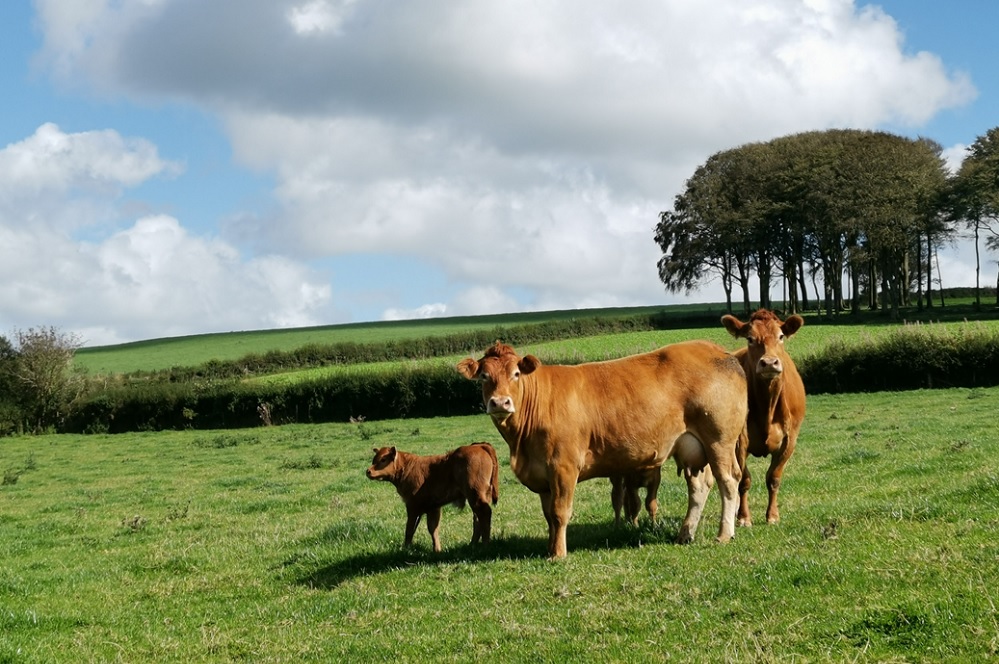
With average herd sizes in Wales significantly smaller compared to the rest of the UK, we should be looked upon as an example of sustainable farming rather than an enemy to the environment.
The average farm holding is much smaller than other UK countries at 48 ha (hectares), compared to 107 ha in Scotland and 88 ha in England. In addition to this 54% of Welsh holdings are smaller than 20 ha.
There is also evidence that forage-based livestock, as opposed to the grain and other feedstuffs, is better for the environment because the soil captures carbon.
It’s difficult to understand therefore why our low intensity, family-run farms in Wales are being compared with the humongous farming estates in England.
Culprit
Two weeks ago the UN's Intergovernmental Panel on Climate Change (IPCC) stated that sustainable livestock production similar to many low-intensity systems found here in Wales can be very much part of the solution to climate change.
Quoted in this story is Dr. Prysor Williams, Senior Lecturer in Environmental Management at Bangor University. He says:
“There are ways in which Welsh farming can become even more sustainable, but it’s important to recognise that not all production systems are the same. In Wales, sheep and beef farming are largely low in intensity. Natural pasture grazing produces most of the food that the animals need, while also helping to capture carbon if managed effectively.”
IPCC also states that making the most of this land and efficiently turning pasture into protein can be an important part of the balanced diet the worldwide population desperately needs.
There is also a danger that we overstate the environmental impacts of farming in order to shift the blame off other human activities. Just this summer new research suggested that cows did not cause global warming, and that the suggestion was an attempt to deflect attention from the real cause, which was burning fossil fuel and fracking.
“This discussion is the cornerstone of debunking all of this hype around why we should eat less animal-based protein,” Frank Mitloehner, professor of animal science at UC Davis in California, said.
“Never have we had smaller flocks and herds than we do today, but we are producing the same amount of meat.”
No farmer has a problem with care for the environment, concern for climate change, or people being encouraged to turn to a vegan diet.
However, when these things are promoted in a misleading or in an unfair manner, or as propaganda to deflect attention from the real culprits elsewhere, our reaction is going to be different.
Being passionate about what you personally believe in and portraying an entire industry unfairly are two very different things.
The onus is on farmers as well, however, to do a better job of informing the people of Wales about the realities of farming in this nation. There has been a growing disconnect between consumers and where their food comes from.
In Denbighshire, farmers have formed FCE (the Farm and Countryside Education Group) in order to educate people about food and how its produced.
The problem, as always in Wales, is that the facts people received are based on what is going on elsewhere.
It only strengthens the case for devolving broadcasting to Wales, so people can discover that livestock farming is quite different here, rather than basing their opinions of the farms of England.

Support our Nation today
For the price of a cup of coffee a month you can help us create an independent, not-for-profit, national news service for the people of Wales, by the people of Wales.
Get more trusted Welsh news
Choose Nation.Cymru as a preferred source in Google News to see more of our journalism.
