


Opinion
The Closed List System and the End of NIMBYism
Jonathan Edwards
We haven’t got to the end of January, yet the award for the bravest political declaration is already in the bag for Labour MP Jess Assato.
Ms Assato, who represents Lowestoft in Suffolk, has publicly supported pylon infrastructure by National Grid linking Norwich and Tilbury (Essex) along a 180km route.
With a majority of only around 2000 in a traditional Conservative seat and as a new MP it would have been far safer politically for Ms Assato to follow the path of another new MP for the region, Adrian Ramsey (Waveney Valley), and criticise the proposals. Mr Ramsey after all is a Green MP.
As an elected member I knew that my re-election hopes in successive elections were built on being an advocate for the communities I represented.
[mid-content-banner]
Rage
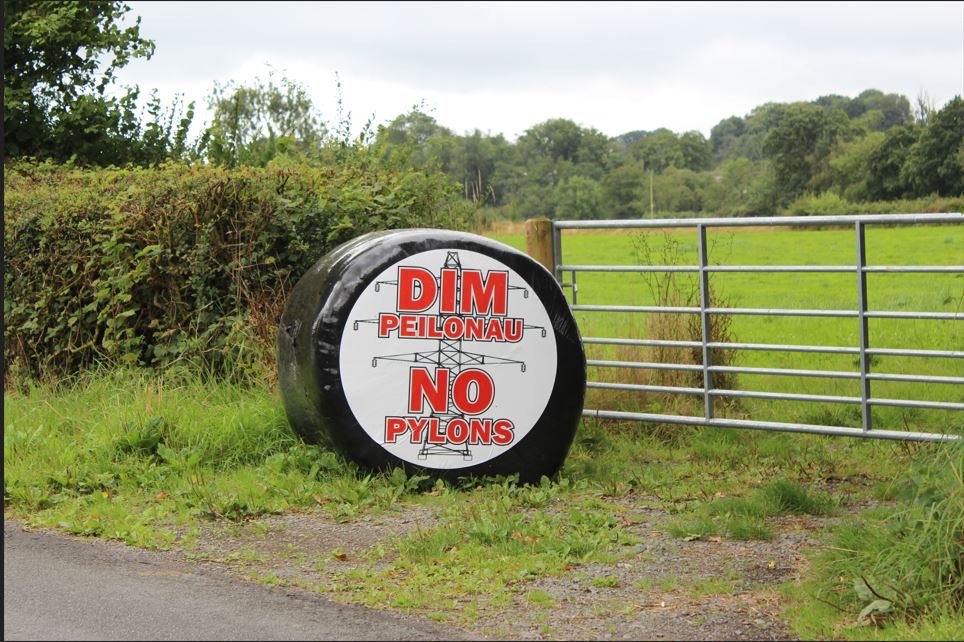
Being perceived as an effective MP transcended political divides. While there is broad support for the need to achieve net zero, communities that face the infrastructure required to achieve the objective, such as electricity transmission and distribution infrastructure, rise in rage.
I would say that the successful campaign my team organised to alter metal pylon infrastructure to wooden pylons for a distribution project linking Brechfa forest in the north of Carmarthenshire to Llandyfaelog in the south of the county was largely responsible for my election victory in 2015.
I remember one conversation I had with my friend Hywel Williams, the MP for Arfon, soon after getting elected, when I was considering my position on one wind farm application which faced significant local opposition. His wise words of counsel were along the lines of “if people don’t think you represent them, they will find someone who does”.
In a highly marginal constituency, he was of course on the money - hence my admiration for the bravery of Ms Assato.
Principles are important in politics, but at the end of the day it is pragmatism that gets you elected.
[taboola-banner]
Soloutions
In my defence I would often taper my criticism of developments by offering possible solutions. In the case of the Brechfa to Llandyfaelog project, we managed to reduce its visual impact.
In the case of the proposed Usk-Towy project, which has caused uproar in Carmarthenshire, I argued for the use of cable ploughing technology. Someone should send Ms Assato a briefing note.
Most politicians view campaigns against developments as opportunities to build incumbency support and gather data. When electors sign petitions by political parties, they achieve zero influence over decision making. However, the data collected is cynically used by politicians for their own ends in promoting their propaganda.
Social media has also made it far easier for community groups to organise and mobilise. It takes a very brave politician to say no when asked to support a campaign.
Hence, we have witnessed in near memory in Wales the unsightly spectacle of Government Ministers holding placards against the inevitable results of their own policies.
Another response by the Welsh political class has been to absolve themselves from any responsibility to avoid accountability. For example Health Ministers blame Health Boards for all decisions. When it comes to the proposed Towy-Usk project by Green Gen Cymru, local Senedd Members have decided to run a full-frontal campaign against the company behind the project while neglecting to inform local people that the company is operating within Welsh planning policy which the politicians are responsible for.
The legal system utilised in England and Wales also gives enormous power to individuals to challenge developments. This isn’t the case in all legal systems; hence the UK Government's determination to streamline planning decision making via the Planning and Infrastructure Bill.
Nimbyism
Politically therefore we have developed a culture based on Nimbyism which is an enormous barrier for Wales and the UK when it comes to achieving change, be it economic development, the net zero transition or reconfiguration of public services such as health.
Many, including myself, have been critical of the new voting system to be deployed at the next Senedd election. Nobody post-2026 is going to know who their Senedd Members are unless they are involved in public affairs. Incumbency building will be more marginal when it comes to determining future elections.
The anonymity that Senedd Members will enjoy should enable them to rise above the age of Nimbyism and put the national interest first and push through policies that are unpopular in a local context but vital from a national perspective. Will the post-2026 Senedd Members get the memo and change their ways?
Jonathan Edwards was the MP for Carmarthen East and Dinefwr 2010 - 2024
Support our Nation today
For the price of a cup of coffee a month you can help us create an independent, not-for-profit, national news service for the people of Wales, by the people of Wales.
Get more trusted Welsh news
Choose Nation.Cymru as a preferred source in Google News to see more of our journalism.
