


Opinion
The case for land fairness
Dr Huw Evans
In this article I argue for fairness in the distribution of land rights and how there is a need for ongoing land reform to improve fairness. And Wales can learn from Scotland (more about that below).
Land
Land, of course, is the physical environment and the landscape in all its manifestations. Land in this sense can also extend to ‘water’; such as the coastal sea, a river, a reservoir, or a lake. It includes the foreshore too. Land also refers to property or buildings in which people live, keep things, or work etc.
[mid-content-banner]
Land rights
Land rights extend to any rights over land use. Ownership is an obvious right. A person (P) can own a property such as a house together with surrounding land, like a garden, within a defined boundary.
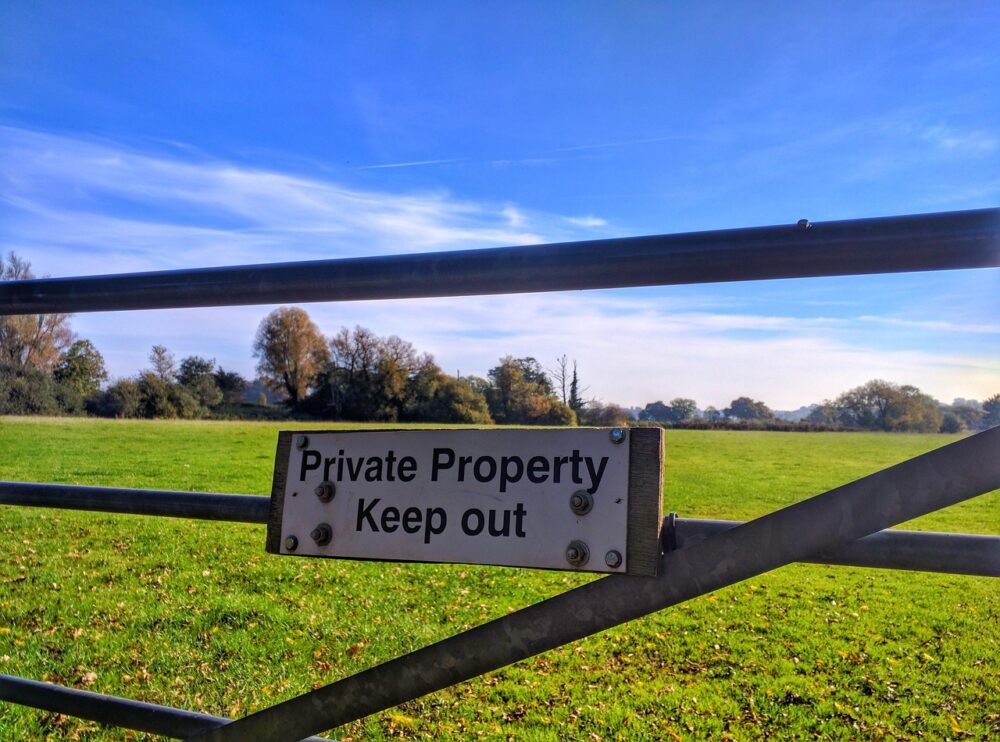
Rights associated with this type of ownership tend to be exclusive to P. P can generally exclude other people from P's property and do what P likes to the land, even if the effect is negative, to allow the land to come into disrepair. Other people will have no, or few, rights over P’s land.
But the situation can be different. P might be a tenant who rents the land from the freeholder (F). P’s rights in that situation are quite different and might, if certain grounds are met, be evicted from the land by F even if not at fault.
From this we see how rights in land can vary; in one situation, P is very secure; in another, P is very vulnerable
Rights can relate to ownership, but ownership doesn't necessarily relate to possession. Rights over land use can be quite independent of ownership or possession. Whereas going on to land without permission can amount to trespass, sometimes it will not: e.g. if a person keeps to a public right of way over P’s land.
An example of rights being extended to the public concerns the so-called ‘right to roam’ over some types of land by the Countryside and Rights of Way Act 2000.
Water as ‘land’ is mentioned above; user rights here might be the right to fish, or the right to navigate the water.
Land rights that may be appropriate to one situation may be inappropriate elsewhere. Most people would think it reasonable that P has a right to exclude other people from P’s house or garden. But most people would not necessarily think it reasonable that this right should extend to P’s deserted moorland.
[lower-mid-content-banner]
Land rights distribution
Land rights are important because they help meet fundamental human needs: e.g. security of tenure of residence can improve physical and mental well-being, as can a right of access to an attractive environment like a public park or the countryside; this latter aspect was amply demonstrated during the Pandemic lockdown.
I mentioned above about fairness in the distribution of land rights. I use the term ‘distribution’ in two senses. The first is about the distribution of rights to a defined group, such as under the Countryside and Rights of Way Act 2000.
The second sense is about creating the conditions where individuals are put in the position where they can acquire land rights: e.g. so that there are enough affordable homes to allow people to enter the housing market.
There is a Welsh example: as a disincentive to owning more than one home, local authorities can charge owners increased council tax on second homes.
Balancing interests in defining rights
Rights about land ownership, possession and usage are interrelated and their appropriateness must be considered in context; such as with P’s residence, P’s isolated moorland, or multiple holiday homes displacing a local community.
Assessing the appropriateness of rights must involve balancing the legitimate interests of all to decide what rights should prevail. And by ‘all’, I mean individuals, defined groups of people, society at large, humankind now and in the future, and the natural world as reflected in the Rights of Nature movement.
Land rights must be considered and defined considering the range of contexts. They must also be continually reviewed: e.g. with reference to protecting the environment.
Land reform
There is a need for land reform: i.e. to improve land fairness through better rights balancing. Areas of focus include: rental security of tenure; land access; keeping community assets in the community; environmental protection; and securing more affordable housing for first-time buyers.
This is an ongoing need, as new evidence emerges about the causes of environmental harm or people’s fundamental need for accommodation security is not being met.
Yet land reform is not something in the forefront of political thinking in Wales. It should be.
Land reform in Scotland
This contrasts with Scotland where there is the Land Reform (Scotland) Act 2003. Admittedly, the term ‘land reform’ here is confined more narrowly than I have done, but it does give material rights to people such as far wider public access to land than in Wales.
There is a right for a community to buy land, including abandoned and neglected land; again, something far stronger than anything in Wales. Realisation of this right is actively promoted by the Scottish Land Fund through making funding available for purchases.
Land reform is an ongoing process in Scotland under the auspices of the Scottish Land Commission. As evidence of that process in action, there is currently the Scottish Government sponsored Land Reform (Scotland) Bill.
The way forward in Wales
Fairness in the way land rights are distributed is linked to social justice outcomes because of the contribution those rights can make to meeting fundamental human needs. As well as identifying specific ways in which greater fairness can be achieved, these ‘ways’ need to be thematically linked to the overarching concept of land fairness.
Wales can learn from Scotland. But in the first place the idea of land fairness, and land reform to achieve greater fairness, must find a core place in Welsh public policy.
Support our Nation today
For the price of a cup of coffee a month you can help us create an independent, not-for-profit, national news service for the people of Wales, by the people of Wales.
Get more trusted Welsh news
Choose Nation.Cymru as a preferred source in Google News to see more of our journalism.
