
Opinion
The Cambrian Mountains of mid-Wales: outstandingly, naturally beautiful
Lorna Brazell
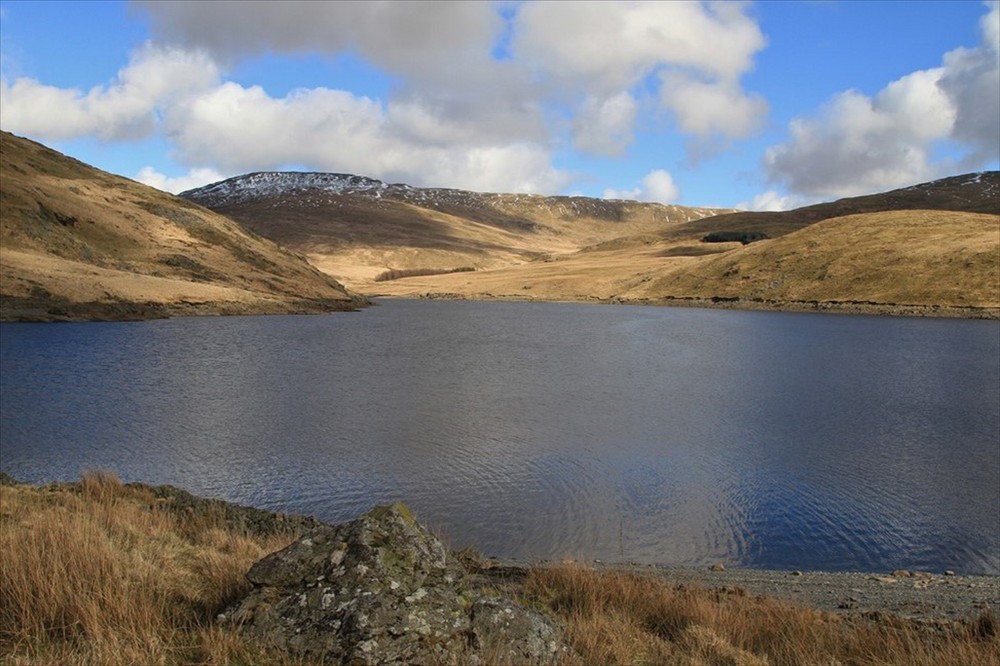
The Cambrian Mountains are the upland backbone of mid-Wales, stretching from the northern edge of Carmarthenshire to the southern edge of Snowdonia.
These wide hills are, unfairly, far less well-known than the Brecon Beacons or Snowdonia. Their low density of population has long led to the region being somewhat overlooked by governments in either Westminster or Cardiff, neglect which contributes materially to the ongoing ebbing of population from rural mid-Wales.
Currently, the principal economic activities are farming, forestry and hospitality and tourism services.
Although for centuries it has been a farmed landscape, the industries which are growing in the region today are forestry, which generates limited local employment, and hospitality and tourism.
Accordingly, measures to sustain farming while also preserving and promoting the attractions of the uplands, are key to retaining living communities in and around the hills.
The landscape is under threat from two principle changes which are encroaching across the region. In the present dash for renewable energy various sites - including adjacent to Plynlimon, the highest point in mid-Wales - are now being identified as potential sites for marine-scale wind farms with turbine blade tips a massive 180m (580ft) above the ground, three times higher than traditional onshore wind turbines.
Such enormous towers would massively over-dominate the surrounding landscape: Lluest y Gwynt’s own report shows that their towers would be visible from Aberystwyth to Llandovery.
[mid-content-banner]
Investors
Consequently, though enriching the lucky landowners who are able to sell their land to the investors, they risk undermining the future value of the entire region for tourism and those who depend in whole or part upon it.
Furthermore, as Wales already generates as much renewable energy as it is able to consume, the purpose of these new developments is not to bring Wales closer to carbon zero but to cash in on the curious pricing structure of the electricity market through exporting renewable energy to England and Ireland.
By all means let us use the Cambrians to generate renewable energy, but with its many rivers and reservoirs, hydroelectricity is far better suited to reduce carbon emissions, conserve the landscape and help local communities to thrive.
A completely different threat arises from the increasing number of mid-Wales farms being bought by companies to plant essentially monoculture confers in the name of future timber production and/or offsetting carbon emissions.
Land within the Cambrian Mountains, particularly the south and east, is already being bought by investors who offer prices for the land which local farmers simply cannot match.
Such monoculture plantations, highly vulnerable to climate change and tree diseases, blight the landscape for other uses as well as reducing biodiversity, harming the soil's suitability for future pasture, and changing water run-off leading to acidification of rivers and greater variability in flow.
In the light of these trends, the Cambrian Mountains Society, a charity campaigning to promote and preserve the Cambrian Mountains, is arguing for designation of the Cambrian Mountains as an Area of Outstanding Natural Beauty.
Iolo Williams
The area - described by TV naturalist Iolo Williams as "Wales' last true wilderness, a place where you can lose yourself in nature" - easily fulfils all the statutory requirements for designation.
Such spaces are increasingly rare in an ever more developed world, and their importance for present and future generations is greater than ever.
In addition to providing a home for endangered species such as the curlew, golden plover and snipe, the uplands have huge areas of peat bog – an essential element in the fight against climate change as they sequester more carbon than woodland.
Development work for either wind farms (and their necessary infrastructure) or conifer plantations damages these fragile environments and releases carbon, undermining the very rationale for either activity.
Economic benefit
Designation, by officially recognising the beauty of the area, would deliver an immediate and significant economic benefit by putting mid-Wales on the map for the first time for visitors from Wales and further afield.
AONB status would also help attract funds for environmental projects such as the restoration of river catchments and native woodland – projects that would benefit many amber-listed species such as pied flycatcher and redstart, as well as enhancing the tourism offer.
An AONB Partnership would provide a forum for regional co-ordination and holistic management of the uplands between all stakeholders, including farming communities and the three County Councils which administer it, without imposing additional bureaucracy that more institutional mechanisms such as National Parks entail.
AONB status is needed as a matter of urgency, as piecemeal developments threaten the area at the very time when an integrated regional approach is needed to protect this unique and beautiful landscape.
Please support our Senedd Petition here.....
Lorna Brazell is secretary of the Cambrian Mountains Society
Support our Nation today
For the price of a cup of coffee a month you can help us create an independent, not-for-profit, national news service for the people of Wales, by the people of Wales.
Get more trusted Welsh news
Choose Nation.Cymru as a preferred source in Google News to see more of our journalism.