


Opinion
Tata's survival is vital for Wales – and shows why bailouts are about more than money
Theo Davies-Lewis
Following the near-ending crisis it faced in 2016, it was sadly unsurprising to learn that the impact of Covid-19 has prompted Tata Steel’s UK arm to ask for government support last weekend. While Tata is not the first multi-national corporation to ask for emergency aid, the public interest case for supporting the business is unique.
As outlined by Stephen Kinnock in his letter to the Chancellor this week, Tata’s survival is so crucial to communities across Wales.
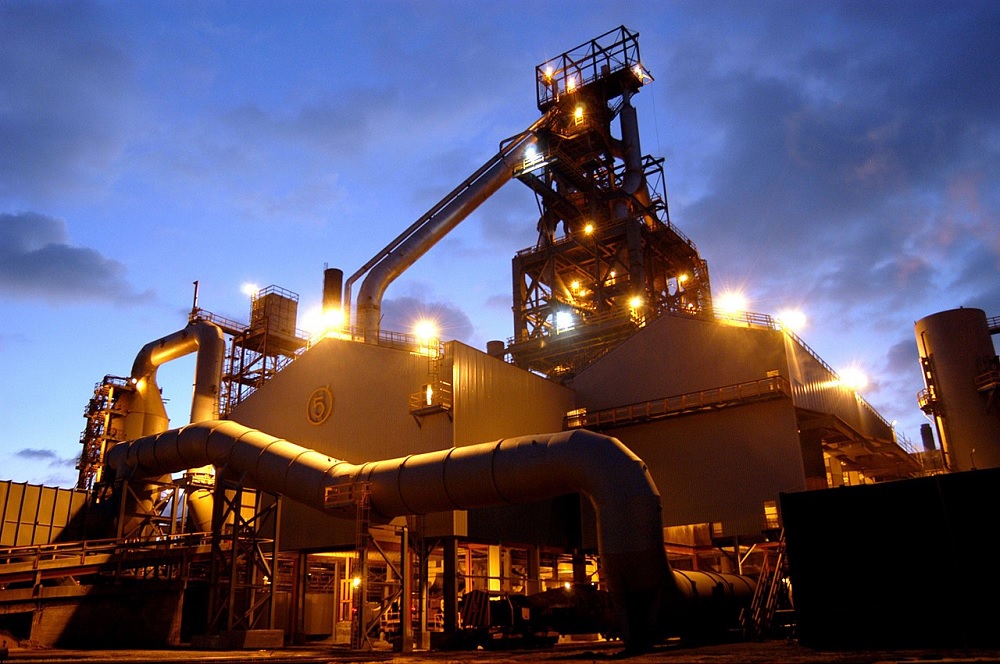
In Kinnock’s own Aberavon constituency, Tata employs 4,000 people in its Port Talbot steelworks and there are thousands that are involved in the supply chain. The impact of job losses would, in Kinnock’s own words, be catastrophic for communities across the south of Wales and cost the British taxpayer an astronomical amount of money too.
Tata also employs another 2,800 workers across Wales, some of those down the road from me in Llanelli’s Trostre Steelworks. Its looming physical presence in the town – albeit slightly tarnished by the neighbouring retail park that has also taken its name – is a reminder of how the industry has been an omnipresent economic and cultural feature of Wales for two hundred of years.
If Tata was to lay-off workers, or worse still walk away from Wales, the scale of deprivation would be amplified in our country where, according to the Bevan Foundation, 22 per cent of working-age adults, as well as 28 per cent of children, are living in poverty. The potential impact of economic damage can only be compared to the fate of mining communities in the Valleys.
[mid-content-banner]
Viable
The crisis facing Welsh industry has worsened since Tata pleaded with the government, as Airbus – another major international employer – furloughed 3,000 of its staff from its site in the north of Wales on Monday. The developments come back to the same issue: will the government in Cardiff, and especially London, be prepared to save highly-skilled jobs in Wales? These are jobs that are the backbone of communities across our country, and demonstrate what Welsh workers have to offer global companies.
As Kinnock has pointed out, the financial difficulties faced by the industry is not necessarily short-term.
There are legitimate questions for consecutive UK governments over how they have supported the steel industry. The dumping of Chinese steel, the government’s approach to procurement, and punishing business rates are some of the factors that has meant that Port Talbot steelworkers have been competing “with one hand tied behind their backs”, as Kinnock put it.
The government was of course more than happy to support British Steel last year, after it received hundreds of millions of pounds when it collapsed into liquidation in 2019.
If the government was happy to inject money then, the Covid-19 economy has shown that the situation for Tata and Welsh communities is even more dangerous and desperate.
While there may be questions for the government, as well as for the steel industry itself, over their response to wider economic and sector trends, these should be asked post Covid-19 when our economy has started to make its recovery.
Now, the Welsh Government should work with London to support Tata Steel and safeguard thousands of jobs.
By doing so, communities will know that their governments are there to protect them and their skilled workforce. It will also be recognition for the industry that it may indeed have a viable future in the UK as a whole.
After all, as Kinnock told Dominic Raab last week, there can be no post-pandemic recovery unless there is strong and healthy Welsh and British steel industry.

Support our Nation today
For the price of a cup of coffee a month you can help us create an independent, not-for-profit, national news service for the people of Wales, by the people of Wales.
Get more trusted Welsh news
Choose Nation.Cymru as a preferred source in Google News to see more of our journalism.
