


Opinion
What conditions need to be met to increase the uptake of electric vehicles?
Professor Stuart Cole, CBE. Emeritus Professor of Transport Economics and Policy, Prifysgol de Cymru / University of South Wales
Governments throughout the developed world are setting targets to produce electric vehicles (EV) in place of petrol/diesel vehicles.
However, before car users will feel able to use electric cars, they will need to be convinced that fuel options will be easily available and reasonably priced.
Targets
The EU has an emissions reduction target of 55% by 2030 and 100% by 2050. However, confusingly, achievement measures vary between member states, putting a degree of doubt on the effectiveness of vehicle emission control.
This does not only apply to motor vehicles but to all those elements of modern industrial life such as houses and factories. Currently road vehicles account for 26% of UK emissions 85% of which produced by cars (UK Department for Transport Statistics October 2023).
Charging points
The 61,000 charging points (i.e. the equivalent of individual petrol pumps) estimate by British gas varies across the countries of the UK. Wales has 3,900 which is about average for our population size and large rural area.
Charging points per 100,000 population is 89 in Wales compared with 71 in Portugal and 817 in the Netherlands – though the last has been foremost in developing other aspects of low emission transport particularly bicycles and trams in the large cities.
By comparison the number of fuel pumps in Britain’s 8,300 filling stations is around 100,000.
Charging stations
The financial viability of charging stations will be determined by criteria similar to that of any other retail outlet. Investment capital will be the first element.
Most investment is at private sector company sites though not always at existing large filling stations.
Fewer regulations governing electricity sales (compared with petrol/diesel) have enabled small sites adjacent to shops to be set up
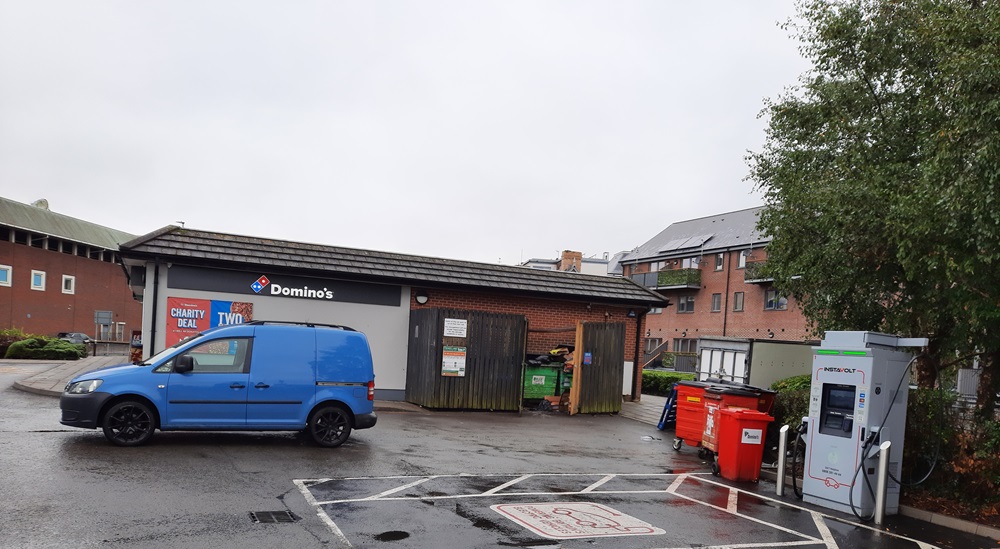
Charging station owners speculatively set up the facility believing that either it will be a loss leader to attract customers, or following the increasing EV trend.
Alternatively smaller site owners may be less likely to invest until they are sure what, where and when the electric fuel demand will be.
The number of charging points will grow as the use of electric vehicles grows.
That transformation will present a separate demand analysis and investment requirement.
Demand will depend on driver behaviour and how soon they are persuaded to buy an EV given the risk of not finding a charging point during the ‘transition’ period.
Investors whether in private or public sectors are therefore unlikely to further invest in charge facilities until the demand pattern becomes clearer.
This is a chicken and egg situation where site owners are largely retailers with no ownership links with petrol companies. It is they who will have to consider at what point the number of EVs is sufficient to form a viable market in any location.
Some might suggest that reducing emissions is the responsibility of government and some capital funding grants are available. However, none of the layers of government (UK, Wales or county councils) are exactly over endowed with financial resources and HM Treasury is unlikely to see that change soon.
Manufacturers will be concerned with the cost and selling price per EV to achieve profitability. Car owners will only buy new EVs when the price falls and manufacturers demand predictions will determine production levels. Battery technology will also change to reduce battery weight – as occurred with mobile phones.
Demand forecast and pattern
Determining transport demand patterns are often difficult as the assumptions being made are subject to change.
Demand will vary between areas, by time of day and different days and by season. Each charge station location would have to be considered.
Some background can be achieved from existing sales of petrol/diesel in terms of how many charging points per location.
The spread of charging stations will have to consider the location of houses, employment, education and retailing.
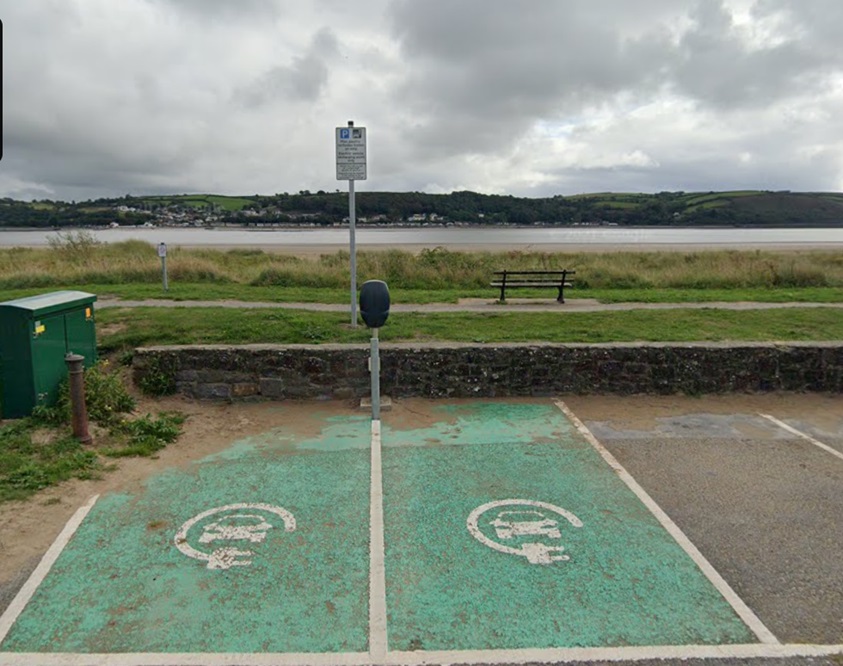
Keeping in mind the rurality of much of Wales, planning authorities will need to set rules on location.
There is also the spread of stations so they are not concentrated in the early years in wealthy areas where residents are likely to be the earliest to adopt EVs.
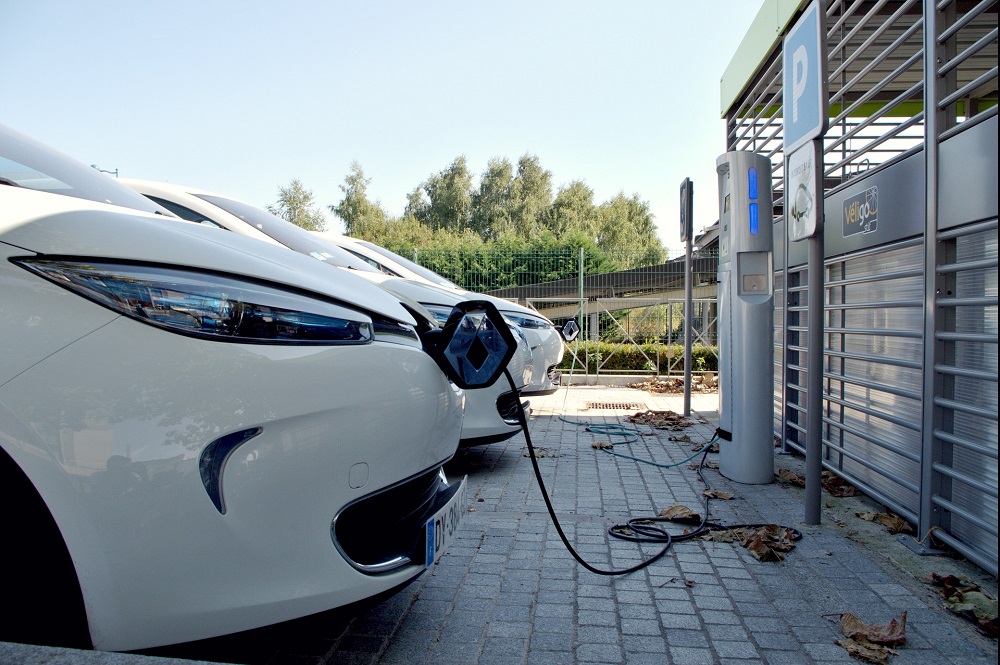
There will also be a decision on the mix of slow, fast and rapid chargers where ‘filling-up’ time reduces but costs increase at 20 – 30 p / 30 – 40p / 40 – 70p respectively per Kwh (the standard unit of electricity we all pay).
Recharging at home is cheapest at an estimated 14p – 34p per Kwh between peak and off-peak and ther supplier.
Current evidence indicates that the first drivers moving to EVs are likely to be those with off-street parking and therefore taking the electricity directly from their domestic supply. This will be another factor determining the investment programme for public supply points.
In industrial south Wales the large proportion of terraced housing has little off-street parking so household charging points will not be an available source.
National Grid
Electricity, unlike petrol/diesel, cannot be stored. Unlike petrol/diesel it cannot be delivered on a regular basis over a given period and then sold in accordance with the demand pattern. It can be stored in batteries at a cost, at supply points. National Grid have suggested that it could not meet all the road transport demand until possibly 2040.
Taxation
Emerging from that scenario is the action HM Treasury will take in determining the tax payable on domestic electricity. A separate tax rate on EV usage is envisaged to meet the resultant shortfall in fuel duty estimated at £30 bn annually.
Design and Location of ‘filling’ stations
This is probably the easiest part of the exercise. Existing filling stations 0r car parks provide a good base as the layout is unlikely to change. However, while average filling up time is currently six minutes and this may apply to fast charging, the suggested twenty minutes slow charging time is likely to require spatially larger premises.
Operational agreements with forecourt owners in term of opening hours, standards of customer service and additional retail offers will not be dissimilar to the current position. Standardisation of sockets in cars and chargers will also have to be agreed internationally – a repeat of the VHS/Betamax debacle would not help EV market expansion.
Heavy investment is being made in the EV market. However vehicle purchase cost and more certainty about operating costs will determine the rate of future growth.
Government pontificating will be no more believed by consumers than its other ‘good for you’ policy pronouncements.
Support our Nation today
For the price of a cup of coffee a month you can help us create an independent, not-for-profit, national news service for the people of Wales, by the people of Wales.
Get more trusted Welsh news
Choose Nation.Cymru as a preferred source in Google News to see more of our journalism.
