


Opinion
Sleepwalking down the path to catastrophe
Dr Gethin Matthews, Department of History, Heritage and Classics, Swansea University
How long have the Welsh public been warned about climate change? The surprising truth is that some newspaper reports raised the alarm decades ago, with accurate predictions of the impending dangers, but the warnings fell on deaf ears. Scientists are now unanimous in their warnings of the dire consequences upon all aspects of human life unless immediate action is taken, and yet the measures taken in response are minimal. Unfortunately, this pattern is well established in Wales.
For many years an enormous number of distinguished scientists have been making stark predictions of what awaits humanity unless major action is taken to deal with the causes of climate change. These have often gained a little attention in the press, sometimes eliciting some words of concern from commentators and politicians … and then nothing changes.
Whether it is the release of a report by the Intergovernmental Panel on Climate Change (IPCC – the latest one being March 2023) or the briefings for a COP event (2022 in Egypt; 2021 in Glasgow), or of any of the warnings put out by specialist scientists, the pattern is the same – a small ripple of attention and then the issue fades into the background noise.
As a historian, I am interested in finding out when this sequence of events began: when were the people of Wales first warned of the dangers of irreparable harm to the planet?
The first scientific predictions of climate change due to increased carbon dioxide in the atmosphere date back to the end of the nineteenth century, and in the 1930s a meteorologist showed how the average temperature of the earth had increased by 0.3°C over the previous fifty years.
However, these early indications of climate change seem not to have created any interest in the Welsh media.
[mid-content-banner]
Palm trees
The first significant report in a Welsh newspaper that I have found dates back to May 1956, when the Western Mail gave readers an attention-grabbing headline: ‘Palm Trees at the Pole as the World Grows Warmer?’. This cites the work of Swedish scientist, Professor Hans Ahlmann, demonstrating that the temperature increase was accelerating and leading to visible changes in terms of retreating glaciers and diminishing ice shelves.
Yet, although there are sentences here which should have set some alarm bells ringing, noting the potential impacts of the changes upon ‘population, economics, food and politics’, you can search in vain for any responses to these challenges.
Two years later, there is another article in the Western Mail which introduces Welsh readers to the term ‘greenhouse effect’, with an explanation of how a blanket of CO2 acts to prevent heat from escaping and thus keep the planet warm.
There is a prediction from ‘a leading climatologist’ that the present rate of increase of CO2 will raise temperatures by two degrees per century, and an explanation that this will mean the flooding of low-lying areas such as New York and the Netherlands. It is noted that technological measures are available to lessen the impact, but that these are costly.
So the information was available to Welsh politicians and decision-makers 65 years ago, warning them of the dangers of climate change and the consequences of inaction.
Yet these went unheeded for decades. It is only from the late 1980s onwards that one can find a regular stream of articles about the threats to the planet, and even then they are far away from the front page. You have to browse through to page 35 of the South Wales Echo on 14 May 1988 to find the headline ‘Glaciers Melting as Earth gets Hotter and Hotter’ – a report which shares the page with an account of how ballet dancers are planning a visit to hospitals to cheer up sick children and another excited that Michael Jackson has added another date to his UK tour.
Ignored
When trying to explain why these scientific warnings were ignored, I think it is fair to point out that there are also a large number of predictions made over the years which proved to be groundless. In the 1970s there were a number of alarming forecasts made of a ‘new Ice Age’ that would be the consequence of global cooling: you can also find any number of frivolous predictions of how people would be flying helicopters for their morning commute within a few years, or how holidays on the moon were likely within a decade.
Perhaps also the real threat of nuclear annihilation following a conflict between the superpowers was a more tangible concern. There was also, quite understandably, a concentration on other environmental matters that seemed more immediate, such as the impact of acid rain upon ecosystems and the destruction of the ozone layer due to the use of CFCs (an area where inter-governmental co-operation did lead to positive results).
However, we can also see those with a vested interest arguing against action to combat global warming.
At a political meeting at Pontyates in 1989, Dr Phil Williams (a Plaid Cymru candidate who was also a physicist at Aberystwyth University) explained that the continued burning of coal would accelerate the greenhouse effect, meaning a temperature rise of 4 or 5 degrees over a century, leading to a global catastrophe.
He urged investment in renewable energy to cut out the use of fossil fuels, while creating more jobs locally. The local NUM chairman, however, disagreed. He claimed that a Sheffield scientist had told him that burning coal was only a minor contributor to global warming: what was necessary to boost the local economy was more investment in coal and steel.
Now, 34 years on from that exchange, it is crystal clear that Dr Williams was right and, belatedly, much (though not all) government policy has caught up with the necessity of prioritising renewables.
Carbon emissions
The measure to cut carbon emissions that were mentioned in the 1958 article are now understood as essential. This report noted that ‘the upset that could be caused by an uncontrolled increase in the carbon dioxide content of the atmosphere … could be disastrous.’ That is what we are facing now, due to decades of inaction.
One key difference between now and the 1950s and 1980s is that we in Wales do have a limited amount of autonomy to be able to act. We know that reducing environmental damage in Wales will only go a very little way to solving what is a global issue, but as we do have some elbow room, we need to use it. One country needs to take a lead and do what is right by future generations, and hope that other nations follow.
As a historian of the First World War, in my lectures on the war’s origins I have the job of explaining to students how Europe was plunged into catastrophe in 1914, with a war that almost no-one wanted. One book published a decade ago that has established itself as a classic is Christopher Clark’s The Sleepwalkers: as the title suggests, the argument is that the countries slipped unthinking into war because no-one in power was awake to the warning signs.
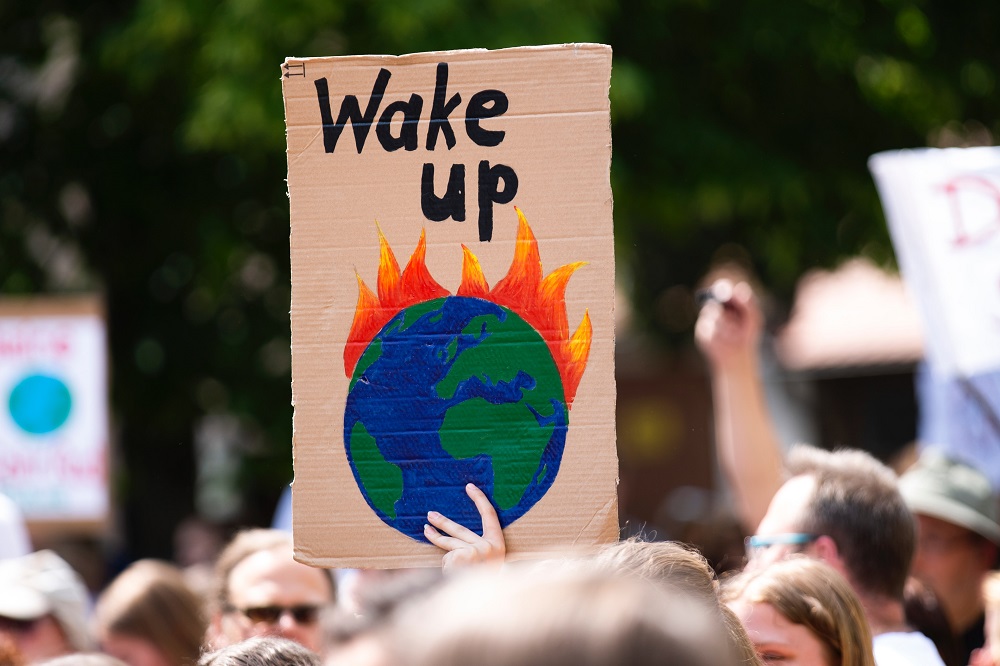
Unfortunately, it seems that we have been sleepwalking towards a catastrophe for the last few decades by ignoring scientists’ reports of the dangerous consequences of our actions.
Support our Nation today
For the price of a cup of coffee a month you can help us create an independent, not-for-profit, national news service for the people of Wales, by the people of Wales.
Get more trusted Welsh news
Choose Nation.Cymru as a preferred source in Google News to see more of our journalism.
