


Wed, 22nd July Cardiff 18°
Nation.Cymru wordmark
Advertisement

Opinion

Second homes restrictions: Common sense in England, racist in Wales
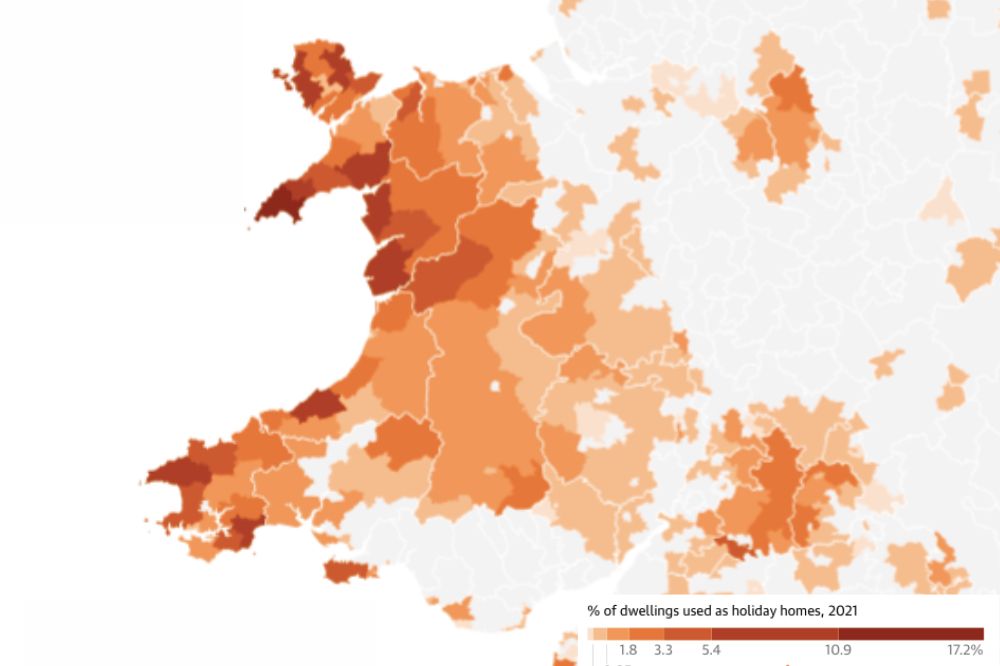
By Stephen Price
High concentrations of holiday homes are found near the coast and national parks. Image: The Guardian

Stephen Price

Across the whole of the UK, councils are finally facing up to the pressures on housing and communities caused by empty homes, AirBnBs and second homes.

In places as diverse as Norfolk, St Ives, Whitby and Tenby, local people’s voices are at last being heard, and council tax premiums and more restrictive measures are beginning to be introduced.

But here in Wales, and despite claiming to have unparalleled and groundbreaking measures in place, we must always know our place.

We must tread very carefully lest we are accused of being racist against poor rich English folk, and because (thankfully for them) we might take down a few Welsh people with them.

‘Oh but won’t you think of the diversifying Welsh speaking farmers?'

[mid-content-banner]

Following our lead

Seaside towns including Scarborough and Whitby were among the first in England to double council tax under changes enabled through the UK Government’s levelling up bill.

Councillors said the rise of Airbnb and other rental sites was “tearing the heart out of communities,” as they voted to introduce a 100% premium on owners of second homes in North Yorkshire.

In Whitby, about 28% of properties are holiday homes. Estate agents said that as many as three-quarters of new developments in the town were being sold as short-term lets or to investors.

Janet Jefferson, a North Yorkshire independent councillor, said she was dealing with “constant calls” from residents being evicted from properties that “have suddenly become holiday homes”.

“They are getting rid of people that have rented for years because they can make more money,” she said.
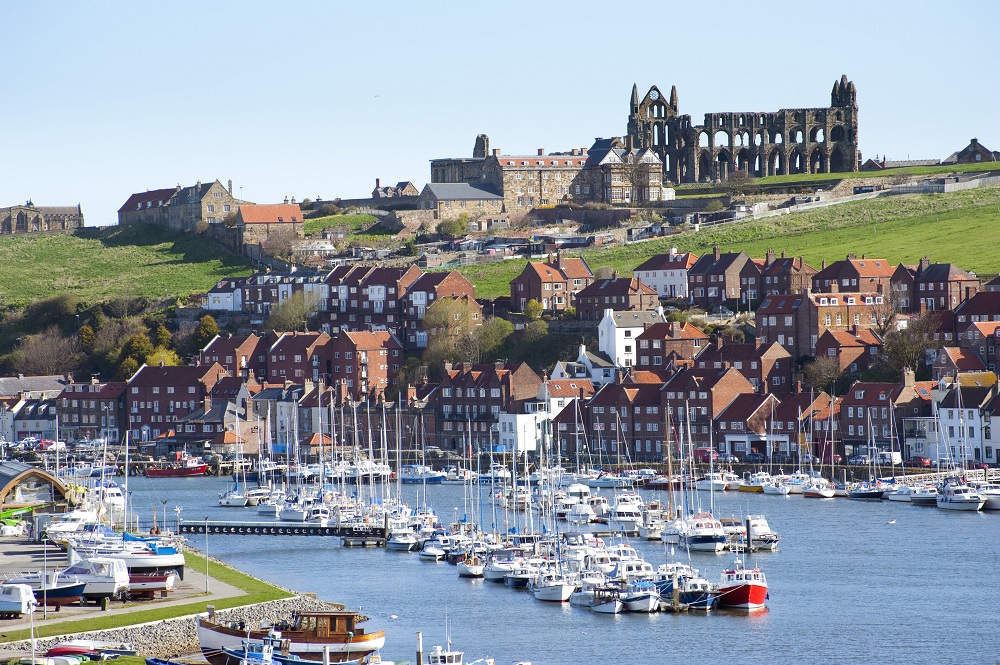
Scenic fishing Port and abbey ruins in Whitby, North Yorkshire

Jefferson said houses in her coastal ward were being turned into holiday homes “every day” without the need for planning permission, adding: “It’s affecting our communities. It’s breaking up our communities.”

Similarly, when speaking to the BBC about the situation in Norfolk, Megan Denton, who lives in a rented property in Cromer with her son Hugo, said: "Prices have risen a lot. A one bedroom house is at least £800 a month to rent. Buying here is really tricky too.

"People just seem to take and take. They have these homes which they don't live in which prevents people [like me] from moving.

"Doubling council tax would push people to not buy second homes and then leave them empty for half the year."

And it’s not just second home owners that Norfolk is tackling. Prospective purchasers of certain properties in North Norfolk also have to contend with rules that favour those who have lived in the area for over three years.

Speaking to Nation.Cymru, one person who recently retired to Munsley, North Norfolk said: “I was turned away from a few properties here with restrictive covenants that meant I had to live there three years previously - the same thing happened in Cromer and Sheringham.

"It’s all along the North Norfolk coast - I’d get in touch with the estate agent and be told 'That’s for locals only’."

North Norfolk’s s157 restriction applies to many properties sold under the Right to Buy by North Norfolk District Council before March 2006.

The s157 restriction requires that a prospective purchaser must have lived or worked in Norfolk for at least three years (without a break) at the date of purchase.

In the case of joint purchasers, only one of the purchasers needs to have lived or worked in Norfolk for three years before their purchase.

The policy has driven down prices and made them more affordable - at odds with the wider UK market, but in reach of locals.

And yet, as it’s an English policy affecting (primarily) English people, it’s not racist.

The fuss when we propose similar things.

Kernyw

The situation is at boiling point in Cornwall, where 20% of all second home sales in the UK took place in the last decade.

Heck of a map from @guardian pic.twitter.com/Uz7TyQexrA

— David Ellis (@David_J_Ellis1) March 7, 2024

Back in 2016, St Ives voted to ban the sale of new homes to second home buyers.

Fowey and Mevagissey soon followed suit, but a 2019 London School of Economics study found the policy just pushed up prices – because demand shifted from apartments to existing homes.

This has, in turn, pushed up rents – making it harder for first-time buyers to save for deposits.

From next year, Cornwall intends to generate £28m by charging second homeowners double council tax under new powers handed down by the levelling up secretary.
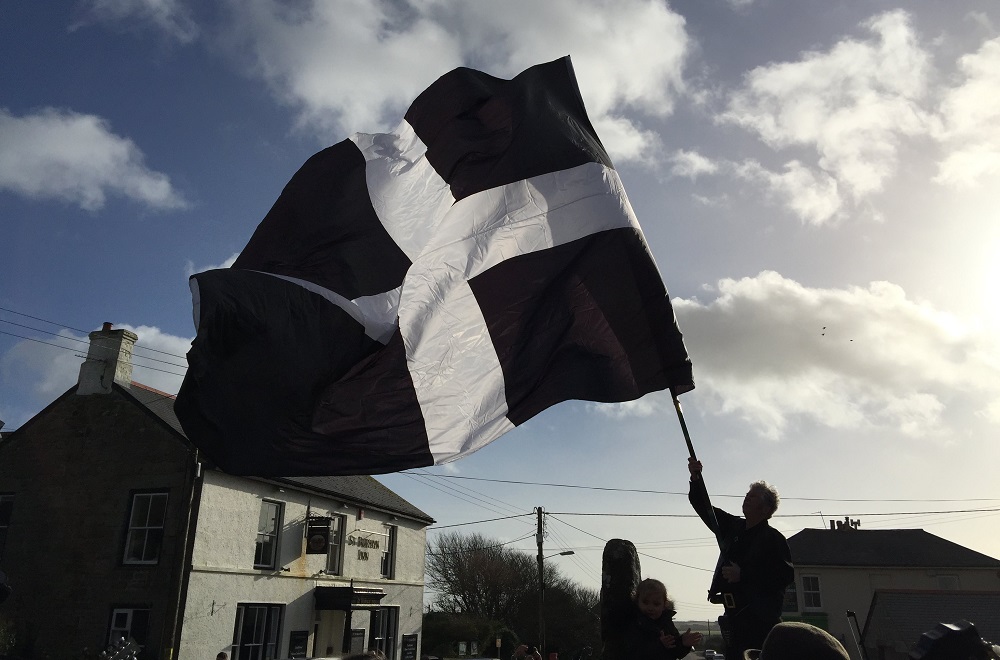
St Piran's Day 2017, St Buryan, Cornwall. Picture by Tom Goskar (CC BY-NC-SA 2.0).

An article from the Telegraph earlier this year has quite rightly pointed out that this issue doesn’t exist in a microcosm, and red tape facing landlords has led to increased competition and demand for rental properties, while council property waiting lists continue to grow. House building has also stalled across much of the UK.

Labour and the Tories have let things run amok, and their efforts to try to address the situation have only made things worse.

A spokesman for Cornwall Council told the outlet: “Cornwall continues to experience extreme and unprecedented pressures on housing and we have the utmost sympathy for our residents unable to find a home.

“There are many reasons for the current pressures, which were brought to a head in the aftermath of the COVID-19 pandemic. The boom in house prices and demand for holiday accommodation caused a significant and sudden reduction in the availability of homes to rent.

“Private landlords moved away from long-term letting and towards the short-term holiday market, as COVID-19 travel restrictions increased the demand from people looking to holiday within the UK. Others sold their properties due to the high market sales prices. This was matched by an escalation in private rental costs.”

“Priced out"

Cymdeithas yr Iaith Gymraeg are currently calling for the introduction of an Article 4 Directive for the whole of Eryri.

The introduction of this policy would make planning permission mandatory before changing the use of a property from a main home to a second home or short-term letting accommodation.
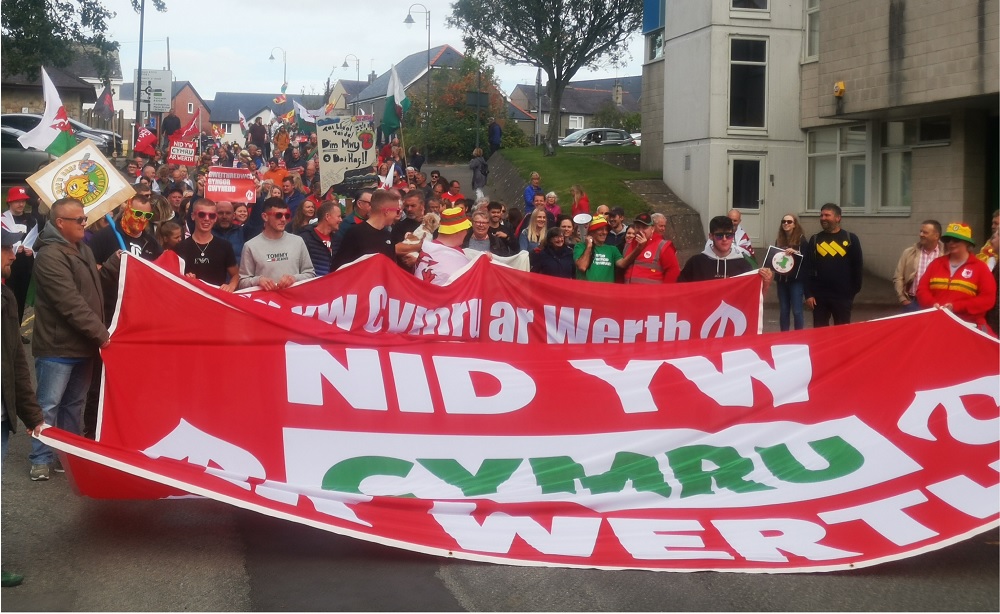
A Wales is Not for Sale rally

Gwyn Siôn Ifan, Chair of the Gwynedd and Môn Region of Cymdeithas yr Iaith, said: “The significant number of second homes and short-term holiday accommodation in Eryri – around 17% of the entire housing stock – is a symptom of the inequality of an open housing market which undermines the sustainability of communities and threatens the future of Welsh as a living language.

“According to a report prepared for the Planning Committee, 65% of Eryri’s entire population have been priced out of their own housing market.”

Tears of clowns

In Gwyn Siôn Ifan’s words, “Ultimately, the housing system must be transformed at its core by introducing a Property Act which would treat houses as essential social assets and put the housing needs of communities before profit.”

But when Wales tries to tackle the problem, the narrative shifts.

Instead of championing the voices of local people and their local communities, we tend to centre the voice of the victim of all victims - the second home owner.

And, in turn, we are labelled racist - something not so easy to do when it’s done in England.

From the people who wrote brought you the British Empire, you can expect the highly original: ‘BUT WELSH PEOPLE HAVE SECOND HOMES TOO!?!’, ‘I shop in the local Tesco and use a local cleaner, now I’ll use Aldi back in Chester!!!!’, ‘You lot couldn’t afford this one anyway.'

Blah blah f***ing blah.

Read the room

A financial disincentive only works for the poorer among us.

If your pockets are deep enough, a few hundred quid extra for a house that’s been snapped up for a laughable sum is neither here nor there.

And if said pockets aren’t deep enough, and you’re struggling with the new costs associated with having an oversized dolls house, then it’s time to sell up and live according to your means.

Wales needs an outright ban on second home ownership, and an end to operations of companies such as AirBnB, and we need to be bold and introduce policies such as those in North Norfolk that prioritise the needs of the people who live in and work in our communities.
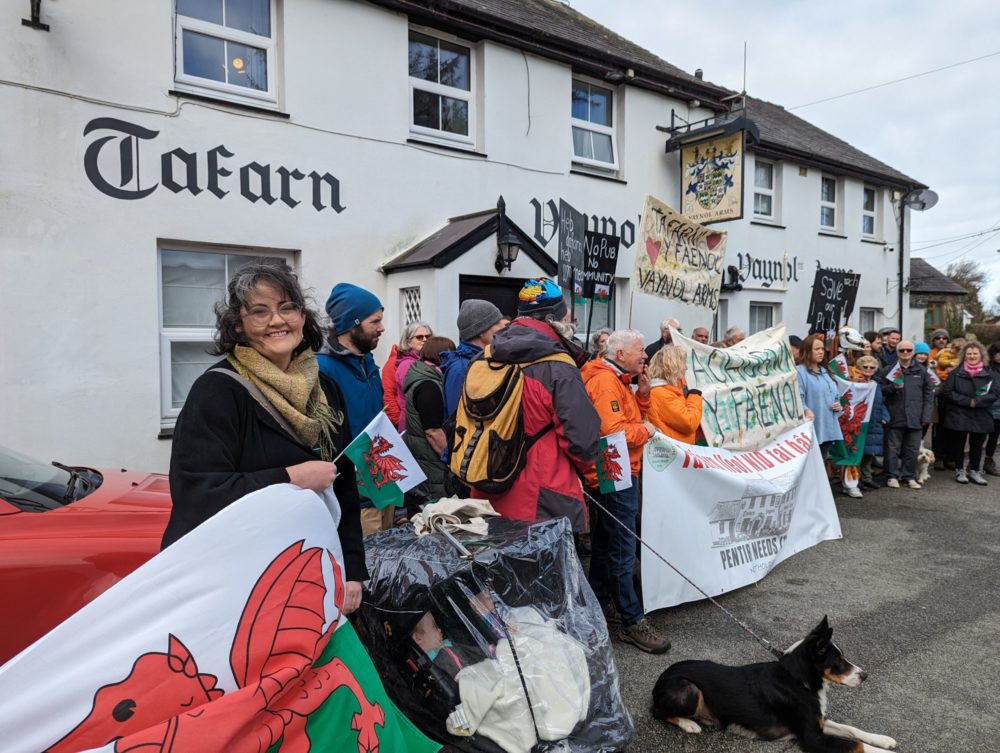
Locals protest against plans to convert The Vaynol Arms into an AirBnB

We need to grow some balls, all of us, and stop centering the narrative of the already-haves and do what is right for the very survival of our communities.

Morality is subjective, of course, but there is something morally wrong with a country that shrugs its shoulders when young people have no choice but to sofa surf or move away, often putting off having a family, while others add to their portfolios with a bolthole, a nest egg, a boutique cottage by the sea or a city pad to let out during big events.

And to those who shall no longer be centred - enough with the redefining of what it means to be racist and go buy something in Norfolk or Whitby.

Oh sorry, they don’t want you there either.

For the price of a cup of coffee a month you can help us create an independent, not-for-profit, national news service for the people of Wales, by the people of Wales.

Get more trusted Welsh news

Choose Nation.Cymru as a preferred source in Google News to see more of our journalism.

Choose Nation.Cymru as a preferred source in Google News

19 comments

Linda Jones

Agree we in Wales need to be far more courageous in tackling the second home/holiday let/air bnb scourge on the landscape. Enough is enough

Reply
Mr Williams

Wanting to live in your own community, and not be priced out by others, wherever they are from, is not racist. Wanting to protect the future of Cymraeg, and Welsh culture and values is not racist. I would suggest that haughty and 'superior' attitudes against Wales and Welsh people are the ones that are actually racist.

Reply
Annibendod

Over-tourism is a blight the world over. We just have a barrel of idiotic Tories in Wales led by the most talentless blowhard in a generation trying to score political points off people's concern for their communities and heritage. Shameful. All the more so for the Tory councils in England calling for controls for the same reasons!

Reply
Evan Aled Bayton

The answer is a licensing system similar to that for retail and business. A proportion of houses could be licensed. Obviously properties suitable for locals like former local authority housing etc should not be licensed as holiday homes. Taxation just favours the extremely rich and becomes a source of prestige for those who can afford to pay it. Transitional arrangements need to be made for existing businesses.

Reply
Annibendod

Just do it through planning. Change of use.

Reply
Mawkernewek

Licensing would presumably only capture those houses that are being let out for short-term letting, anything that is just a second home occupied only sporadially by its owners, and if let out at all, informally to family and friends, probably wouldn't be affected. The double or triple council tax they would have to pay, but sometimes these properties aren't even in that high bands, I've seen adverts in estate agents for houses at three-quarters of a million that are only in band D, since these are here in Cornwall based on valuations from 1992, so even doubled council tax might not be a lot of money for them. I'm not sure exactly where Wales stands with that, but I'm assuming there's quite a lot of inflation gone on.

Reply

In reply to Mawkernewek

Annibendod

If it's a change of use issue under the planning regs it takes on a different complexion. It would be similar to living on holiday parks. You can bring in significant fines and use court orders. For example, if we change the law such that all homes are designated as main residence use only then you could give LA's the legal right to issue a CPO if a court agrees an owner is breaking that designation. Anyone who wants to use a home as a holiday home or let would need PP to do it which would allow community councils to control the numbers.

Reply

In reply to Mawkernewek

Padi Phillips

That just goes to show how regressive council tax is. Let's not forget that in essence it's the panic driven reaction to the opposition to the Poll Tax, and anyone with any nous would have realised that back in 1990 or whenever it was that council tax was foisted on us as a system. The only fair taxation is the progressive variety that is based on ability to pay, so that would indicate some form of local income tax. However, on the issue under consideration it is indeed high time to get tough and introduce radical reforms to the system so that people who can pass a residency test are the only ones who are able to purchase in the first instance. Further to that, I'd personally like to see all LDPs torn up and in their place a new policy of only allowing development for recognised local needs, i.e. the needs of those already resident who can pass a residency test. But it's not just about being able to find a home, it's also about being able to pay for it, ideally without the need for housing benefit, which of course means jobs that are skilled and pay well. At present the economy over much of rural Wales is extremely weak and has been that way for decades and is in many cases far worse than it was in the 1980s when the existence of the Cold War provided a significant and substantial number of jobs in rural Wales, especially on the west coast area. Both Ynys Môn and Gwynedd benefitted economically by the presence of nuclear power stations that provided a large number of well paid (at least by local standards) jobs, with the added bonus on Ynys Môn of the presence of Aluminiwm Môn that relied on the power from Wylfa to be in business. All that is now gone, and while I wouldn't advocate for a new Cold War, (though that might be what we end up with, the way things seem to be going) or new nuclear power stations, there does need to be a root and branch reassessment of Welsh rural economies and their overreliance on tourism and agriculture and the development of new industries that provide the variety of jobs that leads to a rounded and well functioning society that is able to offer to people, particularly younger people, the option of staying and thriving in their home localities, should they so desire.

Reply
Gareth

Whatever we do here, that does not conform to how we are supposed to behave, according to Torys within Cymru, or the general " British" establishment, is met with derision and ridicule at best, or accusations of racism and hate. Restoring original place names in India, Australia or New Zealand are respected, but use Eryri, and we are insulting the English, and are " narrow minded nationalists", change the consent of organ at death laws, uproar in the British press , they dont do this in England. Want to put 20 mph limits on roads, it's a " war on motorists" but Tory councils in England are all for it, free perscriptions " waste of NHS money" because England charges for meds. I could go on, but it boils down to how we are viewed, as a people who should be grateful for the UK sustaining us, so shut up, do as you are told, and stop behaving as if you have the right to self determination. Untill we are our own independent country, this attitude will continue, we are the only ones who can change it.

Reply
Ernie The Smallholder

This is what you get for staying part of the UK. It is called Imperialism. Now, they are imposing a general election on us, So let us use it to elect Welsh based party, Plaid Cymru to represent us as a nation and press for our Declaration of Independence. After all that election is on the 4th of July. Will it be our day when we will start our bit for independence ?

Reply
Richard Thomas

The Tories hate anyone who disagrees with their narrative. Wales is thereby a major problem to them. They're trying just as hard to undermine councils in England which have brought in measures they don't agree with. The Tories are massively out of step. It would probably be a good idea for all communities blighted by second homes to fight collectively. These people understand our cause, they know it's not racist, but about community and future. Build a good relationship with progressive people and freeze out the Tories, so Wales and England can co-operate for the good of each other and not the good of a tiny wealthy cabal.

Reply
Gareth

If they are that successful, they can afford the extra Bill's, and there are also millions of people working, who are able to claim benefits, that can not even afford the deposit, and they all "work hard".

Reply
Riki

Yep, if only we challenged the English as much we do other foreigners about their illegal place in Wales. For some reason we roll out the red carpet for people who come from a nation who has history of destroying our culture and then expecting us to say thank you. The majority of those in Wales TRULY believe we are a lesser people than those across the border. And in doing we must oblige them at all times.

Reply
Arthur

I would like to point out that the figures for Ceredigion ( gained through a FOI request) shows that there has was a net REDUCTION in revenues raised since the introduction of the second home premium with respect to second homes / holiday lets in the county. The figures quoted by Ceredigion county council are WRONG and I have proved this and contacted Audit Wales with the evidence. Janet Finch-Saunders advised the same for Conwy CC and Pembrokeshire CC, the only two other counties who even bothered to respond to her own FOI. You can view the Business Statement that was made by Janet Finch-Saunders in the Senedd on her own website. The Welsh Assembly government REFUSED her request for an audit of the £17m total revenue which is claimed by Welsh County Councils as additional revenue for 2022/23. There is significant anecdotal evidence that this second home premium is not actually working - there are unintended consequences.

Reply
Ron Biggly

Returning all mostly empty properties to main residential use won't on its own fix the problem. That's why councils also need to be building, or buying and refurbishing, enough high quality properties in their area and making them available on social rent to anyone with a connection to the area who wants one. This is what the second home levy should be paying for right now. Why isn't it happening.

Reply
Arthur

You are making the assumption that incremental revenue has been raised since introduction - of course, a reasonable assumption to make. Not true in the case of the 3 County Councils who actually bothered to respond to the FOI requests. I have verified Ceredigion's numbers myself and it would appear that Ms Finch-Saunders has discovered the same. It is the ordinary (general) council taxpayers who are making up the difference ! The silence is deafening from our elected representatives. The political consequences are so embarrassing - not the panacea it was claimed to be, in fact quite the opposite. I am more than happy to forward you the evidence I sent to Audit Wales.

Reply
Ron Biggly

Are you saying nothing has been raised from the second home levy? That could only mean all second homes have reverted to main residence use, switched to business rates, there were no second homes or the levy isn't being applied.

Reply
Dr Jonathan F Dean

I lived in the Peak District national park for over a decade and s157 was widely supported and used specifically to keep developments affordable for locals

Reply
Bob

Before you ban people investing in Wales bear in mind the only industry left for West Wales is tourism as successive govt have ignored investing in infrastructure for so long The money will go elsewhere.and the lovers will as ever be the welsh

Reply

Leave a reply

Replying to Annibendod Cancel

Over-tourism is a blight the world over. We just have a barrel of idiotic Tories in Wales led by the most talentless blowhard in a generation trying to score political points off people's concern for their communities and heritage. Shameful...

Comments are reviewed before they appear.