


Sun, 19th July Cardiff 17°
Nation.Cymru wordmark
Advertisement

Opinion

Second homes in rural Wales – should we change the locks, or change the tune?
By NationCymru
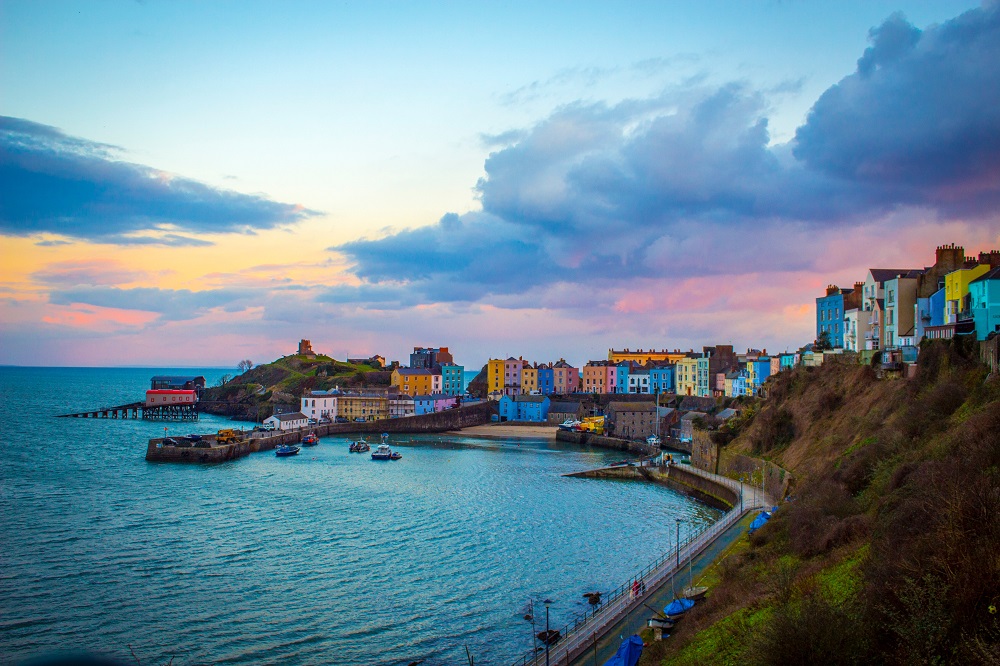
Tenby harbour. Photo by Beata Mitręga on Unsplash

Bryonny Goodwin-Hawkins

If it’s ‘coronavirus holiday’ season in rural Wales, the forecast is frosty for second home owners. From spreading the virus and skipping lockdown to unfairly claiming business relief, second home owners have had bad pandemic press. MP Liz Saville-Roberts and Gwynedd Leader Cllr Dyfrig Siencyn are among those calling Cardiff and Westminster to crack down. Is it time to change the locks on second homes?

Over forty years ago, the great Welsh cultural theorist Raymond Williams observed that every urban dystopia has its rural idyll. Coronavirus has given wide green space a whole new appeal compared to cramped city lockdown. Boris Johnson, Prince Charles and the Queen are currently all taking the country air.

Slipping the city worked out less well for Catherine Calderwood. Scotland’s Chief Medical Officer was forced to resign after being dobbed in for flouting her own lockdown advice and weekending at her second home.

Here in rural Wales, curtain twitching is also having a comeback. I’ve caught myself glaring at suspiciously shiny cars passing my (only) home on the road to Snowdonia. Neighbours have got out the paint. ‘GO HOME!’ warn signs stuck to gates and fences – written in English, of course.

Two ingredients are simmering here. The first is privilege; the second, identity. Viruses don’t care about money, but the current crisis lays inequalities bare. Seeing some enjoy a second home when so many others cannot afford (or even have) a first leaves a bitter taste. The taste turns sour when privilege crosses the border to Welsh communities struggling to keep their young people, their livelihoods, and their language.

[mid-content-banner]


Symptom

Research from the UK and elsewhere does suggest that second home owners contribute to the rural economy. The difference is often down to demand. Second home owners spend on local shops and tradespeople. They don’t send their kids to the village school or take the bus to work. Over the past decade, the nine most rural local authorities in Wales have together closed or merged 140 schools. Welsh rural bus patronage dropped 44% in the five years to 2017. The statistics on rural service deprivation are stark.

But second home owners are a symptom of rural socio-economic change, not the cause – and they’re probably not the tweed-clad bankers we imagine, either. Differences in relative affordability make urban salaries stretch to buy what lower rural wages often can’t. In research last year, Rhys Dafydd Jones and I interviewed (permanent) incomers to Ceredigion. They told us about trading tiny city flats for three or four bedrooms and a big backyard. They weren’t rich. Their money simply went further in rural Wales.

Not all second home owners have snapped up a bargain. Some are keeping Nain’s old house in the family. Others have a former first home they can’t sell, or might move back to. We need to be careful about caricaturing second home owners as cashed-up, council-tax dodging fraudsters. This isn’t to say there aren’t people doing well out of loopholes. Rural Wales just has far bigger problems than misappropriated funds.

Reality

The inequalities that let some relax in a Welsh rural idyll while others can’t get a local job, a house or a bus, are long-term and systematic. Spraypainted signs won’t solve these problems, and nor will police stops on the Menai Bridge. While government relief for (genuine) businesses is sorely needed, so is government investment in a better rural deal.

Too often, the rural view from policy windows takes in agriculture, environment and tourism, but misses that rural communities are places where people live – and not just at the weekend. It’s time to change that view, and it’s time to change the far from idyllic realities of rural life. So let’s stop being distracted by those who don’t live here, and start talking fairer futures for those who do.

Bryonny Goodwin-Hawkins from Aotearoa / New Zealand and currently a postdoctoral researcher in rural and regional development at Aberystwyth University.

For the price of a cup of coffee a month you can help us create an independent, not-for-profit, national news service for the people of Wales, by the people of Wales.

Get more trusted Welsh news

Choose Nation.Cymru as a preferred source in Google News to see more of our journalism.

Choose Nation.Cymru as a preferred source in Google News

36 comments

j humphrys

'Rural Wales just has far bigger problems than misappropriated funds'. Yeah, right.

Reply
Huw Davies

That a quote typical of those who elect to ignore the big issues and go off looking for something that's more in tune with the fashionable ishoos of the day, those trendy right on dimwits that feel the need to tell others how to live their lives. Sad but pernicious.

Reply
Siôn

U ok hun?

Reply
Lionel Jackson

Similar themes to the argument for open borders. It's not about the numbers, it's about providing enough houses for all. So we keep all the second home buyers coming and be nice to them, as they arrive with their bootloads of ASDA shopping, but we build new housing estates for other people. Some of which also become holiday homes themselves, so we need to build more again and again. Where does that stop? When you've turned Abersoch into a town the size of Aberystwyth?, or even bigger? It's then not rural any more.

Reply
K. K

I don't quite understand the thrust of some of the arguments in the article. How can you compare permanent incomers to second home owners? And how can you say not to be so quick to point the finger when the evidence provided justifies doing so? Holiday homes should be banned. End of. This disease isn't unique to Wales but by accepting the situation things will only get worse both here elsewhere in Scotland and England.

Reply
Ceri

I enjoyed this article save one minor niggle; The spray-painted signs were not an attempt at resolving or highlighting the very real issues the author raises here. Indeed, the article itself does a good job of that. Those signs, the curtain twitching, the 'are you from 'round here' type questioning is a response to the many people who have fled large cities to rural Cymru during a pandemic, possibly bringing the virus with them to areas that could not deal with the type of spread seen in major urban centres the world over. The underlying issues are just that - underlying. They have no real relevance to the Covid-19 situation, in my view. Despite it's lack of relevance regarding the pandemic, it is an important issue - Many people in rural communities in Cymru grumble about rude tourists, flighty second home owners and recent migrants who moan about hearing a 'foreign language' or insist on sending their kids to an English-medium school where upwards of 50% of the local population are Cymry Cymraeg. But plenty are more nuanced in their approach, as the author states ; if it's 'holding on to Nain's old house' or 'I married a Welshman/Welshwoman' or 'Dwi'n dysgu Cymraeg', this seems to appease most people who may begin with a distrustful attitude; rural people are more understanding than she seems to allude to (and some run the type of businesses that need tourist/second home owner money to survive). Not that either party is right or wrong, but there doesn't seem to be anything but a low buzz of opinion on the matter. We haven't had any meaningful conversation about the nature of rural life in 21st century Cymru, we never hear from more than the same old activist voices, (with whom I tend to agree, by the way). Maybe a specific public forum to address this area would be a good idea?

Reply
Royston Jones

'Go home' is written in English because the visitors are English. It's both polite and sensible. What is the point of this article? It seems the Polly Fillers and the Phil Spaces are taking over Nation.Cymru.

Reply
Huw Davies

Articles like this are designed to irritate and cause a surge in my B.P However they fail, abysmally. They remind me of those who try to push us down, keep us down, tell us how to live our lives. In a way we must thank Covid-19 for bringing into sharper focus the presumptive nature of these "seasonal invaders" and their values ( or lack of). They have done a good job of making us think about this kind of pollution, this toxic blanket of ignorance and arrogance they use to try and stifle us and our identity. Perhaps the next pandemic will have remote rural origins and we'll then find how these city types feel about 4X4 truck and car loads of hill billies cruising into their cities dumping viral spores up their high streets. Suck that up when it comes to your suburb.

Reply
Siôn

She has as much right as you do to write articles, Royston. I thought you hated this website, what are you doing on it?

Reply
Jason Evans

Do you see the hypocrisy of your reply. Hey at least you put a bit more thought into than your other reply "U ok hun?"

Reply
Mawkernewek

I get the argument that second-home owners bring in money, but I'm not sure that the numbers really add up. If you're talking about a property visited by its owners for a few weeks in the summer and a few other weekends, even if they spend on some nice restaurant meals etc. while they're there, their overall spend is probably in most cases less than a household living there year-round. Even on a purely economic basis, before considering the social benefit of the local community having somewhere to live without having to engage in a lot of new development on greenfield sites, I am unconvinced. The first link by the author, www.york.ac.uk/media/chp/documents/2005/SecondHomes.pdf does actually concede that: None of the studies tried to compare the typical expenditure of a second home owner with that of a permanent resident. (page 60 in the documents numbering/ page 73 of the pdf)

Reply
Solonge

What is pertinent is that often homes stay empty for want of someone to buy them. Much like large areas of rural France. The young don't want to settle in the countryside, they wish to live and work where there are jobs, in the cities. The French by and large are delighted the English take these old houses, do them up, spend time in the locale and spend money in supermarkets and garden centres, restaurants and cafe's. The majority of second home owners are not rolling in money, just people who have a bit of money, maybe left to them by their parents and they invest it in another property, one they and their kids and extended family can use for holidays or they can rent out. This hate for second home owners comes over as envy. No it isn't fair that some people have two homes and others don't own a home at all...but life isn't fair...and the majority of those second homes would lie empty if it was down to the locals to buy them.

Reply
j humphrys

France is huge, with millions of people and the Francophonie beyond. Your"Envy" label was worn thin ages ago. How do you know houses would lie empty? They would just become cheaper. Then locals could buy them.

Reply
Ceri

Something else Covid-19 has shown us: globalized markets as practiced thus far and they societal move into ever-expanding cities may well have to be revised, lest a far more serious virus take hold. Flight from the city, contrary to what many may intuit, leads to a 'city-fication' of rural towns and villages = more establishments that people can be in close quarters, bars, cafes, restaurants, community centres, all manner of hobby classes, gyms. Our 'great outdoors' here in the Tywi Valley and the surrounding area is starting to feel like a cross between West London and another 'out of town retail' suburb of Swansea. Like most things pertaining to rural life in Cymru, I'm on the fence about all this...Although, very few people I know, (anecdotal, I know) who have moved here say they moved to my area for 'the lovely shops', 'lifestyle', 'cafe culture', 'great undiscovered food culture', very much the same way people talk about Borough Market or Clifton, Bristol. Hermits, preppers or farmers they ain't. For the record, I moved here so I could spend more time living through the medium of Cymraeg. Funny, Solonge, some Breton speakers looking to move home may find themselves surrounded by non-Breton (or even French) speakers. But hey, at least the houses aren't empty...

Reply
Rhosddu

Kid yourself that it's envy, if it makes you feel better, but you know the real reasons why Welsh people are sick to death of the whole holiday-home problem. And if these houses "stay empty", it's not because local people don't want them, it's because an economy based almost entirely on mass tourism provides insufficient well-paid work to encourage young people to stay in the area. But, as you must have realised by now, colonialism (which is exemplified by holiday homes) is not intended for the benefit of the colonised, but for the colonisers.

Reply

In reply to Rhosddu

puzzeled

what alternative economy do you have up your sleeve

Reply
John Young

'The young don’t want to settle in the countryside, they wish to live and work where there are jobs'. Well, when all the 'decent' (you left out that word) jobs are in the cities then they really have little choice about where they settle. A seasonal, minimum wage job that doesn't pay enough to be able to afford to buy your own home and live a good life in the countryside or move to a city to get a decently paid job. Not much of a choice is it.

Reply
Dadydd du

Its not about money its about cultural genocide

Reply
Wrexhamian

I think you're wrong, missus; holiday homes are a driver of rural socio-economic change in the Bro Gymraeg, not a sysmptom. If they are a symptom of anything, it is wider colonial tourism that has been promoted, largely for political reasons, for decades in Cymru by powers that have until now been beyond the nation's control. The WAG's decision, reinforced by local councils and the old bill, to curtail the use of Wales as a supposed 'safe zone' by non-residents (in effect, to protect the border for the first time ever) represents a significant move by Cardiff Bay in a positive, pro-Wales direction, and should not only be built on now, but continued and developed once Covid-19 is history.

Reply
K. K

Maybe the 'researcher' would like to take a trip to Harlech whereby there now exists chunks of holiday homes, a dying town, a college closed with a cinema to follow. This was a vibrant town until outsiders bought holiday homes and its effects are felt not only in the local economy and culture but also elsewhere in places outside of Wales in areas such as Cornwall, Cumbria, the West Country and Scottish Highlands. It's a form of social cancer and no different from the social cleansing that exists with gentrification which also embodies privilege, entitlement, arrogance and aloofness. And to the poster who states that it's envy, I disagree. Envy is a very dark character trait that goes hand in hand with privilege, entitlement and narcissism. I also often find that when valid issues such as holiday homes are brought up the tired defence of such people always falls on how beneficial they are to the local economy. They're not. All economies run for 12 months of the year and not four. The impact of school closures and businesses as a result of second homes and the social breadcrumbing that they produce is of no benefit to anyone especially local economies. My answer? Ban holiday homes. The drain on local tax and resources has been identified elsewhere years ago (Netherlands) so maybe it is about time it happened here.

Reply
Beth

All 2nd home owners pay 90% to 100% of council tax even if they spend only a short time there. They don't use the schools, garbage collection (much) etc. etc so are not free loading. Many second home owners buy faded semi derelect places locals don't want. May I ask how many Welsh born people live in England? Maybe this ridiculous xenophobia should be laid to rest.

Reply
K. K

It isn't xenophobia as if you read the article fully I have stated that it is a problem that is having a massive social impact not just in Wales but elsewhere in England and Scotland too. Not xenophobic but a social issue. The council tax that is paid isn't very much when you consider that some have not only registered such properties as businesses but have also taken advantage of the furlough scheme too. They don't use schools because there aren't many left but I'm supposed to be thankful that they don't use the bins much. Wonderful. If you could enlighten me as to what 'etc etc etc.' is exactly then I would be very grateful as the tone of your argument suggests to me that I should go on my knees and thank you. How very kind of you!! Final point: lots of Welsh people live in England. Lots of English people live in Wales. The argument I am making makes no mention of English people at all but more the case of entitlement and privilege that affects everyone everywhere and not just in Wales. Your failure to read my post properly as well as the fact that second home owners are doing everyone a favour by buying 'semi derelect (sic) places locals don't want' is not only woefully disingenuous but also exhibits the very ignorance that you have accused me of. Lastly a question. Do you believe in society and healthy communities? If so, then how can you defend those things that lead to the decay of such values?

Reply
Johnny Gamble

So what if many Welsh born people live in England. This is mainly due to economic reasons and lack of sustainable all year round employment that tourism in Wales doesn't offer. The difference is that Welsh people in England assimilate into the English way of life and don't force their Welshness on anyone. The same cannot be said the other way around. In many parts of Rural Wales today Welsh people are in the minority and are becoming strangers in their own country. This is not Immigration but Colonisation.

Reply
Ceri

You may ask how many Cymry live in England - around half a million, less than 1% of the total population! The next pertinent question would be the inverse; how many English people live in Wales - between 600k and 700k (the next census may even show that there are more than that), which is between 25% up to as high as 33% of the population. Imagine a third of England population was from somewhere else, the prevailing socio-political narratives would be a tad different I'd wager. It is xenophobic to say 'I don't like English people because they are English' or 'English people are all *insert generalisation*, so I don't like them'. There are many thousands of English migrants who contribute a huge amount and, lest we forget, are human beings too for God's sake. But this charge of xenophobia is just plain wrong, we must be allowed to discuss these matter in the abstract without being labelled as bigoted. it is not xenophobic to point out that there is a burgeoning crisis in rural Cymru that is in no small part linked to a third of our population being recent migrants, many of whom are retired, many are moved into social housing and some (not sure how many by %, but I've certainly met enough) are very hostile to our culture and language. This phenomenon is many things; a cultural crisis, economic crisis, ageing population crisis, political crisis and, in this time of Covid-19, a health and well being crisis. There will be an answer to this, an answer that many second home owners may not like, but most English people who've settled and made a life here in Cymru would welcome. such an answer may be to take responsibility for our own affairs, reasonable and consensus-led immigration policies for an independent Wales, new and cutting-edge industries and research bodies bolstered by a fortification of traditional rural enterprises (farming, fishing,lumber etc). The sooner our rural areas look more like a place where people can make a life for themselves, the sooner it will cease to be a playground for people who contribute little except a hollowing out of a given area. England and Cymru will have a more amicable, fairer, and indeed, a closer relationship once both nations gain independence from each other.

Reply
John Young

You ask how many Welsh born people live in England. I don't know the answer but if there was a similar proportion of Welsh people living in England as there are English people living in Wales the number would be 12 million. You must understand surely that an English population of 650,000 in a Nation of just over 3 million has an enormous effect on Welsh communities especially when a very large proportion of that number head toward the small towns and villages in the West. And this is not an anti English article. As someone else says in another reply, the same is happening in the West Country, the Peak district, the Yorkshire Dales, the Lake District and so on. How would you describe those English people's complaints ? Are THEY being unreasonable ?

Reply
Jase

If it looks like a duck, walks like a duck and quacks like it a duck then its probably a duck And you are more than probably an Anglophobe ..... happy St Georges day

Reply

In reply to Jase

Ceri

Dydd gwyl Sant Sior hapus, Jase

Reply

In reply to Jase

Jason Evans

Here's the so called "Welshman" wishing someone a "Happy Saint George's Day" but shouldn't it be "Aziz George Günü Kutlu Olsun"

Reply

In reply to Jason Evans

Ceri

Well, if we wanted the patron saint of Lloegr (and a few other places) to understand, we'd have to say χαρούμενη ημέρα του Αγίου Γεωργίου...according to google translate

Reply

In reply to Jase

John Young

I'm not exactly sure what you mean by that Jase (I presume it's aimed at me). If i'm an Anglophobe i'm one with a sister married to an Englishman from Harlow and a brother whose partner is from Carlisle. Both lovely people. I imagine everyone else who read my post understood that all I was doing was explaining the logic of how the huge numbers of English people living in Wales affects our country. There was no malice at all, simply an explanation of why it's wrong.

Reply
Jonathan Edwards

Sloppy thinking. Wringing hands, on the one had this on the other hand that. No action proposed. Writer accepts research that 2nd Homes can be OK. Not what the research actually says. Nordic one had a concrete suggestion " to discuss whether municipal income taxes should be shared between municipalities, based on the locations of the permanent home and the second home." Wow! BTW the research saying 2nd homes are OK comes from places with lost of 2nd homes, and seems mere assertion. No surprise really....

Reply
RhosColin

Second homes are like a cancer spreading through many communities not only in Wales but all over the United Kingdom, what we see today is that cancer in it's middle stages of its development. Second homes aren't a new phenomena, they have been around for many years certainly into the 1800s, then there were just one or two owned by some well to do English person (but not always) who would exist for two weeks of the year side by side with the community it found itself in, a community with shops, garages, farms, fishermen etc but very rarely would those owners exist in that community and tat still applies today. Occasionally then a person with cash to spare would buy a property in Wales (I say Wales because that is my country but it could equally be Cornwall or Norfolk etc), these communities were back then quite static, there weren't many comings and goings of the population so houses tended to be lived in, the sale of houses was rare but when one came up for sale the well to do property buyer from the city would offer more money than the young lad who had saved hard to buy his first house could possibly match and so he lost out. Over time this kept happening, eventually the young moving out of their parents houses had to move away to live, over time this started to happen more and more, people being driven away from their home villages, populations decreased, shops closed and so forth. Today we see many second homes or seasonal properties as Royston has observed the GogPlod calling them, in some villages like mine the second home density is running at about 70% and increasing rapidly. So they bring money into Wales, rubbish they do! So they spend their money in the local shops and employ local tradesman? Rubbish! They arrive in their Range Rovers filled full of Pimms and fancy cheese they brought with them from Sainsbury's in Whimchester or some such place. They couldn't shop locally if they wanted too, there are hardly any shops here anymore. They employ builders from Shropshire or Cheshire to work on their houses (probably 90% of the time). What few shops/cafes we have are owned by incomers or larger chains fro outside Wales who employ yet more seasonal staff brought in from England, why, either because there are few young locals here anymore to employ or they want someone who speaks like the well to do types who overrun us in the summer months. Many but again not all of the second homes are claiming to be businesses and we see the red dustbins outside their properties but the only cars we see are the same ones every time someone appears there, no business just ripping us off. We have the ones from Whimchester who claim their second home is their primary residency so they can save on high council tax charges back in Whimchester, save a small fortune on car insurance, they get a postal vote in the election too so now we have an MP who was but just a few months ago the deputy chair of the Kensington and Fulham conservative association. Then come winter they are all gone, the summer population of 10,000 has dropped to less than 1000, what local shops we have shut during the week, the chip shop shuts for 3 months because they can't afford to open. That is just the lovely money they bring into Wales (Sarcastic), do I need to bring up the superior attitude these people have? As I said at the beginning, they are like a cancer, they are chocking the life out of this country and they are spreading, more will come and more local people will be forced to leave. Aside for one minute, I am trying to sell my own house, I have refused 2 offers from people who wanted it for a second home, I am making some small stand but the sad thing is that because house prices are so high in my village no local can afford to buy it, what do I do? As more people leave the workforce declines, as a result more small businesses will close or move away, in return more house will be bought for holiday purposes. Eventually there will be no one left, just these bizzare villages that come alive for a few months of the year but are deserted for the rest, how will that be good for the Welsh economy? Most holiday home people are English but not all but it doesn't matter who they are or where they're from, a second home is a second home and they are doing more damage than good. If you want to come and live here, do so but live here all year round not just a couple of weeks of the year, learn the language, be part of our community, please don't try and turn it into Whimchester by the sea. If you just want a second home, this is my message to you, F-U-C-K O-F-F!

Reply
Lindsay Meads

I'm not sure how you manage to function with such an enormous chip on your shoulder. Have a listen to yourself. Pathetic. Some people have more than you. Get over it.

Reply
none welsh

might i suggest instead of mamoth carping you build up industry in these areas of rural idyll, that would provide well paid jobs and stop English wanting to come (and why would they), 2 birds with one stone, sorted!

Reply
John Evans

there is nothing to redeem the tourist industry. It rely's on poorly paid seasonal workers and does nothing for the areas it establishes in reality. (I am speaking from personal experience! ). Most people I know can't afford a second home.

Reply
Ann Owen

Whilst there are certainly issues that have to be tackled in rural Wales, with homes at their heart, this article completely misses the point as far as the pandemic is concerned! Go home/Wales is Closed signs are the result of a 3rd factor - fear - fear of communities that the virus is being brought to them, and fear that our health services can't cope with the current population let alone the increased population due to second-home self isolators, and Covid-19 day trippers completely ignoring the non-essential travel regulation! And on top of that the holiday-home letting that was being actively promoted by websites until very recently. The 11 critical beds in the only hospital in north-west Wales can't be expected to cope with an influx of upwards of 5,000-10,000 extra people during a pandemic, in a health board area that's in special measures because it can't cope in normal times! That's the considered and informed opinion of many of the area's doctors and clinicians too. The second point to make is about resentment of those second-home owners who flipped their properties from the domestic list to the business listing, thus avoiding paying any Council tax even though receiving all the area's usual public services. With £10k grants at stake for small real businesses (including tourism businesses) in order to help them to pay current costs, survive, adapt and recover there is genuine disgust that second-homers are also claiming this money.

Reply

Leave a reply

Replying to Mawkernewek Cancel

I get the argument that second-home owners bring in money, but I'm not sure that the numbers really add up. If you're talking about a property visited by its owners for a few weeks in the summer and a few other weekends, even if they spend...

Comments are reviewed before they appear.