


Wednesday, 15th July 2026 Cardiff 26° · Clear sky
NationCymru A news service by the people of Wales, for the people of Wales.

Opinion

Saying no to the Swansea Bay tidal lagoon was not a failure of ambition
By Mark Mansfield
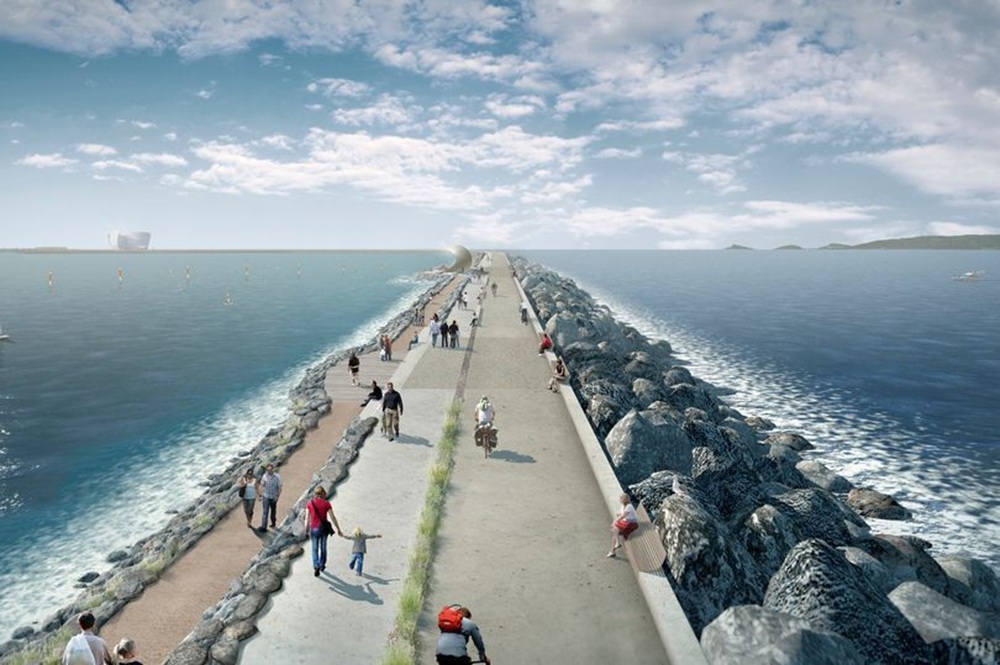
Image of how the Swansea Bay tidal lagoon seawall would have looked. Photo Tidal Power plc

David TC Davies

Too many politicians in Wales are carried away by a well-produced video, a glossy brochure and an appealing vision of what might be.

Serious government requires something more hard-headed: clear figures, and a proper understanding of who ultimately carries the risk and the cost.

Although I am not normally a fan of Rachel Reeves, in 2018 we jointly chaired a cross-committee inquiry into the Swansea Bay Tidal Lagoon proposal, which Cll Sam Bennett wrote in support of for Nation.Cymru earlier this week.

Despite our very different political views, the current Chancellor and I reached the same conclusion: we were not satisfied by the evidence put forward by the developers.

The most obvious problem was cost. The developers accepted that, to be viable, the lagoon would have required a Contract for Difference strike price of around £150 per megawatt hour in 2012 prices.

By comparison, Hinkley Point C was agreed at £92.50 per megawatt hour, also in 2012 prices, for a 35-year contract. Claims that the lagoon could deliver electricity at the same price as nuclear were utter rubbish.

The cost of the CfD would have been paid for by energy bill-payers at a time when energy bills were already far too high.

There were also serious risks. This was a first-of-a-kind project in a demanding marine environment. If construction costs rose — as they so often do on complex infrastructure projects — the taxpayer would almost certainly have been left carrying the can.

A tidal lagoon cannot simply be abandoned halfway through; an unfinished structure in the Severn Estuary would have created environmental and navigational problems, leaving government ie the taxpayer to step in regardless of cost.

Concerns 

Environmental and governance concerns also remained unresolved. The project required millions of tonnes of rock for its seawall, raising legitimate questions about quarrying, supply chains and conflicts of interest that were still not fully addressed when Parliament was being asked to commit billions of pounds of public money.

The reason the lagoon did not go ahead was not a lack of vision or hostility to renewable energy. It was because, when politicians across parties quietly examined the figures instead of the glossy brochures, serious doubts emerged.

That included Labour politicians, including some prominent figures within Swansea Council.

Wales needs investment and growth, but it also needs politicians prepared to stand up for taxpayers.

Saying no to the Swansea Bay tidal lagoon was not a failure of ambition; it was a rare instance of politicians doing what they are elected to do — properly scrutinising a proposal that needed billions of pounds of public money, and refusing to load higher energy costs onto bill-payers on the basis of an unproven scheme.

For the price of a cup of coffee a month you can help us create an independent, not-for-profit, national news service for the people of Wales, by the people of Wales.

79 comments

Jack

The failure of ambition and vision wasn't refusing the deal on the table. The failure of ambition and vision was refusing to find a way to make it work. The entire response from Whitehall to the very idea of tidal power in any form has been "what do we need to say to make this go away".

Reply
Alwyn

As the article says, the strike price would be 60% higher than the highest strike price ever agreed in the world (?) for electricity (Hinckley point c). The latter was only agreed to get the ball rolling on new nuclear builds in the UK, as it would hope further projects would come forward. In addition, there were doubts this would have been enough as due to project overruns and cost escalations. Given the inflation over the past 5 years, I think this might have been one of the most sensible decisions by the tories! Whitehall can do a lot, but it can't bring down the costs of heavy engineering projects at the drop of a hat! And it would have need to come down by 66%

Reply
Jack

You ignored the point. The way to turn this deal down without appearing to be sponsored by the oil and gas industry is to counter propose an even better way to exploit the second largest tidal range in the world.

Reply

In reply to Jack

Alwyn

I didn't ignore the point. But you can't 'find a way to make it work' if the striker price is 60% higher than nuclear and 80+% higher than wind/gas. How would you get the O&G to 'appear' (no idea what that means) to sponsor a project like this?

Reply

In reply to Alwyn

Jack

Make the concept work, if not the deal. The strike price was high not because tapping into the energy source is fundamentally expensive but because it was a high risk (for investors) private venture. Government can reduce this by de-risking the venture in any number of ways.

Reply

In reply to Jack

Thomas

The government derisks non-fossil energy projects by offering a guaranteed strike price for power and hence certainty of income - what more do you think the government/tax-payer should do to reduce risk? The strike price was high because the project required a massive civil engineering project in order to generate a measly average of 59MW (of course the glossy brochure only ever mentioned peak production because the average production was embarrassingly small). Given that the developers spent many years and millions of pounds of tax-payers money putting the project together, I am curious to read that you think they missed a simple trick to make this work. Perhaps you can enlighten us.

Reply

In reply to Thomas

Jack

Nationalise it, sort out the planning and permits, put the build out to competitive tender, connect it to the grid and once it's producing a known amount of power sell it to the highest bidder whose only risk is then maintenance and wholesale market price.

Reply

In reply to Jack

Thomas

Nationalise it? Can you point to a large-scale nationalised project that has been anywhere close to its budget or schedule in the last fifty years?

Reply

In reply to Thomas

Jack

If your red line on the state building critical infrastructure why aren't you demanding the privatisation of roads.

Reply

In reply to Alwyn

David J.

The supposed "cheapness" of nuclear in relation to the tidal barrage is a con; it does not take into account future costs dealing with nuclear waste or even the cost of leaks or other accidents, should they occur. This sort of short-term thinking will do for the human race; all politicians like Davies worry about is their own reputation in the short run. Why should they worry about leaving a pollution bill for future generations? They'll be dead anyway.

Reply

In reply to David J.

Alwyn

That's not true. This changed in 2008. UK taxpayers aren't responsible for the cleanup costs on Hinckley or any new builds, it was written into the contract that EDF will carry the responsibility. This is part of the reason it has a high strike price.It's not a promise, it's written into legal and contractual agreements

Reply

In reply to Alwyn

David J

And of course you would stake your life (or rather your grandchildren's lives) on EDF or any other company fulfilling their contractual agreements, wouldn't you? Modern history is littered with examples of joint-stock companies dodging payment, especially when the cost is astronomical, as it will be with nuclear cleanup. Who's to say that EDF will even be a thing, when the chickens come home. A poor argument for a polluting and dangerous technology.

Reply

In reply to Alwyn

David J.

Sorry, I meant lagoon, not barrage -they are very different.

Reply

In reply to Jack

Phil Jones

Swansea doesn't have the second largest tidal range in the world. Common misconception. Further up the Channel (Barry, Avonmouth, etc) - yes. Swansea Bay - no.

Reply

In reply to Phil Jones

Jack

The point wasn't about Swansea. It was about the UK. If Whitehall said we're not going to pursue Swansea because there's a much bigger and better tidal range project now on the cards it would be difficult to argue with that. The problem is simply doing nothing with this energy source and relying on renewables for decarbonisation that, conveniently some might say, need much more gas backup.

Reply

In reply to Jack

Thomas

The Severn Barrage has been studied and found to be uneconomic and/or unacceptably environmentally damaging in 1925, 1933, 1945, 1948, 1953, 1971, 1975, 1981, 1987, 1989, 2007, 2011 and 2024. Consultants have taken enough money from the tax-payer for this and, if generating power from tidal range can't stand on its own two feet on the Severn or in Swansea Bay there is little point trying to make it work anywhere else. Tidal flow power is a different story - much smaller scale projects, hence much cheaper to fund, but so limited in applicability that it cannot make a significant contribution to our energy needs.

Reply

In reply to Thomas

Jack

That's not the problem and you know it. The oil and gas industry have accepted that the writing is on the wall for them, so rather than fight the transition they seek to manage it for their own benefit. We could spend the next 20 years building enough wind and solar to meet the UK's entire energy needs but we still need gas backup because we might have a month or more without wind and with heavy overcast skies meaning we need enough gas capacity to fully plug that gap. It'll also be decades before energy storage comes close to plugging that gap so the gas industry has a big role to play for the rest of the careers and retirement (funded of course by oil and gas shares) of current executives. But tidal is different. Some estimates say it could meet a fifth of the UK's needs if fully exploited. And, although it's intermittent, the intermittency is highly predictable and can be met with battery storage and offsetting (give tides vary by location) without any need for gas. That's why we're going all out on highly unreliable wind and solar while reliable alternatives like tidal are professionally besmirched at every turn. Because a lot of people have a financial interest is doing so.

Reply

In reply to Jack

Thomas

1. Not the problem? I don't understand. If tidal range power cannot make sense in the Severn Estuary regardless of how many times it is studied, how do you suppose it would make sense in a location with a lower tidal range? 2. The oil and gas industry have not accepted that the writing is on the wall. In fact all of the oil majors are reversing out of uneconomic renewable investments and continuing to invest in oil and gas production. Even the IEA expect oil and gas demand to continue to increase until at least 2050. 3. Please provide a link to a credible, independent study showing the ability of tidal to make one fifth of the UK's electricity needs. I would be curious to read it.

Reply

In reply to Thomas

Jack

And you completely ignored the main point. Unreliable green energy needs gas backup for as long as storage technology remains primitive. Reliable green energy doesn't. Anyone with an interest in the gas industry will prefer the first if one of the two must be pursued.

Reply
Llew Gruffudd

The developers of the Lagoon presented three alternatives with regard to strike price, which reflected the long term asset of producing electricity for over 120 years. That is twice, the best guess for Hinkley Point. The Lowest alternative was £95 MWh, similar to Hinkley Point, but over a longer period. This would have been lower still, if the investment offered by the Welsh government and a Welsh pension fund had been allowed. This was vetoed by Westminster. The reason for turning down the project as stated by the Minister Greg Clark, was the costs couldn't be justified compared to other alternatives, Hinkley Point. The cost of Hinkley Point was estimated at £18 billion and the strike price at £89 MWh. The strike price today is £130 MWh and rising due to UK costs and inflation. It will continue to rise until it is connected to the grid. It is estimated that by next year, still a long way from completion, the strike price will be double the market price for electricity. The £18 billion original construction estimate is now £33 billion, the responsibility of EDF who don't have the money giving the UK government a bit of a dilemma. So it doesn't make the Swansea Lagoon, £1.3 billion risk, such a bad deal.The big mistake was claiming that the project would make Wales the world leader in this technology. Westminster couldn't have that.

Reply

In reply to Llew Gruffudd

Llew Gruffudd

It should read four times the best guess for Hinkley Point

Reply

In reply to Llew Gruffudd

Alwyn

You lost me at the claim that Westminster rejected the Swansea Bay Lagoon because it would make Wales a world leader in tidal energy. Laughable. Decarbonised steel, floating wind, compound semiconductors mean anything to you? And oversimplifies a complex policy decision and risks undermining stronger, evidence-based criticisms of the project’. The capital cost vs lifetime issue cuts both ways. A 120-year asset sounds great, but long-lived infrastructure also carries long-term maintenance, environmental and opportunity costs. Energy systems evolve rapidly. What might be useful today or in 20 years time might not be in 50 years time. Committing to a fixed-output, location-specific technology for over a century would be irresponsible on future generations - especially as we almost certainly have a future dominated by flexible grids, storage, demand-response and cheaper renewables.

Reply

In reply to Alwyn

Llew Gruffudd

you lost me in your long term nonsense and your fantasy that Wales are world leaders in decarbonised steel. floating wind and semi conductors. Wales has neither developed nor owns any IP for any of these.

Reply

In reply to Llew Gruffudd

Phil Jones

If you're going to compare TLSB and Hinkley C, you need to compare output: TLSB about 500GWH per annum; Hinkley C 26,000 GWH.

Reply
Brychan

The flaw in this article by David TC Davies can be seen in what he has written.  He says "Hinkley Point C was agreed at £92.50 per megawatt hour for a 35-year contract." That is where a nuclear power station only has a 35 year productive life prior to decommissioning. Not so with a tidal barrage as we can assume the tides will still work beyond 35 years. It's also the case the taxpayer picks up the bill for nuclear waste and decommissioning, no so with a barrage. The investment horizon of the British Government is also at fault, a false calculating payback within a few decades. Sad it would be if the likes of Brunel had such a restricted horizon. 

Reply
Alwyn

A 90 year CfD contract was also proposed, but it was still higher than nuclear. But in any case, the project risk was still there - first of its kind, small company with limited capital pushing it etc. The barrage has a 100 year estimated lifespan, I don't remember end of life being discussed either. I don't think brunel would look at the current changes in electritiy and see no ambition. Smart meters, decentralisation of grid, international interconnections and rapid rise of renewables and energy storage are an incredible feats when you take a step back. Maybe the barrage will still happen, but getting to 100% RES or low carbon sources is quite feasible without tidal energy.

Reply
Smae

Not stable though. Also I swear we're talking about a Lagoon and not a Barrage... (two different things). The advantage of a lagoon is having a constant energy source that replenishes itself twice a day... practically every day. It's something that's very hard to achieve with with solar, wind... and at the rate climate change is happening, I suspect Hydroelectric....

Reply
Phil Jones

You might not remember 'end of life' (decommissioning) being discussed but it was. And it was a big sticking point.

Reply
Thomas

You are 18 years out of date. Since 2008, the tax-payer is not responsible for decommissioning or waste-handling costs for new-build nuclear projects. This is the responsibility of the operator, not the tax-payer.

Reply
Jack

How's that working out at Ffos-y-Fran?

Reply

In reply to Jack

Thomas

I wasn't aware that a nuclear power station had been built at Ffos-y-fran since 2008, so I'm not sure how to answer your question.

Reply

In reply to Thomas

Jack

The point is about the private sector promising to clean up a long way down the road once it's finished making money.

Reply
DarkMrakeford

This is just a defence of austerity and a reluctance by labour and tory politicians to invest. Tax payers do want big successful projects, especially in the energy sector to secure energy independence, not having us at the reliance of international corporations which don't pass on the savings to UK customers. Tax payers just want them to be managed by competent, uncorrupted politicians that don't hand out contracts to companies they and their mates are invested in. I think that sums up unionist neoliberalism nicely, seeking all the praise but none of the responsibility for the companies that go boom but inevitably go bust after passing on the bill to taxpayers yet again.

Reply
Smae

big successful projects... that's the key point and where the reluctance comes from. They don't want to be on the hook for a project that ends up failing because they'll be voted out of office.

Reply
Thomas

A 'big successful project' would need to generate a lot more than an annual average of 59MW to deserve the moniker.

Reply
Jack

A big successful project is delivering all the proposed lagoons, not just the small first one. Were you born with low ambition or did you become infected later in life?

Reply
Dai Rob

I don't often agree with a tory, but this article is spot on, it was (and is still) an utterly ridiculous plan. What this article doesnt really touch on, are the massive environmental effects of this awful plan. Our beautiful bay would have been utterly destroyed, FOREVER. Fish stocks wiped out, 3 sandy beaches being turned into mudflats, the Ecosystem of the bay completely destroyed, just for the far-off foreign fatcats to reap their Dividends, while the local population have the highest priced electricity, anywhere in the world, ever. Utter fantasy!!!

Reply
Brychan

Perhaps you misunderstand the proposal. It's to the east of the estuary nowhere near the sandy shores of the bay to the west nor of Jersey Marine beach to the east.  https://www.constructionenquirer.com/wp-content/uploads/lagoon_map-390x292.jpg Neither does it impinge on the inflow or outflow of the Tawe.

Reply
Dai Rob

You seem to have little understanding of the Ecosystem in the bay.....studies have been done to say that Aberafan Beach, Swansea Beach & Mumbles are likely to turn to mud, due to the signicicant tidal changes in the bay, resulting from a barrage.

Reply

In reply to Dai Rob

Phil Jones

You're right about the predictions for the beach to the west of the structure but Aberavon and Jersey Marine beaches probably would have received more sand deposition. Anticlockwise tyre in the Bay.

Reply

In reply to Dai Rob

Phil Jones

In my last post 'gyre' was autocorrected to 'tyre'... :-(

Reply
Phil Jones

You obviously have no understanding of coastal processes. You're absolutely wrong. There's an anticlockwise gyre in Swansea Bay which would have been disrupted.

Reply
Andy w

Think about managing your own house if you need to improve your disposable income - cancel gardener / cleaner and do yourself, shop in Aldi not Waitrose, holiday in Wales not Tenerife etc - some middle income people would do this not borrow from a bank. Lots of Welsh small government funded project work for local authorities is delivered by consultants, why can this not be done by councils themselves? Sellafield Limited and Network Rail both self-delivered; so lots of apprentices and also improved design certainty of their own organisations.

Reply
Smae

They don't have the skills nor the staff... nor importantly... the money.

Reply
David J.

This is nonsense. Have you bothered to look at the plans for the tidal lagoon? If you are worried about fish stocks (which will be minimally affected by the lagoon) then direct your anger to, for example, scallop dredging in the Irish Sea. Better yet, give up eating fish. The ecosystem will not be destroyed, it will be altered slightly; the tide will continue to rise and fall, the beaches will not turn into mudflats, any more than they already are, and the seabirds will continue to feed on them. If you don't want renewables you need to give us an alternative, but in the long run there isn't one.

Reply
Dai Rob

Utter nonsense, look up the scientific reports. The Ecosystem of the Bay will be totally changed, for the worse. I'm not against renewables, quite the opposite. But this is the wrong plan, in the wrong place.

Reply

In reply to Dai Rob

Phil Jones

Well done Dai. You're the only one who seems to be familiar with the detail... I worked on this project for 8 years and most comentators are talking bollox...

Reply

In reply to Dai Rob

David J

So where is the right plan and the right place for a tidal lagoon? Just asking for a friend...

Reply
Phil Jones

What are you basing your incorrect claims on? Have YOU studied the evidence? All the evidence, not just the plans. Much of the fisheries evidence considered in connection with the Marine Licence application, wasn't in the public domain. The ML application failed because of likely fisheries impacts.

Reply
David J.

No, there will be minimal effects on the beaches or fish stocks. The lagoon could well improve conditions for wildlife.

Reply
Dai Rob

Ridiculous comment, how will dumping MILLIONS of TONNES of concrete and iron in the Bay improve it for wildlife. Laughable comment, I'm sorry!

Reply

In reply to Dai Rob

Jack

By creating an area protected from extreme elements, and new habitats within the rock armour.

Reply

In reply to Jack

David J

Thanks for giving a correct response to Dai Rob's comment, so I don't have to.

Reply
Phil Jones

Rubbish. Please tell us what you're basing these claims on. Are you just guessing? There's plenty of evidence available, although it's now more difficult to find.

Reply

In reply to Phil Jones

David J

If there is plenty of evidence, why is it difficult to find? I have no problem finding evidence for the points I have made. Unlike far too many on here, I actually do some homework before posting.

Reply
Andy w

Many of the issues on the delivery of infrastructure projects have not been addressed. The whole of the rail industry knew Crossrail would go over-budget, the consultants had not written a basic interface management plan and ALL Network Rail staff boycotted Crossrails strategy meeting as nobody wanted to be associated with that project. Hinkley Point C has caused wage inflation across the UK construction sector by paying staff industries plus fifty percent; so staff go to whichever contractor pays the highest day rate. HS2 has done the same. Also then Shropshire County Council could not retain its’ procurement staff or suppliers as HS2 supply-chain was paying high wages. We do not need a communist style planning system, but better coordination of major project spend is needed. These issues need to be resolved before new projects are started. The logical department to do this is the Department for Transport, but they have a framework of 35 suppliers for economic advice and no Intelligent Client capability.

Reply
Guto Owen

“Serious government requires something more hard-headed: clear figures, and a proper understanding of who ultimately carries the risk and the cost.” Now apply this logic to all energy/grid projects in Wales. Who ultimately pays? (Consumers, via bills) Who benefits? (Developers)

Reply
Alwyn

Plaid have certainly got the right idea about encouraging as many community owned projects as possible, in my opinion. How you scale it to larger towns and cities so all benefit is a bigger question, but the success of facilities around places like abergwyngreganl are undoubted

Reply
Guto Owen

With a tweak of regulations, simple bills👇 & investment, the opportunity presents itself for communities of interest in Wales to be both developers AND consumers. So retaining & creating wealth from energy. Something which would surely appeal across the political spectrum? https://x.com/gutoowenh2/status/1976739039912116398?s=46&t=JfRnISLaeQDdIOMvWE1VGQ

Reply
Thomas

The inconvenient thing about community-owned projects is that the community has to pay for them. That might be fine if we are talking about a few thousand for some solar panels on the roof of the village hall, but somehow I doubt the 'community' is ever going to stump up a billion pounds for a project of this scale.

Reply
Deiniol

There is.no such thing as "tax payers money". Tax is primarily a means of controling inflation not raising income. Viewing this project only by the cost of electricity it produces is wrong. It's essentailly a large research and development project in green energy. The government could find the money for it as they always do for war and the bailing our the banking sector.

Reply
Jack

"a large research and development project in green energy" Indeed and why the carbon energy sector was so resistant.

Reply
Smae

At the very least, if it fails, we've basically got a vast area ripe for new development.

Reply
David J.

Not to mention HS2 and dodgy covid loans.

Reply
Phil Jones

It wasn't an R&D project. Claims to that effect were false. The technology was already well developed and there was little scope for reducing the cost of future projects. Man has been building sea walls for thousands of years.

Reply
Jack

The number of unsubstantiated claims like "it'll fail in the first storm" suggest there was much to learn.

Reply
Thomas

£1.3 billion pounds is an awful lot of money for an R&D project, and would require planting a very large Magic Money Tree to avoid taking that money from either the tax-payer or bill-payer.

Reply
Jack

Why does the taxpayer or billpayer care about how many millions are involved. That's a matter for investors. Only the strike price matters and surely the similar subsidies for Hinkley are just as upsetting, no?

Reply

In reply to Jack

Thomas

The strike price is the mechanism to saddle the bill-payer with the cost of the project. Sure, the bill-payer is paying a lot of money for Hinkley, but at least Hinkley is making a material difference to our energy security.

Reply
Clive hopper

Inclined to agree that the figures probably didn't add up, but surely more use of tidal energy should be investigated with our huge coast, We need wind solar and tidal for the future.

Reply
Phil Jones

Tidal stream is viable. Tidal range (lagoons) is not.

Reply
Jack

Which active and proven tidal stream projects do you base this on?

Reply

In reply to Jack

Phil Jones

Do some reading. Don't come here to learn by being corrected all the time.

Reply

In reply to Phil Jones

Jack

I did some reading and couldn't find anything to support your view which is why I gave you the opportunity to provide some insights before calling out the nonsense.

Reply
Smae

Honestly projects like this should be done by the state and owned by the state and the government should be on the hook for it. Which government, well The Senedd and Westminster can fight over it, either that or it should be purely private and Westminster (or whoever) should supply an agreed new development strikeprice... say 95.00 per megawatt hour, this would apply to all projects across the spectrum. (Lets see how many nuclear powerstations vs wind turbines we get!) Ideally this money should be going to The Senedd, which is why it should be handled in house, but if a private contractor wishes to come along and foot the bill entirely themselves then that's up to them. The government needs to be ambitious and innovative and it needs to try things out. Sometimes things will fail, sometimes they provide cheap clean energy for decades. Politicians are far far too happy to spaff money up the wall on vanity projects (HS2 springs to mind, AJAX tank another (given its track record), among others) that provide extremely minimal ROI if not a net loss.

Reply
Y Cymro

The Tories have zero ambition for Wales. I find it outrageous that David TC Davies states otherwise. As Welsh Secretary he said no to more devolution. No to power over our criminal & youth justice system. No to policing powers. No to the devolution to create March 1st a national bank holiday to celebrate Saint David/Dewi Sant citing there would be cross border confusion but advocated a bank holiday to celebrate the investiture of King Charles. And less he forget. The Swansea Bay tidal lagoon was scrapped after a six year consultation with his then Tory government citing cost and value for money but spent an initial £36.5 billion on HS2, put the infrastructure build as an England & Wales build robbing us of billions in consequential, only later to scrap the project halfway through. And as of 2025 has cost a purported £60 billion, some say it could exceed £80 to £90 billion. Some value for money, eh David. So when I hear this compulsive liar make these claims find it hilarious that this arrogant little Englander spent his time before Wales voted for devolution in 1997 campaigning to abolish the Assembly, during the referendum, after he became an AM. And when he left the Senedd to become an MP and government minister kept on undermining Wales and devolution before being kicked out of office. Best he kept his big mouth shut for once.

Reply
Andy w

Westminster has a preoccupation with awarding vanity projects, consistently changing its’ mind and rewarding organisations that are being sued (Uber in court for treatment of staff / scandals - so get the driverless car project in London; British Airways cleaners get minimum wage and no holiday pay - so government flies on their planes and so BA gets free publicity). Sadly London is causing its’ own economic decline - lots of empty offices and now both GSK and Astra Zeneca are highly critical of Westminster and focusing on non-UK investments. Universities losing students - decline / decline…

Reply
brendan

I read about the initial proposal in Private Eye forwarded by Mark Shurrock and amongst other things how the rocks for the lagoon were going to come from a quarry in Devon owned by ...Mark Shurrock. I think he was trying to make a deal to line his own pockets https://www.cads2015.com/?wysija-page=1&controller=email&action=view&email_id=63&wysijap=subscriptions

Reply
Jack

This was well known and presumably makes financial sense if you need a lot of rock armour. A plan to buy each rock individually at the market rate would cost even more and require more subsidy. Why is was presented as a gotcha says more about those who thought it was a gotcha.

Reply

Leave a reply

Replying to Jack Cancel

Which active and proven tidal stream projects do you base this on?

Comments are reviewed before they appear.
