Opinion
Rural railways: A cornerstone of sustainable tourism
Professor Stuart Cole, CBE. Emeritus Professor of Transport Economics and Policy, University of South Wales
A year ago this column explained why the Carmarthen – Aberystwyth line could not be rebuilt because of the high capital cost and the low passenger demand forecasts.
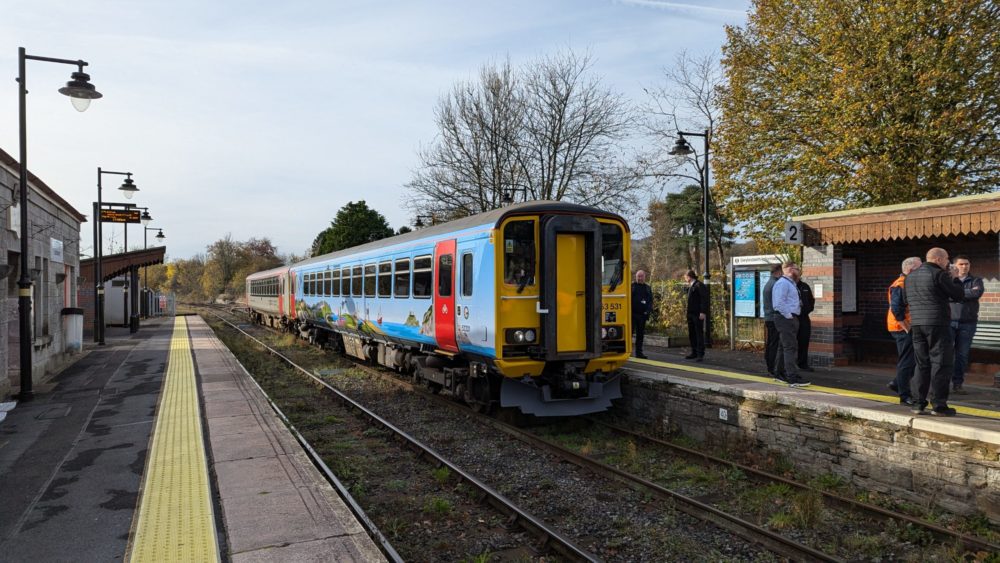
However there is a relatively inexpensive part of its rail network which has not had the attention it deserves from TfW to promote demand despite being a visually beautiful and historic route and one of the tourist treasures of Wales – the Heart of Wales Line (HoWL).
The line provides opportunities to better achieve three major government policies – climate change, modal change from car to public transport and meeting the Senedd’s well-being of future generations statutory requirement.
Although it only represents 3% of rail passengers in Wales it has to be viable and requires more TLC from TfW if it is to survive.
Operational Performance
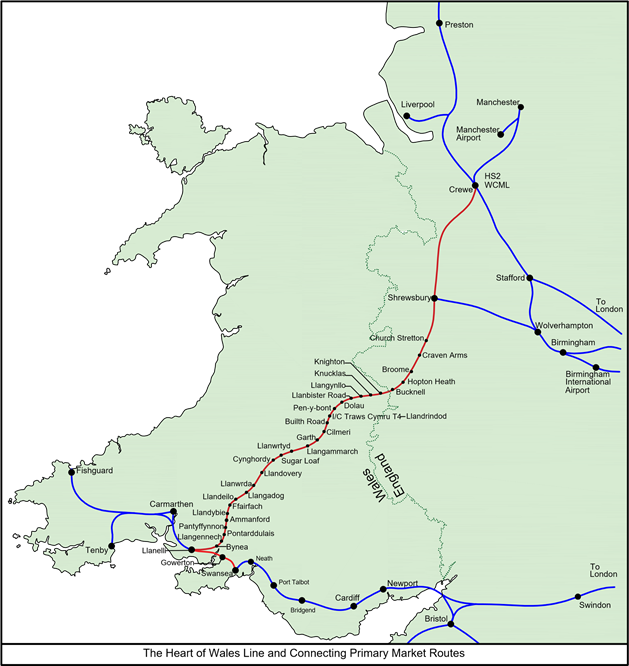
The HoWL service runs from Swansea via Llanelli (South Wales Main Line), Llandovery, Llandrindod, Knighton and Craven Arms (Marcher Line) to Shrewsbury.
Over the last three years operational performance has been unacceptable with between one and three trains (20% to 60%) out of five each day being cancelled or making part journeys. This compares with 7.9% of trains overall on the Wales network.
While the next HoWL train may be three hours away; the next Valley Lines Metro service will be along in six minutes. But hopefully improvements are on the way. Very late running (up to 80 minutes) has also been evident
Leisure travel by train has largely recovered since the Covid pandemic. On the HoWL annual passenger numbers up to 2018-19 were around 186,000; last year the line carried 143,000 though that did show an increase of 31,000 on 2022/23. This step in the right direction must however be enhanced.
[mid-content-banner]
Tourism in the Canolbarth
In the Canolbarth (Mid-Wales) region, tourism and agriculture are the two main sources of employment. Although served by two railway routes – HoWL and the Cambrian Line and by two TrawsCymru long distance bus routes (T4 /T3) most tourists arrive by car.
Car – based tourism becomes more rail – based tourism
The characteristics and size of the Canolbarth tourist market suggest there is demand for sustainable rail travel and for active travel holidays. The HoWL is ideal to encourage walking and cycling (30% of visitors), nature and wildlife watching (25%); enjoying the landscape (44%) and taking part in outdoor activities (29%).
The towns served have many heritage attractions and the line is a gateway to amazing scenery, footpaths, quiet roads and pretty towns and villages. The area is also one of repeat business (definitely will come back: 91%; more than one visit: 74%).
Most visits to the Canolbarth are day trips (85%) and for those travellers the current journey times by train are longer than might be practical or attractive and travel by car becomes the preferred mode.
Visitors aged 16 – 54 form 53% of the total, an age group where walking and outdoor activities are the most popular and party size is mainly single travellers or couples (54%). Tourists in Mid Wales are primarily from two socio-economic groups – AB (28%) and C1 (27%).
This is a market waiting to be developed with the train trip a part of the overall holiday. In its early days the HoWL allowed a fashionable tourism business to be established at the various ‘Wells’ providing water-based health remedies.
[lower-mid-content-banner]
The Active Travel Market attraction
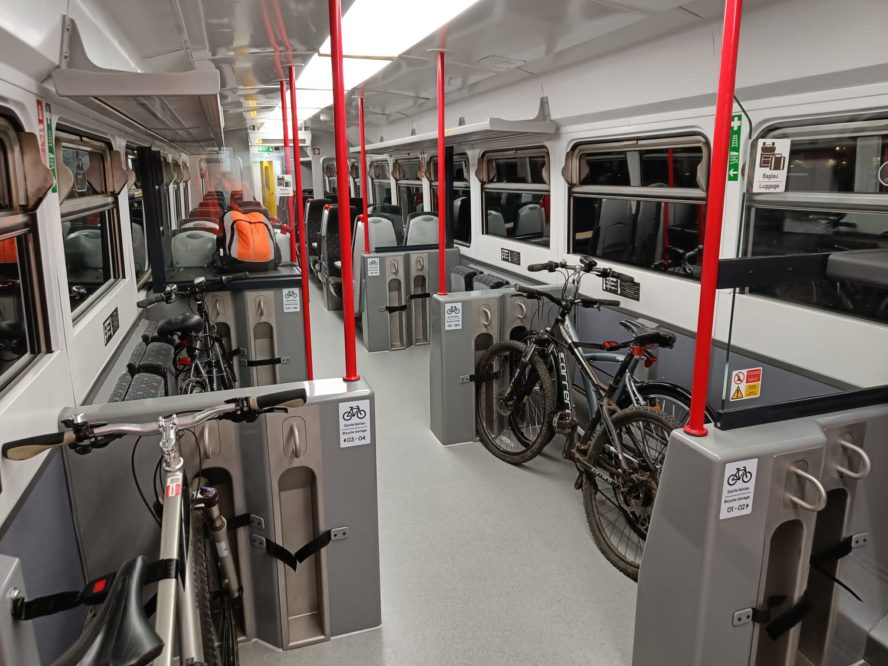
The Active Travel market is seen, correctly, by TfW, as a vital support for the HoWL’s future. During 2025 six two-car train sets rebuilt by TfW will go into service as active travel trains with extra room for bicycles, luggage and passengers.
This builds on the success of the HoWL Walking Trail (2018). Advertising these new trains is an important part of revitalising this line.
Improving service quality on the HoWL trains will help to reduce the carbon footprint thorough rail travel rather than car, encourage more exercise improve access and bring economic and social benefits to local communities
Marketing the future development of the line
To achieve a modal split change and attract visitors to the Canolbarth and the HoWL requires extensive promotion and advertising. As with other tourism destinations and operators this has to begin now when inbound tourists are considering their summer holiday options and booking travel and accommodation.
Here are some helpful guidelines for TfW discussed with local businesses and communities.
Journeys between the Canolbarth and its markets (Manchester, Birmingham and, via Swansea, south east Wales, south east England, and London are largely by car (87%) or campervan (3%) with only two per-cent travelling by train. The HoWL has clearly had little benefit from the growth trend in rail leisure travel.
At present surveys show their reasons for not using the HoWL for their total journey are:
- poor reliability,
- low frequency,
- an inconvenient (particularly connections at Crewe, Shrewsbury and Swansea) and unreliable timetable, and
- the long journey time . This is reflected in several public transport demand studies.
Ease of travel will not match the car in convenience terms. However integrated timetables and interchange facilities can be provided. The Llandrindod Interchange links the Canolbarth’s two public transport spines – the HoWL and the TrawsCymru national bus operation (both part of TfW) providing onward travel to for example Newtown (link with the Cambrian Line), Brecon, Bannau Brecheiniog and Cardiff.
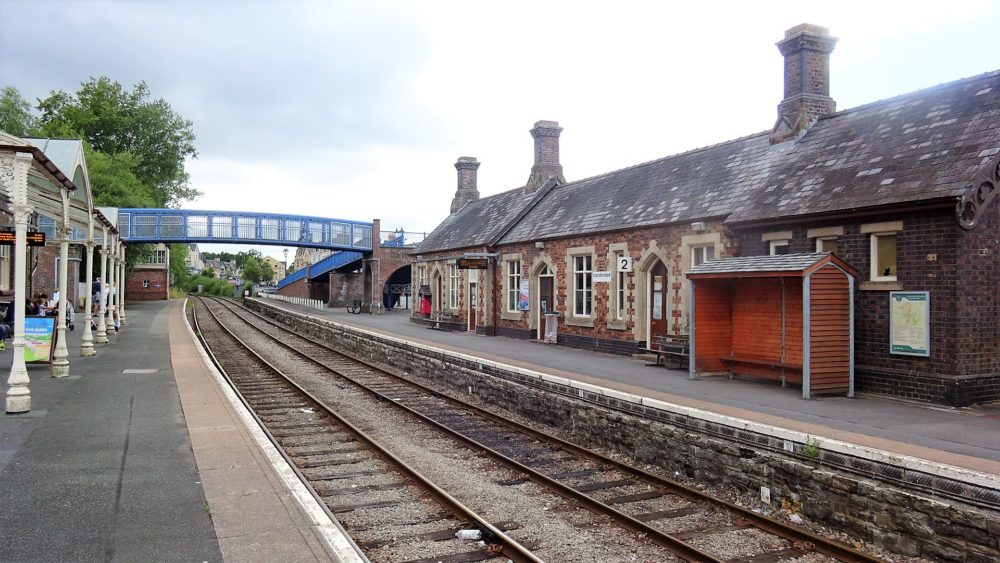
Local bus services are currently deregulated and no structure is available for integration of tickets and timetables across the Canolbarth. The Government plans to franchise bus services in Wales will make this easier.
The line must become an attraction in itself alongside the other tourist railways in Wales where the ride becomes part of a sustainable holiday experience. The HoWL Trail provides a walking route between stations and the national cycle way provides facilities for cyclists.
Revitalising stations giving a much-improved passenger experience and ambiance encourages rail travel. Catering and retailing premises at low-priced rentals from Network Rail would benefit start-up businesses or community services at stations.
There are packages to be created, for example, between the railway and local hotels. This will mean rethinking the whole fares structure to include weekly tickets, HoWL / TrawsCymru through ticketing and hotels meeting customers from their trains.
The recent rates of growth in the Canolbarth tourism market have been reflected in the increase in private car flows in the area, but not in HoWL passenger numbers. For that growing market segment where climate change is an environmental / economic / well-being factor the train journey must be part of the holiday experience.
Support our Nation today
For the price of a cup of coffee a month you can help us create an independent, not-for-profit, national news service for the people of Wales, by the people of Wales.
Get more trusted Welsh news
Choose Nation.Cymru as a preferred source in Google News to see more of our journalism.