


Opinion
Royal exemption from Welsh laws is an affront to Wales’ democracy
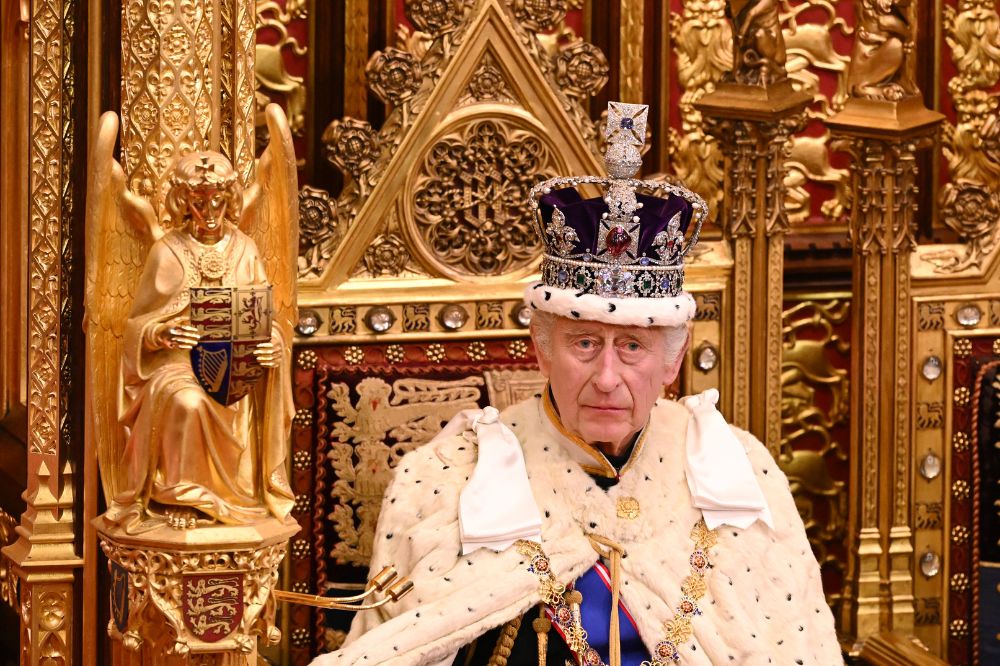
Ahead of King Charles' visit to the Senedd, YesCymru Director, Elfed William looks at the British Monarch's influence on Welsh laws
In any self-respecting democratic nation, equality before the law is sacrosanct.
"All are equal before the law and are entitled without any discrimination to equal protection of the law".
Those are the words of Article 7 of the Universal Declaration of Human Rights (UDHR) which was adopted by the United Nations General Assembly in 1948.
This fundamental principle is rather undermined if any one person can exempt themselves from the laws of the land that everyone else is required to follow.
Though the UK voted for the adoption of this document, the country’s adherence to its basic principles is, at best, rather mixed.
In the United Kingdom, some are more equal than others, and the British monarch is the most equal of all.
King Charles is the most powerful as well as the most influential lobbyist in the British Isles.
He is able to leverage his substantial institutional muscle and his hold over the political establishment to ensure that laws that apply to everyone else do not apply to him.
This in large part is due to an archaic and feudalistic custom that requires UK parliaments, including the Senedd, to obtain Monarch’s consent for draft bills.
[mid-content-banner]
Immunity
Under this custom no proceedings, be they criminal or civil, can be brought against the monarch as head of state.
Just think about this for a moment and follow it through to its logical conclusion. It means that the Monarch is effectively above the law.
King Charles has personal immunity from swathes of British law, that range from animal welfare to workers’ rights.
Whilst YesCymru does not take a view on whether Wales should have a monarchy or not. That is a matter for the people of an independent Wales to decide.
But we are clear that our Senedd should have the power to ensure that the laws it passes apply equally to all of Wales’ citizens.
Documents recently unearthed by the Guardian have shown that this is not currently the case. They revealed that pressure was put on the Welsh Government by palace officials to ensure that King Charles could not be prosecuted for rural crimes under a new law.
This pressure wasn’t just applied. It was highly effective too. Although Mick Antoniw, the Welsh Government’s Counsel General (its chief legal adviser) made it clear that he was “not happy” about the King getting the special exemption from prosecution, he nevertheless agreed to it.
An internal Welsh Government memo on 1 June of last year noted that its lawyers “had been contacted by Buckingham Palace officials who have sought an assurance that Welsh ministers will take into account conventions regarding prosecuting the crown when making regulations under this bill”.
The very next day Welsh Government officials noted that the Counsel General “recognises the ongoing convention and therefore” agreed to it.
He may not have liked it but he most certainly did lump it.
The fact that he did not want to go along with it but did so anyway is an indication of the very real power that King Charles wields. It is not theoretical as some like to argue.
Exempt
The exemptions the Monarch was able to obtain in relation to last year’s Agriculture (Wales) Act, are not insignificant.
King Charles is exempt from regulations relating to the marketing of agricultural products. He is exempt from regulations that relate to the disposal of carcasses.
He is also exempt from regulations that relate to the disclosure of information to the Welsh state. Astonishingly, under that part of the act, the police cannot gain automatic entry to the King’s private property portfolio.
These are regulations that all other farmers in Wales are expected to follow, and they can expect to face consequences if they do not.
Ordinary citizens cannot get officials to reach out to the government on their behalf to ensure that the laws it passes are not applied to them.
These exemptions are an affront.
They are an affront to the principles of equality and fairness. They are an affront to Welsh democracy and to the Senedd in which it is embodied.
Most importantly they are an affront to the people of Wales who give the institution its legitimacy and who are bound by its laws. It is a matter of the system being fair to all our citizens. A system that further entrenches unfair advantage cannot do that.
If Welsh democracy is going to truly flourish it needs to firmly entrench equality before the law, and in so doing break free from the enduring shackles of its feudal past.
Support our Nation today
For the price of a cup of coffee a month you can help us create an independent, not-for-profit, national news service for the people of Wales, by the people of Wales.
Get more trusted Welsh news
Choose Nation.Cymru as a preferred source in Google News to see more of our journalism.
