Opinion
Rethinking Y Wladfa
David Llewellyn
Recently I watched the 2015 documentary The Pearl Button (El botón de nácar) by the Chilean director Patricio Guzmàn, in which he interviews some of the last surviving members of some of Chile’s indigenous tribes, exploring their nomadic existence, and their relationship with nature, especially the country’s waterways and coastline.
Germ warfare
It’s a way of life that was systematically wiped out, beginning with the colonial settlers of the mid-19th Century, and continuing into the 20th with the fascistic reign of Augusto Pinochet, the mass murdering darling of Reagan and Thatcher.
Early settlers gifted the tribes with blankets infected with smallpox, in an early example of germ warfare, and teams of bounty hunters scoured Patagonia massacring men women and children, photographing their exploits like trophy game hunters.
Children were forcibly converted to Christianity by missionaries, eradicating their language and culture, and one of them, Orundellico, renamed “Jeremy Button” was kidnaped and brought on the Beagle to England, where he was paraded in front of “civilised” society like an exotic animal.
[mid-content-banner]
Re-education
By the time the first Welsh settlers arrived in 1865, that programme of state-sanctioned genocide was almost complete, creating wide open spaces in which settlers could thrive.
Once they were there, they quickly set about teaching the locals to speak Cymraeg, continuing the work of re-education begun by Christian missionaries earlier in the century. This continued throughout the 20th Century, and has a legacy that persists to this day.
In Wales, this has historically been treated as a positive (“Look how entrepreneurial we are, and how our culture is embraced around the world”), and there are many who will still boast about it, as if it’s a prized possession of which we should all be proud.
I grew up in a part of Wales where the English re-educated us to speak their language, and did everything in their power to belittle traditions stretching back centuries.
Colonial exploits
It goes without saying that this does not compare with the horrors of mass-extermination experienced by the people of Patagonia, and countless other peoples around the globe, at the hands of Britain’s colonial exploits, but I would at least hope that some might see Y Wladfa in this context, rather than sentimentalising it as some Brigadoon-like fantasia of Hiraeth in Latin America.
The settlers of 1865 pitched their tents, and built their homes in places that were once the nomadic homelands of an entire people, presumably marvelling at all the open space that their God had given them in this latter-day Eden so near the tropics.
Crimes
It’s now 2023, a year in which Picton’s portrait in Amgueddfa Caerdydd currently forms part of an exhibition about his crimes, and Wales’s role in the transatlantic slave trade. In another gallery, Goscombe John’s busts of Africans, brought to the UK are recontextualised from a post-colonial viewpoint.
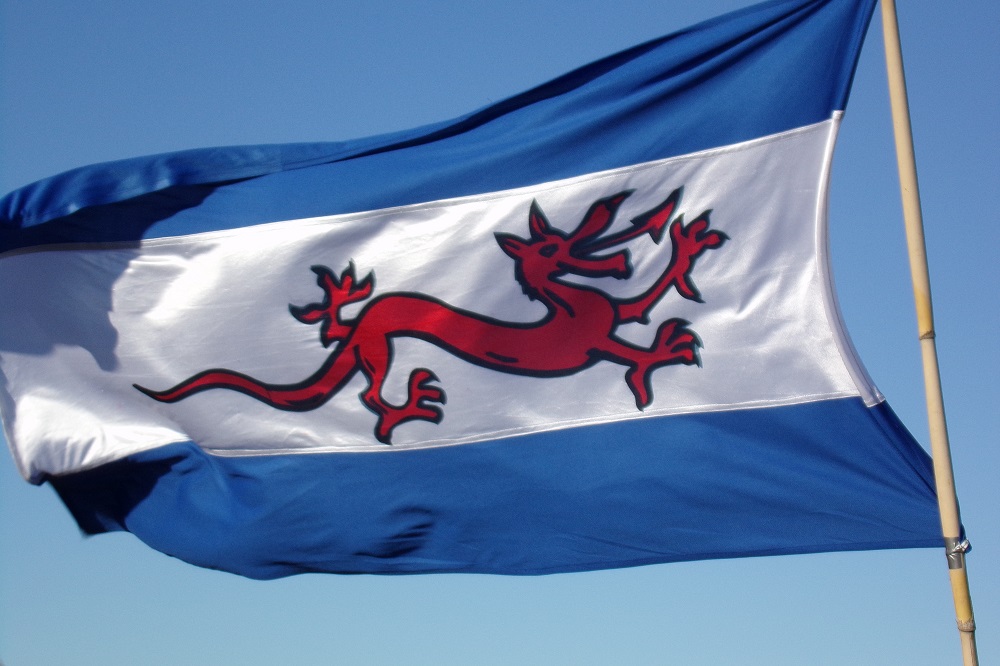
And yet, many in Wales still get misty-eyed at the thought of them singing "Hen Wlad Fy Nhadau" in South America, flying a flag that emblazons the dragon on a flag of Argentina whenever the rugby is on, proof positive that we are the greatest nation on Earth.
There have been meaningful cultural exchanges over the years – Kyffin Williams produced some of his best work there – but it’s high time that we here in the Wales of 2023 begin talking about the reality of our literal colony on the far side of the world, with a degree of honesty, and without sentiment or the callous erasure of the Tehuelche people of Chubut who had occupied those lands for thousands of years before Lewis Jones and the Rev. Michael D. Jones arrived on the Mimosa.
You can read other articles on Nation.Cymru by David Llewellyn by following his links on this map
Support our Nation today
For the price of a cup of coffee a month you can help us create an independent, not-for-profit, national news service for the people of Wales, by the people of Wales.
Get more trusted Welsh news
Choose Nation.Cymru as a preferred source in Google News to see more of our journalism.