


Opinion
Reform - a challenge to all parties in the Senedd
Mike Hedges - MS for Swansea East
In the last 50 years we have had three parties created that had substantial success in the opinion polls although not winning large number of seats at general elections. The three are the SDP, UKIP and now Reform.
There have been other short lived and unsuccessful political parties in the UK. The list includes The Independent Group, Renew, Natural Law Party and the Christian Party.
Change UK, founded as The Independent Group and later The Independent Group for Change, was a British centrist, pro–European Union political party, which lasted for ten months in 2019.
Established in February and formally recognised as a party in May, it was dissolved in December after all its MPs lost their seats at that year's general.
[mid-content-banner]
Poisonous
Renew was created and can be described as its heir apparent: a pro-Europe centrist party set up following the EU referendum in order to ‘tackle the UK’s poisonous political culture head on.’
The Natural Law Party is a transnational party founded in 1992 and fought elections in the UK based on "the principles of Transcendental Meditation", the laws of nature, and their application to all levels of government.
The party defines "natural law" as the organizing intelligence which governs the natural universe.
The Natural Law Party advocates using the Transcendental Meditation technique and the TM-Sidhi program as tools to enliven natural law and reduce or eliminate problems in society
[taboola-banner]
Airtime
Christian Party originated as Operation Christian Vote was founded by George Hargreaves, a Pentecostal minister and former songwriter, in 2004. It has fought a number of seats at parliamentary, council, and European elections.
What differentiates the SDP, UKIP, and Reform from the other mainly short-lived political parties? The major difference is uncritical airtime on the main TV and radio channels. Interviewers avoid asking the type of questions that Labour and Conservative politicians regularly face.
The “we are different to the main parties”, the campaign slogan of third parties is uncontested. The standard questions faced by Labour and Conservative politicians of “how will you fund your promises” and “how will you achieve your aims” remain unasked. Instead, they are treated as a vox pop not as a political party.
[lower-mid-content-banner]
Disruptive
The SDP took votes disproportionately from Labour with UKIP and Reform taking votes disproportionately from the Conservatives. Disruptive parties take votes off all parties and in one election for example 1983 Labour was badly affected by the SDP and in 2024 the Conservatives were badly affected by Reform. The SDP, UKIP and Reform took votes off both Labour and Conservatives as well as enthusing some traditional non-voters and third party voters.
Reform starts by saying, “You are worse off, both financially and culturally. Wages are stagnant, we have a housing crisis, our young people struggle to get on the property ladder, we have rising crime, energy bills are some of the highest in Europe, the NHS isn’t working, both legal and illegal immigration are at record levels and woke ideology has captured our public institutions and schools.”
Reform then says, “We will freeze immigration and stop the boats. Restore law and order. Repair our broken public services. Cut taxes to make work pay. End government waste. Slash energy bills. Unlock real economic growth.”
Neither Labour nor the Conservatives would get away with making those statements unchallenged. The contradiction between reducing taxes and improving public services remains uncontested.
'Outsider'
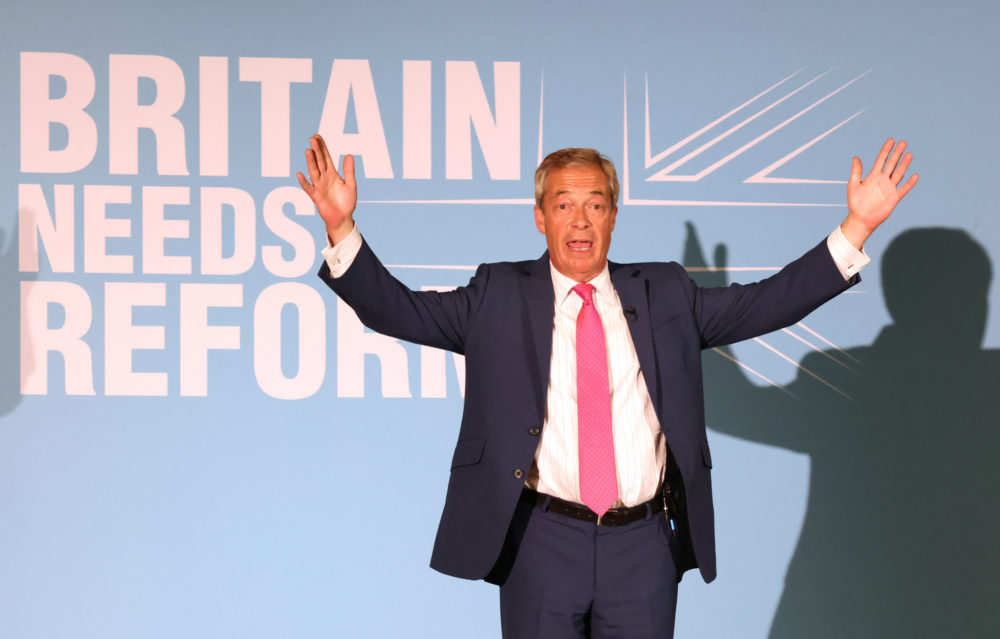
Nigel Farage was educated at a public school, is the son of a stockbroker, he worked as a commodity trader at the London metal exchange. I am not sure how much more establishment he could be yet continually the media allow him to describe himself as an outsider.
In 2016 I wrote the following regarding UKIP: "Why did former Labour voters vote for a right-wing party with a former right-wing Tory Leadership?" I said UKIP had a simple message: "Leave the EU, end immigration and everything will be alright."
Many voters suffered from a difficulty of getting social housing "either personally or for family members", a lack of employment prospects, zero hour or very few guaranteed hours contracts and "debt or the fear of debt".
I highlighted the need to "build council and other social housing" to reduce housing pressure and support the "real" living wage which is higher than the UK government national living wage.
What do most people want? A nice house, a job, adequate pay, no fear of debt and opportunities for their family. We need to address these desires in the language of the electorate who we are trying to communicate with.
Nine years later the above is still true. The challenge for Governments is to address these issues, make people feel better off and to provide adequate housing.
As we start the build up to the next Senedd election, will Reform be questioned on its policies or will the media still accept unverified statements and assertions without asking how they will achieve their aims?
Support our Nation today
For the price of a cup of coffee a month you can help us create an independent, not-for-profit, national news service for the people of Wales, by the people of Wales.
Get more trusted Welsh news
Choose Nation.Cymru as a preferred source in Google News to see more of our journalism.
