


Opinion
Reeves plants a flag in the sand. Will the rest of the Labour Party rally?
Jonathan Edwards
Considering that there has been only a year and a half since Labour won a massive majority at the general election, it’s quite incredible that in government the Labour Party finds itself at a point of high danger.
This columnist and others had speculated that the wheels could fall off the wagon this week. The chaos surrounding the Budget, as we saw last year, has not been helped with the tendency of the Chancellor and her team to heighten speculation for many weeks in advance of the Budget and perform major policy u-turns before they are even announced.
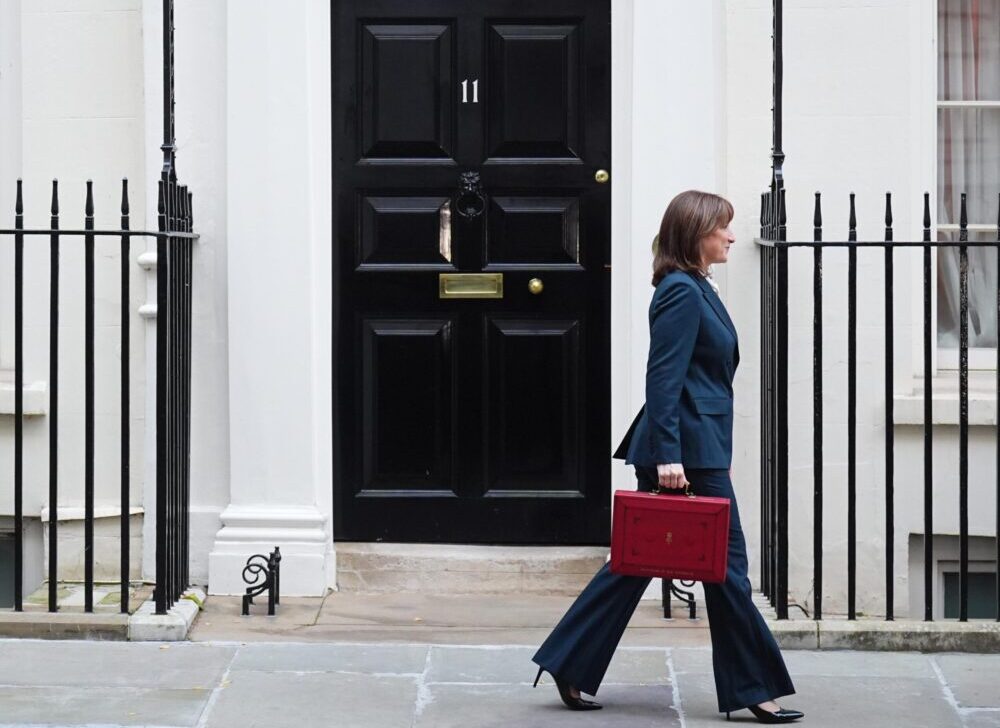
With the Prime Minister engulfed in leadership speculation, and No 10 briefing against potential challengers, the Budget had to achieve one thing above all else: keep Labour MPs and the wider party happy. The second major aim, in a difficult fiscal climate not helped by pre-election pledges, was to avoid an adverse market reaction.
The Budget viewed in those terms was therefore defensive in nature which highlights the weakness of the government. At the time of writing it appears both objectives have been achieved.
On the latter, UK borrowing costs remained steady, with no sharp increase. The Chancellor in the Budget increased her headroom against her own self-imposed targets, achieved primarily by ramping up taxation as the current Parliament progresses.
As the Office for Budget Responsibility (OBR) points out in its report, taxes as a share of GDP are forecasted to increase from 34.7% to 38.3% by the end of the forecasting period. As the OBR mentions, a historic high. Therefore, if the current Budget is not amended the Labour Party will go into the next general election increasing taxation year on year. In that regard, some would argue it’s a very brave political strategy.
The Chancellor will undoubtedly hope that growth in the economy is revised upwards in future Budgets, as opposed to downwards as they were in this one. However, this is a strategy based on hope that global economic fortunes will favour the UK.
If that does not happen the only solution I can see for the Chancellor is for Labour to fight the next general election on a pledge to realign economically with the EU and rejoin the economic frameworks. This would change OBR projections substantially before the general election to allow the Chancellor to reduce the tax burden as pre-election giveaways.
Leap of faith
This would require a substantial change of approach from the UK Government now on the European question, to pave the way for such a major announcement. However, at least these days Labour admits that the current Brexit deal hasn’t been a rip-roaring success. They need to make the leap of faith to the point where they admit that the actual problem is Brexit itself.
On the former, the Budget was well received by Labour MPs. The scrapping of the two-child benefit cap will be welcomed by anyone with a social conscience and was received with rapturous applause by Labour backbenchers. Backbenchers in any governing party need something to shout about. Lifting an estimated 450,000 from poverty is something that should put a spring in the step of any Labour MP.
The Budget has bought the Prime Minister and the Chancellor some time. It is therefore difficult to see any move against them before May’s elections, which was always likely to be the major crisis point in any case.
Goodwill
The decision in the aftermath of the Budget to water down a key manifesto pledge to give workers a Day One right to claim unfair dismissal could test this theory. The goodwill bought by the Budget could collapse by next week. All eyes on Angela Rayner who led on the legislation but now finds herself on the back benches. Does she strike or bide her time?
At the end of the day, the fate of the Labour party will be decided at the ballot box, and the next set of challenges are hurtling towards the Prime Minister. If Labour Party members do not rally behind their leader, their candidates will resemble Russian troops sent into the Ukrainian meat grinder.
Even if party unity can be maintained, it will not be enough. Labour’s electoral fortunes are tied to people’s perceptions of their living standards. If these don’t improve then the electorate will look elsewhere. With that in mind, the challenges facing the Prime Minister are only beginning.
Jonathan Edwards was the MP for Carmarthen East and Dinefwr 2010-24
Support our Nation today
For the price of a cup of coffee a month you can help us create an independent, not-for-profit, national news service for the people of Wales, by the people of Wales.
Get more trusted Welsh news
Choose Nation.Cymru as a preferred source in Google News to see more of our journalism.
