


Opinion
Pylons where once were angels
Mari Mitchell
‘Pylons where once were angels
And the concrete damming the brook.’
D Gwenallt Jones 1899 -1968
Well, I never! Natural Resources Wales have won a gold award (independently judged) at the Royal Welsh Show, for Woodland Management of Brechfa East woodland. Using the Low Impact Silvicultural System (LISS).
This, NRW says, is ‘a big win for sustainable, low-impact woodland management’.
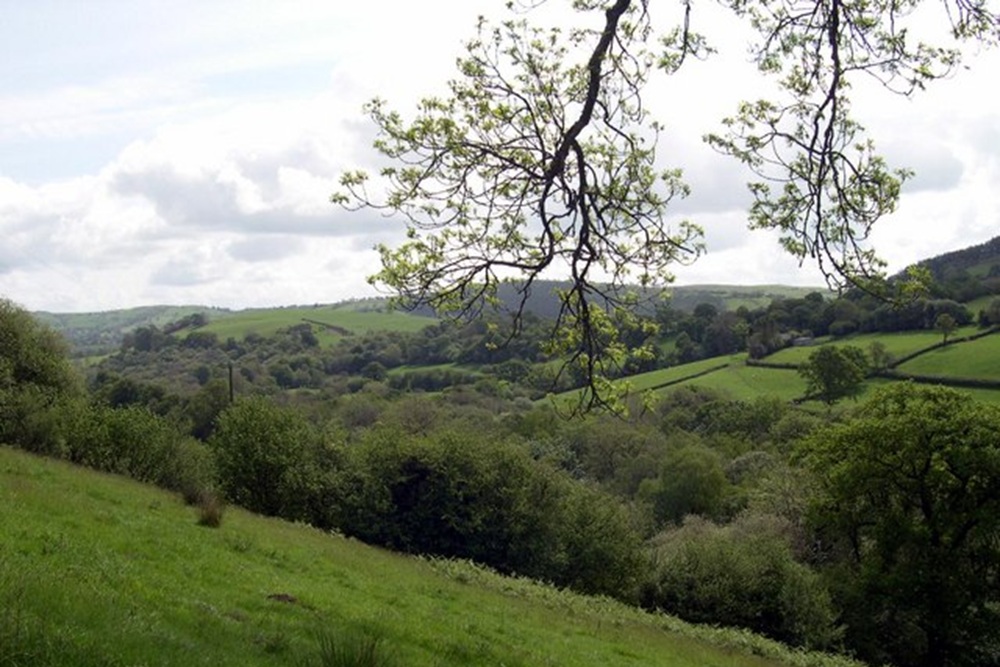
But wait! Isn’t this the same area of forest where the Welsh Government, under the mantle of Trydan Gwyrdd Cymru, want to erect 27 industrial size turbines of 200 metres height, with a network of pylons to carry the electricity? The same area which is of great historic significance under its original name of Glyn Cothi, a Royal Forest once formed of kingly oaks and other broadleaved trees, habitat for an abundance of flora and fauna to this day.
[mid-content-banner]
Under siege
Those who love, live or work in the unrivalled beauty of the Cothi Valley in Carmarthenshire (indeed, all of Wales is under siege now) have another fight on their hands. One we thought we’d won in Brechfa East when the power company withdrew its application. One of many the whole country is facing.
Because wind power and the pursuit of net-zero is the driving force, and all else must fall before it, even if it’s unattainable. Because common sense and compromise have no place here.
Yes, we need to generate more electricity for our needs from renewable resources, not fossil fuels. But do we need to desecrate our countryside in an unswerving commitment to the great god of commercial wind power.
Do we not have seas and tides around us, rivers, and reservoirs? Acres of roofs to put solar panels on, instead of engulfing good agricultural land with solar panel farms and pylons?
Do we not have scientists and conservationists who could produce valid, ethical, and less harmful solutions to future and existing problems?
That’s how I feel. Now for some facts.
Ten turbines of 110 metres high were erected near Alltwallis in 2008. Another wind farm was established in Brechfa West of 28 turbines, height 145 metres, on Natural Resources Wales land adjacent to Llanllwni Mountain. This became operational in 2018, and the cables carrying the electricity to the power station in Llandyfaelog were placed underground.
Bute GreenGen have the go-ahead for an industrial scale wind farm in mid-Wales with electricity to be carried mainly on steel pylons to the sub station. Another 30 acres of good agricultural land have been purchased to house this substation.
[lower-mid-content-banner]
Softener
The Welsh Government’s company, Trydan Gwyrdd Cymru, proposes a further 27 turbines of about 200 metres in Brechfa East, travelling through some of the most attractive parts of the Cothi Valley. As a softener, it is also proposing that electricity would be carried on wooden poles to the sub station. However, the size of turbines and the infrastructure is increasing with each stage of the pursuit of ‘green energy’.
Wales already produces more electricity than it consumes. The mantra is that establishing vast wind farms with concomitant infrastructure will lead to lower energy bills. That has yet to happen.
Moreover, there is a lack of honesty in fully evaluating the benefits of these developments. Their effectiveness is only recorded once the turbines are up and running.
The cost of manufacturing, transportation and construction; the irreversible damage to farmland and natural environment; the effect on the rural population’s mental health; the morality of using materials, some toxic, mined or produced in other countries for our benefit, none of these are made clear in the costings.
Lack of clarity
There is lack of clarity in the cost to the consumer of downtime, when the blades are still, either because there is no wind or because too much electricity is being produced, when constraint payments are made, or, in some areas, to protect migratory birds.
Just as Wales has been left with slag heaps from coal mines and nuclear waste still to be dealt with, the vast tonnes of concrete used as bases for turbines and pylons will be left for future generations to deal with.
Trydan Gwyrdd Cymru has stated that the concrete bases will be left in situ as it would be more disruptive to remove them. Those areas, then, will remain barren, having removed habitat, and change water courses permanently.
How clean is green?
What are we leaving for future generations?
Support our Nation today
For the price of a cup of coffee a month you can help us create an independent, not-for-profit, national news service for the people of Wales, by the people of Wales.
Get more trusted Welsh news
Choose Nation.Cymru as a preferred source in Google News to see more of our journalism.
