


Opinion
Post-truth blues
Ben Wildsmith
When Andrew ‘Real Ting’ Davies gets his gilet in a twist about true facts reported in the press, sometimes on this website, he is occasionally misguided enough to seek redress through the authorities that exist to ensure our output is truthful.
When, however, he is seeking to mislead the nation about payments to care-leavers, he makes sure to do it on Twitter/X.
The reason for this, of course, is that no commensurate bodies exist to regulate output on social media platforms and, thus far, their billionaire owners have succeeded in convincing the UK government that they are not publishers.
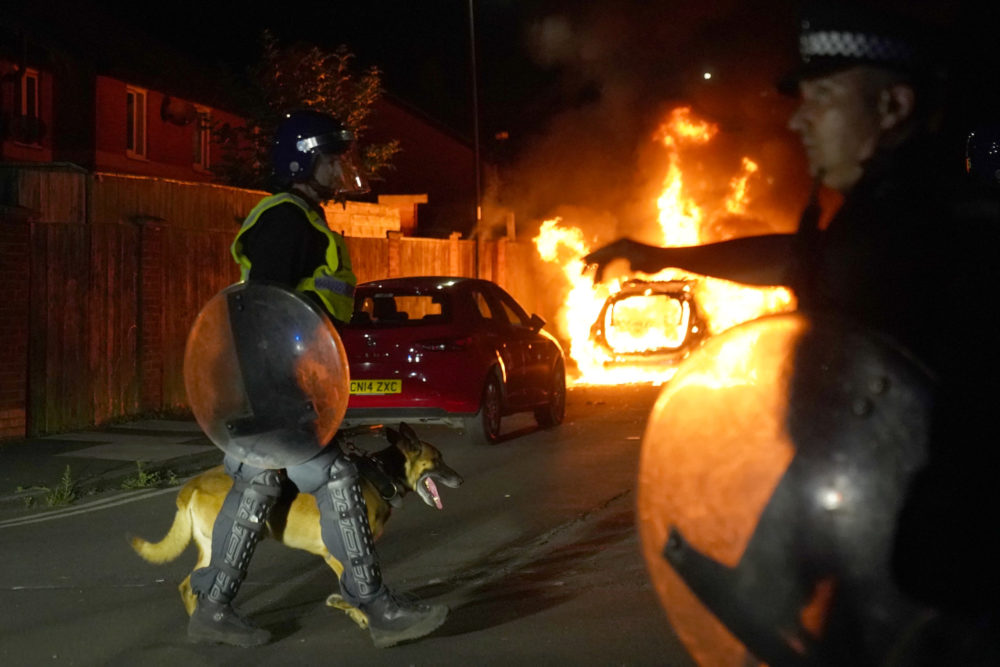
The consequences of this state of affairs have been all too evident this week as the UK has struggled to make sense of the awful events in Southport.
When the broadcast media remained silent about the identity of the person arrested for the atrocity I, like many others, was tempted to see what might have leaked out on social media.
[mid-content-banner]
Asylum seeker
Reports that the perpetrator was a Syrian Muslim who had recently arrived in the UK as an asylum seeker were widespread on X within an hour of the attacks becoming known.
The supposed source for the information looked like a cropped photograph of a print news story. That detail bears some analysis, I think, as it points towards the enormity of a crisis in credibility that is threatening the coherence of society.
Why, with no byline or named newspaper in the picture, would a supposed print source have so much persuasive power that the originator of the lie would go to the trouble of fabricating one?
Part of the answer is, as described, the remaining regulatory framework around legitimate news outlets.
With no author or brand visible, however, I suggest that the semiotics of old-fashioned print offer a more worrying attraction to those who seek to mislead. Print newspapers are a relic of the past, a time when people imagine that they could access reliable information.
If the olden days say it’s true, then it must be.
Prejudices
If the olden days also happen to be confirming prejudices we already hold, then a heady mixture of nostalgia and confirmation bias can override critical thinking altogether.
Nostalgia, as we know, ain’t what it used to be. Facebook pages and groups have attracted huge audiences by encouraging it amongst their consumers. ‘Who remembers when you’d go out at six in the morning, play all day and your mother wouldn’t expect you back until it got dark?’ seems a trite question.
Ask it on Facebook and see the huge response it provokes. As quasi-communities grow around thin remembrances of the past, they become saleable commodities, and with the addition of AI-generated pictures, the reality of the past can be manipulated into something sinister.
All year I’ve been puzzling over bizarre collages of thatched-cottage Britain, complete with overhead spitfires and suspiciously cheerful white people.
These images have darkened over the months to feature frightened looking white children shadowed by cartoons of surly, dark adults with beards.
This week, I’ve seen multiple variations on this theme featuring knives being shared by acquaintances I would have assumed to know better.
When challenged, the people sharing this filth indignantly deny any suggestion of racism. I know them, they say. I know they aren’t racist. It’s me who is deluded, I haven’t woken up to the new reality.
The process has all the hallmarks of cult membership, and, for me, it’s been highly distressing to see people I’ve known for decades be caught in its jaws.
The official response to the violence we’ve seen around the UK this week is decidedly 20th century.
Thugs
Downplaying the ‘tiny minority’ of thugs who actually show up to riot ignores the wider problem at play. Huge swathes of the population are being deluded into false, hateful beliefs and, in a democracy, even one as rigged as ours, that holds the seeds of our destruction.
A common call this week has been to proscribe the English Defence League as a terrorist organisation.
The problem here is that the EDL no longer exists. Organisations like that used to need membership lists to disseminate information. Now, ‘Tommy Robinson’ can tweet from anywhere in the world and anybody remotely interested in his ideas will get the message immediately.
We need to be passing laws fit for the century we live in, and we need to do it immediately. Social media sites should be legally accountable for the veracity of their content and politicians who amplify falsehoods must be sanctioned without fear or favour.
A society that cannot set the parameters of debate will lose all sense of itself. Those whom the gods would destroy, they first make mad.
Support our Nation today
For the price of a cup of coffee a month you can help us create an independent, not-for-profit, national news service for the people of Wales, by the people of Wales.
Get more trusted Welsh news
Choose Nation.Cymru as a preferred source in Google News to see more of our journalism.
