


Opinion
Plaid Cymru's refusal to be open about the selection contest that may see Adam Price lose his seat is a democratic outrage
Martin Shipton
The other day a friend sent me a statistical table that showed Wales was at the bottom of the British league for foreign direct investment.
Based on figures released by the UK’s Department of Business and Trade for 2023-24, the league table is headed by London with 503 FDI projects that created 19,736 new jobs.
The West Midlands is second, with 133 projects and 7,581 jobs, followed by South East England, also with 133 projects but with 4,405 jobs.
Scotland is in fifth position, with 125 projects and 4,035 jobs.
Wales languishes at the bottom in 11th place with 53 projects and just 1,904 jobs.
I understand the argument about the need to nurture and grow our own indigenous companies, but FDI still has its place.
Equally Brexit has made Wales less attractive to investors who want access to the European market, but that applies to the rest of Britain too.
[mid-content-banner]
Investment Summit
Eluned Morgan has announced an Investment Summit to be held in Newport on December 1, and people in the Labour Party have suggested that Vaughan Gething wants to play a leading role in it. It’s even been suggested that he might trigger a by-election if he doesn’t get his own way.
I got an on-the-record statement from the Welsh Government which said: “Further to your call earlier, there is no formal role for Vaughan Gething, but he has been asked by the First Minister to engage with members of the life science sector regarding the Investment Summit in December.”
I also asked the Welsh Government to respond to Wales’ lowly ranking in the FDI league. This is the statement I received from a spokesperson: “Wales is currently home to more than 1,480 foreign-owned companies, employing almost 175,000 people. Our International Strategy prioritises attracting inward investment to Wales and since its publication, 215 investment projects from foreign-owned companies have created or safeguarded more than 20,000 jobs across Wales.
“The latest published data shows 53 foreign investment projects were attracted to Wales in 2023/24 – an increase of 13% increase on the previous financial year and the highest increase of any nation or region in the UK.
“The Wales Investment Summit will be an important platform to further raise the profile of Wales as an outstanding investment destination and showcase key sectors with world class capabilities, supporting our commitment to jobs and green growth.”
Well done to the Welsh Government for putting a positive spin on statistics that remain nothing to boast about, although to be fair the increase in projects is encouraging.
But the general picture underlines the need to improve Wales’ economy significantly.
[lower-mid-content-banner]
Senedd
The Senedd clearly has a major role to play in taking this agenda on. But unless we have politicians with the expertise and new ideas that can invigorate the economy and create well-paid jobs, what follows next year’s election could be a dreadful damp squib.
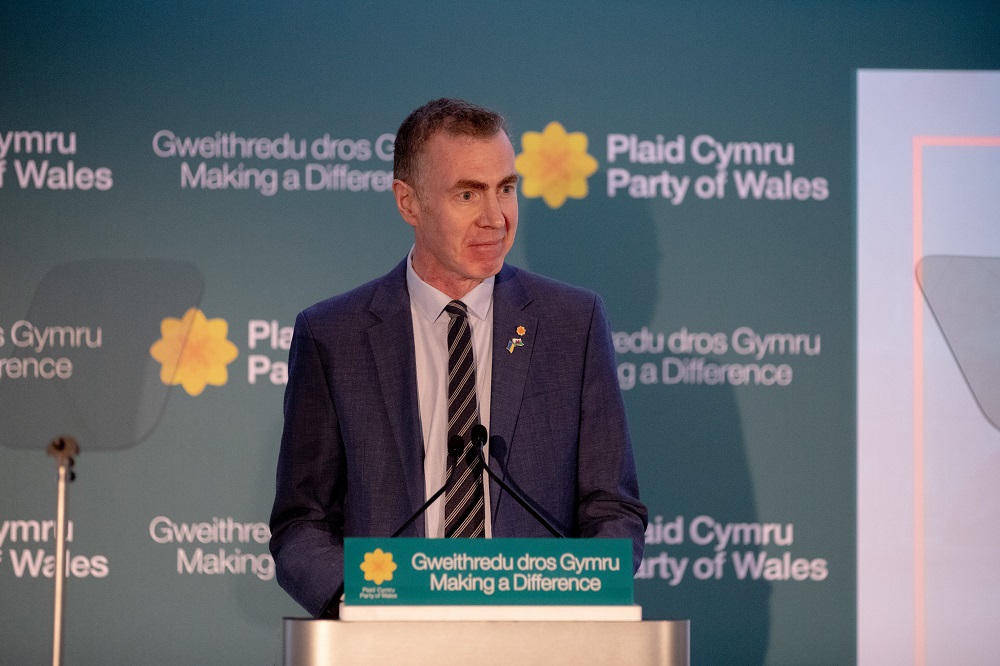
While he has his flaws, Adam Price is a formidable politician of a calibre we have too few of. It therefore seems extraordinary that Plaid Cymru has managed to engineer a situation where he has only an outside chance of being re-elected next year.
I learnt on Thursday evening that he had only achieved third spot on the closed list for the super-constituency of Sir Gar - the whole of Carmarthenshire, including the two Westminster seats of Caerfyrddin and Llanelli. This makes it very difficult for him to win re-election
There are various reasons why Price was defeated in an internal candidate selection contest by Cefin Campbell, who was first elected to the Senedd in 2021 as a regional MS for Mid and West Wales. Campbell is more of a community politician, a former councillor embedded in his part of the county, while for all of his charisma Price can appear somewhat aloof, giving the impression that he is more comfortable in Cardiff and London.
Although he became the party leader, the unexpected arrival of the pandemic robbed him of the opportunity to outshine Mark Drakeford in the run-up to the 2021 election. He also proved not to be as good a party manager as had been expected, seemingly unable to stem a tide of sexual harassment and bullying involving some of the party’s staff. Equally his management of the Jonathan Edwards scandal was far from impressive.
Inspirational
Nevertheless, Price is a trained economist, a generator of creative ideas and for many an inspirational figure who is a credit to Wales. He is widely recognised for his oratorical skills, but hasn’t, in my view, been sufficiently recognised for his forensic questioning of witnesses at scrutiny committees.
Without a doubt, a Senedd without Adam Price would be a considerably poorer place - and while I hope Plaid Cymru performs sufficiently well for him to be re-elected in Sir Gar, I make that point in a non-partisan manner.
But there are important lessons to be learnt about Plaid Cymru’s selection procedures, and especially their shameful lack of transparency.
We all know that many people in Wales are disengaged from Welsh politics and take little interest in what goes on at the Senedd unless they recognise that decisions taken or laws passed impinge on their lives directly.
Next year, for the first time, the people of Wales will be electing 96 MSs rather than 60, for reasons connected with the institution that most won’t care about or understand.
It’s a potentially dangerous moment for devolution, with Reform UK polling well and those antagonistic to the Senedd prepared to tell half-truths and lies to stir up the electorate.
You’d be forgiven for thinking that Plaid Cymru, as a party that likes to promote itself as a party solely dedicated to the advancement of Wales’ interests, would go out of its way to be transparent about its processes, wanting to take the people with it.
But you’d be wrong.
The party has drawn a veil of secrecy over its selection of candidates - and nowhere with greater gusto than in Sir Gar.
Transparency
In terms of transparency, we’re going backwards. The 1999 Welsh Labour leadership between Alun Michael and Rhodri Morgan may have been a stitch-up for other reasons, but the party released details of the electoral college votes to the accuracy of one 10th of 1%. They weren’t so candid in last year’s contest between Vaughan Gething and Jeremy Miles, preferring to leak selectively to favoured news outlets.
This year Plaid Cymru has adopted a “need to know” approach, with the presumption that the vast majority of people, including senior figures in the party, don’t need to know.
Why could this be? Partly because in some areas the number of people voting will be embarrassingly low. And partly because the desire for gender balance among candidates can create distorted results that appear counter to democratic principles.
The closed list system of proportional representation being used by the Senedd in next year’s election takes power from ordinary voters and gives it to the parties. Under the Single Transferable Vote (STV) system, voters can list candidates in the order of their choice. But with the closed list, voters can only back a political party.
Under Plaid’s selection procedure, the candidate getting the most votes from party members in Sir Gar secured the top slot on the closed list. But the number two slot on the list had to be a woman, however many or how few votes she got, and whether or not she got more votes than the male candidate with the second highest number of votes.
The party has kept those in the know down to the bare minimum in a bid to stop the result leaking out. Knowing there was no chance of my being told the actual voting figures, I asked a senior Plaid official on Friday evening whether Adam Price or the lobbyist and former Assembly Member Nerys Evans had come second to Cefin Campbell in terms of the number of votes cast.
The official said he didn’t know and referred me to the party’s national chair Marc Jones or chief executive Owen Roberts. I have Mr Jones’ mobile phone number, but not that of Mr Roberts. I rang Mr Jones, asking whether he would at least tell me who had received more votes - Adam Price or Nerys Evans. He wouldn’t tell me. I told him the party had a duty to be transparent and that the people of Wales deserved to know the answer, at which point he told me he was driving and would call me back. He didn’t do so.
Electoral balance
The party has decided to have an electoral system designed to achieve electoral balance. But it is not prepared to say whether the rule that allows a female candidate to leapfrog a male candidate has been deployed. This is a democratic outrage and brings not just Plaid Cymru but the Senedd itself and Welsh devolution into disrepute.
In another seat, Pen-y-Bont Morgannwg, covering Bridgend and the Vale of Glamorgan, Barry councillor and former Plaid special adviser Mark Hooper won the top slot and Sarah Rees, who heads Oxfam Cymru, the second. Luke Fletcher, an incumbent MS and Plaid’s economy spokesman, is third on the list with no chance of being re-elected.
However, I have been told that the result of the members ballot saw both Hooper and Fletcher getting more than 100 votes, with Sarah Rees getting far fewer. I’ve heard two suggestions about how many votes Ms Rees’ secured: one said she got just over 10 votes and the other suggested she got just three. We can’t be sure because Plaid Cymru refuses to release the figures.
This is appalling. Plaid should be prepared to own the consequences of the electoral system it has adopted. By not doing so it will alienate the electorate still further.
Support our Nation today
For the price of a cup of coffee a month you can help us create an independent, not-for-profit, national news service for the people of Wales, by the people of Wales.
Get more trusted Welsh news
Choose Nation.Cymru as a preferred source in Google News to see more of our journalism.
