


Sat, 18th July Cardiff 24°
Nation.Cymru wordmark
Advertisement

Opinion

One of Wales’ Victorian treasures is being demolished to build flats - please help us save it
By NationCymru
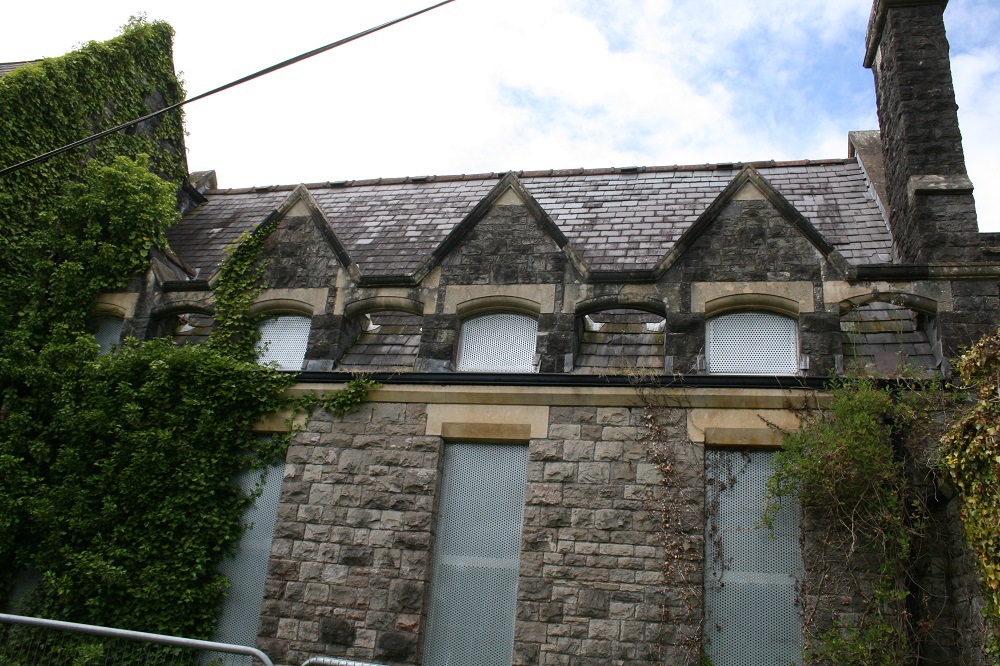
Old Sixth Form, Aberthin Road, Cowbridge

Sara Pedersen

The former Intermediate School for Girls’ in Cowbridge, Vale of Glamorgan was built in 1895-6 and was the first throughout England and Wales to be built specifically for the secondary education of girls as a result of the Welsh Intermediate Education Act of 1889.

It stands as an attractive monument to a pivotal moment in Welsh history which paved the way for equality in women’s education. However, it is under imminent threat of demolition to make way for housing.

The school was listed on the Victorian Society’s Top 10 Endangered List in September 2019 and is a treasured part of the historic town of Cowbridge. The community, alongside heritage experts, have been campaigning hard for its sympathetic conversion rather entire demolition but time is running out with its future set to be determined next month.

[mid-content-banner]


Pioneering
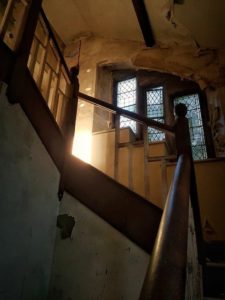
Staircase

As well as being the first girls’ intermediate school to be built in Wales and England, Cowbridge school was also built amid notorious local acrimony, which resonated at a national scale. Cowbridge was one of nearly 100 schools built as a result of the Welsh Intermediate Education Act.

However, it was highly unusual in including accommodation for boarders at the outset and for being funded to a great part by a local benefactor. This private funding made it possible for girls from outside of the area to attend the school when they would have been unable to otherwise.

As well as being important from an historic aspect, the school also is a grand and attractive building. Despite being derelict for a number of years due to restrictions over its redevelopment, its original character survives intact to a very high degree, both externally and internally, including the original layout, staircase and roof beams of the main hall.

Far from conforming to the standard ‘county’ school image, it has many unusual features including its dormers, prominent corner chimneys and a ‘baronial’ style dormitory range with a pretty oriel window which was the matron’s room.

The architect of the 1895-6 part of the school was Robert Williams who originated in Wales but went on to work in London and later Cairo in Egypt where he designed many buildings for the Davies Bryan family (who were linked to Aberystwyth University).

A strong advocate for Welsh culture and language, he was also known as a radical, prominent and early advocate of building conservation and a national pioneer in terms of social housing.
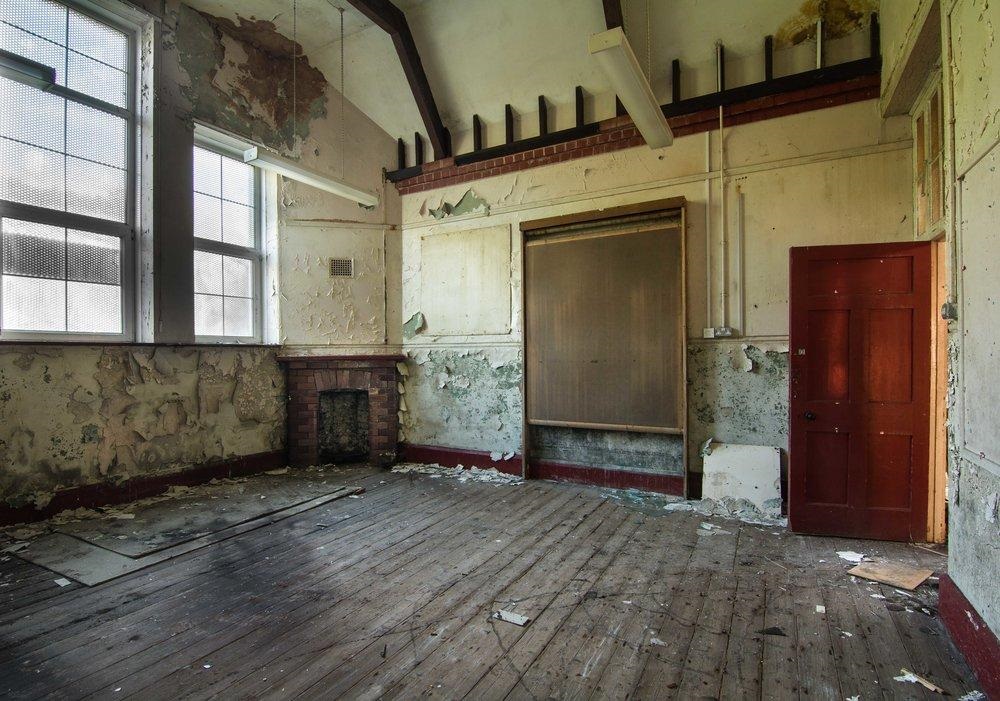
A classroom with surviving ceilings, doors & fireplace

Asset

After years of standing empty and neglected due to an educational covenant preventing its redevelopment, the school is now subject to an application for complete demolition to make way for blocks of flats.

The group campaigning to save the school from demolition have tried to engage with the developers, Hafod Housing Association, to find a solution to ensure that housing can be provided whilst also protecting this important heritage asset. However, citing financial reasons, Hafod are continuing with their plans to completely demolish the building.

As a result, the community is now calling on the Welsh Assembly to intervene and urge the Welsh Government to protect this important heritage asset for generations to come. The petition will close next week with the Petitions Committee set to consider their requests later this month.

Please sign the petition here. And for information on the campaign visit here.

For the price of a cup of coffee a month you can help us create an independent, not-for-profit, national news service for the people of Wales, by the people of Wales.

Get more trusted Welsh news

Choose Nation.Cymru as a preferred source in Google News to see more of our journalism.

Choose Nation.Cymru as a preferred source in Google News

16 comments

Charles L. Gallagher

A Nation's heritage should never be squandered to the 'great god GREED'. Once destroyed there is no chance of it being recovered!!!

Reply
K. K

The likelihood of the building being saved is minimal primarily because the CADW isn't an independent body but one that primarily fulfils the demands of the Welsh Government. This is further complicated by the fact that local authorities can give listed building consent bypassing further scrutiny for the building to be demolished without undertaking an options appraisal which should be undertaken to not only negate future use but also the social, cultural and economic impact that may ensue from its retention. In the case of the aforementioned building it is a fine piece of architecture but typically 'financial concerns' are cited when in reality Hafod will make a fortune from the raw materials and build a completely substandard set of flats using cheap materials. Conversion is the answer but intellect is in short supply. As someone who has been involved with campaign groups trying to save Welsh heritage over the years I wish you well. From my own experience, I have seen local community hospitals, ironmasters houses, chapels, pubs and temperance halls all demolished despite the fact that local people paid for them. The ignorance is a predominantly Labour thing as they have been responsible for most of the destruction with no understanding of what these buildings mean to the people and the local environment. It explains why Valleys communities are bereft of ideas and options because their best hopes of social, cultural and economic regeneration have been decided behind closed doors by someone with vested interests. Shameful.

Reply
John Evans

I'd rather see Cowbridge benefit from perhaps a community centre type of thing where all could enjoy the beauty of this architecture rather than flats. Shame. Arts centre with workshops?

Reply
Stephen Bale

This should be exposed in Private Eye's Nooks and Corners column

Reply
Clive Jenkins

Itwas.I Sent it in.

Reply
Jonathan Gammond

Another example to add to the long list of examples of unimaginative uses of our heritage. We have suffered a good number of demolitions in Wrexham and the question begs - are the Welsh more willing to accept any development opportunity, however low quality and short term, offered to them than the Scots, the English, the Irish (northern and southern) or many other nations in Europe, often self-imposed?

Reply
K. K

In Wales, our heritage has always been erased from the landscape due to skewed ideology and complete ignorance. In Merthyr Tydfil and particularly in the post period one only has to look at the plethora of buildings lost including the Triangle housing estate, the old iron bridge, Ynysgau Chapel as well as the clearance of the historic Georgetown are just some examples whereas a town like Mountain Ash saw the demolition of Dyffryn House (1984), the arson job on the Nixons Workmans Hall (1995) and the local health board flogging off the General Hospital (paid for by the people) only for it to be demolished in late 2017. These are only some examples but throughout Wales and in areas such as Conwy, Wrexham, Pembrokeshire and elsewhere heritage is left to rot primarily because of ignorance but certainly in the case of the Valleys vested interests, ideology and cronyism. So what can be done? One only has to look at English Heritage for what can be achieved and could be done. By listing buildings and having a forward looking policy they have listed architecture representative of the present as well as the past such as the Lloyds Building in London or Preston Bus Station in Lancashire. What we get in Wales is the ridiculous situation of a hands off heritage body influenced by the Labour Party who not only find in favour of their employers but also list the Big Apple Kiosk in Bracelet Bay as an important part of Welsh heritage. It not only underlines the hands off approach of CADW but also the lack of knowledge given that it was partially reconstructed in 2009. That isn't a criticism of the structure itself (heritage isn't just buildings) but more a reflection of just how inept our governing body is in safeguarding and promoting the heritage of Wales. That is why I fear for the future of Intermediate School for Girls in Cowbridge.

Reply
j humphrys

Anyone remember The Rape Of Britain? It detailed all/most of the buildings "lost" since WW2, and had a foreword by John Betchemin (lost my copy) "a devastating book" he wrote. I am a big fan of modern architecture but "patch and mend" is the best way to cope with our built environment. I've signed the petition, but I must have done so a hundred times since the sixties. So I agree with KK. Bring on the new party asap!

Reply

In reply to j humphrys

j humphrys

Googled it, published 1975, so not the sixties! By Amery/Cruicshank. Amazon has it, 31 quid.

Reply
John Mcfadzean

You all need to stop voting in a labour govt!! That would sort a lot of issues like this!!

Reply
Rhosddu

If, as KK says, CADW have been slow to step in to protect our architectural heritage, then that's a disgrace (and Jonathan Gammond is right about the cultural vandalism perpetrated on Wrecsam over the years by the Council). Having a building listed will do much to prevent this, and no-one has to wait for CADW to do this -- a Community Council has the authority to list any building in its jurisdiction. I've seen it done in one village in Wrexham Maelor, and all Welsh Community Councils should be made aware of their right to do this, if they're not already. There's a permanent war going on between builders and preservationists, and if the WAG and the County Councils can't or won't rein the builders in, the Community Councils can.

Reply
Padi Phillips

Twas ever thus though. I can remember reading, as part of the basic research for my long essay as part of my course at Coleg Harlech in the mid 80s, an article in a very early edition of Archaeologia Cambrensis bemoaning the national approach to the preservation of our built heritage. It seems to be a thing. How many of us are aware of old houses and buildings being allowed to fall into disrepair and ruin by our compatriots who seemingly on the whole prefer to do this, and build in place the most banal of bungaloid monstrosities that in many places seem to defy the 1947 Town and Country Planning Act's clause aimed at preventing ribbon development? How many of our listed buildings are being allowed to fall into ruin as there is no comprehensive legislation enforcing duties of upkeep and maintenance upon the proprietors of historic and listed buildings? Currently a building that has listed status isn't really that well protected, as it relies on inspection by local authority employees who, at best, can only try to persuade owners to look after buildings, and, in extremis, to step in and do necessary works, but what local authority has the resources to do this, when to start off with, they don't even have the resources to inspect in the first place. Cadw is, and always has been an agency far more concerned with the promotion of tourism than it has been an agency charged with the care of our historic built environment. This was as it was conceived right from the beginning. Vast sums are spent on visitor facilities, such as those at Castell Harlech, when a simple shed for the custodian would do, or, if Cadw wished to push the boat out, perhaps a moderately bigger premises accommodating a shop selling postcards and guides, as once was the case when these structures were under the care of the Department of the Environment, and previous to that, the Ministry of Public Buildings and Works. There is nothing of the calibre of the blue guides sold by that organisation being published by Cadw, (though I do have sympathy for an early criticism of Cadw that the blue guides were a bit of overkill when all that was wanted was a simple map with brief details) though there is nothing wrong with also publishing a simpler document. We do need a heritage agency in Cymru that isn't compromised by market considerations, one where historic buildings are seen as an opportunity to create new uses, with a bias towards schemes that will benefit the whole community, such as community halls, or social housing. Too much of our built heritage is being lost. It's time this changed and that we started to truly value that part of our inheritance.

Reply
Saffron Waghorn

The idea of demolishing Sarah Pedersen school is scandalous. I am a stonemason /sculptor, there are so many people skilled in the old trades that are looking for work like this. There are plenty of other places of less importance to demolish to build. Also in this environmental climate, it would be better to restore all our beautiful heritage. The council yet again want a quick fix. They are not investing in our future. It could be a brilliant community challenge to restore this fantastic building. Crowd funding should be involved.

Reply
Steve

Would be well looked after in St Fagans if demolition was the only option

Reply
Jan

Let's be honest, if it's not Cardiff....it's nothing! Take a good look at the Welsh assembly, you'll find what's wrong!

Reply
K. K

I don't think that's completely true sorry Jan as Cardiff has a horrendous record with regards to their track record on heritage conservation. What with the Rise in Pontcanna and Guildhall Crescent succumbing in last 18 months and with a botox job on Cardiff Central to come, Cardiff and in particular its beloved council have an abysmal track record. During the local council elections in 2017 I was asked by an unnamed party for input into what local issues would be relevant to the local electorate. Despite advising them that our local heritage is one of the the most important aspects it was ignored. It's suicide because local issues and local landmarks speak volumes and it is an issue close to peoples hearts regardless of your political colours. Re: J. Humphreys. Betjeman was a superb fighter for Englands heritage and Kings Cross was a significant achievement. Within a Welsh context, I always admired Joseph Gross who as a Czech wasn't tainted by political association. Re: CADW are abysmal. Time and again they have refused to acknowledge or list buildings despite their historical legacy primarily because it would conflict with the Welsh Government and Local Government who are essentially in kahoots with each other. There is a reason they list apple kiosks and a reason they stand by and allow a building like the Temperance Hall (1853) in Aberdare to be demolished. The former is simple and needs no maintenance whilst the latter involves going against their paymasters who wanted a social housing scheme built in EXACTLY the same style as the building they wanted to demolish. Despite a full detailed analysis and architectural analysis by conservationists based in London and architects from Cardiff they still weren't interested. So what you have is conservation policy dictated by the Labour Party in Cardiff, enforced by the Labour Party in Rhondda Cynon Taf and upheld by a body answerable to both to an extent. No prizes for guessing who benefitted from the entire debacle (clue: the construction lobby).

Reply

Leave a reply

Replying to Jonathan Gammond Cancel

Another example to add to the long list of examples of unimaginative uses of our heritage. We have suffered a good number of demolitions in Wrexham and the question begs - are the Welsh more willing to accept any development opportunity, ho...

Comments are reviewed before they appear.