


Wed, 22nd July Cardiff 21°
Nation.Cymru wordmark
Advertisement

Opinion

Not in Service: Is the Welsh Government failing bus users?
By Mark Mansfield
Photo TfW

Andrew Jenkins

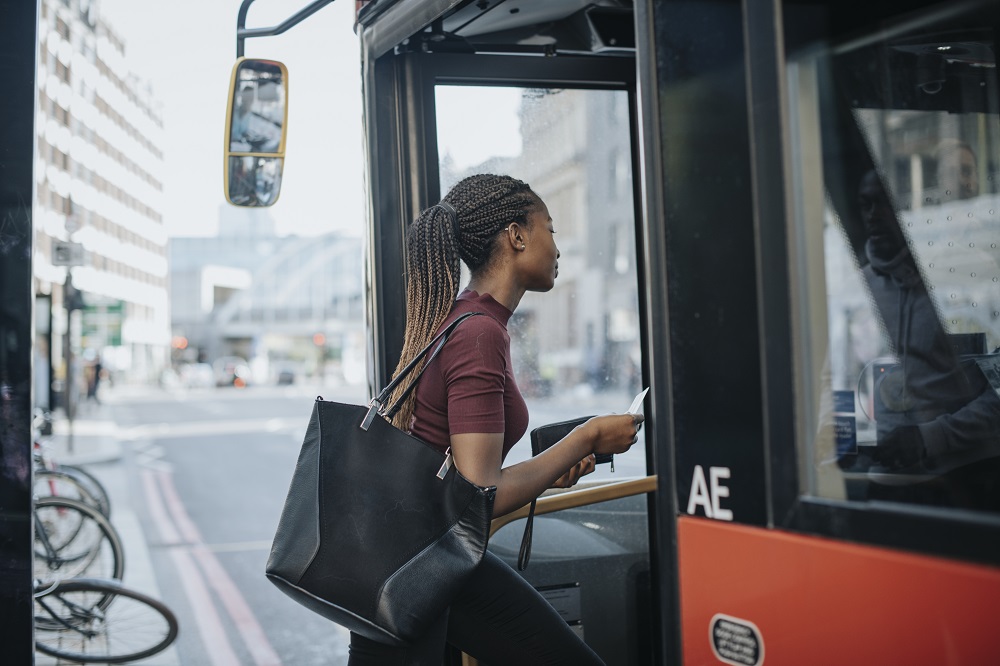
I catch buses every day.

I catch a bus to get to work and take my son to school. I catch a bus to go to the shops or visit a local attraction. I catch a bus to meet a friend, to go to the cinema or to do some volunteering. Having access to good bus services is essential for me.

However, I have become increasingly frustrated with the way in which buses are not recognised for the essential service that they are.

That’s not to say they aren’t spoken about. When bus services are threatened with cuts, then they get some attention. When a Minister wishes to talk about more sustainable forms of transport, they will include references to buses in their strategies and boast about the amount of funding they are putting into the network.

Despite these warm words, action from various levels of government in Wales often leaves a lot to be desired.

Earlier this year, the Deputy Minister for Climate Change, Lee Waters, announced that funding for the Bus Emergency Scheme was coming to an end. He later announced a new package of money – the Bus Transition Fund. That didn’t stop 10% of services being axed over the summer, with more on the way.

The Deputy Minister, as well as the First Minister, in response to various questions asked by Members of the Senedd representing Labour, Plaid Cymru, Conservatives, and Liberal Democrats referred to passenger numbers as one of the key challenges facing the bus service.

In short, passenger numbers have not recovered from the pandemic, leading to a reliance on funding that the Welsh Government can no longer afford.

Truth is, I agree with that completely.

[mid-content-banner]

Recovery plan

That’s why I launched a petition in February that is still being worked on by the Petitions Committee, that didn’t just call for an extension of funding but also a national recovery plan for buses. I wanted this plan to be co-produced by Welsh Government, local authorities, bus operators and bus users, in order to bring people back onto buses and reduce reliance on emergency funding.

It’s also why years ago I asked my local authority to get involved with what was then called Catch the Bus Week. Year after year I wrote to the authority, to councillors, to MPs and MSs asking them to lend their support to campaigns to encourage bus patronage.

Year after year I was left disappointed.

Despite the recognised challenges and the steady stream of strategies suggesting public transport is prioritised, I am left disappointed again. September is Catch the Bus Month, and even though the Deputy Minister called for a campaign to encourage bus usage, he has sadly not uttered one word of support for the Catch the Bus campaign.

There is plenty of research out there that show the benefit of buses to the social, economic and environmental wellbeing of our communities, but I see it every day. I speak to my regular bus driver, I speak to other passengers who each have their own reasons for regularly getting the bus. Many of them have no alternative form of transport, and without the bus their lives would change enormously.

At the moment I feel that the Welsh Government, and politicians of all parties are not doing enough to deliver a more comprehensive and sustainable bus network. Soon Catch the Bus Month will be over and it’ll be too late for them to get involved, but it won’t be too late for them to get onboard and show real leadership.

Buses are in crisis. As a bus user, I just want to ask those in positions of responsibility – are you going to help?

For the price of a cup of coffee a month you can help us create an independent, not-for-profit, national news service for the people of Wales, by the people of Wales.

Get more trusted Welsh news

Choose Nation.Cymru as a preferred source in Google News to see more of our journalism.

Choose Nation.Cymru as a preferred source in Google News

12 comments

David

If buses are running only half full on certain routes. Why doesn't the company use mini buses for those routes?

Reply
Ap Kenneth

When Arriva used mini-buses around Wrexham some 15 yrs ago it did nothing to drive passenger use, cramped, difficult to get on and off when crowded, uncomfortable, overall a depressing experience.

Reply
Andrew Jenkins

I think it's because passenger numbers will fluctuate throughout the day - at peak times that bus may be full while only half full or less at other times. It doesn't make financial sense for the bus company to swap buses between large and small, especially when most of the fixed costs (driver, fuel, insurance, maintenance etc.) remain mostly the same.

Reply
Padi Phillips

i too am a regular bus user, and it's my primary mode for travel for anything more than a short walk, as I have no car. I live in Cardiff, for which I am somewhat thankful, but the service provided by Cardiff Bus leaves a lot to be desired. I live just outside the city centre, and usually catch buses on Newport Road, so I usually have a pretty good selection of buses I can use. I use the Cardiff Bus app, so I am always aware of when a bus is due, and can always ensure that I have enough time to walk the 300 metres or so from where I live to the bus stop. Except the Cardiff Bus app is adept at telling lies. I fail to understand how a supposedly 'real time' information system doesn't inform me in good time that a particular service has been cancelled, or isn't running for any reason. Sometimes several buses in a row are cancelled leading to subsequent buses being jam packed full, sometimes so full that there is 'Sorry, bus full' displayed on the destination board. Added to this it is often the case that, due to traffic congestion, buses are delayed, and it's not uncommon to have to wait at bus stops for half an hour or more in a period where there should have been several buses scheduled that I could use. In the meanwhile I amuse myself watching the constant stream of cars passing, most of them with a single occupant, as I breathe in noxious fumes. It's no trivial matter, and today's Guardian saw the publication of an article exposing the serious levels of pollution in Europe, particularly the extremely damaging PM2.5 particles, much of which is a result of transportation. Another article earlier in the week told of research that found working from home reduced traffic derived pollution by 54%. The issue of lack of bus users could be solved overnight, simply ban private cars from city centres and then people would have no option but to use public transport, but for the fact that there aren't enough buses, and certainly not enough bus drivers to cope with the services as it is, so we are, it seems, stuck with the present situation. There is also the factor that buses, in general are still a fairly unpleasant form of transport to use. Bus operators ideas of cleanliness leave a lot to be desired, and most buses that aren't brand spanking new are basically filthy, too small, and are designed for people who are shorter and much thinner that the average citizen. Leg room is inadequate for anyone more than about 5' 6" tall, and on those buses with facing seats over wheel arches there is usually some total oik who is resting their feet on the seat opposite. Challenging them, like challenging any anti-social behaviour in the UK is to take one's life into one's own hands, with little fear that violence short of murder will result in any significant sanction. There are also a significant number of bus drivers who seem to think they're competing in an F1 race, such is their acceleration and harsh and late braking - are they indeed trained to drive a PSV with consideration of the passengers? I've lived in Cardiff long enough to have seen several initiatives where the council sets out a strategy to get people out of their cars and onto public transport or to using active travel, dating all the way back to 1990. All have completely failed, mainly due to the lack of any serious political will on the part of politicians, local and national to get behind public transport in any serious way. This is evidenced by the total shambles of Transport for Wales and also, in Cardiff, Cardiff County Council who seem to struggle so much with the concept of a bus station in the city centre that can handle more that 14 buses at any one time, all because the land that the former bus station sat on was worth lots of money. What happened to the sums raised from the sale of the land that the former Central Bus Station occupied? And why wasn't the land currently being used as the car park for Cardiff Central railway station not subject to compulsory purchase to be used as the location of a properly integrated bus and railway station with capacity for long distance coaches as well? In short, why weren't Cardiff's, and Wales' public transport users placed front and centre where public transport planning is concerned? I suspect that such a genuinely democratic intervention would just too much for the egos of too many of our 'city fathers' in their quest for the 'ours is bigger than yours' bragging rights in the contest to develop bland, identikit cities that are all alike rather than liveable spaces that reflect the desires of those who live in them.

Reply
Mab Meirion

Public transport is just a figment of Lee Waters' imagination...

Reply
Andrew Jenkins

On your question "why weren't public transport users placed front and centre where public transport planning is concerned?" This is something that I feel is all too common, across many service areas in many parts of Wales. There is a very welcome move over the last couple of decades to see service users as partners who have valuable experiences and insights that can be harnessed to improve a service. It's mostly been talked about in health and social care settings (although, in my opinion, no where near embedded enough in practice) and in some other service areas. Bus users don't seem to be talked enough in this respect. That's why I think that any strategy developed at Welsh or local government levels to increase passenger numbers/improve services generally needs to involve bus users.

Reply
Gavin

If the WAG had an ounce of sense they would sort out the public transport system in Wales before trying to force motorists off the road under the guise of saving 6 lives a year. Buses are expensive, unreliable and the service is sparse off the main routes. Maybe then some would be more likely to use the trains and buses.

Reply
R Jones

Has any research been done on bus usage? I use buses all the time but most of my fellow passengers are elderly, or women, or not wealthy . Are those people important to politicians?

Reply
Alun Gerrard

Our political leaders treat us as cash cows only. If we comment on them we are a terrorist...I do not jest !

Reply
Mab Meirion

The country is a playground for little politicians to indulge themselves at our expense, from Waters to Dowden flying a 150 seat troop carrier to New York... My brother is getting to know Argentina, he tells me that in the cities the only people with any wealth are the politicians the rest are dirt poor and are fearful to leave their homes... Is that to be our future too...

Reply
Michael Alan Cridland

I'm not surprised that my comment was not approved, quite brutal, even for me! Not as brutal as the brutal truth for those who use the bus, bad in the cities, but and atrocious for those in the country, where their services are cancelled or non existent. People are late for work, they miss hospital appointments, they wait for hours for buses that never turn up! Then what is more brutal is the indifference those who are responsible seemed to be almost indifferent to those who suffer, either because they feel that the Welsh Government is responsible because funding. You know what I don’t care, and neither do those who put up with the nonsense. I wrote to Lee Waters and got a brutally canned response, which said nothing, I read it as the dilapidated bus rode up Lloyd George way, passing the tram built with leveling up money from the much maligned Westminster government, watching Mark Barry’s shining new trains running half empty down to Penarth, passing the bike less cycling paths. The only thing that is full are the buses, that most people take in Wales. 

Reply
LindaJones

In my experience Cardiff Bus is failing on all levels. Its expensive, unreliable and non existent at certain times of the day. I have complained about the service on many occasions to my local Llandaf North councillors. One asserted Cardiff Bus is nothing to do with the council, fact its owned by Cardiff Council seems to have escaped him. It turned out the same councillor was on the Board of Cardiff Bus. So much for the calibre of Cardiff Councillors and the service they provide.

Reply

Leave a reply

Replying to Andrew Jenkins Cancel

On your question "why weren't public transport users placed front and centre where public transport planning is concerned?" This is something that I feel is all too common, across many service areas in many parts of Wales. There is a ve...

Comments are reviewed before they appear.