


Opinion
No, support for scrapping the Senedd isn't on the rise

Ifan Morgan Jones
Supporters of 'abolishing' the Senedd have become quite excited over the last two weeks after a YouGov poll projected that, with don’t knows removed, 33% would vote to get rid of the institution.
Some campaigners and sympathetic media outlets have claimed that this is proof that support for ditching Welsh devolution is on the rise.
However, this is largely an attempt to 'fake it till you make it' - i.e. to give the impression of momentum in the hope that it will generate a real poll bounce. There is no evidence in the polling, at least, to suggest that there has been any increase in support for abolition.
So what to make of the poll showing that 33% would back abolition?
This was the first time a ‘yes’ or ‘no’ referendum-style question on abolishing the Welsh parliament and government had been asked as part of the ITV/YouGov poll and therefore it can't be claimed that it represents a rise or fall in support, as we have no other polling to compare it to.
All we have to compare it to are the results of the 1979 and 1997 referendums on establishing the Assembly and the 2011 referendum on more powers.
79.74% voted ‘no’ to the first, 49.70% ‘no’ to the second and 36.51% ‘no’ to the third. Therefore, if anything, a poll projecting that around 33% would vote to do away with the Senedd today suggests a continuation of the pattern of a gradual decline in opposition to devolution rather than an increase.
It’s also notable when looking at the figures that there is quite a large and obvious age gap in opposition to the Senedd.
Would vote ‘yes’ to abolishing the Assembly 18-24 year olds 14% 25-49 year olds 17% 50-64 year olds 27% 65+ year olds 38%This could, of course, mean that people get more devo-sceptic as they get older. But a more reasonable interpretation might be that those who have grown up with devolution tend to be less opposed to it.
The 65+-year-olds are the last of the cohort who are old enough to have voted ‘no’ so overwhelmingly in ’79, while some of those 50-year-olds would have been in their 20s when devolution was voted for in 1997.
[mid-content-banner]
Multi-option
So is there any other polling out there that could show whether there has been a long-term rise or fall in support for abolishing the Senedd?
What we do have as evidence is the multi-option question which has been asked consistently for some years, going back to 2014.
However, you may notice there is quite an obvious inflection point in the middle of these statistics. At the start of 2019, support for independence and abolishing the Assembly seem to bump up slightly and support for more powers dip.
But rather than being the result of some political earthquake it’s likely that all we’re seeing here is a difference in methodology. The polls before April of last year were conducted as part of the St. David’s Day BBC/ICM poll and the ones after (in italics) by ITV/YouGov:
Independence More powers Status quo Fewer powers Abolition Don't know / didn't reply Feb-14 5% 37% 28% 3% 23% 5% Sep-14 3% 49% 26% 2% 12% 6% Feb-15 6% 40% 33% 4% 13% 4% Feb-16 6% 43% 30% 3% 13% 4% Feb-17 6% 44% 29% 3% 13% 4% Feb-18 7% 44% 28% 4% 12% 5% Dec-18 8% 40% 23% 4% 18% 7% Feb-19 7% 46% 27% 3% 13% 4% Apr-19 12% 27% 25% 4% 15% 17% May-19 11% 26% 25% 5% 17% 16% Oct-19 11% 22% 27% 6% 17% 16% Nov-19 11% 21% 27% 6% 17% 16% Nov-19 10% 24% 26% 6% 15% 15% Dec-19 8% 24% 27% 6% 17% 15% Feb-20 14% 18% 24% 8% 17% 16%It’s particularly noteworthy that there are far more ‘don’t knows’ in the YouGov polls. The wording of the questions asked are also different. Therefore these results while interesting on their own should probably be considered separately rather than as part of a continuum.
The fundamentals of Welsh politics didn't change overnight between February and April 2019.
So what we’ve actually seen here is support for independence perhaps rising – a little bit. While support for abolishing the institution has dipped in the ICM poll and wobbled back and forth around the 17-15% mark in the later YouGov polls.
What will be interesting is when the BBC publish this year’s ICM St. David’s Day poll next week and we can compare their 2020 figures ‘like for like’ with 2019.
Until then, there’s no real sound basis for claiming that there’s an upwards trend in support for abolishing the Senedd, just two methodologies by different polling companies consistently showing different numbers.
Sentiment
But some may ask, so what about the polling today? Those who wish to Abolish the Senedd will point to the EU Referendum in 2016. Leaving the EU wasn’t really on the agenda, they say, until they began campaigning for it.
But while the vote to leave the EU may feel as it if sneaked up on Remainers, it didn’t really. The earliest available Wales-only polling, in July 2013, suggested a majority of people in Wales would vote to Leave.
Across the UK, opinion polling showed Leave in the lead as early as 2010. In fact, contrary to the received wisdom, it was as the referendum approached that Remain pulled level, not the other way around.
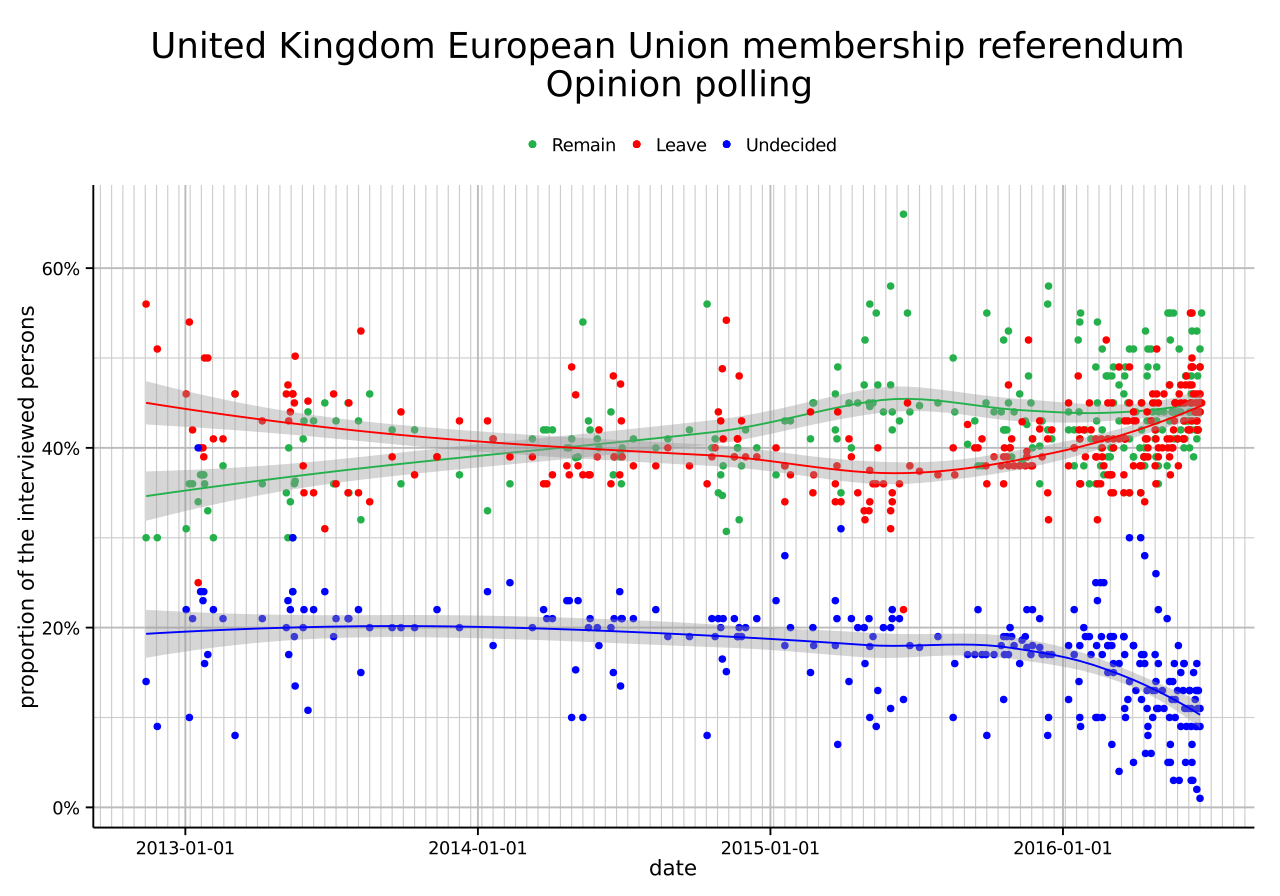
In other words, what UKIP and Nigel Farage did very successfully was to take advantage of already existing widespread anti-EU sentiment, present it as the people v the political establishment and pulled off a referendum to leave the EU.
In the case of abolishing our Welsh parliament and government, there is no evidence that such pre-existing sentiment exists to a significant enough degree to win a referendum to abolish the institution.
This does not mean of course that supporters of abolishing the Senedd are wasting their time or that those who support devolution can rest on their oars.
A year ago no one was really discussing independence as a political option for Wales, yet there is evidence that sustained campaigning has managed to shift the polls - a little bit.
There is no doubt that if the Abolish the Assembly campaign managed to pick up a head of steam they could also make headway in the polls over the next decade or so.
But given that the bulk of their support seems to be concentrated among the current crop of 65+-year-olds, perhaps time for them is of the essence.

Support our Nation today
For the price of a cup of coffee a month you can help us create an independent, not-for-profit, national news service for the people of Wales, by the people of Wales.
Get more trusted Welsh news
Choose Nation.Cymru as a preferred source in Google News to see more of our journalism.
